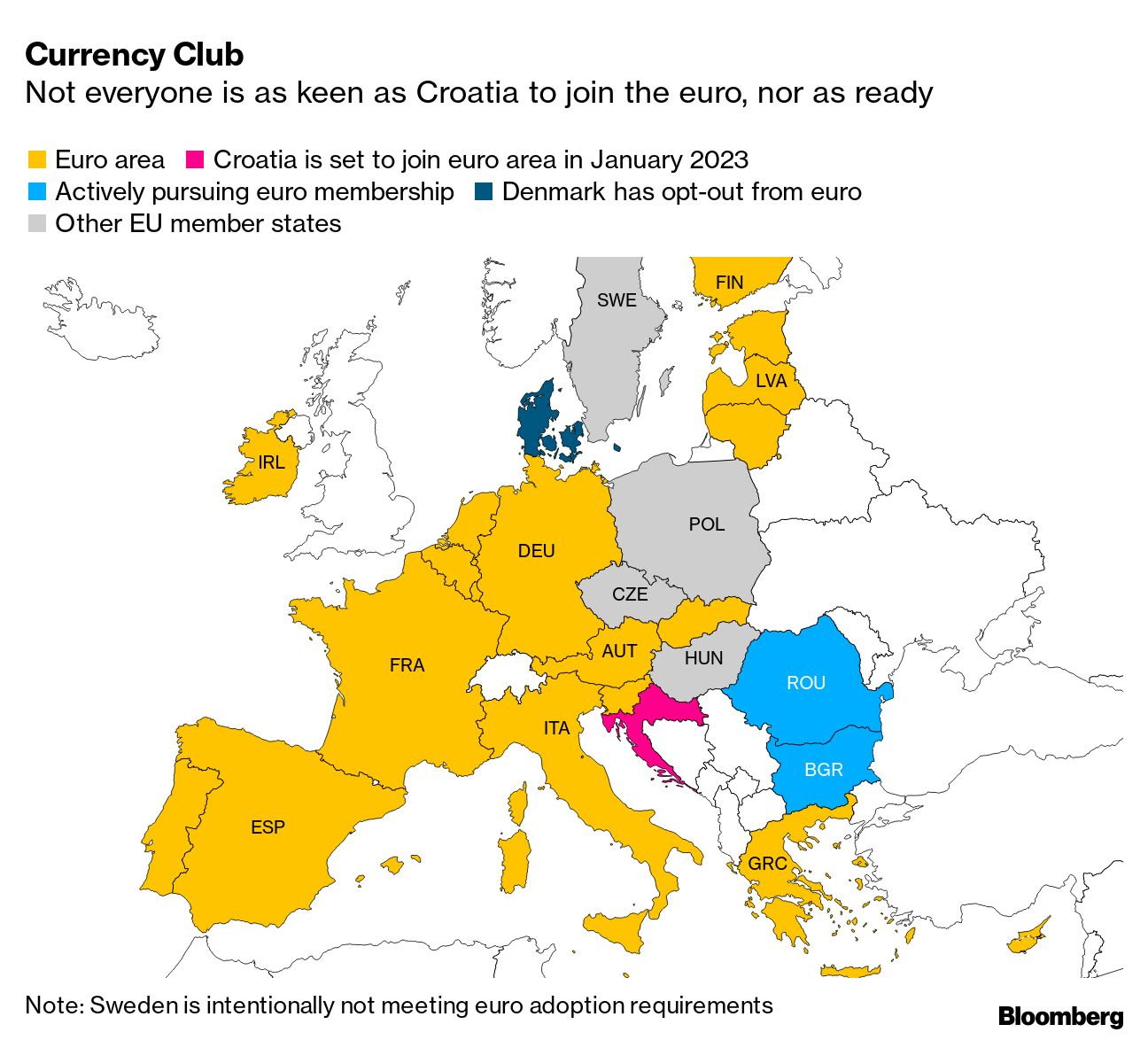
| Hello. Today we look at the choices European countries are taking about joining the euro, prospects for Brazil's monetary policy, and the significance of the LGBTQ+ community in the US economy. When it comes to joining the euro, several countries still abide by the wisdom of Groucho Marx. The American comedian's famous quip, that he didn't want to belong to any club that would have him as a member, fairly describes the approach of European Union holdouts to the single currency. Ultimately joining the euro is actually a condition of signing up to the bloc, though the Czech Republic, Hungary, Poland and Sweden don't seem interested. Meanwhile Denmark, which clinched an opt-out on acceding before the dawn of the currency, isn't budging either. Its premier, Mette Frederiksen, said on Wednesday that a public vote on switching stance isn't going to happen. Contrast such foot dragging with the enthusiasm of Croatia. The Adriatic country of 3.9 million, scarred by war a generation ago, is about to complete its transformation and become the euro's 20th member. EU officials recommended its application this week. Bar any hiccups, the nation will fully join on Jan. 1, 2023. That "will bring benefits for citizens, businesses and state and make economy more resilient to shocks," central bank Governor Boris Vujcic said.
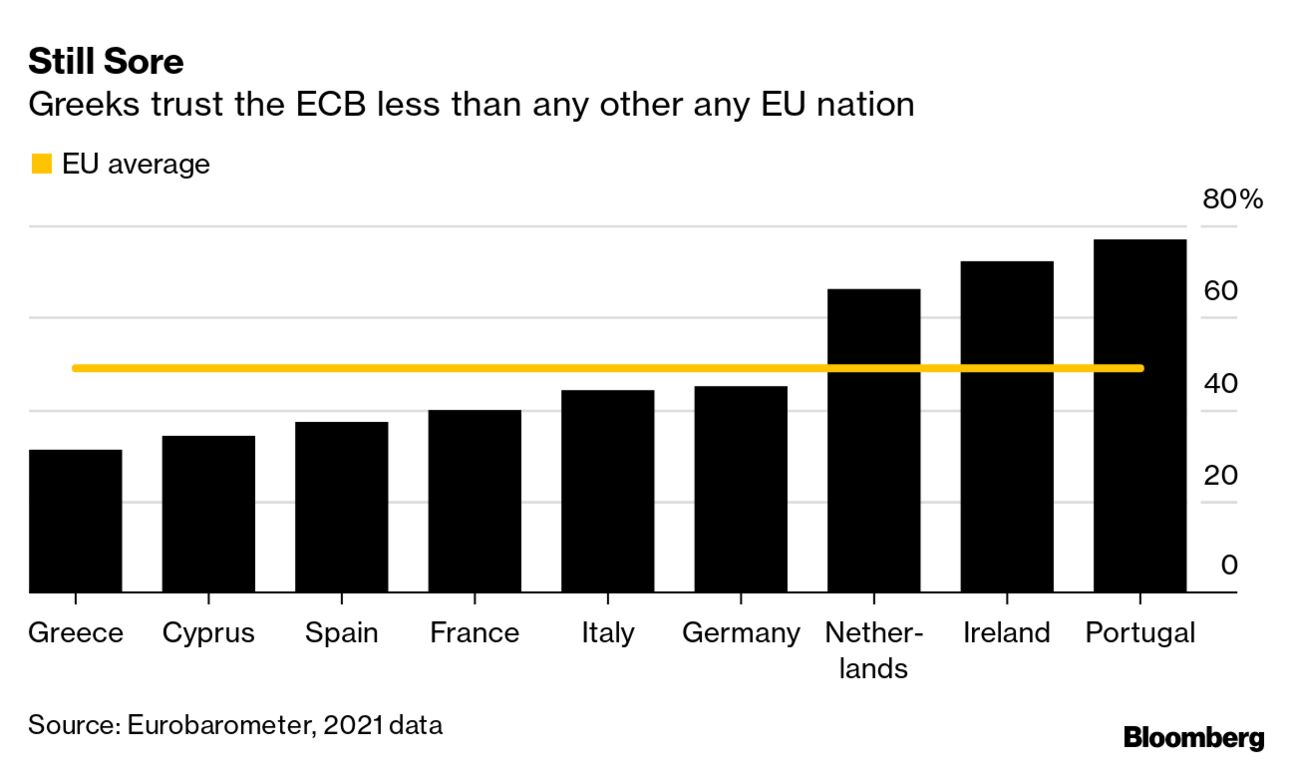
Two other hopefuls aren't so fortunate. Romania's bid for membership has been hampered by internal squabbling, evidenced by the highest turnover of governments in the EU. Bulgaria, the bloc's poorest country, wants to join in 2024, but now faces attempts to delay the process from junior coalition partners. In any case, wary European Central Bank officials aren't convinced that its economy and scandal-plagued banking system are ready for currency prime time. Applicants know that membership is no panacea. Just look at the euro zone's struggle with inflation, where the lowest and highest rates of price growth in different countries are now wider than ever. And as the ECB's current debate shows, signing up also means accepting a common monetary policy stance determined by the majority. Finally, while membership has its privileges, it also brings obligations, as Greeks learned to their cost during the sovereign debt crisis of the past decade. Surveys of trust in the ECB show they're still bitter. Yanis Varoufakis, Greece's finance minister for a few troubled months in 2015, once ruefully cited the Eagles to describe what it's like being a member of the euro. "The last line in Hotel California explains where we are: you can check out any time, but you can never leave," he said.
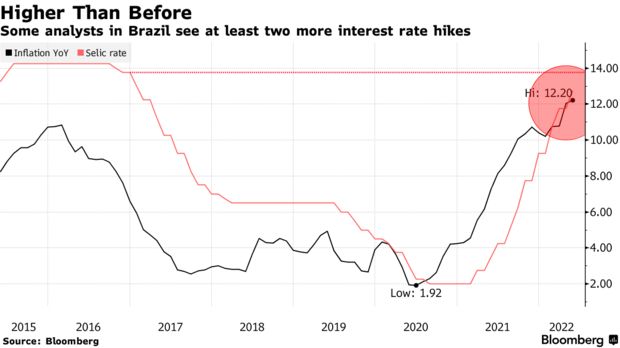
— Craig Stirling Brazil's central bank might have tried calling time on interest-rate hikes, but the biggest Latin American economy's struggle to tamp down inflation continues. Economists are once again lifting their projections for the benchmark policy rate. Banco Central do Brasil has already boosted its benchmark by 10.75 percentage points since March 2021, among the biggest moves globally. Observers are now starting to pencil in the key rate heading to 14% or more from the current 12.75%, Maria Eloisa Capurro and Josue Leonel report here. It's a particularly fraught moment for President Jair Bolsonaro, who's battling to win re-election in October. Already falling further behind former President Luiz Inacio Lula da Silva, the latest key poll showed nearly a third of the incumbent's supporters could change their votes if inflation keeps heading higher. "Current inflation will keep surprising central bankers, and so will inflation expectations," says Lucas Vilela, an economist at Credit Suisse. The central bank's plan, which was to deliver a final hike this month, "will have to change," he said. - Jobs slowdown | Watch out for the monthly the US labor report due today. Economists expect an increase in payrolls of 320,000, the smallest gain in a year, as Federal Reserve tightening takes effect.
- No brakes | Calling expectations for 50-basis-point rate increases in July and August reasonable, Fed Vice Chair Lael Brainard also said she didn't see a case for pausing the hikes from September.
- Slick supply | Saudi Arabia gave a nod to US diplomatic pressure to boost global oil supply, allowing for a boost equivalent to about 0.4% of global demand over July and August that should give a bit of inflation relief.
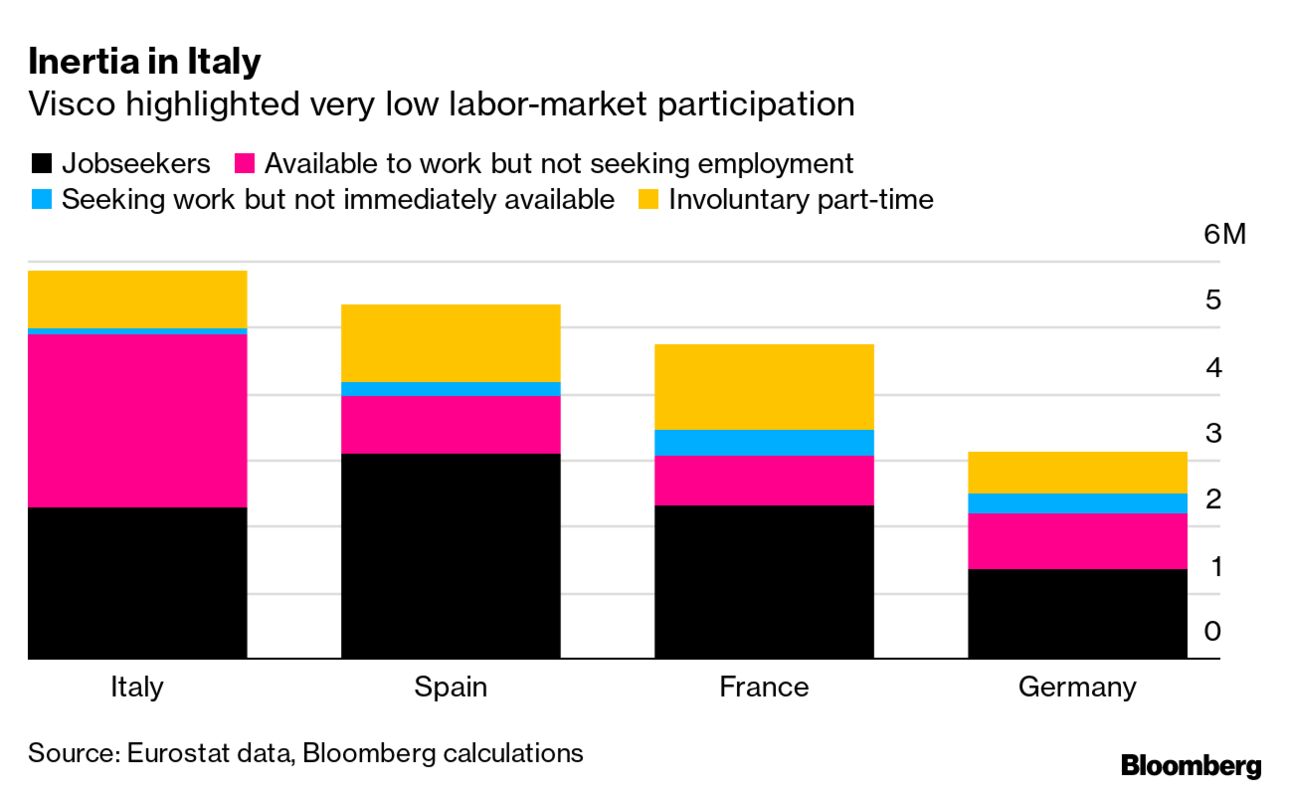 - Giving up | Italy has one of the lowest levels of labor participation in Europe, which may prove among the trickiest challenge for the EU to fix with its 200 billion-euro Recovery Fund effort.
- Candidate inflation | Runaway inflation is the most urgent threat to Turkish President Recep Tayyip Erdogan's 20-year hold on power ahead of elections next year, with price gains projected to have accelerated almost 75% last month.
- Inflation winner | Soaring commodities prices are a happy development for Argentina's government, which expects record export levels this year of about $90 billion in goods, marking at least a 15% jump from 2021.
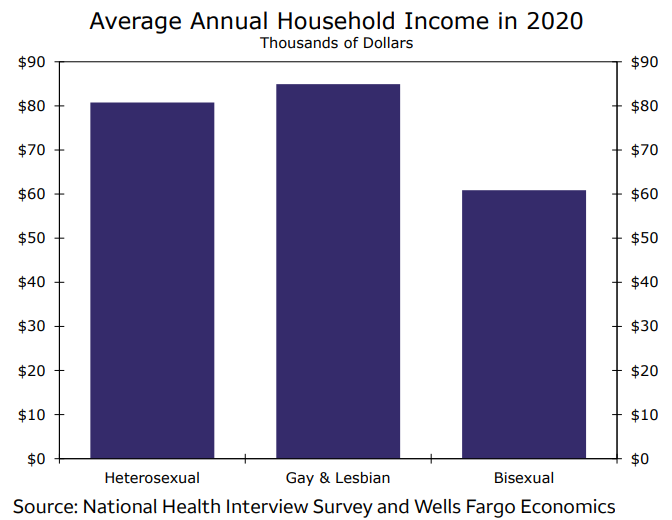
The LGBTQ+ community's economic weight in the US is already notable, and set to expand, according to Wells Fargo economists. - Reliable estimates from public surveys put the community's share of the overall population at around 5% to 8% currently, Jay Bryson and Nicole Cervi write in a note this week.
- They tend to be younger than the overall average. The "vast majority" are under 40, so peak earnings years are yet to come.
- Gay, lesbian and bisexual individuals also have above-average levels of education — almost 21% have a master's, professional or Ph.D. degree.
- The number of people identifying as LGBTQ+ is growing faster than the overall population.
"The spending potential of the LGBTQ+ community should continue to grow, and likely at a faster rate than overall household spending," the duo wrote. "Businesses, especially those that cater to the savings and discretionary spending needs of American households, should take note of the growing economic influence of the LGBTQ+ community."
You can sign up for our Equality Newsletter here.
Read more reactions on Twitter
| 








No comments:
Post a Comment