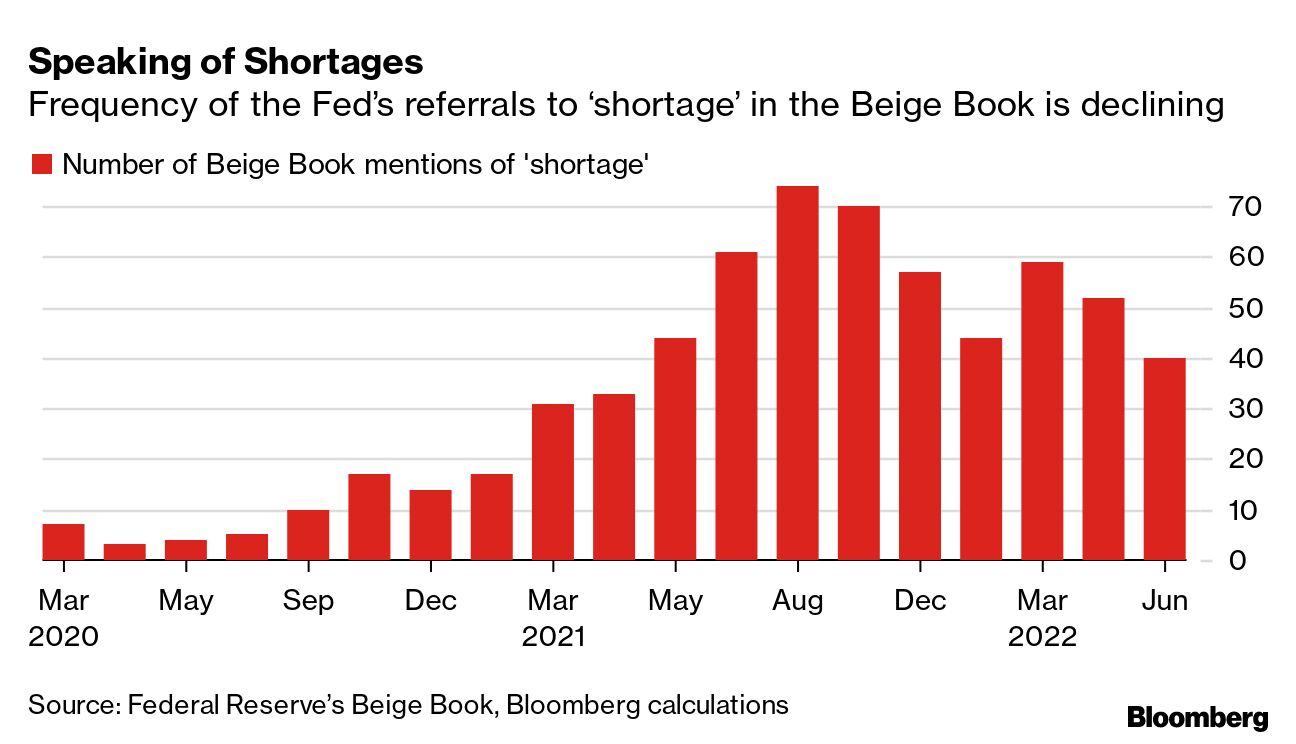
| Supply-chain constraints continue to rank among the top headaches for US businesses, two reports showed, generating more anxiety about the outlook for the economy. The Federal Reserve's Beige Book, covering economic conditions from mid-April through May 23, showed that contacts in all of the Fed's 12 districts spanning Boston to San Francisco grappled with supply-chain issues that either limited their productive capacity, raised costs, muddled transport plans, curbed orders, crimped expansion or added to backlogs. Eight districts reported that expectations of future growth among their contacts had diminished, while contacts in three districts "specifically expressed concerns about a recession," the Fed said. (For Jonnelle Marte's full story, click here.) Despite the impediments, US manufacturing activity unexpectedly increased in May as new orders and output growth accelerated, according to Institute for Supply Management. Its gauge of factory activity climbed to 56.1 last month from 55.4 in April. (For more, read Vince Golle's piece here.) However, average lead times for capital expenditures grew to 178 days, the highest in data back to 1987, the ISM said. Production-material lead times eased slightly to 99 days from a record 100 days a month earlier. Companies are taking different approaches to dealing with the scarcity and logjams, according to the Beige Book: - Some are opting for alternatives that come at higher prices, with the Atlanta Fed district reporting that a few contacts shifted to shipping freight by air, though it was much more costly. In the Cleveland Fed area, an airport contact reported a recent double-digit increase in air cargo volume.
- Other firms are sitting out this round — a salvage store in the Boston Fed district that enjoyed a better-than-expected increase in recent sales rejected some potential inventories over high freight costs.
- Concerned about not having access to stock, several companies in the Cleveland Fed's district temporarily moved away from just-in-time inventory management to stockpiling supplies where they could. A San Francisco Fed manufacturing contact "mentioned maintaining approximately three months of additional inventory of supplies."
- In the Kansas City Fed's patch, some importers of consumer products slightly reduced their orders for goods to be delivered later in the year because of concerns that lockdowns in China would increase input prices and worsen supply-chain issues.
- Freight brokers in the Atlanta region reported "a slight pullback" in the van-sector spot market — partly due to a shift away from goods purchases towards spending more on services — but demand for flatbeds was steady as housing and construction activity remained high.
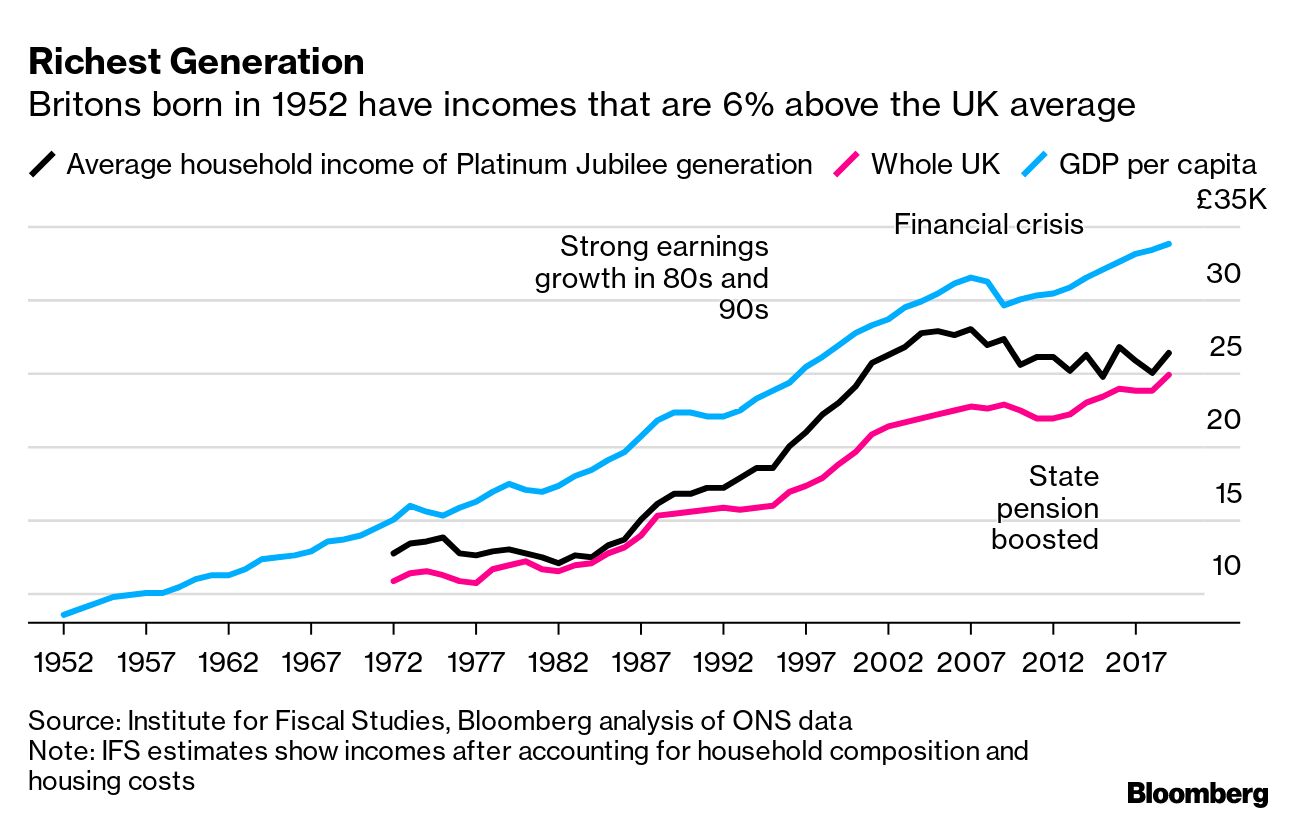
For retailers, ensuring there's sufficient, appropriate stock on hand when it's needed while navigating snarled logistics networks mean they "have a lot to get right," Goldman Sachs analyst Kate McShane said on a call with reporters Wednesday. "If we're going into an environment where we're going to see a little bit less demand because of how the consumer's feeling and maybe a little bit more supply because these retailers are still trying to chase categories because of the congested supply chain, it does increase the risk for markdowns in the back half of the year," McShane said. —Ana Monteiro in Washington Making It Reign | The UK economy of 2022 is barely recognizable from the one that greeted Queen Elizabeth II 70 years ago. Butter, bacon and meat were rationed in 1952 as World War II cast a long shadow over an economy that was just a fifth of current size. Money was counted in shillings, men wore ties even on days off and pub goers could enjoy pints of beer for just 6p. Today, suits and cash are both a far less familiar sight in the British pub, while wine and gin have both become much more popular tipples. Houses that once could be bought on one income now require two. (Check out the full story here.) - Chip relief | Daimler Truck sees promising signs of moving past the prolonged chip shortage that has beset manufacturers globally, the head of the company's Mercedes truck brand said.
- Change up | The $12 billion plan by the Oakland Athletics to build a baseball stadium and real estate development on a parcel of industrial waterfront owned by the Port of Oakland has faced any number of challenges and opposition since it was proposed in 2018.
- Hitting brakes | Surging battery prices and shortages of metals and materials are likely to last for some time, Toyota's chief scientist warned, trends that could weigh on the world's embrace of electric vehicles.
- Changing the channel | Trade disruptions from China's lockdowns and the war in Ukraine are seen doing for Southeast Asia what the US's spat with Beijing couldn't meaningfully do — redistribute supply chains, according to a new report.
- Pain endures | Shanghai began lifting its lockdown in late May, but for thousands of small and midsize companies the reckoning has just begun. Only now are they able to properly account for the damage that the nine weeks of restricted movement caused to their operations and ambitions.
- Formula flight | The US will import the equivalent of 3.7 million bottles of infant formula from the UK via the latest emergency flights aimed at easing a shortage spurred by a plant shutdown.
- Next level | The US and Taiwan unveiled a fresh blueprint to deepen their trade relationship focusing on ending forced labor and "harmful non-market policies and practices" as Washington and Beijing vie for sway in the region.
- Stephanomics podcast | In this week's episode, Mexico City reporter Maya Averbuch explains what's at stake economically and politically as the US hosts the Summit of the Americas next week in Los Angeles.
 | - Inflection point | Bloomberg Intelligence senior transport industry analyst Lee Klaskow expect transpacific container rates rates to slowly decline until exports flow out of China again once the economy emerges from the lockdowns.
- Damage limited | European leaders are pressing forward with an oil embargo, but a gradual phase-in also gives Russia time to adjust, tempering the impact on GDP and President Vladimir Putin's budget, Bloomberg Economics writes.
- Use the AHOY function to track global commodities trade flows.
- Click HERE for automated stories about supply chains.
- See BNEF for BloombergNEF's analysis of clean energy, advanced transport, digital industry, innovative materials, and commodities.
- Click VRUS on the terminal for news and data on the coronavirus and here for maps and charts.
Don't keep it to yourself. Colleagues and friends can sign up here. We also publish the New Economy Daily, a briefing on the latest in global economics. For even more: Follow @economics on Twitter and subscribe to Bloomberg.com for unlimited access to trusted, data-driven journalism and gain expert analysis from exclusive subscriber-only newsletters. How are we doing? We want to hear what you think about this newsletter. Let our trade tsar know. | 







No comments:
Post a Comment