| By Ira Boudway Last month, as part of our series on how to speed up the transition away from fossil fuels in the wake of Russia's invasion of Ukraine, I wrote about how protected bike lanes are the single best way to encourage the use of electric bikes (and traditional ones) for daily transit. As a rule, people don't ride bikes of any kind where they don't feel safe, so infrastructure is paramount. But bike lanes alone are not always enough. Take, for example, Portland. The city has been steadily adding to its network of greenways and bike lanes for decades, yet the share of vehicle miles traveled by bike has hovered stubbornly around 7%. In recent years, it's even begun to erode, taking the city further away from its climate goal of getting to 25% mode share for bikes by 2035. "They've done an amazing amount of bike infrastructure development in the city," says John MacArthur, sustainable transportation program manager at Portland State University's Transportation Research and Education Center (TREC), "And we're still bumping against the 7%." What else can be done to break through? MacArthur believes e-bikes themselves can be a catalyst. The boost of the electric motor helps to lower barriers that stand in the way even when people have access to safe streets — shortening the time and effort that it takes to make long trips, making it easier to haul cargo, and allowing riders to arrive at their destination without breaking a sweat. But that additional utility comes at an additional expense. According to a white paper published last month by MacArthur and three other researchers, the average cost of a conventional bike purchased at a specialty shop in the US is $753, while the average cost for commuter or leisure e-bikes is $2,600. For cargo e-bikes, the average sticker price is a whopping $5,000. Policymakers looking to unlock the power of e-bikes and help push transit cycling into the mainstream, says MacArthur, should consider shouldering some of this expense. The Build Back Better spending bill that passed the House last November included a tax credit of up to $900 for the purchase of an e-bike, but the legislation's death in the Senate left slim hope of seeing a federal incentive anytime soon. The action now is at the state and local level. In their white paper, titled "Using E-Bike Purchase Incentive Programs to Expand the Market," MacArthur and his co-authors identify more than 40 active and pilot programs in the U.S. and Canada, with incentives ranging from $100 to over $1,000. One recently launched program in Denver, which provided rebates of up to $1,200 for income-qualified buyers, reached budget capacity in less than three weeks. MacArthur is planning a survey that would help inform policymakers about how much consumers say they are willing to pay for different types of e-bikes. In the meantime, he says, a good target is to bring the cost of an e-bike down to that of a well-built conventional bike, just as incentives for electric cars have aimed at achieving price parity with comparable combustion engine models. "At a lower cost, people are more willing to try it," he says of e-bikes. "And we found in our research is that once people try them, they stick." If you're a Bloomberg Green subscriber and want to start getting our Hyperdrive newsletter about electric vehicles, sign up here. If you're a Hyperdrive subscriber and want to start getting our daily Green newsletter, sign up here. Subscribe to Bloomberg.com for unlimited access to breaking news on climate and energy, data-driven reporting and graphics, Bloomberg Green magazine and more. As Americans grow more fixated on massive vehicles – such as pickup trucks like the Chevy Silverado HD or the Ford F-250, both hugely popular as passenger vehicles – how can city or state leaders contend with the additional dangers these vehicles bring to dense urban neighborhoods? A proposal in the District of Columbia could offer one possible solution: Washington, D.C., is poised to require owners of vehicles weighing over 6,000 pounds to pay an annual $500 vehicle registration fee, almost seven times the cost to register a modest sedan. As David Zipper recently reported for City Lab, no other US jurisdiction has created such a forceful financial disincentive. 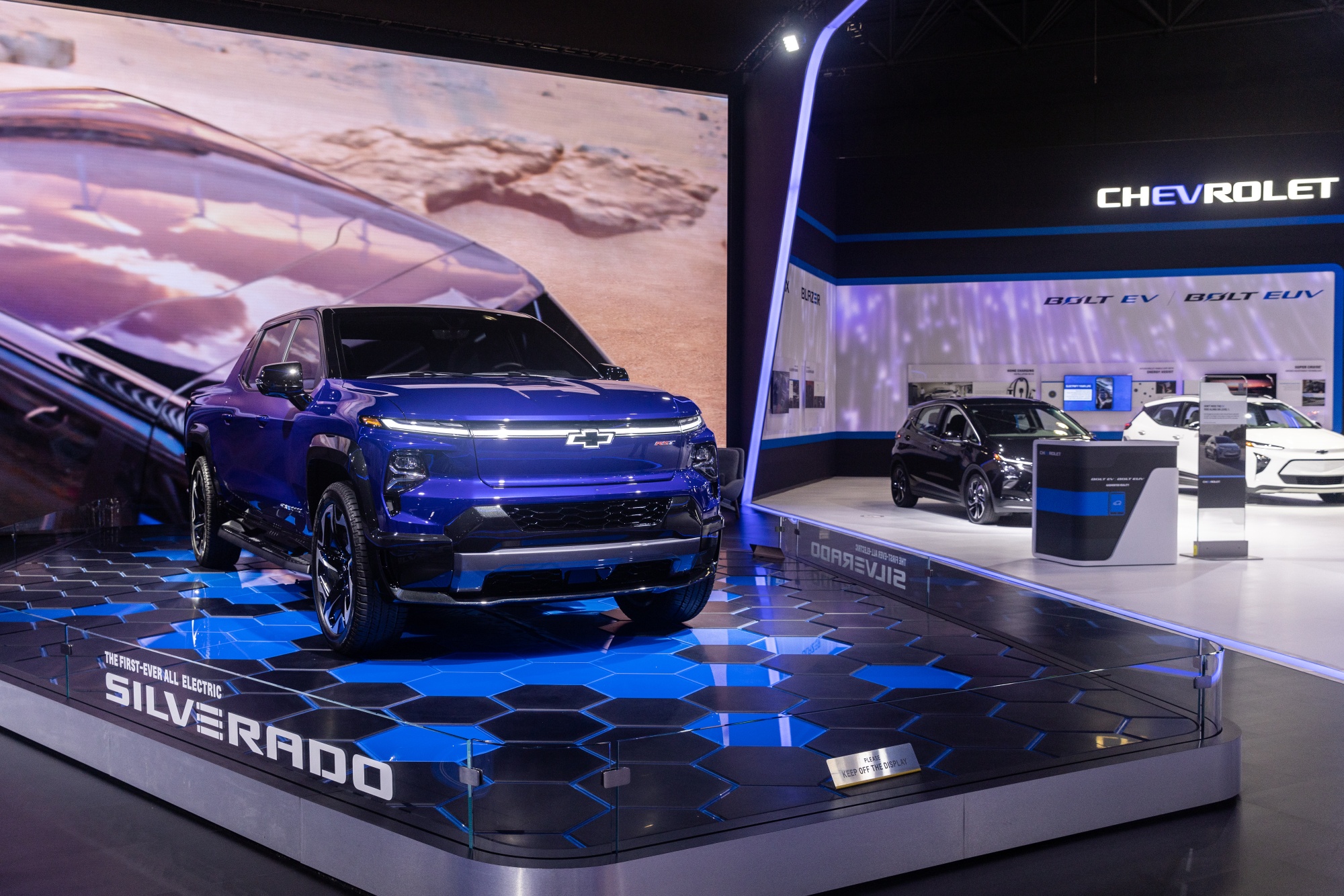 A Chevrolet Silverado EV RST all-electric pickup truck during the 2022 New York International Auto Show. Photographer: Jeenah Moon/Bloomberg | 







No comments:
Post a Comment