| Feel like your local Covid case counts are gaslighting you? Like the numbers seem piddling compared with your sense that nearly everyone you know has tested positive lately? You're not wrong. Epidemiologists agree that mass home testing, with few positives reported to health authorities, leads to a dramatic undercount of cases. But just how dramatic? How much should we multiply the official case counts by to get a good sense of local levels? The short answer is: No one knows for sure, and that multiplier will vary. But at this point, if you see a daily local case count of, say, 1,000, some data suggest it's reasonable to figure the actual count is likely somewhere between 3,000 and 31,000. (A very big difference, we should note.) That 31,000 comes from a preprint — a study not yet peer-reviewed and published — led by Denis Nash, a professor of epidemiology at the City University of New York. It surveyed more than 1,000 New York City adults and concluded that more than one-fifth had the virus in late April and early May. 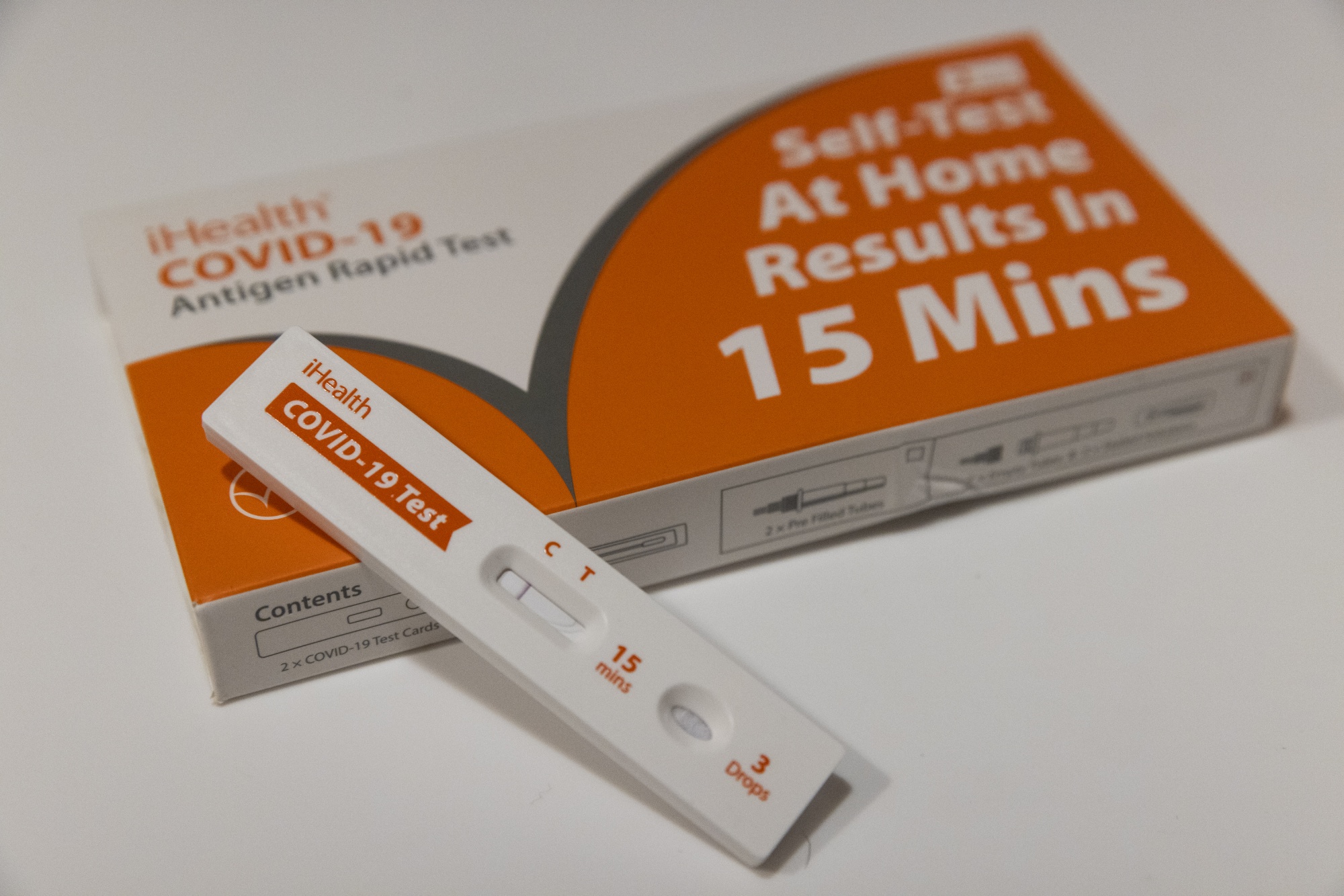 Home testing has led to a dramatic undercount of actual Covid cases, experts say. Photographer: Angus Mordant/Bloomberg That's about 31 times the official count, Nash estimates — and that multiplier seems to be growing. A similar survey that focused on the early omicron wave in January found that actual prevalence was only three or four times the official case count, he said. "The case count, which we always knew underestimated the true burden of infection — actually vastly underestimates it — and the underestimation appears to be getting even worse with time," Nash said. "The concern is that it really undermines our ability to know when we're entering a surge, so that people can be informed, including our decision-makers." Nationwide, official new case counts are hitting weekly averages of about 100,000. That's less than one-eighth of the peak counts during the omicron-driven spike in January. But John Brownstein, an infectious disease epidemiologist and Boston Children's Hospital's chief innovation officer, says the true prevalence "could be three times bigger" or more.
"It's like a hidden wave that we're missing because of the fact that home test data is not being reported," he says. Along with those unreported home tests, he says, it's important to also factor in those who never test at all. For starters, as many as half of Covid cases are asymptomatic. Brownstein — who was himself home with Covid when we talked — says the impression that "everyone has Covid" could be at least a bit skewed if you're a member of a certain crowd. Some evidence suggests the current surge is particularly strong among people who could work from home during previous surges. The fundamental virus-avoidance rules — vaccination, masking, distancing — haven't changed, he says, but "if you really want to avoid infection, you have to double down on all those things."
But, ultimately, he added: "This virus is going to eventually get everyone." — Carey Goldberg | 







No comments:
Post a Comment