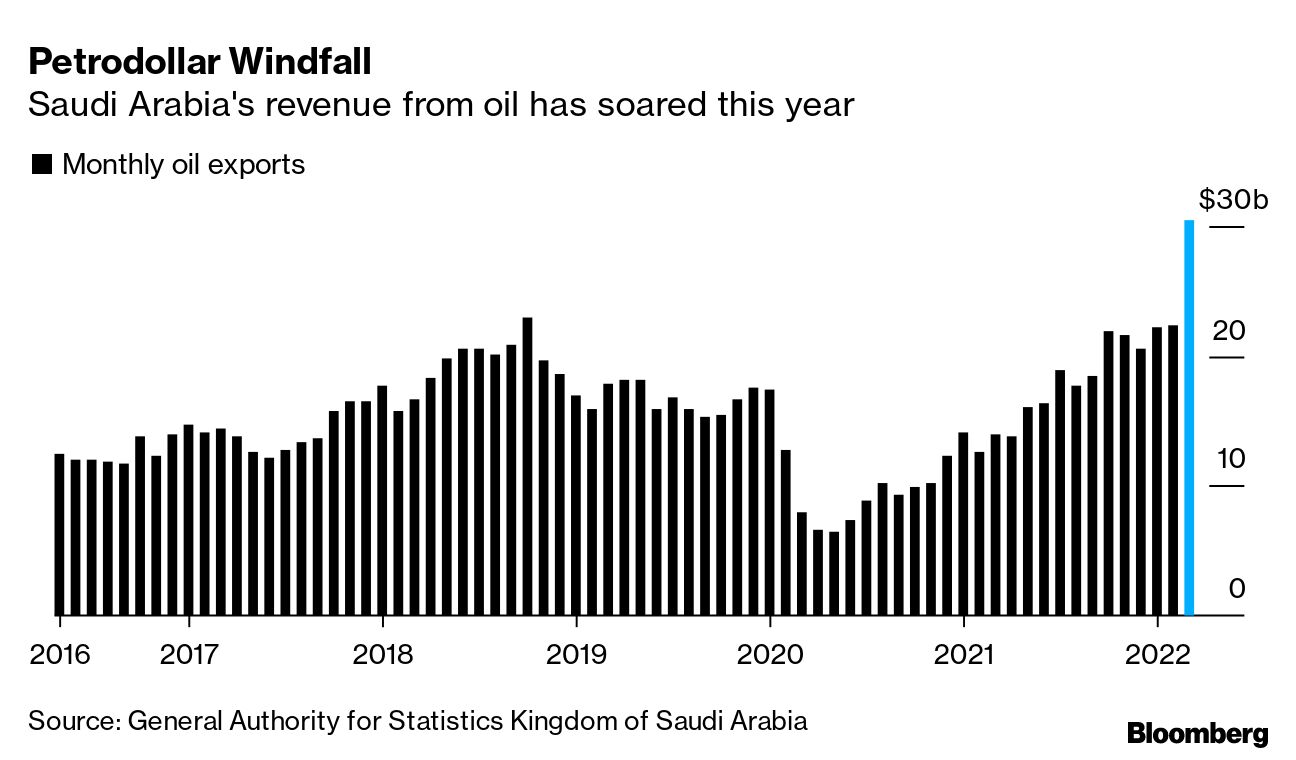
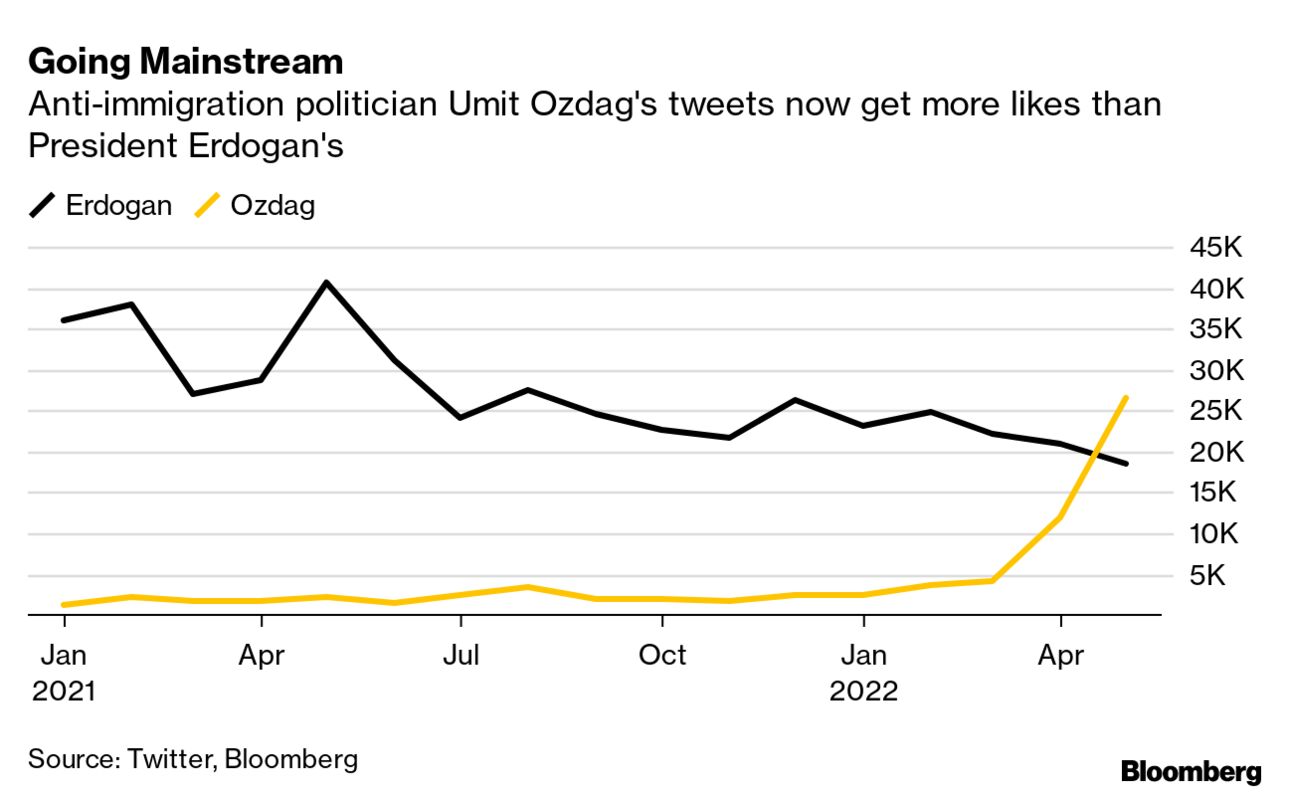
| Investors and economists watching Saudi Arabia's economy over the past few months have been puzzling over something — where is the kingdom's oil windfall going? With crude prices over a $100 a barrel and production at over 10 million barrels a day, the country is in a rare sweet spot. The kingdom is making about $1 billion from oil exports every day, putting it on track to record its first budget surplus in nearly a decade and the first since the rise of Crown Prince Mohammed bin Salman. How he spends it will be closely watched. The answer - he won't. Or at least not yet. Finance Minister Mohammed Al-Jadaan said this time the surplus will accumulate in a government current account held at the central bank until the end of the year. After that, it'll be used to replenish foreign currency reserves with any extra potentially transferred to sovereign wealth funds - including the powerful Public Investment Fund that's become the main engine of state-investment in the domestic economy. It's a key part of Prince Mohammed's plan to break the boom-bust cycle that plagued Saudi Arabia in the past. Previous budget surpluses were spent on public sector salaries, large infrastructure projects, and big chunks of it were put into low yielding but safe investments like US treasuries. Oil surpluses created an economy whose fortunes rose and fell with the oil price, rather than a rainy day fund. Prince Mohammed wants to shake off the oil curse, but avoiding it will be tough. Global inflation is rising, the Saudi banking system is struggling with the tightest liquidity conditions in years, and external investor backing for the Prince's biggest initiatives to wean the economy off oil has yet to arrive. The temptation when billions of dollars are flooding into government accounts will be to try and tackle these problems by throwing money at them. Turkey's leading anti-immigration opposition politician Umit Ozdag now gets more "likes" than President Recep Tayyip Erdogan on Twitter, underlining the firebrand's outsized effect on political debate ahead of elections next year. The mood in Turkey is turning against hosting the world's biggest refugee population as an inflation surge erodes living standards. Commodities have been on a tear at a time when stocks, bonds, cryptocurrencies and other assets have collapsed. But commodities bulls may soon regret their enthusiasm as both demand and supply forces look like they will soon start to depress prices, writes Gary Shilling for Bloomberg Opinion. Saudi Arabia says it's done all it can for the oil market. The energy crisis is "much more complex" than pumping more crude, Foreign Minister Prince Faisal bin Farhan said. The United Arab Emirates shipped rare cargoes of oil toward Europe, where crude buyers are snubbing imports from Russia. This is the first such delivery since May 2020. Turkey's ruling party has moved a draft bill seeking prison terms of as much as three years for the spread of "disinformation" and "fake news" on digital platforms. Government critics say the move would enable censorship and stifle dissent. Turkey is also crafting legislation that would establish greater control over the cryptocurrency market and possibly impose a tax on some transactions involving digital assets.
President Recep Tayyip Erdogan doubled down on his unorthodox economic views saying only "illiterates or traitors" link interest rates to inflation. The comments came a day after Turkey's central bank kept rates unchanged despite high inflation and a falling lira. Israel stepped up its inflation fight with a larger-than-expected 40 basis point rate hike. Consecutive rate increases are a rarity in the country. Moody's lowered Egypt's outlook to negative citing its narrowing foreign exchange buffer. The North African nation now risks having its credit rating downgraded for the first time since 2013. - Saudi Arabia reserves data on May 31
- Purchasing Mangers' Index data for Saudi Arabia and UAE on June 5
The football World Cup in Qatar is set to boost Gulf tourism. 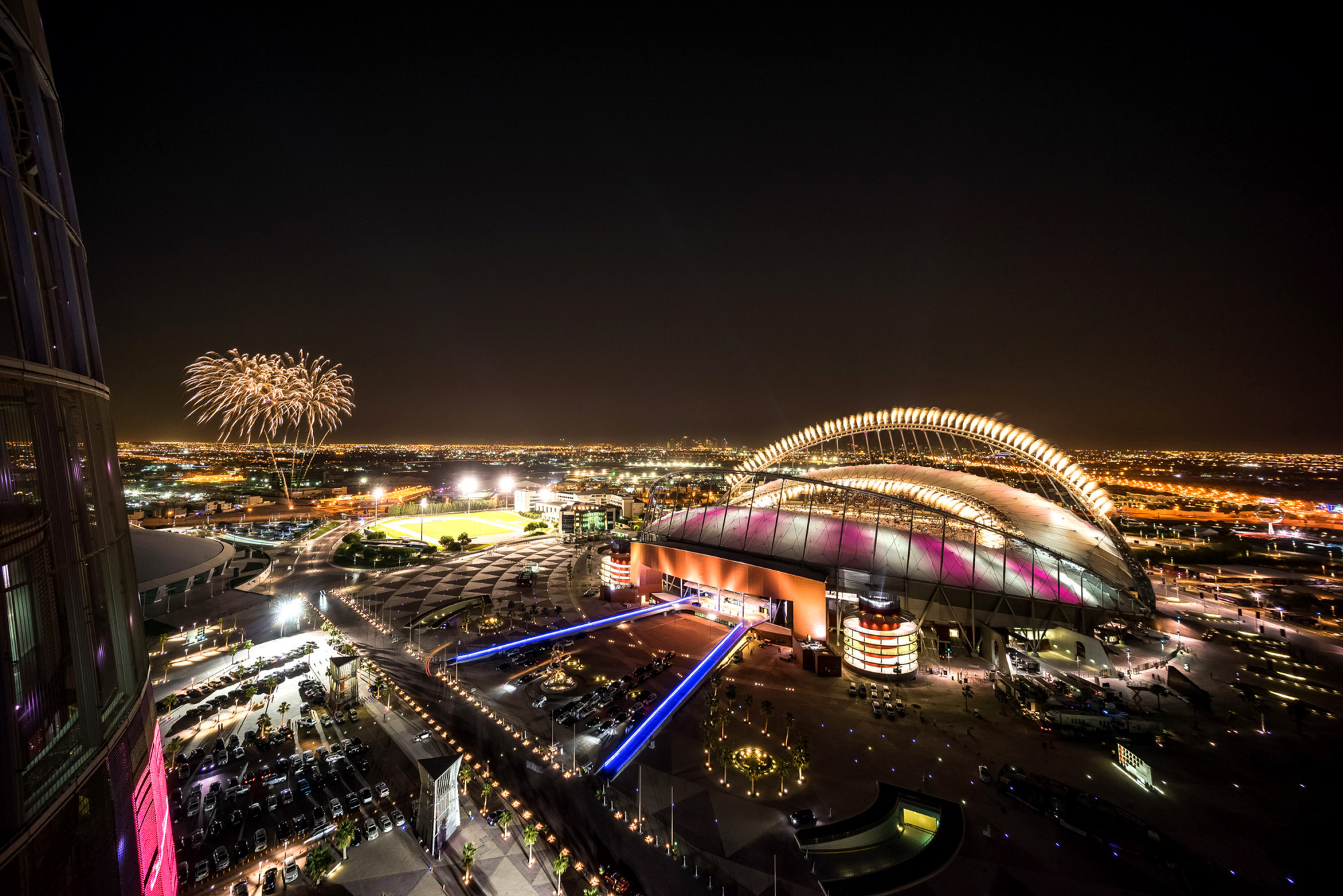 Khalifa International Stadium in Qatar. Photographer: Handout/Getty Images Europe Some of the leading airlines in the region announced a partnership to set up match-day shuttle flights between Doha and major Middle Eastern cities for fans to attend games and depart the Qatari capital the same day. The move will alleviate concerns over the lack of affordable accommodation in Qatar and benefit regional tourism hubs, including Dubai. About 1.5 million fans, a little more than half the population of Qatar, are expected to descend upon the tiny Gulf state during the event, which
starts in November, and runs for a month. | 







No comments:
Post a Comment