| Read in browser | ||||||||||||||
 Verdicts announced last week against Meta and Google present an opportunity to change young people's online lives. Kurt Wagner, who covers social media for Bloomberg News, writes today about what might come next. Plus: AI gig workers vent, confess and role-play with strangers, all to help machines learn how to sound human (free link!). If this newsletter was forwarded to you, click here to sign up. US politicians have spent years talking about regulating social media companies, or adding laws to protect young people who use their products. That talk has mostly been, well, talk. But two trial verdicts last week—one against Meta Platforms Inc., the other against Meta and YouTube parent Google—may well be a tipping point. In Los Angeles, a jury found that Meta and Google created addictive products for young people and failed to warn them about the risks. In New Mexico, Meta was found to have misled teens about the safety of its services, even when it knew Facebook and Instagram were regularly used by sexual predators. Meta was hit with $375 million in penalties in that case. Those verdicts, on back-to-back days, are reverberating around the social media industry. They're as damaging to these companies' reputations as they are to their pocketbooks, and social media is now in the same conversation as Big Tobacco, an industry that had its own reckoning with cigarette addiction suits in the 1990s. There are also thousands of lawsuits waiting in the wings alleging similar harms to young people. 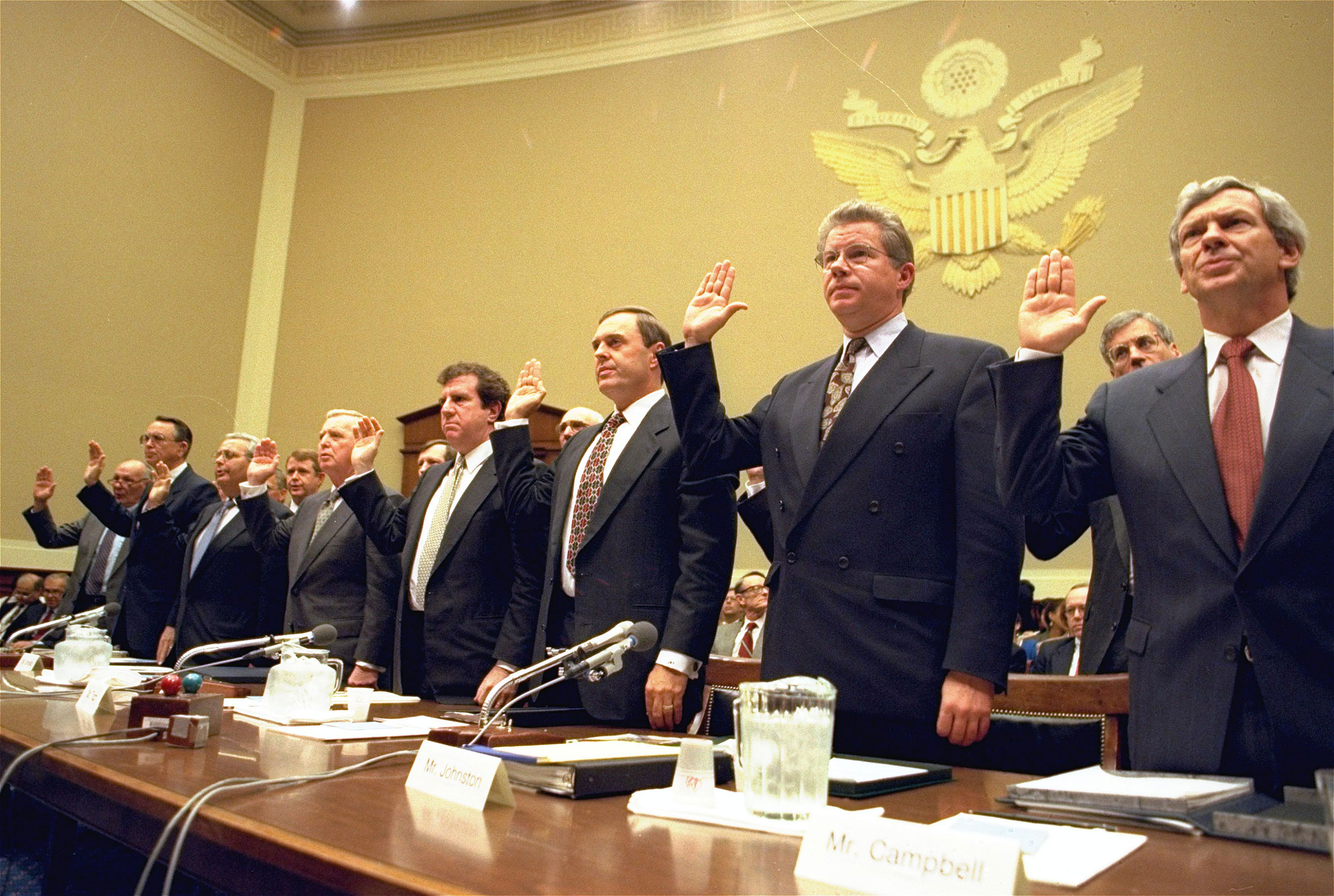 Tobacco company executives testifying before a US House subcommittee in 1994 about the content of cigarettes. Photographer: John Duricka/AP Photo To some of the industry's biggest critics, these verdicts delivered a moment of reckoning that was a long time coming. "This is a real watershed in terms of holding social media companies accountable," New Mexico Attorney General Raúl Torrez said in an interview with Bloomberg News. The trials were able to "pull the curtain back" on the harms these platforms create and what their executives knew, he added. What happens next could shape how this industry operates over the next decade. Meta and Google could voluntarily change the way their products work to try to sidestep future litigation, something they've already introduced with parental controls and feature restrictions for teens. They may also succeed in getting the verdicts thrown out on appeal; both have pledged to fight the trial results in Los Angeles, and Meta also plans to appeal in New Mexico. But it's also possible that those lawmakers I mentioned—the ones who've spent years doing very little to hold social media companies accountable—may finally use this momentum to pass real legislation. "Congress always acts slowly until they act extremely quickly," Sacha Haworth, executive director at the industry watchdog Tech Oversight Project, said last week. Oftentimes "there needs to be a galvanizing moment for Congress to act—and this is that moment." 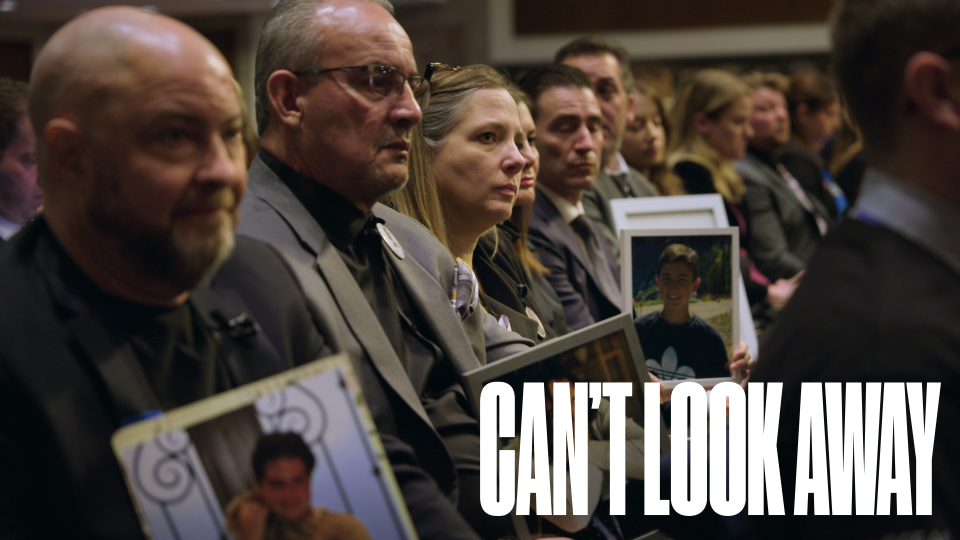  Watch: The documentary Can't Look Away: The Case Against Social Media One path forward may be restricting access to these services for young people. Australia has already implemented a social media ban for those under 16. About a dozen other countries in Europe are considering similar restrictions, as are several US states. Even in California, Meta and Google's home state, legislators recently proposed an under-16 ban on social media. The fact that two separate juries found social media products to be unsafe for young people is only going to add fuel to that fire. Republican Senator Marsha Blackburn of Tennessee, who's spent years trying to pass a law to create more parental controls and oversight for social media, called the verdict a "monumental victory." "Big Tech has done everything in its power to blame parents and children instead of taking responsibility for designing their products to addict and harm children," she said in a statement, urging Congress to pass her bill, the Kids Online Safety Act. Congress, of course, has had years to make moves and hasn't. Expecting something to change in a midterm election year with a slumping economy and a war in the Middle East may not be realistic. But it's also clear that momentum is growing, and not in a way that Meta, Google and others in the industry are excited about. Latest on the Iran War In Brief
Teaching Computers to Talk Illustration: Aaron Fernandez for Bloomberg Businessweek Late last year, Gina found herself pouring her heart out to a pastor on a virtual call. She was plumbing the depths of her most difficult memories—her breakups, her childhood trauma, her relationship to her father, who'd been forever changed by his time fighting in the Vietnam War. The pastor sat and listened, asked questions and patiently counseled Gina. He suggested some self-care, perhaps a spa day. "He actually gave me some really good advice," she says. "It took me aback." The man on Gina's screen said he was a pastor, but he wasn't her pastor. See what Issie Lapowsky found out about who he was—and what that has to do with AI training (🎁). To the Moon1972 That's the year NASA last sent astronauts to the moon. The Artemis II mission scheduled for this week will mark humanity's return to the lunar vicinity, as a step toward building a base where humans can live and work. They're Mallmaxxing"It's just like more of a screen-free activity. You're, like, finding things and you're so amazed by all the stuff in the stores. I'm not really on my phone unless I'm in line or waiting for something." Sahara Lynn Barnes 15-year-old from North Philadelphia Against all odds, the mall is once again winning over American teens like Sahara: They're getting their ears pierced; they're buying jewelry; they're trying on outfits that make their parents shudder; they're even learning to stand in line and hang out IRL.  Watch: Gen Z Is Bringing Back The Mall Play Alphadots!Our daily word puzzle with a plot twist.  Today's clue: Lack of balance? More From BloombergLike Businessweek Daily? Check out these newsletters:
Explore all Bloomberg newsletters. We're improving your newsletter experience and we'd love your feedback. If something looks off, help us fine-tune your experience by reporting it here. Follow us
You received this message because you are subscribed to Bloomberg's Businessweek Daily newsletter. If a friend forwarded you this message, sign up here to get it in your inbox.
|
Monday, March 30, 2026
Will lawmakers ban teens from social media?





Subscribe to:
Post Comments (Atom)
Important Message About Your FutureProof 2026 Registration
Hello, Eric Fry checking in with you… I'm thrilled to see you're al...

-
PLUS: Dogecoin scores first official ETP ...
-
Bloomberg Evening Briefing Americas View in browser Who's paying for Donald Trum...


No comments:
Post a Comment