Tuesday, March 10, 2026

Trump tries a TACO again

Oil prices seemed to spook the president
View in browser
Bloomberg

The White House account on X this afternoon called Operation Epic Fury in Iran a "RESOUNDING success" even as the Pentagon says it will not relent on its assault. Bloomberg Businessweek national correspondent Joshua Green writes today about the conflicting messages out of Washington. Plus: An anesthesiologist is pushing for transparent surgery pricing (free link), and China's Gen Z traders are pursuing high-growth stocks.

If this email was forwarded to you, click here to sign up.

Over the weekend, I asked an anxious Trump adviser the questions on everyone's mind: How long will the US attack on Iran carry on? And what's the White House's exit strategy?

My source had no clue but worried that President Donald Trump's chest-thumping declaration on Friday—that there'd be "no deal with Iran except UNCONDITIONAL SURRENDER!"—meant the US could be in for a protracted, messy struggle. With gallows humor, the source added it wasn't American allies but equity markets that might ultimately save Trump and the country from another Middle East quagmire.

The notion that Wall Street is among the few forces capable of constraining Trump isn't exactly new. In his second presidency, Trump has shown a pattern of taking maximally aggressive actions on issues such as tariffs—most notably last year's "Liberation Day"—only to abruptly reverse course when markets react badly. His hasty retreat from that global tariff regime, which sent the S&P 500 down 12% in the week after its April 2 rollout, prompted Financial Times columnist Robert Armstrong to coin "TACO," short for "Trump Always Chickens Out."

On Monday afternoon, we experienced what looks to me like an Iranian TACO. After initially taking the airstrikes in stride, the S&P 500 slid late last week, and then dropped steeply on Monday morning. More worryingly, with the Strait of Hormuz all but closed and refineries shutting down, oil prices shot up above $110 a barrel during the trading day. This carried through almost immediately to gasoline prices.
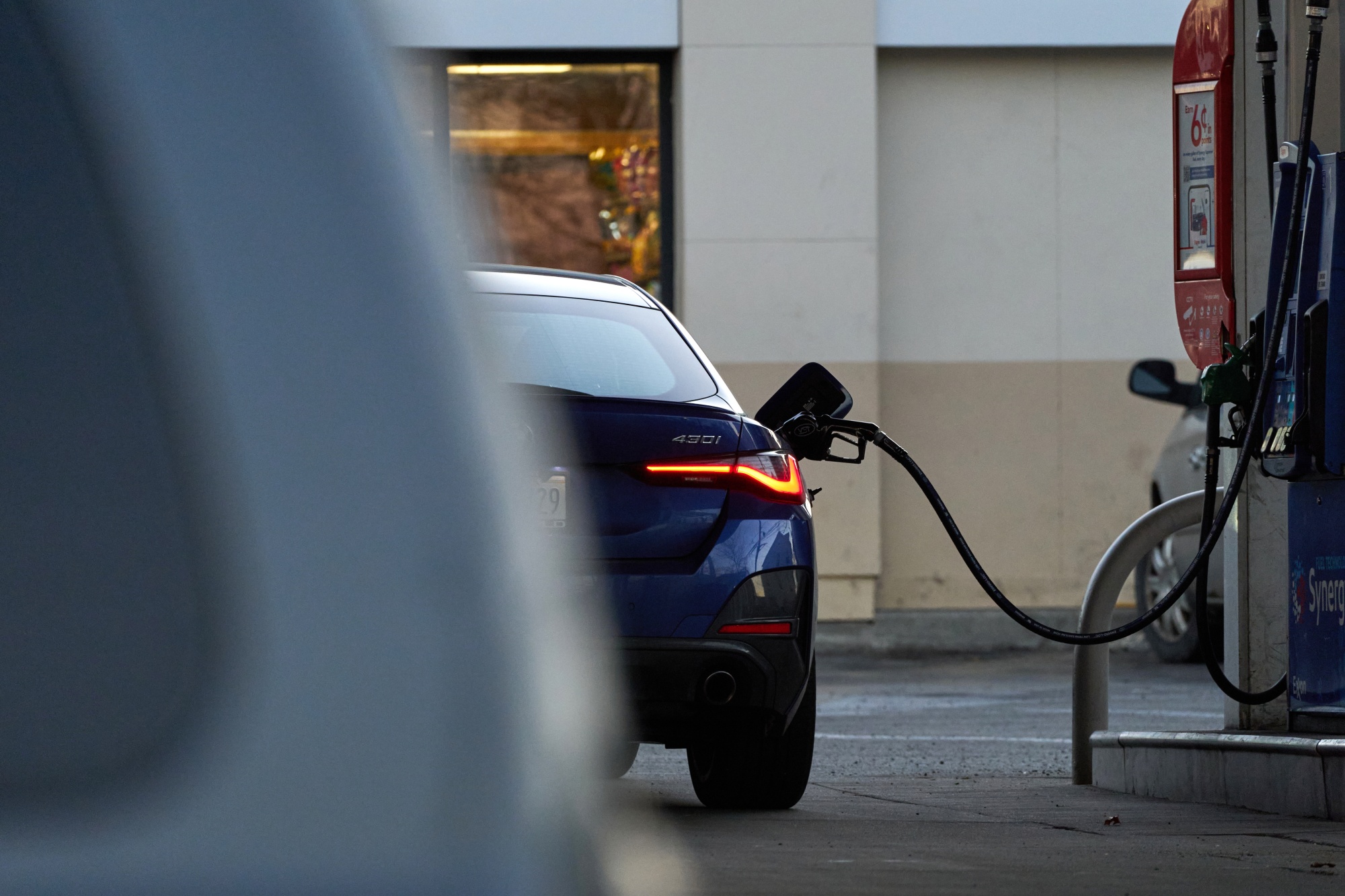
An Exxon gas station in Elizabeth, New Jersey. Gas Buddy at midday Tuesday was reporting the average price per gallon nationwide at $3.55. Photographer: Bing Guan/Bloomberg

My exchange with the Trump adviser happened to occur while I was filling up my car at the "cheap" gas station in my neighborhood—the one all the price-obsessed folks and Gas Buddy followers flock to because they know it always has the best deals. The cost of unleaded had surged 50 cents in just a week, prompting heavy grumbling among my fellow gas nerds. With voters already furious about the cost of living, you didn't have to be Karl Rove to see how the war and its effects might further damage Trump and Republicans heading into the midterm elections.

Evidently, Trump got the memo that Iran is fast becoming a political danger. After insisting last week that he was seeking unconditional surrender and wouldn't rule out sending in American ground troops, the president abruptly changed his tune. In a Monday afternoon phone call with Weijia Jiang of CBS News, Trump all but declared "Mission Accomplished" and said the campaign would soon be winding down. "I think the war is very complete, pretty much," Trump said. "They have no navy, no communications, they've got no air force." He added that he thought the US is "very far" ahead of his initial time frame.

Those were the magic words that traders were longing to hear. The S&P 500 immediately shot up and is continuing its ascent today. Oil prices have also fallen back below $85 a barrel, aided by reports that the Group of Seven is prepared to tap oil reserves if necessary. Assuming the war really is winding down—big caveat there—it will take several more weeks for gas prices to ease.

It's almost too neat to believe that what we've seen over the past 24 hours is an Iranian TACO—if, indeed, that's Trump's intent. With tariffs, the president acted unilaterally, flipping the switch on and off, and avoiding catastrophic economic damage. The S&P 500 bottomed out at 4,983 in the week after his Liberation Day announcement and then managed to climb above 7,000 in the weeks before the Iran attack.

The Iran war, on the other hand, has already become a full-blown regional conflict, with many more actors than just Trump making the decisions. In a best-case scenario, hostilities subside and the economic damage to the US is limited.

But with the Pentagon calling today the most intense day of strikes yet, a new Ayatollah Khamenei taking power in Iran and its military saying it's prepared to fight for at least six months, as well as Israeli Prime Minister Benjamin Netanyahu signaling that Israel intends to carry on the conflict, there are plenty of worse outcomes that have to be considered.

Latest: Live Updates on the Iran War

'Downright Panic': Traders Tested to Limits on Oil's Wild Monday

Marc Champion writes in Bloomberg Opinion: Trump Doesn't Understand His Enemy. That Gives Iran an Edge

On the Odd Lots podcast: Rory Johnston, the author of the Commodity Context newsletter, talks about persistent closure of the Strait of Hormuz as a worst-case scenario for oil. 

In Brief

  • One year into President Donald Trump's immigration crackdown, there's little evidence that closed borders are boosting employment for US-born workers. 
  • Exxon Mobil is seeking to shift its legal home to Texas after being incorporated in New Jersey for more than a century. The company said moving would mean operating in a more favorable business environment where officials are more familiar with its operations.
  • Pershing Square filed for an initial public offering, in a deal that would see billionaire Bill Ackman's hedge fund make its debut on a US exchange alongside a new closed-end fund.
  • Review: The $599 MacBook Neo proves that it's possible to make a laptop that stays true to Apple Inc.'s reputation for craftsmanship, performance and reliability—even at roughly half the price of the popular MacBook Air. 

Get the Bloomberg Businessweek print magazine delivered to you and unlimited access to Businessweek stories on Businessweek.com. Annual subscription for $99.

Surgery for a Set Price

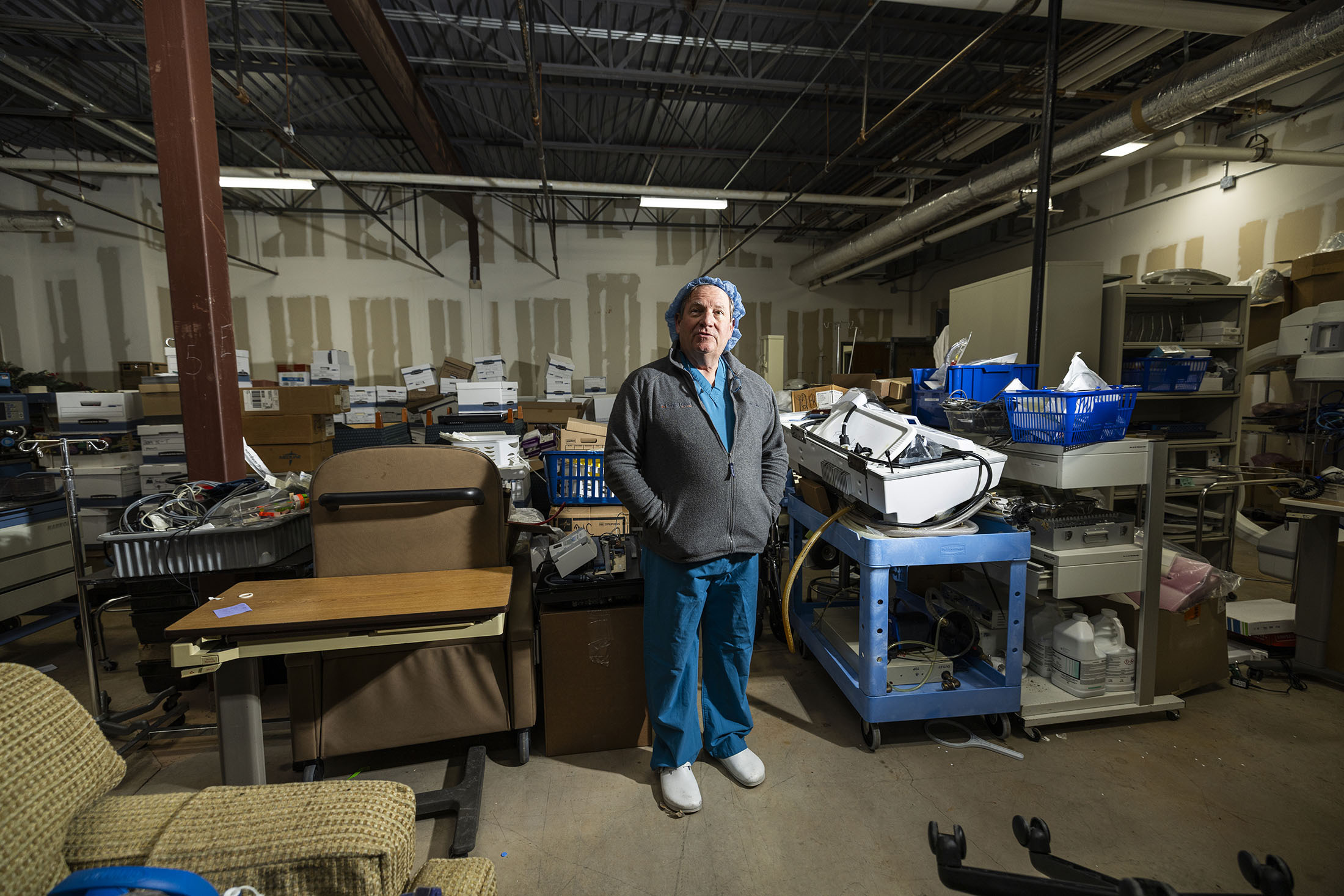
G. Keith Smith in a rather no-nonsense storage room at the Surgery Center of Oklahoma on March 4. Photographer: Brett Deering for Bloomberg Businessweek

By 6:30 a.m. on a chilly Wednesday last year, the Surgery Center of Oklahoma is bustling. Six miles north of the state Capitol, beside a stretch of Route 77 lined with medical facilities, spouses waiting in the lobby scroll through their phones and slurp coffee from foam cups. A toddler in a Tigger-print medical gown and pajamas is on the way toward the operating room for his tonsillectomy, a doctor leading him by the hand. Those waiting include a young man in for a sinus operation and a middle-aged woman getting a hysterectomy. It's a diverse caseload by the standards of your average surgery center—most SCs focus on just one branch of surgery, such as thoracic or orthopedic. But what really separates SCO is its price transparency. There are no hidden fees, no massive charges mailed to patients' homes months later. The flat cost of each procedure has been set and mostly paid beforehand, often at a fraction of what a mainstream hospital in the area would charge.

"I wanted patients with sticker shock to better be able to find us," says G. Keith Smith, one of the two anesthesiologists who co-founded the center. When he first posted the prices online, in 2009, he says, "I wanted to start a price war—wanted these damn hospitals bankrupting people to have to explain themselves. And I also wanted to understand the scams at play keeping the market from disciplining everybody in this industry."

And so, Rowan Moore Gerety writes, a knee replacement will run you $17,679; a gastric bypass, $18,750. Others are now following Smith's lead: How a Die-Hard Libertarian Is Negotiating Lower Health-Care Costs (🎁)

Blockbuster Bonds

$37 billion
That's how much Amazon.com Inc. aims to raise in what's likely one of the biggest corporate bond offerings ever. It's the latest in a series of jumbo bond sales by hyperscalers as they plan to invest hundreds of billions of dollars in artificial intelligence infrastructure.

China's Traders Under 30

Illustration: Min Heo for Bloomberg Businessweek

When he started trading in 2020, Lito Chen followed mostly well-trodden advice, tucking his modest university student savings into the kinds of blue-chip stocks like liquor companies that analysts had touted as safe bets. They proved to be anything but, erasing his nest egg and eroding his confidence in mainstream financial analysis. So when doing research for his next round of investment picks in the first half of 2024, Chen turned to what many young people know best: artificial intelligence chatbots and the social media hive mind. Investing in a mix of tech, defense, mining and other stocks recommended by internet friends and chatbots like Kimi and Zhipu, he's clawed back his earlier losses—and then some. "I'll rely more on AI for stock selection in the future," says Chen, a 24-year-old student in Shanghai. "Some of the stocks it picked for me really just kept rallying nonstop."

Young, technologically savvy, even defiant, Chen represents China's newest generation of retail investors. These bold Generation Z traders have earned a nickname in China: Xiao Dengs, or "little guys"—and their swelling ranks are propelling the country's more than $14 trillion stock market.

Keep reading: China's Gen Z Day Traders Trust in Chatbots and Move Markets

Forces Collide

"Too many people seem to think that as long as the oil shock isn't as bad as the 1970s, the tech bubble is not as big as 2000, and the credit issues are not as large as 2008, then they are nothing to worry about. That's ridiculous. When the stock market is as expensive as it is today, it will take a much smaller predicament to create problems."
Matt Maley
Chief market strategist at Miller Tabak 
Trump's decision to attack Iran has injected a new and potentially long-lasting shock into the global economy at a time when investors' confidence was already upended.

Play Alphadots!

Our daily word puzzle with a plot twist.

alphadots

Today's clue is: Entrance exam?

Play now!

More From Bloomberg

Like Businessweek Daily? Check out these newsletters:

  • Odd Lots, with Joe Weisenthal and Tracy Alloway, explores the most interesting topics in finance, markets and economics.
  • Power On, with Mark Gurman, has the inside scoop on all things Apple and consumer tech.
  • Washington Edition follows Trump's second term through the lens of business, markets and the economy.
  • Bloomberg Weekend discusses big ideas and open questions in the fascinating places where finance, life and culture meet.
  • Business of Food covers how the world feeds itself in a changing economy and climate, from farming to supply chains to consumer trends.

Explore all Bloomberg newsletters.

Follow Us

Like getting this newsletter? Subscribe to Bloomberg.com for unlimited access to trusted, data-driven journalism and subscriber-only insights.

Want to sponsor this newsletter? Get in touch here.

You received this message because you are subscribed to Bloomberg's Businessweek Daily newsletter. If a friend forwarded you this message, sign up here to get it in your inbox.
Unsubscribe
Bloomberg.com
Contact Us
Bloomberg L.P.
731 Lexington Avenue,
New York, NY 10022
Ads Powered By Liveintent Ad Choices

No comments:

Post a Comment

Oil’s Plunge Sends a Market Signal

Markets bet on a return to normalcy Is the war in Ir...