| Read in browser | ||||||||||||||
 Global warming is making it hotter basically everywhere — "global" is right there in the name — but some places are approaching the threshold for dangerous heat faster than others. Today's newsletter shows you where the heat is approaching deadly levels and who will suffer the most. We also look at how Planet Labs, whose satellite data help monitor changes to the Earth, is delaying imagery over concerns they could be used to target NATO members. For all the latest climate science, subscribe to Bloomberg News. Too hot to handleBy Todd Woody The number of days where extreme heat makes it too dangerously hot to walk the dog, sweep the porch and engage in other ordinary pursuits has doubled around the world over the past 75 years, according to new research. Scientists determined that on average, those 65 and older experience a month a year when heat prevents them from routine activities. Parts of Asia, Africa, Australia and North America are becoming unlivable for senior citizens, the researchers said. Younger adults also are losing time as climate-driven heat restricts their lives for 50 hours a year. 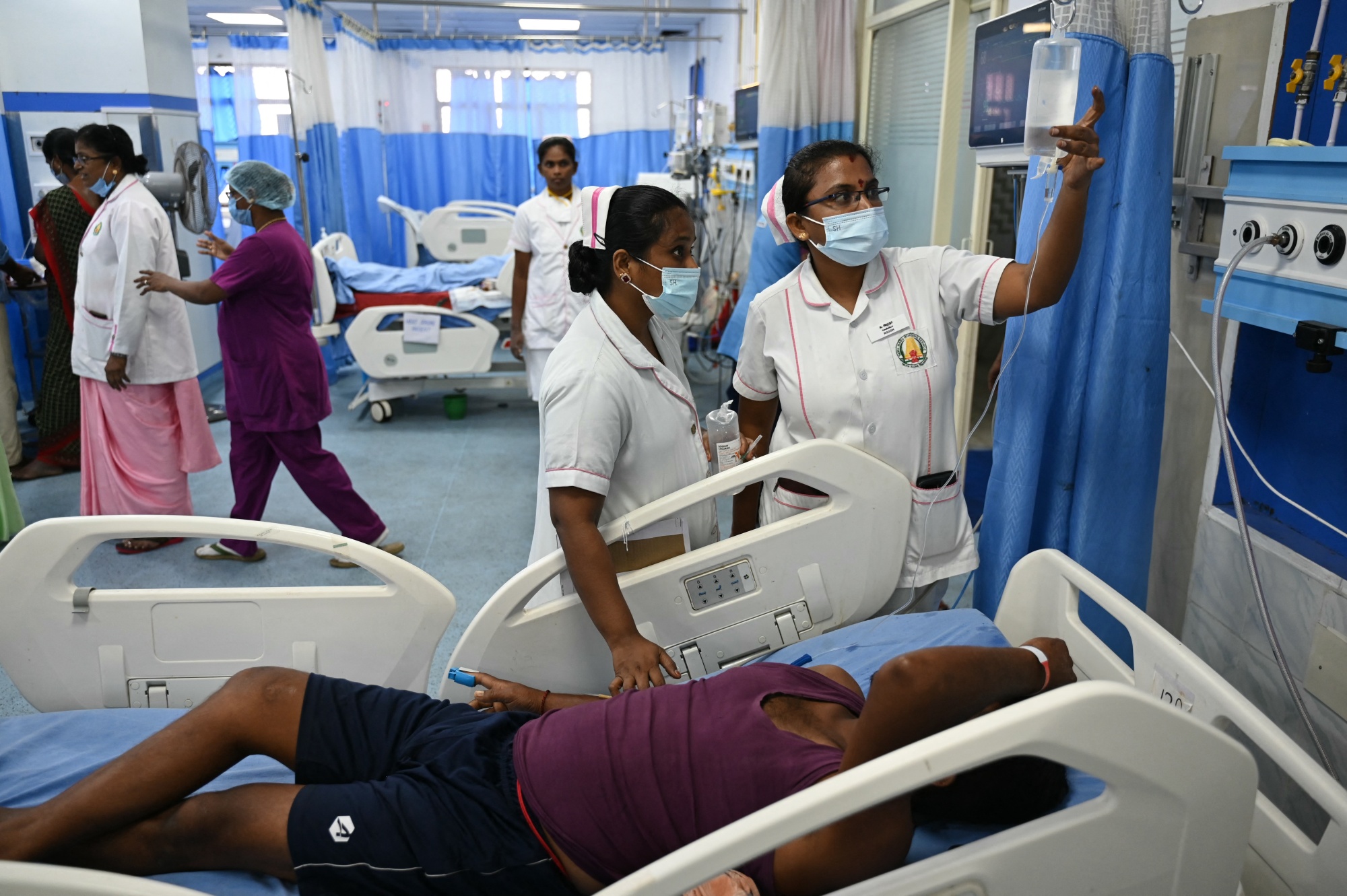 Nurses provide medical care at a special ward for heat stroke patients in Chennai, India. Photographer: R.SATISH BABU/AFP Overall, more than a third of the global population resides in regions where heat severely affects daily life, according to the peer-reviewed paper published Tuesday in the journal Environmental Research: Health. While previous research has shown the impact of extreme heat on human health, authors of the new study said it's the first to document the consequences of rising temperatures on everyday life. "Extreme heat isn't just affecting our ability to survive or work physically demanding jobs, but also just to do simple, light, daily tasks," said Luke Parsons, a climate scientist at nonprofit environmental organization the Nature Conservancy and lead author of the paper.  Pedestrians cool off under a water mist spray in Tokyo, Japan. Photographer: Soichiro Koriyama/Bloomberg The researchers analyzed heat and humidity records from 1950 to 2024. They used the United Nations' Human Development Index, which measures each country's health and living standards, as a proxy for vulnerability to rising temperatures. The scientists, who developed a physiological model of heat impacts on different age groups, determined when it becomes too hot for people to undertake tasks when exposed to outdoor temperatures in the shade. In Qatar, for instance, heat now makes it risky for older adults to engage in routine activities for a third of the year. Even 18-to-40-year-olds in that country must curb daily tasks for more than 800 hours a year or 10% of their time. Senior citizens in the US have 270 fewer hours they can devote to normal activities due to the risks of overheating. In the southern US, "we're looking at many hundreds of hours of livability limitations for older adults every year," said Parsons. Those areas along with Europe, southern South America, southern Australia and parts of Asia and Africa have seen the largest increases in restrictions on daily life since 1995, according to the paper. Read the full story and subscribe to Bloomberg for unlimited access to more stories on how global warming impacts human health. Testing the limit35C The threshold wet-bulb temperature — a measurement that takes heat and humidity into account — above which humans aren't able to survive for extended periods. Extended impacts"Parts have been snow-free entirely, which was never the case since the measurements began." Andrea Fischer Researcher, Austrian Academy of Sciences Fischer has studied ice loss in the Alps, which is accelerating as the planet gets hotter. Iran risks prompt satellite delayBy Aaron Clark Planet Labs is extending its delay on commercial satellite imagery in the Middle East to two weeks from four days over concerns that the intelligence could be used to target North Atlantic Treaty Organization members. The San Francisco-based commercial satellite provider, which has contracts with NATO and the US Navy, is also expanding the area under monitoring related to the conflict to include all of Iran, nearby allied bases, Gulf states and existing conflict zones, it said.  A deployment by Planet Labs reaches the ISS. Source: NASA via Bloomberg "There are genuine concerns of use of Planet data over Iran," the company said in an emailed statement. "Planet has decided to take additional, proactive measures to ensure our imagery is not tactically leveraged by adversarial actors to target allied and NATO-partner personnel and civilians." The decision underscores the growing strategic role of commercial satellite operators in modern conflicts, where high-resolution data can shape military planning as quickly as it informs financial markets and the public. Once tightly controlled by governments, Earth observation is now a multibillion-dollar industry supplying near real-time intelligence to clients worldwide. Read the full story on Bloomberg.com and subscribe to Green Daily for more stories on how the conflict in the Middle East is impacting climate technologies. This week's Zero listen Many consider a widespread war in the Middle East the worst-case scenario for the global oil and gas markets. That war is here, and it could have wide-ranging, long-lasting impacts on energy and climate policy. This week on Zero, Akshat Rathi speaks with Jason Bordoff, director of the Center on Global Energy Policy at Columbia University and former energy and climate advisor to President Barack Obama to try to understand what those impacts could look like. Will countries double down on fossil fuels or will they speed up the clean-energy transition? Listen now, and subscribe on Apple, Spotify or YouTube to get new episodes of Zero every Thursday. More from Green Hydrogen is loaded into a truck at the Plug Power Inc. plant in Woodbine, Georgia. Photographer: Agnes Lopez/Bloomberg Plug Power is planning to offer hydrogen electricity in a potential special auction by the biggest US power grid in the scramble to feed the artificial intelligence boom. The supplier of hydrogen energy systems is considering providing as much as 250 megawatts in an auction that President Donald Trump is keen to happen later this year, according to Andy Marsh, the company's chairman. Plug would need contracts lasting at least seven years, and is already talking to hyperscalers, data center companies and utilities. "We're courting data center operators and utilities that really come up with the right mix," Marsh said in an interview at Bloomberg News headquarters in New York. "These are long, long term assets. So the longer the better." Read the full story. Southeast Asia is set to feel the heat over the coming months, potentially raising power demand for fuel and straining grids at a time when the Middle East conflict has tightened energy supplies in the region. The European Union made a "strategic mistake" in turning its back on nuclear energy, Commission President Ursula von der Leyen said in thinly-veiled criticism of Germany's decision to close its reactors. Meanwhile, the UK's decision to use the proceeds of its green gilt sale on nuclear energy has emerged as a dealbreaker for Rathbones Asset Management's £2 billion flagship bond fund. More from Bloomberg
Explore all Bloomberg newsletters. Follow us
You received this message because you are subscribed to Bloomberg's Green Daily newsletter. If a friend forwarded you this message, sign up here to get it in your inbox.
|
Tuesday, March 10, 2026
Too hot to survive





Subscribe to:
Post Comments (Atom)
🩲 6 Colors of Underwear. Pick Your Mood.
Break out and build a color system. Save up to 36% ͏ ͏ ͏ ͏ ͏ ͏ ͏ ͏ ͏ ͏ ͏ ͏ ͏ ͏ ͏ ͏ ͏ ͏ ͏ ͏ ͏ ͏ ͏ ͏ ͏ ͏ ͏ ...

-
PLUS: Dogecoin scores first official ETP ...
-
Bloomberg Evening Briefing Americas View in browser Who's paying for Donald Trum...


No comments:
Post a Comment