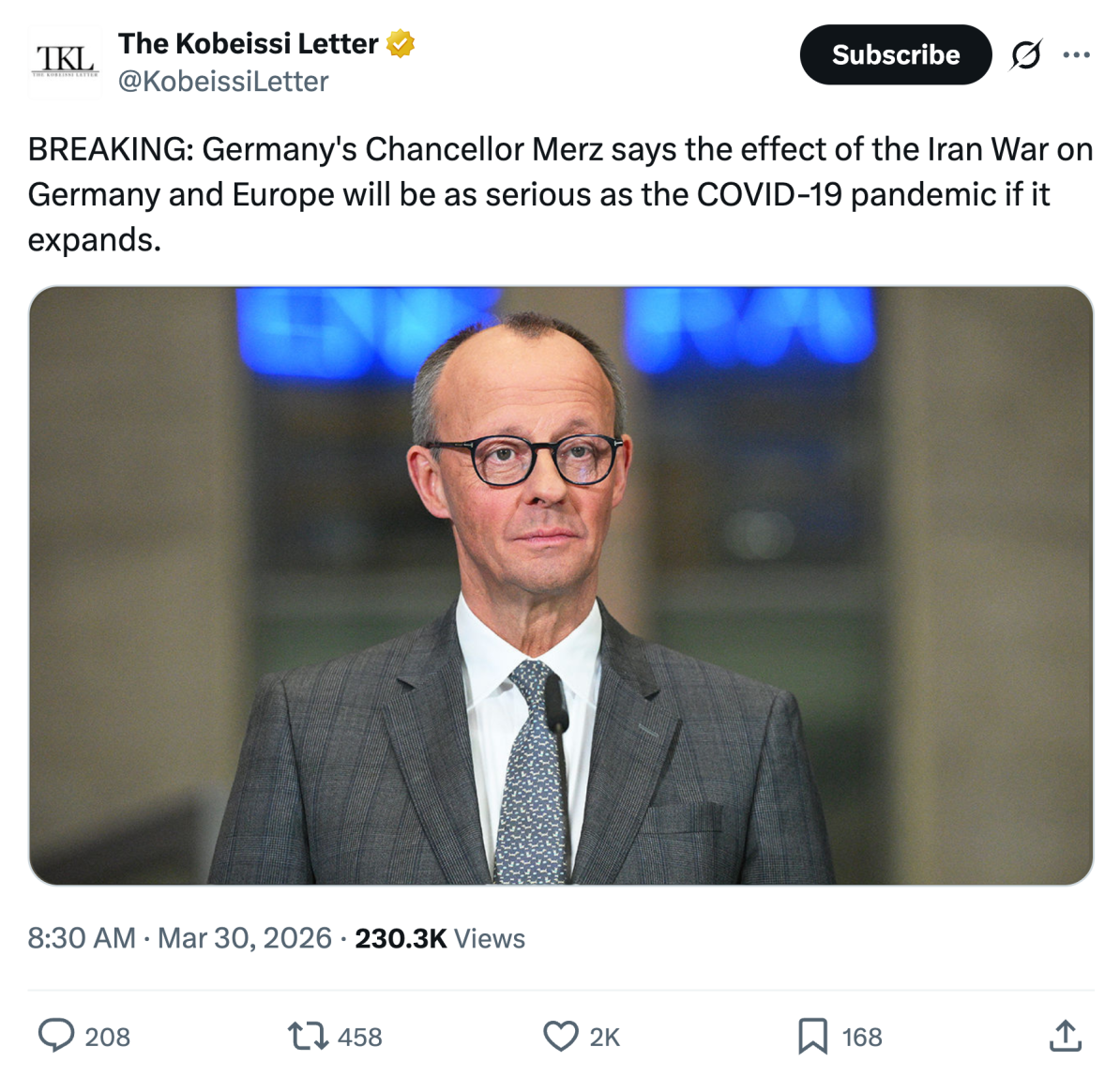
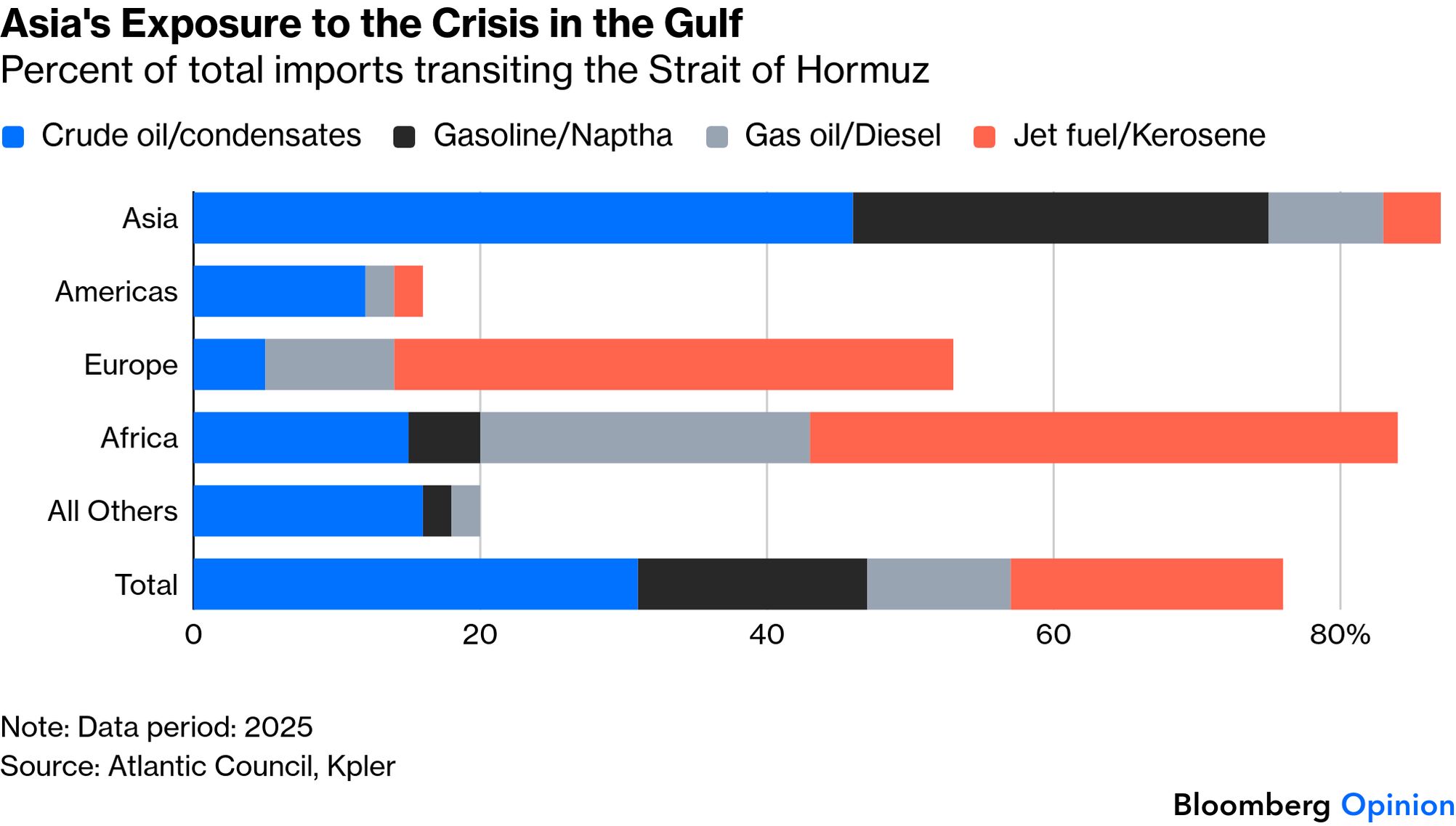
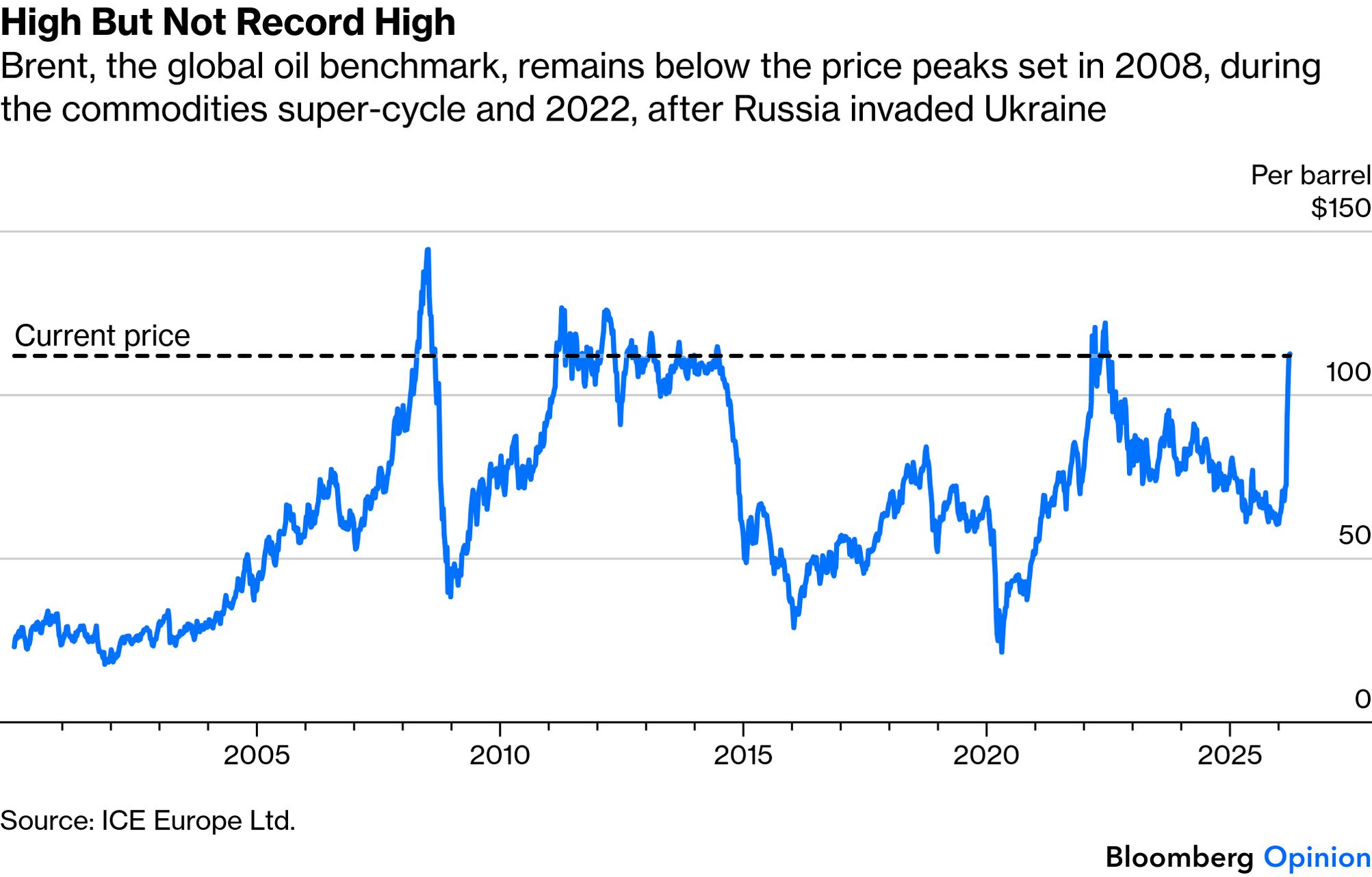
| Let me set the scene for you: It's the second-to-last day of March. People are filming all sorts of TikTok dances. The oil market is incredibly out of sync. Mandatory work-from-home mandates are on the table. Jonathan Levin says Robinhood traders are questioning the dip. Controversial masking policies are dividing states. Talk of the "little treat economy" is growing louder, according to Shuli Ren. And President Donald Trump, in his handling of the crisis, is "assaulting the organs of truth," per Max Hastings. I'm sorry. What year is it?? Because my brain is telling me it's 2020 and somebody is about to suggest injecting bleach into the human body. But no, it's 2026, and the US and Israel are at war with Iran. The days of disinfecting our groceries with Clorox wipes and singing awful renditions of Imagine are long behind us (thank goodness), but in many other ways, the world is unraveling like Covid Times. And I'm not alone in feeling that way: "America is no longer seen, especially in Europe, as worthy of trust," writes Max. "Even superpowers need friends yet America has few left who, after enduring so many insults from Washington, sincerely respect those in charge there, or believe what they say." In Asia, too, the US is being described as "a revisionist power," words that Karishma Vaswani says are "not simply anxious rhetoric," but a reflection of a "deeper disquiet about how a conflict far from Asia's shores, shaped by decisions made in Washington and Tel Aviv, is now landing squarely on the region's households and businesses." Five weeks into the Strait of Hormuz's effective closure, Javier Blas says the oil-barrel math is clear: "The world is short of the black stuff," he writes. "The last time the market was so out of sync was in 2020 when the pandemic forced billions of people into lockdown. But then the problem was too much supply, this time it's the opposite." In Javier's eyes, there's only one way to address the dearth of oil: demand destruction. "This is where policymakers use emergency tools to curb energy use (the less bad version), or where sky-high prices force consumers to stop buying (worse because of the blow to the economy)," he explains. In some corners of the world, the war's ripple effects are already appearing. In South Korea, residents are being told to take faster showers. In Laos, students are adjusting to a three-day school schedule. In Thailand, short-sleeved shirts are recommended at work to curb AC usage. In the Philippines, civil servants are taking the stairs in lieu of the elevator. In Egypt, the malls have a 9 p.m. curfew. Are we all about to go back to Zoom calls in our pajama pants? Not quite yet — Javier says work-from-home policies are the most politically and economically fraught option for governments. Yet some officials in Southeast Asia have no choice. If the war drags on, more countries may get boxed in. Bonus Iran War Reading: - The war is now about WACO, and the ayatollahs have little incentive to chicken out. — John Authers
- M&A, leveraged loans and equity capital markets are enjoying a boom even as the Middle East clouds the financial outlook. — Paul J. Davies
If Kim Jong Un's latest achievement — a test for a missile capable of targeting the US mainland — weren't enough to send a chill down your spine, here's Andreas Kluth on the odds of a "space Pearl Harbor." This month, the director of national intelligence told Congress that the development of a "nuclear counterspace weapon" would pose "the greatest single threat to the world's space architecture." The good news — if you can call it that — is that a space nuke won't kill us humans. But it could, according to Kari Bingen at the Center for Strategic and International Studies, render entire orbits unusable. "The blast would first take out all the satellites in line of sight with an electromagnetic pulse that fries the electronics," Andreas explains. "It would then leave a radiation zone that destroys all the other machines in the orbit as they transit during their revolutions." If, say, Moscow were to launch a strike in space to avoid military defeat here on Earth, Andreas says, "humanity could at a stroke revert to the developmental stage of the previous century, if not the pre-industrial age. The damage and suffering would be less than that following a terrestrial nuclear war, but still greater than anything we can imagine today, when the closure of just one strait in the Middle East keeps us busy." | 








No comments:
Post a Comment