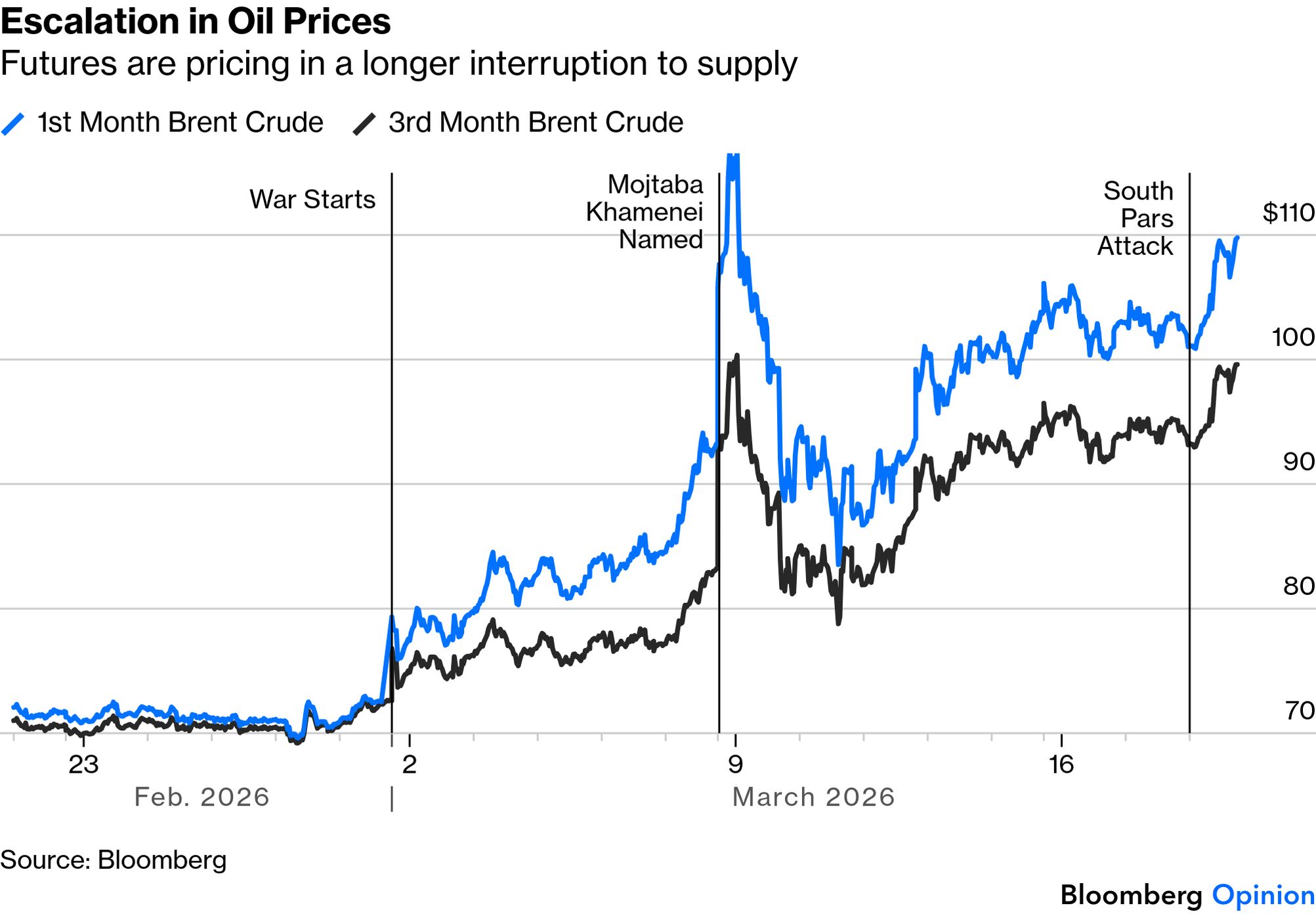
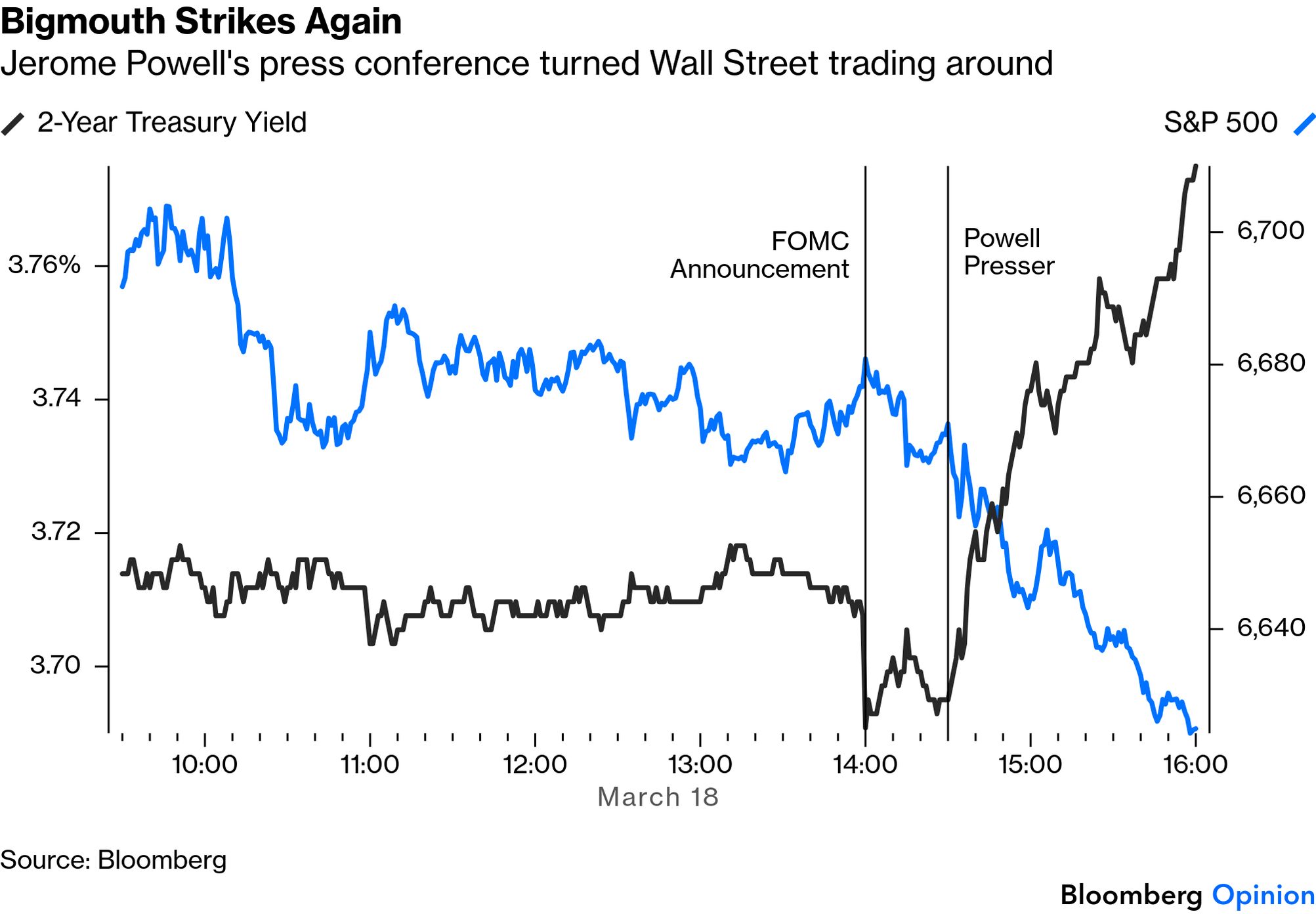
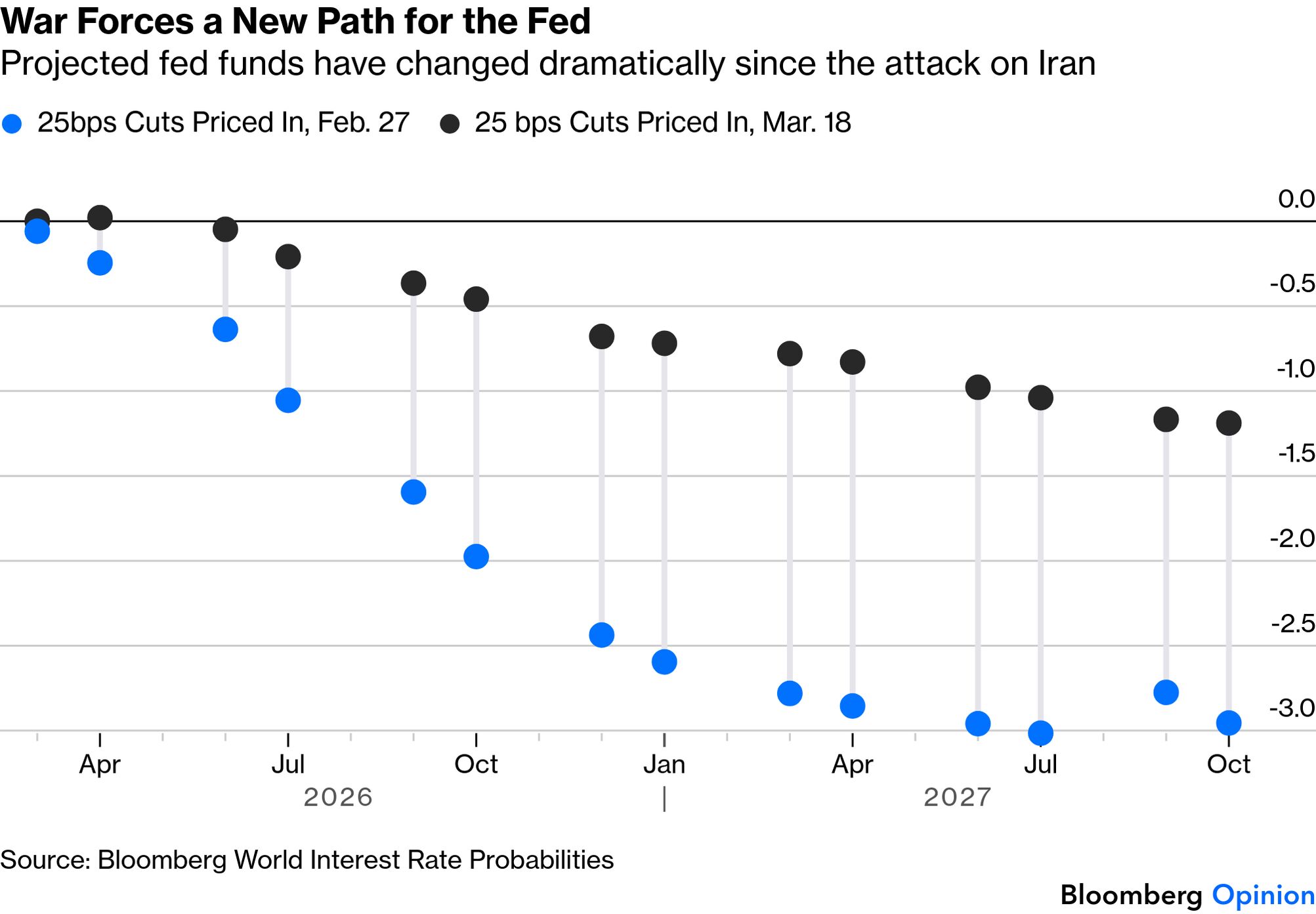
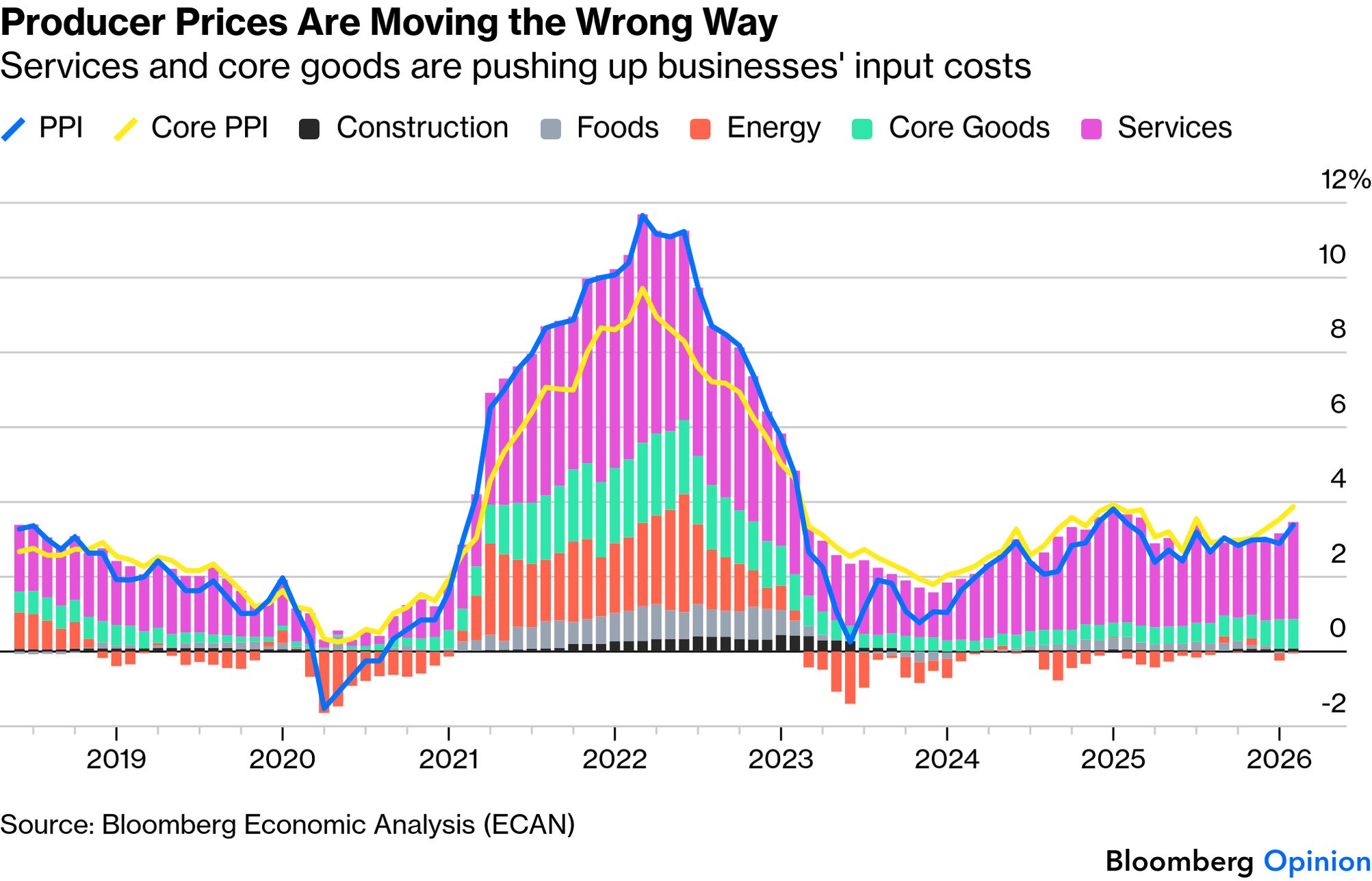
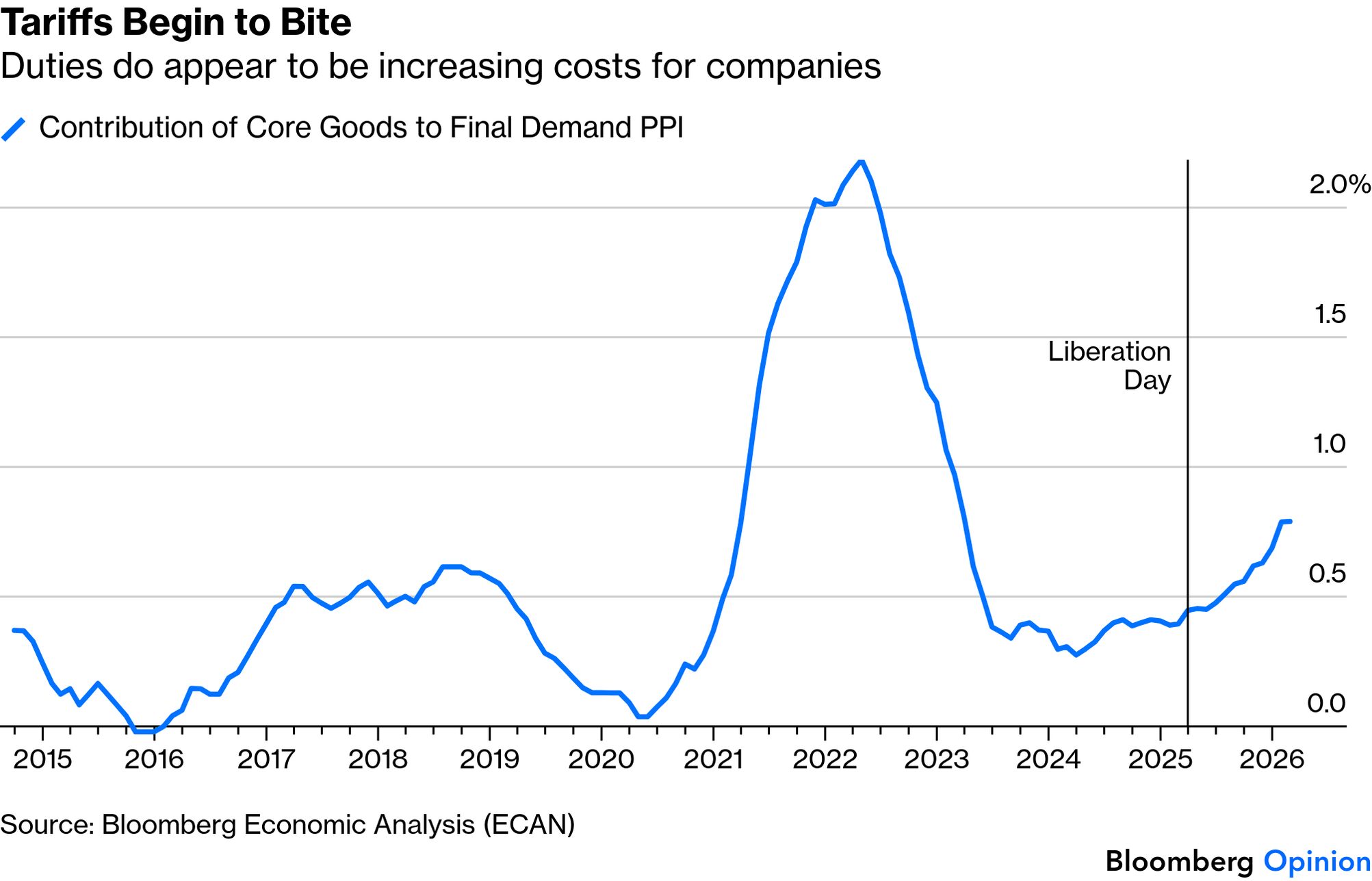
| "The implications of developments in the Middle East for the US economy are uncertain." That assessment, impossible to challenge, was all the Federal Reserve had to say about the escalating war in the Gulf. More or less everyone agreed, and the words contributed to a hugely difficult day on world markets. Escalating Warfare The key news of the last 24 hours is Israel's attack on Iran's South Pars gas field. This is an escalation, attacking oil production facilities for the first time. Depriving Iran of natural gas might help to force it into submission — but it also risks enduring interruptions to supply, and gives Iran an incentive to retaliate against the many energy production facilities in the region, which has started with an attack on a huge LNG facility in Qatar. Oil prices ramped up: One-month Brent crude futures haven't quite reached their high from the brief spike after Mojtaba Khamenei was announced as new supreme leader last week in a move interpreted as a sign that Iran was digging in for a long conflict. But futures for oil three months hence are back to $100, and have returned to last week's high. The market is explicitly pricing a longer and more severe rise in prices. A Do-Nothing FOMC In financial markets, nothing matters more than the Fed. The Federal Open Market Committee met Wednesday afternoon and left rates unchanged (as universally expected), with one dissent from the manically dovish Trump appointee Stephen Miran. The governors updated their projections for the fed funds rate and the main economic indicators in the so-called dot plot — but we needn't pay much attention as the chairman, Jerome Powell, told us to ignore them. He commented that several colleagues felt that if ever there was a time to skip the dot plot, this would be it. Too much depends on the extent and duration of the oil price shock. Given that the FOMC did nothing, and admitted it was as dependent on the news from the Middle East as the rest of us, there should be little reason for markets to move. That wasn't what happened. As Powell spoke, equities sold off and bond yields surged: Why? Without saying anything explicitly hawkish, Powell made clear that he and his colleagues needed to know how the war would unfold. It wasn't a dovish or hawkish hold; it was as non-committal a hold as they could muster, given radical uncertainty. Critically, he updated his career plans. If Kevin Warsh isn't confirmed by the end of his term as chair, Powell said he will carry on as chairman pro tem. And as long as the government continues to prosecute him (an action already roundly criticized by a conservative federal judge), he will continue on the board of governors, where his term has two years to run. Once the prosecution is over, he said, he hasn't decided whether he'll carry on. This gets to the heart of the battle over the Fed's independence. The prosecution is a disgrace and he has every right to protect his reputation and the integrity of the institution. Staying on the board, the first chairman to do so since Marriner Eccles in the 1940s, would however ensure that the political battle over the central bank's independence would continue. Warsh is seen as on a mission to reduce rates if at all possible, and Powell's continuing presence would make the politics harder for markets to gauge. It might make a policy error less likely — but it would also help to fuel market confusion. Powell could have said that he had decided to stay on. His non-committal stance, it seems to me, merely shows that he wants to maintain his leverage in a fight against some unscrupulous opponents. But if he really were to stay on, trying to predict the FOMC would be a new and difficult game. For now, the war has slashed hopes for rate cuts. On the eve of the Iran attack, fed funds futures priced three more cuts of 25 basis points in the next 18 months. That's been cut to one: The Fed is a global outlier, as it's still expected to cut. Each of the nine other largest developed market central banks is now forecast to hike, as Capital Economics shows: 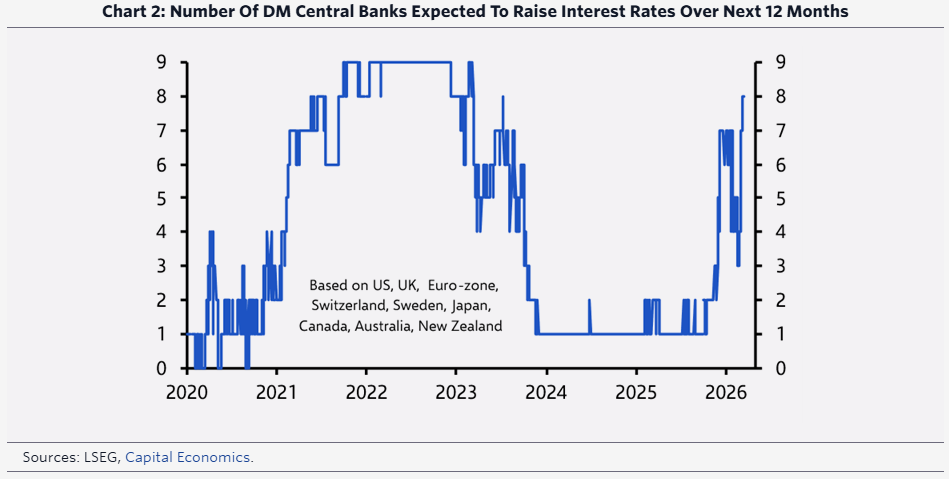 Source: Capital Economics The Middle East has a lesser effect on the US than other developed economies, and the Fed is behind others in the cutting cycle — but if the war escalates much more, it will have to join the hikers. Data Before the news from the Gulf and the FOMC, data gave cause for disquiet. Core producer price inflation is at a three-year high: Tariffs are partly responsible. Their inflationary impact has been muted so far, but core goods prices (most directly impacted) have risen since Liberation Day: The judgment of High Frequency Economics' Carl Weinberg: We do not see anything in this report that tells the Fed that prices "down the pipeline" were not accelerating in February, BEFORE the blockade of the Strait of Hormuz and the war.
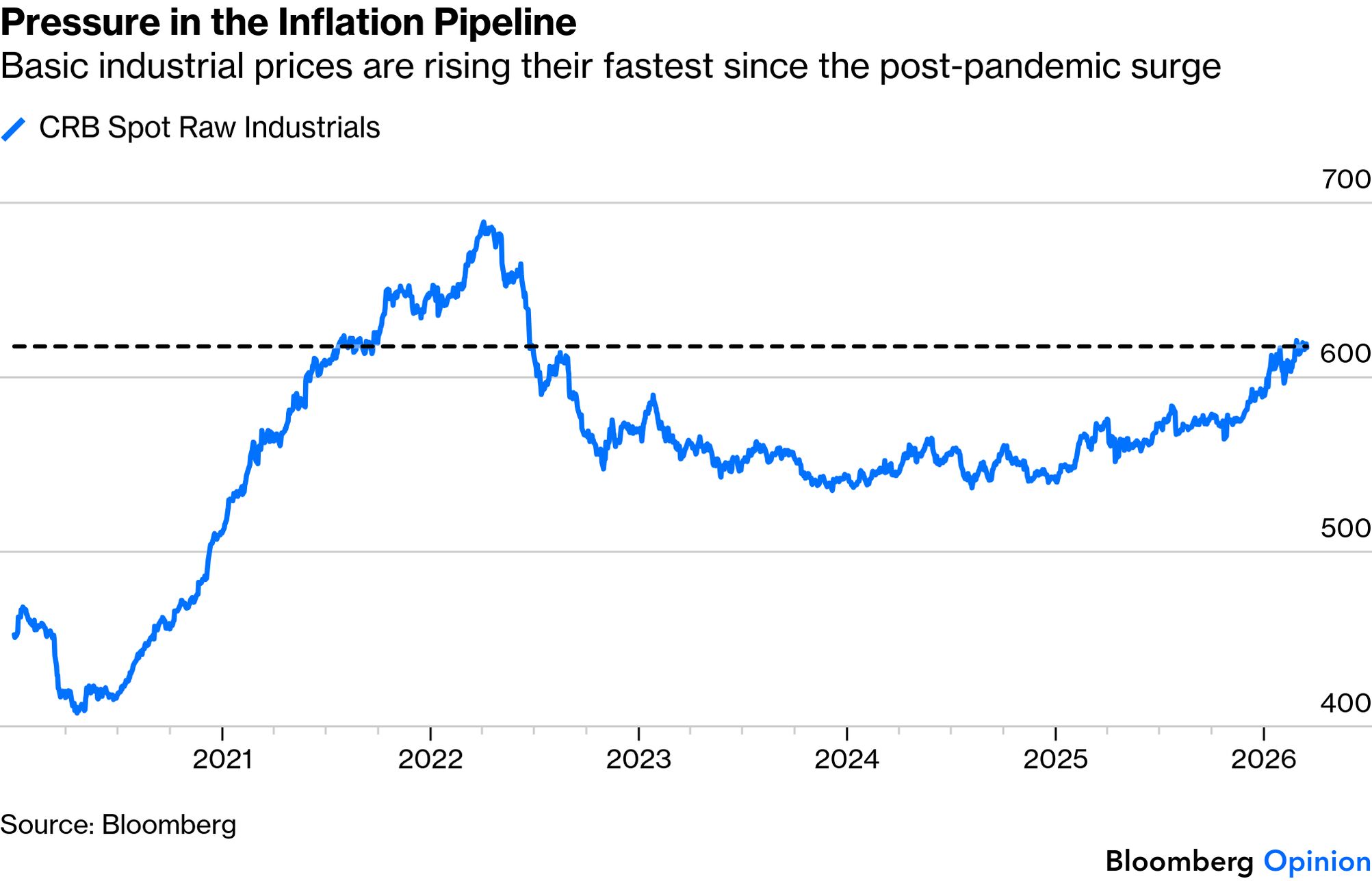
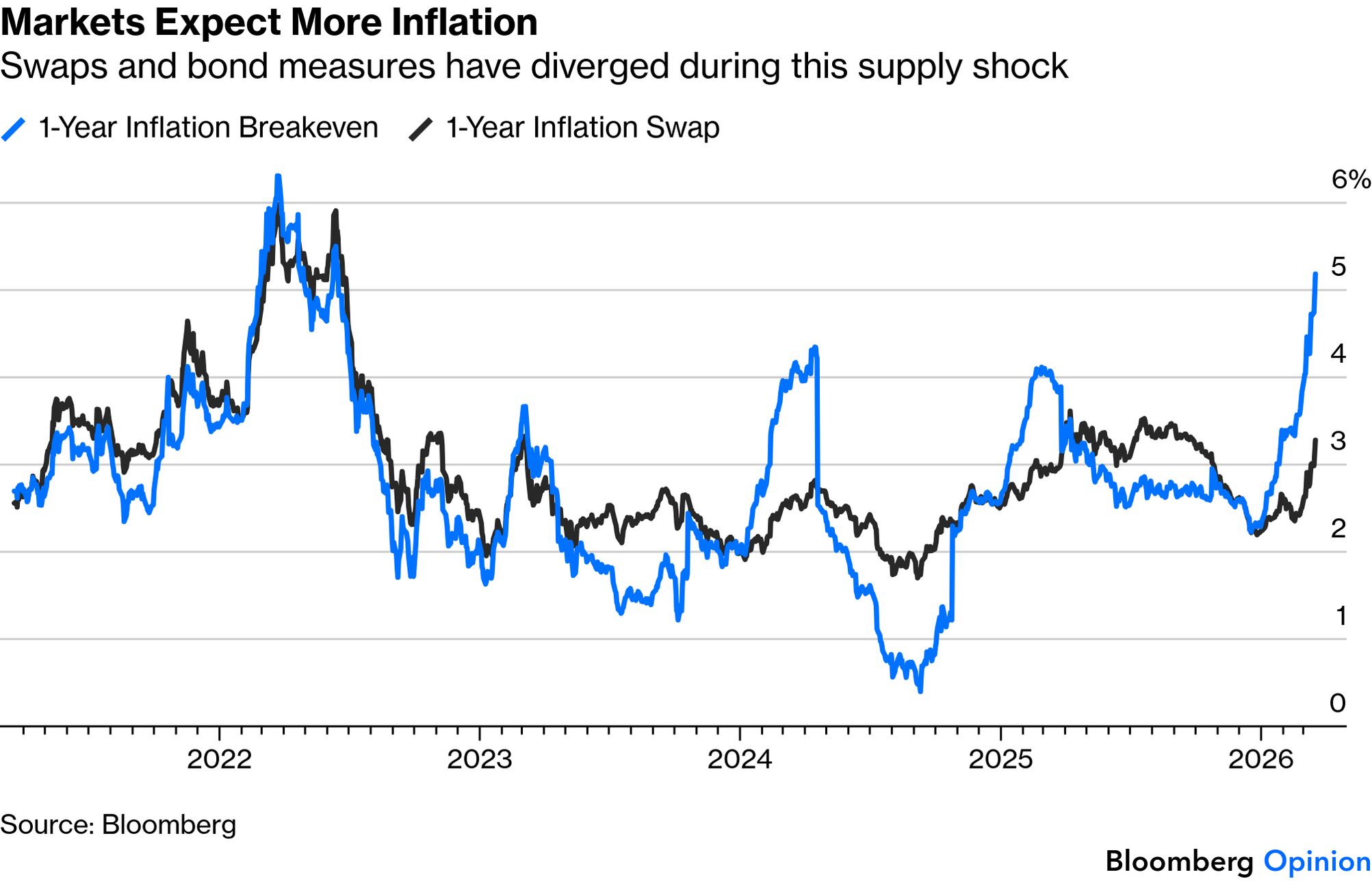
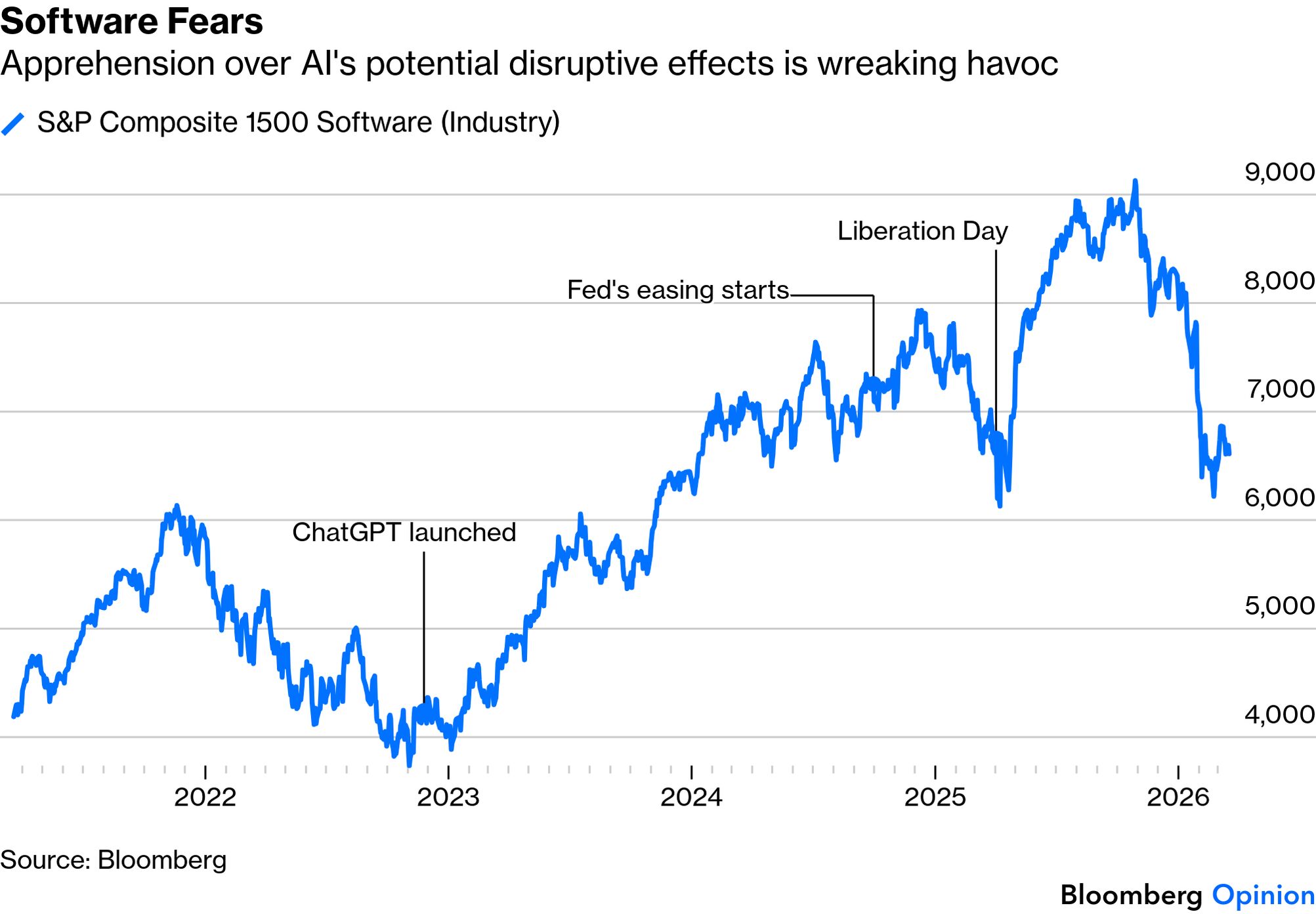
One of the better warning signals of the 2022 inflation shock came from the Commodities Research Board Raw Industrials index (known as the RIND), covering the prices of industrial commodities that aren't traded on futures markets. It surged in 2021, and it was surging again before the outbreak of hostilities: Meanwhile, the bond market sees a big inflation spike coming. Swaps — direct bets on inflation — have diverged from bond market breakevens, where the expected price rise is derived from the difference between fixed-income and inflation-protected yields. Breakevens now project 5% inflation, which would be disastrous. Swaps suggest a rate above 3%. The split shows the difficulty assessing the shock. But the direction of travel proves that alarm is intensifying: Taking all this into account, it's easy to see why the first reaction to the FOMC communique, which barely mentioned the war, was to treat it as very dovish. But even if hostilities tamp down swiftly, inflation will make the job of whoever is running the Fed later this year much harder. Is It a Bird? Is It a Plane? It's Superagent! | More than three years after ChatGPT's launch, there's still no answer to the question of how artificial intelligence will fulfill the long-promised boost to productivity. But the latest excitement is that it can be answered in one word: "OpenClaw." Fear that AI will primarily cannibalize existing software business models has driven a sector-wide selloff that has erased almost $2 trillion of market value. History offers no shortage of new technologies that upended incumbents that took years, even decades, to build: But OpenClaw has now brought excitement to agentic AI which, as Points of Return noted here, offers uses far beyond large language models that perform mundane tasks. So-called "superagents" are autonomous. Once set up, they can handle tasks until the user halts the workflow. It's a personal assistant that can respond to emails, book rides, and make restaurant reservations — while also handling more complex tasks like building software, testing it, and deploying it with little to no human intervention. OpenClaw, founded by Peter Steinberger, who joined OpenAI last month, isn't the first superagent, but it's generating excitement because it is open-source. By allowing developers to build on its base, it grows more powerful and potentially more consequential. Earlier this week, Nvidia Corp.'s Jensen Huang dubbed OpenClaw the next ChatGPT, opening the next frontier of AI: Mac and Windows are the operating systems for the personal computer. OpenClaw is the operating system for personal AI. This is the moment the industry has been waiting for, the beginning of a new renaissance in software.
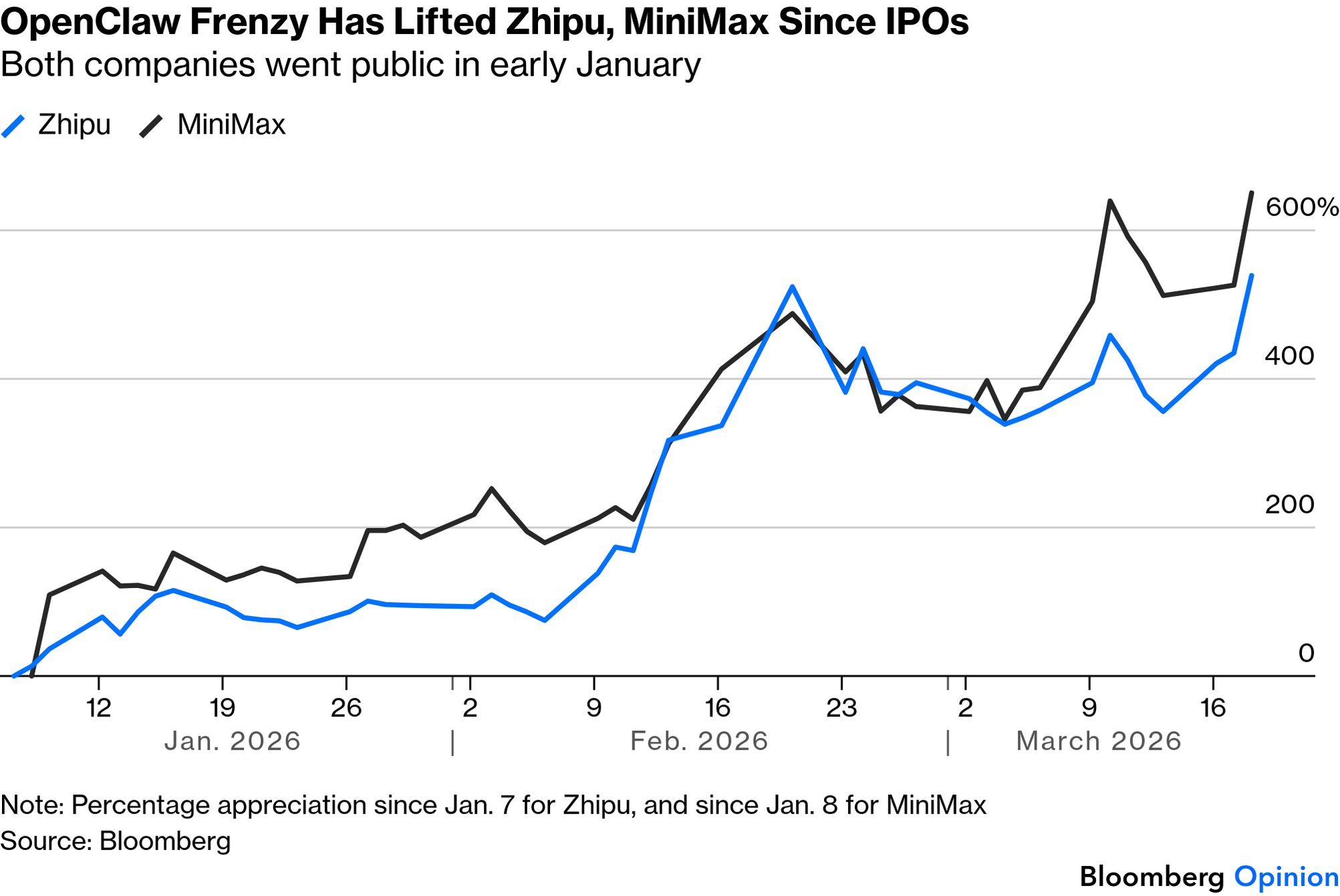
Those words sent waves through Hong Kong, where two companies whose platforms have integrated OpenClaw surged by 19% on Wednesday. It's only two months since they went public. The frenzy is rippling through China, where cloud computing providers are rushing to integrate agents into mainstream apps such as WeChat: The enthusiasm aligns well with China's top-down strategy for achieving large-scale AI deployment that the US will struggle to replicate. Bloomberg Intelligence's Robert Lea explains that Beijing's approach involves low-cost, open-source models that are more likely to boost economic productivity. The laser focus on AI in the 15th Five-Year Plan could come at a cost to private-sector groups like Alibaba, SenseTime, and Baidu, whom Lea expects will have to prioritize the state's strategic goals over their profits: Rising agentic AI use will widen application-programming interface losses at China's leading AI firms, given the high computational workload associated with the execution of agentic functions and extremely low API prices.
OpenClaw's emergence bears a striking resemblance to last year's DeepSeek moment. Market impact this time has been more muted, but the fact that a lesser-known startup can develop a powerful AI tool, and prompt such a market response, shows how low the barriers to entry have become. For consumers, this seemingly endless pipeline of innovation is remarkable. For investors, it's less reassuring. The forces driving rapid innovation and lower costs also make it harder to build the durable network effects that have created such wealth for the winners of the first generation of the internet, like Alphabet and Meta Platforms. DeepSeek proved that public attention can be fleeting. But the use cases for AI agents are improving over time, and adoption is broadening. Mainstream companies, from payment system providers such as Visa, Mastercard, and PayPal, to marketplaces like Walmart, Amazon, and eBay, are increasingly receptive to AI agents. Whether people use these tools comes down to trust and regulation. Trust shapes how much control we'll give AI over daily tasks, while regulation sets limits on how far that control can go. President Donald Trump's close ties to Silicon Valley suggest few obstacles to turning what once seemed like science fiction into reality — and it's possible that OpenClaw really is a ChatGPT moment. —Richard Abbey | 






No comments:
Post a Comment