| Read in browser | ||||||||||||||
  Good afternoon from Los Angeles and happy baseball season to those of you who celebrate. I am headed back east on Friday, including a pit stop in Toronto for a World Series rematch. Thank you to the Society for Advancing Business Editing and Writing for saying our reporting on the Warner Bros. sale was the best entertainment and media business coverage of 2025. Five things you need to know
Netflix's pricing strategyThe cost of Netflix has increased by 150% over the last 13 years. The standard, advertising-free plan, Netflix's most popular in major markets, cost $7.99 a month as recently as 2013. It will soon cost $20 a month in the US. Netflix is raising prices for all three of its plans in its biggest market. The advertising-supported plan will now cost $9 a month while a standard ad-free plan will cost $20 a month and its premium plan will cost $27 a month. Netflix has been raising prices at a more accelerated clip than inflation, and certainly at a faster pace than Spotify, its peer in audio. 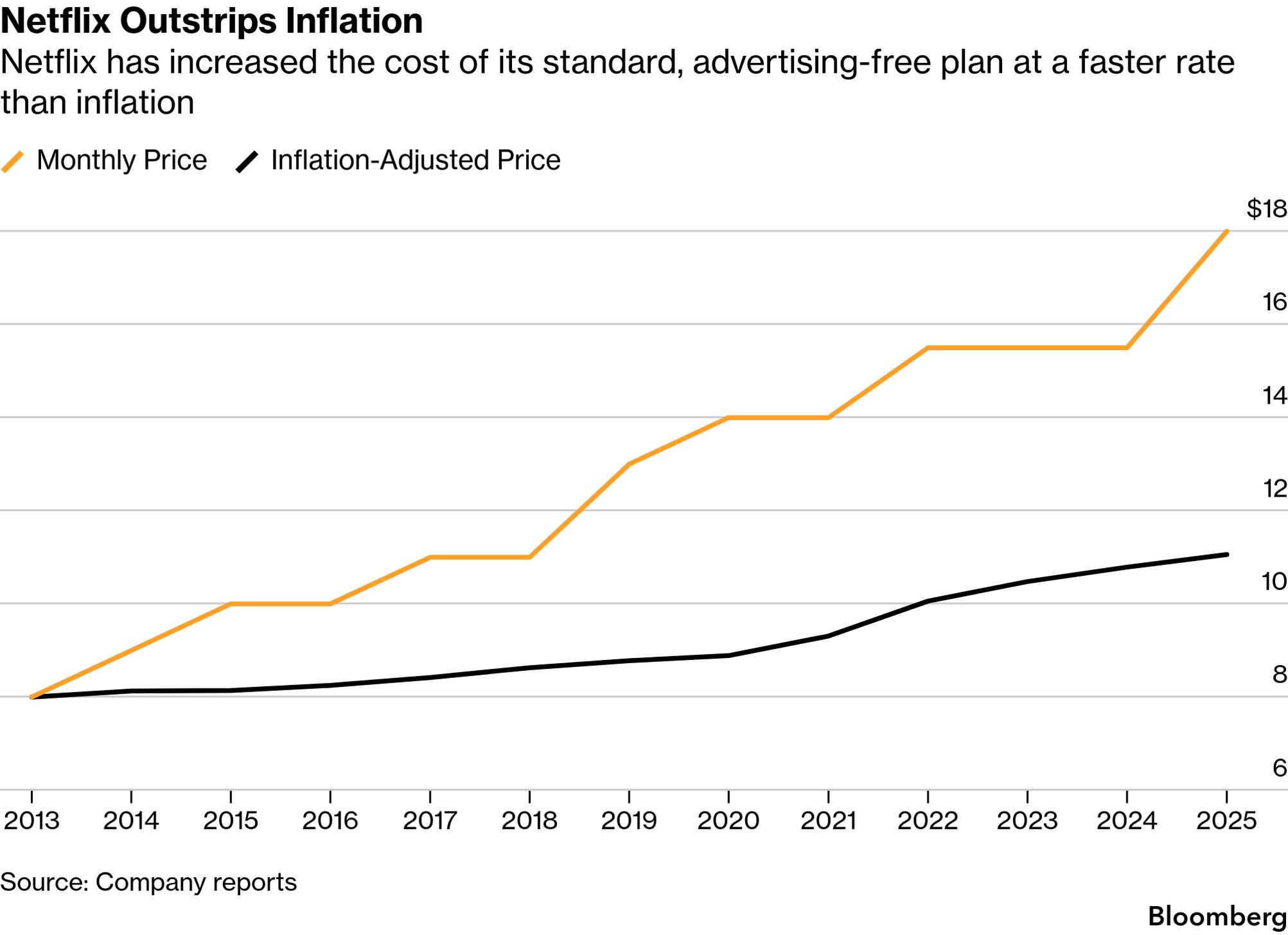 Before you flip out about Netflix price-gouging us, it's worth putting the subscription increases into perspective. Everyone is raising prices. Disney+, Apple TV+ and Peacock have more than doubled prices in half the time. Remember when they all cost less than $10 a month? Netflix says it only increases prices because it's spending more on programming. The company's annual cash spend on programming has increased from $2.4 billion in 2013 to an estimated $20 billion this year. Its programming budget has grown more rapidly than the cost of its service. "We deliver more entertainment value for our members," Co-Chief Executive Officer Greg Peters said on a call with analysts in January. 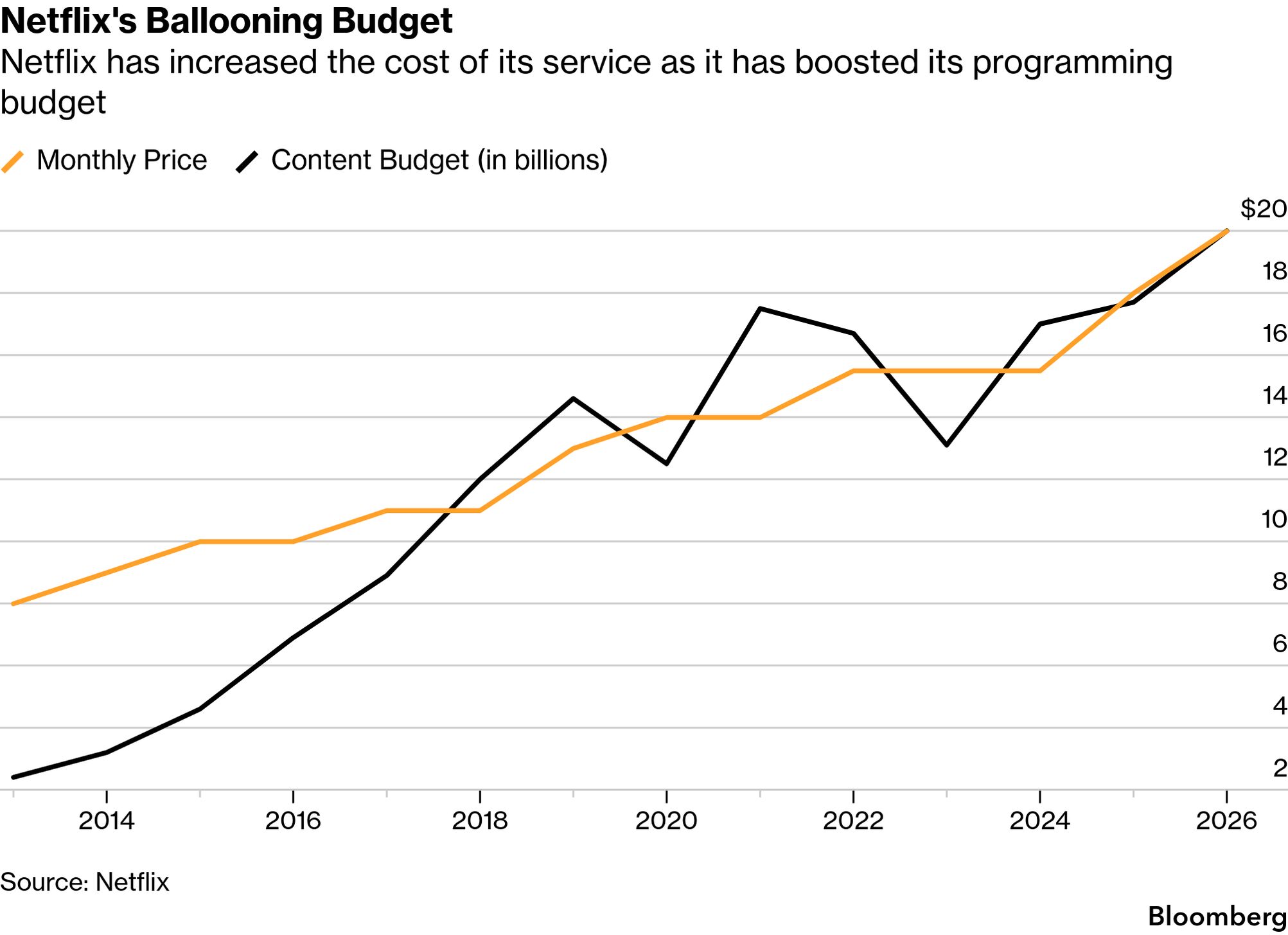 That being said, the value of Netflix has gotten worse in recent years. Netflix boosted prices by just $3 a month between 2013 and 2017, a period in which its content spending more than tripled. By 2021, Netflix has increased its spending from about $2 billion to more than $17 billion and yet a standard plan still cost only $14 a month. The service offered hit shows and a deep library for a fraction the price of cable. Over the last few years, Netflix has increased its prices by almost 50% even as its total budget hasn't changed as much. Because Netflix already has almost 90 million customers in the US, there is only so much more it can grow. It has to make more from the customers it already has. Netflix feels comfortable raising prices knowing that cost-conscious customers can downgrade to the advertising service. It has boosted prices for its standard plan at the same time it has rolled out an advertising-supported service in a dozen markets. That service is still quite small. Roughly 23 million people are on the ad tier in the US and Canada, according to research firm MoffettNathanson. Netflix said it made more than $1.5 billion in advertising sales last year and is on track to double that figure this year. Driving even more customers into the advertising to help accelerate its advertising business may be a good thing in the long run for the company (if not for all customers). Ever since Netflix bowed out of the bidding for Warner Bros., entertainment industry figures have wondered what the company would do next. The answer, at least for now, is raising prices and getting better at selling advertising. Netflix can keep raising prices because its customers keep paying. Customers cancel Netflix at a lower rate than its peers. Until customers start cancelling Netflix, they better get used to higher and higher prices. The best of Screentime (and other stuff)
Music publishers take on songwritersMajor music companies are trying an unusual legal maneuver in a major court case that pits them against songwriters. A recent court ruling would allow artists to regain their copyrights in the US and abroad through what's called a termination right. The major music companies don't want that. Their copyrights are their most valuable asset, especially as more contemporary artists push for ownership. So four major music companies — Universal Music Group, Sony, Warner and BMG — bought a piece of the disputed copyright to Double Shot (Of My Baby's Love) from Robert Resnik, the publisher that owned the song. Resnik had lost the case defending his ownership against the songwriters. The record labels want to take this case to the Supreme Court. In related news, Universal Music Group announced a stock buyback program, a bid to boost its lagging share price. Shares in the world's largest music company are down about 27% this year. The No. 1 movie in the world is…Still Project Hail Mary, which grossed more than $100 million globally during its second weekend. It dropped 23% from the previous weekend, which is outrageously good. The film has eclipsed $300 million domestically and $500 million worldwide and now feels like a sure thing. The highest-grossing movie of all time in South Korea is a historical drama. Deals, deals, deals
Weekly playlistThe Los Angeles-based pop duo Haute & Freddy released their major label debut earlier this month. I think I have touted singles of theirs in the past. This album features some of those songs, but it's a 13-song dance party. Don't get thrown by the first track. More from BloombergGet Tech In Depth and more Bloomberg Tech newsletters in your inbox:
We're improving your newsletter experience and we'd love your feedback. If something looks off, help us fine-tune your experience by reporting it here. Follow us
You received this message because you are subscribed to Bloomberg's Screentime newsletter. If a friend forwarded you this message, sign up here to get it in your inbox.
|
Monday, March 30, 2026
Netflix’s price hike, Disney’s bad week, Epstein island





Subscribe to:
Post Comments (Atom)
The current environment is perfect for my top Tesla setup
Check out the game plan here There’s a reason I keep coming back to my Tesla game plan. Across 87 live, published trad...

-
PLUS: Dogecoin scores first official ETP ...
-
Bloomberg Evening Briefing Americas View in browser Who's paying for Donald Trum...


No comments:
Post a Comment