| Read in browser | ||||||||||||||
 The US is seeing a growing electric vehicle paradox. Sales are down but charging companies are expanding and usage is up, indicating there's a critical mass of EVs on the road. Today's newsletter looks at this emerging pattern and what it means for drivers and charging companies. Plus, your weekend listen catches you up on the war in Iran's impact on renewables and your weekend read reveals the rise of the wildfire HOA in California. Charging aheadBy Kyle Stock Despite the plunge in US electric vehicle sales, it appears there's a critical enough mass to sustain the companies building public charging infrastructure. ChargePoint Holdings Inc. posted a 7% increase in sales in the last quarter of 2025, even as new EV sales fell by nearly 40% compared to the year-earlier quarter. "A lot of people get fixated on the new EV sales," ChargePoint Chief Executive Officer Rick Wilmer said. "But what really drives our business is not only new EV sales, but the cumulative number of EVs that are on the road." There are now roughly 5.8 million EVs zipping along American roads. With drivers increasingly relying on public charging, companies are racing to install more stations. 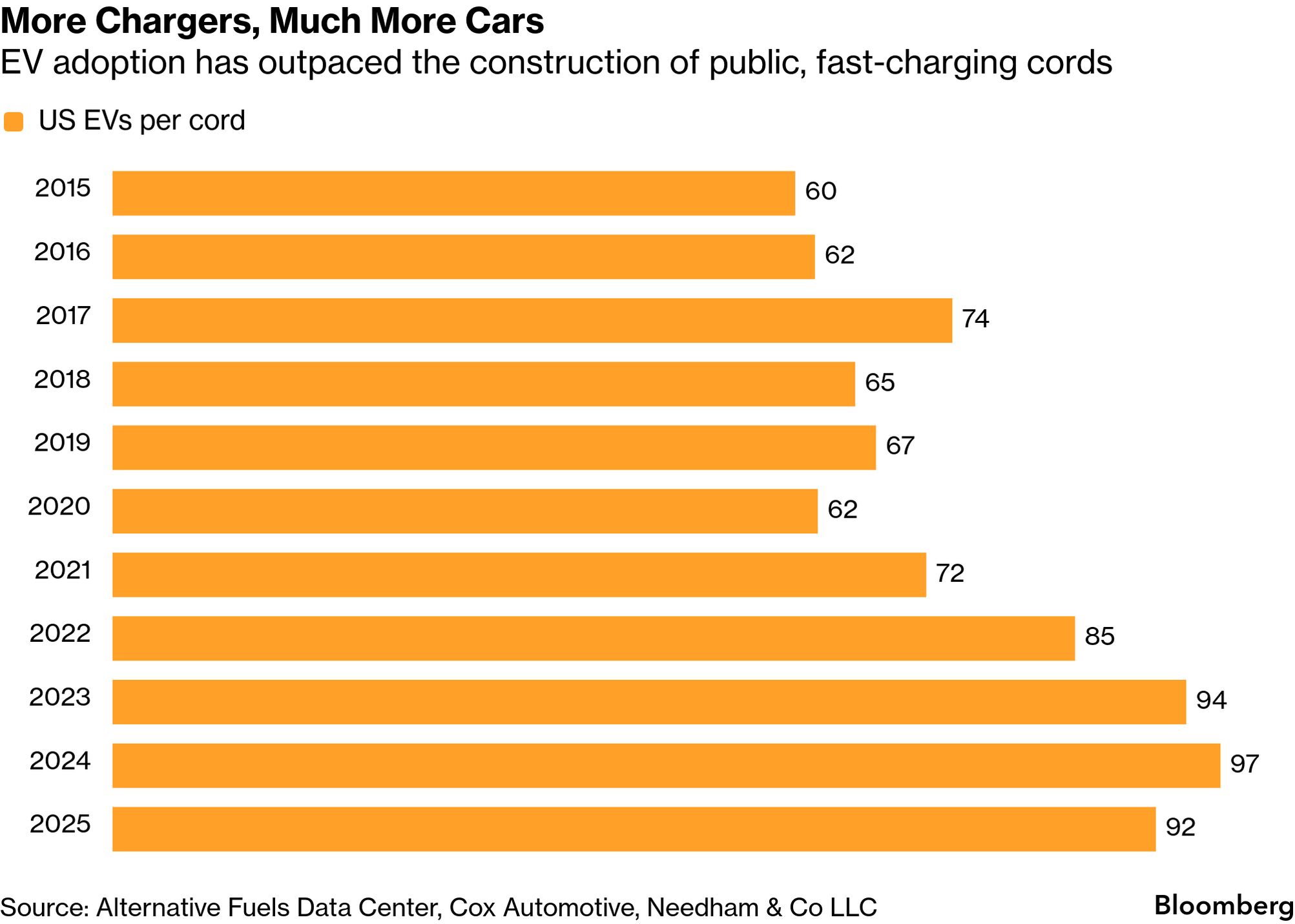 EVgo Inc. is another company expanding its network. The firm aims to build up to 1,650 new slots to charge electric cars in the US this year, which would be 38% more than it installed last year. "We're actually really excited about this year," CEO Badar Khan said to investors on Tuesday. "I think it's a year of really ramping up." US chargers have become more reliable and far faster, which encourages more people to use them, according to Paren, a data platform focused on EV infrastructure. Charging networks added about 11,300 ultra-fast cords across the US last year, up 48% from 2024. And the high-speed buildout is only accelerating: In the fourth quarter, nearly one in four new chargers were capable of pumping at rates of 250 kilowatts or more, which can typically add 100 miles of driving range in less than 10 minutes. Despite the uptick in the number of chargers and their ability to sling electrons faster, the average US charging station is still fairly busy most of the time. 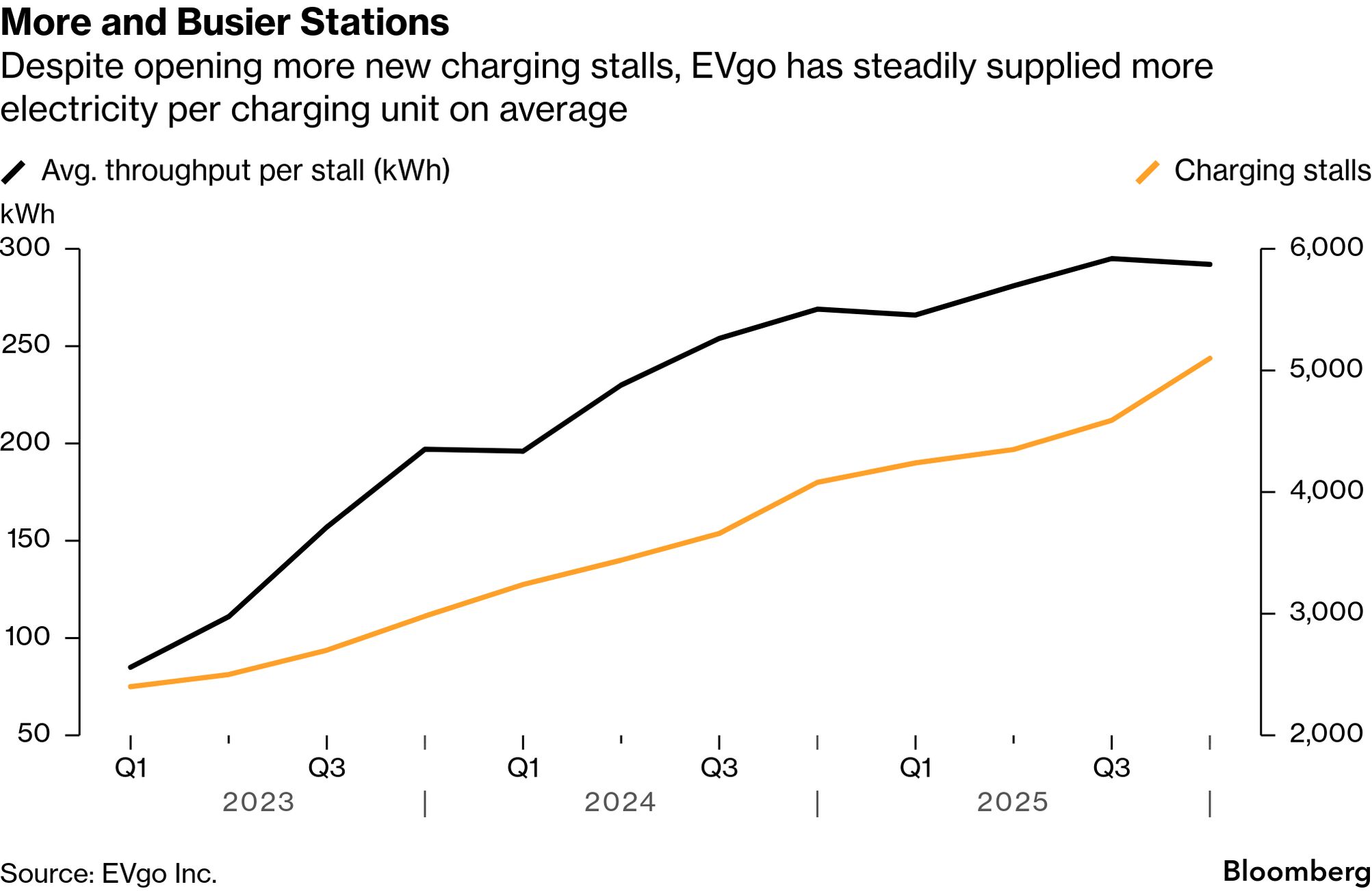 The number of charging cords in the EVgo network has roughly doubled in the past three years. Yet each cord, on average, has steadily pumped more electrons in a given period. To be sure, swooning EV sales complicate the road ahead for charging companies. Needham analyst Chris Pierce calls it an overhang, the type of bearish signal that drove shares of both ChargePoint and EVgo down this week despite their upbeat earnings calls. Both stocks are wallowing near historic lows. However, Pierce said charging results can continue to improve even with slumping car sales. "There are already too many EVs for too few fast charging stations," he said. Ferro, at Paren, is keeping an eye on surging gas prices due to the war in Iran and a suite of new affordable electric SUVs, factors that could yet swing sales away from internal combustion engines. "There's room to grow," he explained. "The [charging companies] we talk to are not building for 2025 or 2026; they're building for 2035. They may slow down their deployment, but they're still going to deploy." Read the full story to see how charging companies are planning for 2026. Subscribe to the Hyperdrive newsletter for your weekly guide to the future of cars, from reporters around the world. Bargain shopping$25,000 The price almost 40% of used EVs in the recent quarter sold for less than. The other route"I think the demand is only going to keep going from here." Peter Nagle Associate director of Americas demand forecasting, S&P Global Mobility Nagle is talking about hybrid sales in the US, which have been on the rise since federal EV incentives expired. With war in Iran pushing up the price of oil, they could continue to increase. Readers really liked🔋China's new big lead? Batteries that discharge power for days Your weekend readState policymakers have pushed regulations to curtail wildfire risk in the increasingly flammable West, while some homeowners have made costly upgrades themselves. But there's a new model being tested: creating fire-resilient housing developments from scratch. The wildfire HOA isn't widespread (yet), but a handful of developers in California are testing it out to see if it can create shared resiliency and bring down the high costs of adapting to a more fiery world. The subject of this weekend's read is one of those neighborhoods under construction in the Sierra Nevada Mountain foothills, an area that gave California two of its largest wildfires in recent history. 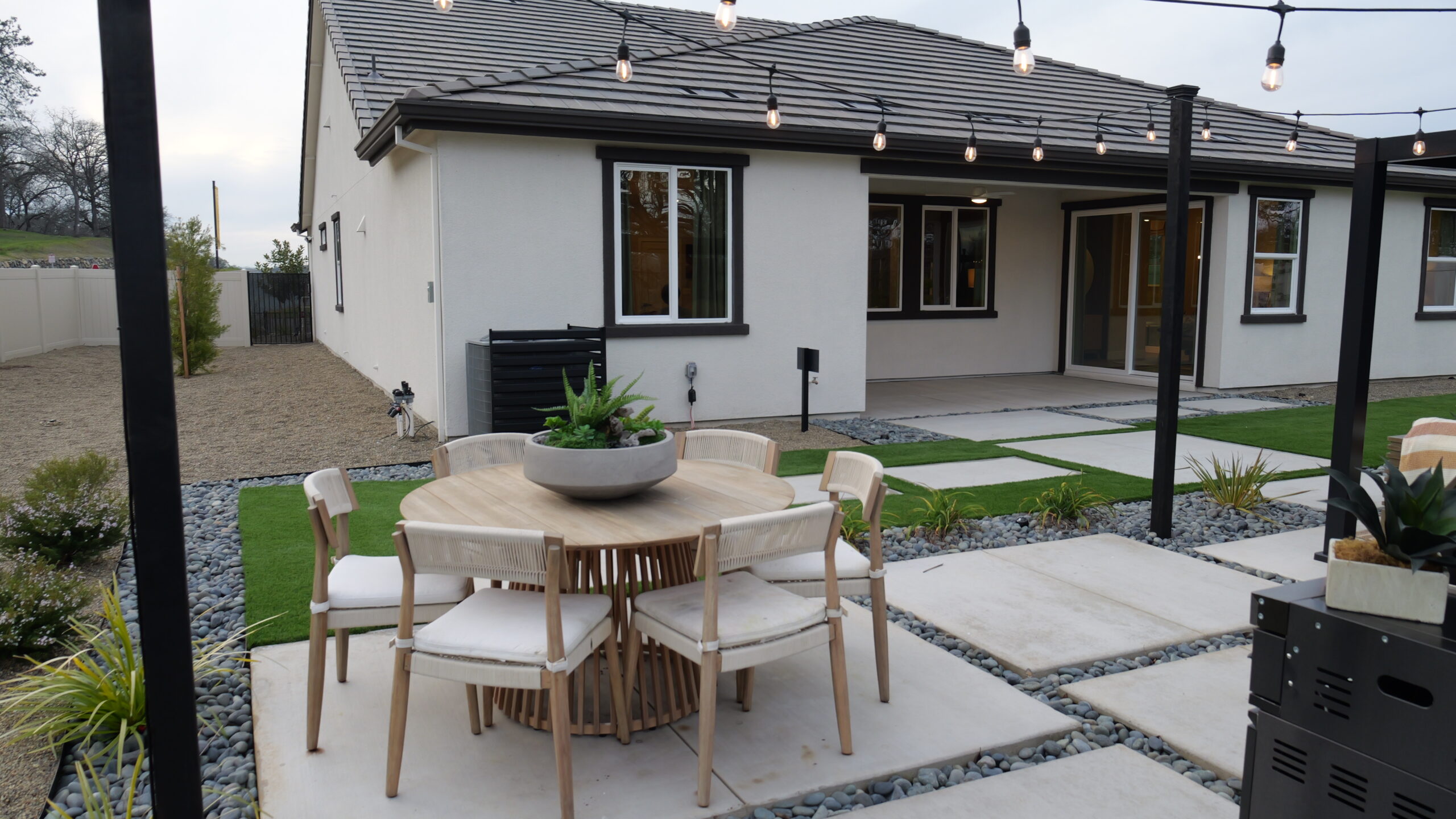 An example of how the backyard area can be landscaped to limit chances for ignition near the home. Credit: Insurance Institute for Business and Home Safety By Linda Poon As builders in fire-prone areas like California race to reimagine homes for a more fiery future, one developer is zooming out to build entire fire-resilient neighborhoods. KB Home's developments tackle an issue that's hard for any individual homeowner to overcome: "You can do your home perfectly, but if your neighbor didn't, you still have a fire risk," said Roy Wright, chief executive officer of the research nonprofit Insurance Institute for Business and Home Safety. In other words, to slow the spread of urban fires it takes a village. Earlier this year, KB Home held a ribbon-cutting ceremony outside Sacramento for Stone Canyon, the first "Wildfire Prepared Neighborhood" in Northern California, built in partnership with IBHS. The development, which is still under construction in Cameron Park with four homes completed so far, will comprise 24 single-family homes designed to meet the nonprofit's strictest fire protection standards. The development is slated to be completed in 2027. It's only the second development in the US to achieve that designation; the first is Dixon Trail, a 64-home community also from KB Home that's slated to be completed later this year in Escondido, San Diego County. A model home in Stone Canyon shows concrete tile roofs and double-paned, tempered windows, as well as non-combustible sidings and shutters. Vents and gutters are covered with mesh to keep embers from igniting the structure. The home also has at least five feet of clearance from the building free of any combustible material, with metal fencing surrounding the entire property. The limited greenery — a few wiry shrubs spaced apart and larger trees found just beyond the fencing — stands in stark contrast to the lush, tree-lined neighborhood just across the street. That's part of the sell: Less vegetation means less fuel for a fire to propagate, though the development isn't completely barren. While the homes do not come with landscaping, the model home shows how owners can spruce up their backyards while following community rules, with paved walkways, turf-covered patios, small plants and outdoor furnishing. "This is not about removing the tree canopy; it is about ensuring that those trees are not on top of the house," said Steve Ruffner, president and regional general manager for KB Home in Southern California. Such developments have yet to be tested against real-world conditions, and they're not billed as a panacea against wildfire risk. But they represent an "important evolution in making both existing and new communities more resilient to wildfire," said Frank Frievalt, a retired fire chief and the director of the WUI Fire Institute at California Polytechnic State University. "It's recognizing the necessity to do this work in density." They are also a reflection of the tensions between the realities of climate change and California's severe housing shortage: Amidst an urgent need for more homes, development continues to expand into wildfire-risky areas where open forest meets the built environment. Read the full story on how to fireproof a neighborhood. Your weekend listen Many consider a widespread war in the Middle East the worst-case scenario for the global oil and gas markets. That war is here, and it could have wide-ranging, long-lasting impacts on energy and climate policy. This week on Zero, Akshat Rathi speaks with Jason Bordoff, director of the Center on Global Energy Policy at Columbia University and former energy and climate advisor to President Barack Obama, to try to understand what those impacts could look like. Will countries double down on fossil fuels — or will they speed up the clean-energy transition? Listen now, and subscribe on Apple, Spotify or YouTube to get new episodes of Zero every Thursday. More from Bloomberg
Explore all Bloomberg newsletters. Follow us
You received this message because you are subscribed to Bloomberg's Green Daily newsletter. If a friend forwarded you this message, sign up here to get it in your inbox.
|
Saturday, March 7, 2026
EV sales fall. Charging rises.





Subscribe to:
Post Comments (Atom)
Your Reservation is Confirmed...
You're Confirmed for The Secret AI Stocks Summit Click here to see how you can test drive Jason...

-
PLUS: Dogecoin scores first official ETP ...
-
Bloomberg Evening Briefing Americas View in browser Who's paying for Donald Trum...


No comments:
Post a Comment