| Claude takes the lead in downloads |
| |
| The Iran war suddenly turned theoretical debates about the US military's use of AI into a more urgent discussion. Today's newsletter features an excerpt of Amanda Mull's latest Buying Power column (which you can read free!) on how American consumers are showing their preference for the company that's pushing back on the Pentagon's demands. Plus: Middle East data centers are under fire, Elon Musk's political spending hasn't moved the needle in Kentucky, and Calvin Klein is missing a pop culture moment. If this email was forwarded to you, click here to sign up. It took only a few hours for Sam Altman's timing to go from bad to worse. On Friday evening, the chief executive officer of OpenAI announced the company would step into the role at the Department of Defense vacated earlier that day by Anthropic PBC, which had angered Secretary of Defense Pete Hegseth by refusing to allow its artificial intelligence models to be used for "all lawful purposes." In particular, Anthropic CEO Dario Amodei wanted assurances its technology wouldn't be used for conducting mass surveillance of Americans or controlling fully autonomous weapons. That same night, US and Israeli forces launched the first salvo in an ongoing bombing attack on Iran. Among other things, a girls school was destroyed and more than 160 people killed, according to local authorities. 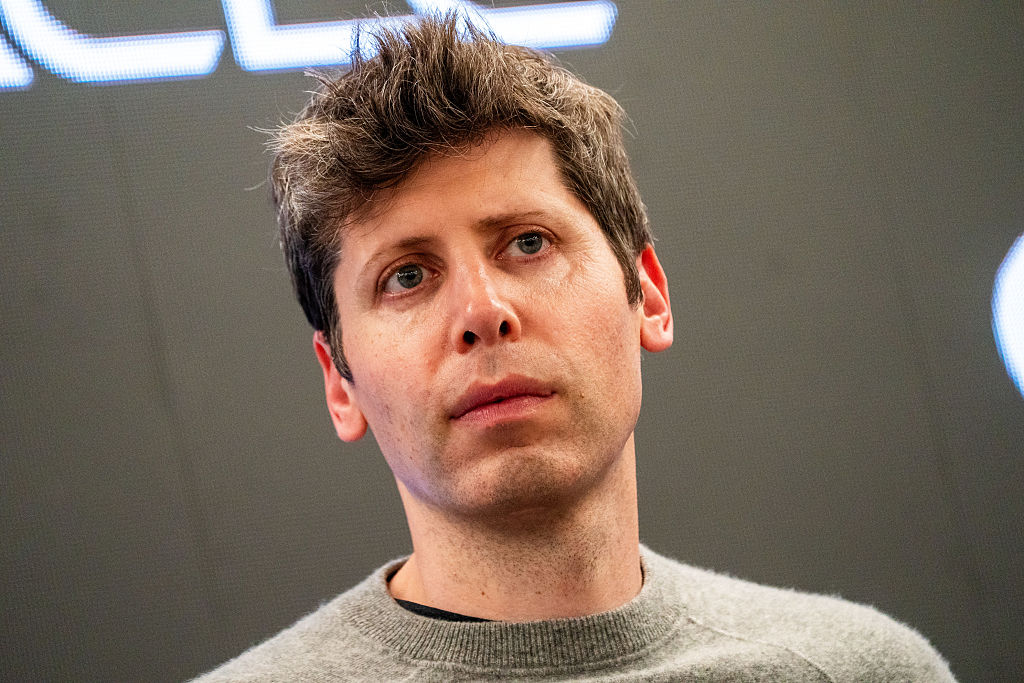 OpenAI CEO Altman at the Stargate AI data center in Abilene, Texas, in September. Photographer: Kyle Grillot/Bloomberg The backlash online was immediate—OpenAI, according to a growing chorus of critics, had sold out regular Americans and foreign civilians alike. QuitGPT, an existing campaign to encourage people to stop using and paying for OpenAI's popular ChatGPT service because of its potential impact on users' mental health, swiftly picked up steam. Altman spent some time in the following days trying to explain himself and the company he leads, including in a statement posted to X on Monday in which he promised to amend the company's agreement to prevent its use for domestic surveillance of Americans. Although the company's intentions were good, he wrote, the Pentagon deal "just looked opportunistic and sloppy." The attempt at damage control was warranted. In the days between OpenAI's announcement and Altman's X statement, app store downloads of Anthropic's Claude surged ahead of OpenAI's ChatGPT, with a spike so big on Monday morning that it briefly crashed the company's services. Social media users—including Katy Perry, for some reason—made a show of canceling their paid ChatGPT subscriptions and switching to Claude, which had up to that point lagged far behind ChatGPT in awareness and usage among people outside the tech industry. As of this morning, it remained in the top spot for new downloads on Apple devices. Keep reading: ChatGPT Backlash Reveals New Pitfalls in Aligning With Trump (🎁) Related: Pentagon Says It's Told Anthropic the Firm Is Supply-Chain Risk More from today: Live Updates on the Iran War Markets wrap: Stocks Fall as Oil Surge Boosts Treasury Yields The Big Take: Trump's Shifting Iran Strategies Risk a Chaotic Global Endgame Jonathan Levin writes in Bloomberg Opinion: This Oil Shock Hits Differently for the US | |
| |
| |
| | Get the Bloomberg Businessweek print magazine delivered to you and unlimited access to Businessweek stories on Businessweek.com. Annual subscription for $99. | | | | | | |
Servers in the Crosshairs | |
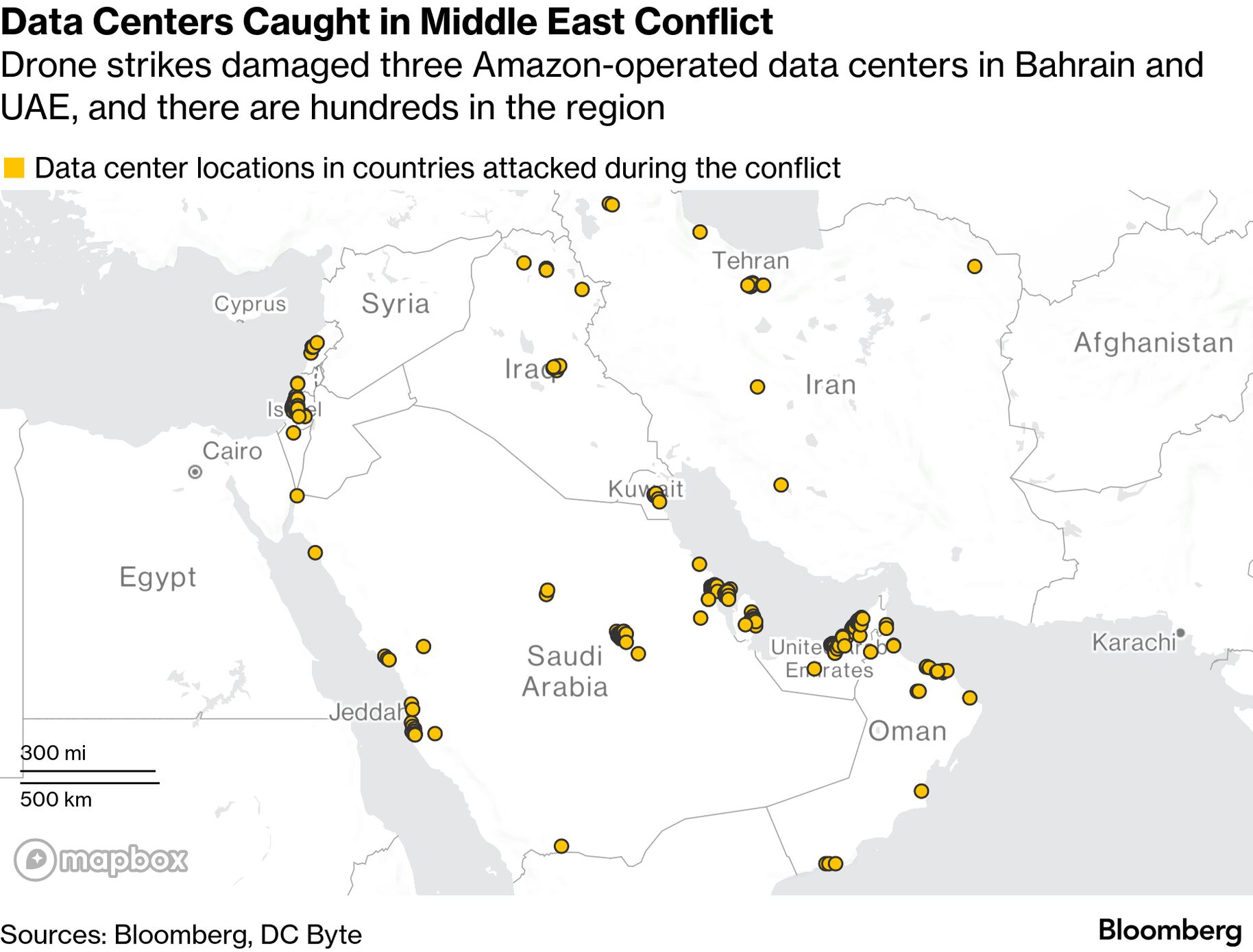
| For millennia, wartime combatants have sought to hobble the infrastructure of their adversaries by poisoning wells, burning bridges or, more recently, attacking railways, refineries and airports. In the war now unfolding across the Middle East, another kind of target has been added to the list: data centers. Drone strikes have damaged three facilities operated by Amazon.com Inc. in the United Arab Emirates and Bahrain. And Israel and the US have hit at least two data centers in Tehran—one of them connected to the Islamic Revolutionary Guard Corps—according to Holistic Resilience, a nonprofit mapping airstrikes. Attacking such facilities can "paralyze banks, paralyze government offices" and key industries, says Daniel Efrati, chief executive officer of NED Data Centers, an Israeli company that builds fortified data centers. "If you have one minute of downtime, it can cost any organization millions." Although it's not certain that Iran was aiming specifically for the Amazon facilities, computing capacity has clearly become a strategic imperative. Read more from Olivia Solon, Loni Prinsloo, Marissa Newman and Omar El Chmouri here: How Data Centers Became a Casualty of War | |
Closed for Business | | 15 million | | That's how many barrels of oil transited the Strait of Hormuz each day in 2025. Ship-tracking data compiled by Bloomberg show traffic through the strait has plummeted by more than 95% since the US-Israeli war on Iran began, with major crude carriers and gas tankers are avoiding the route. | | |
| |
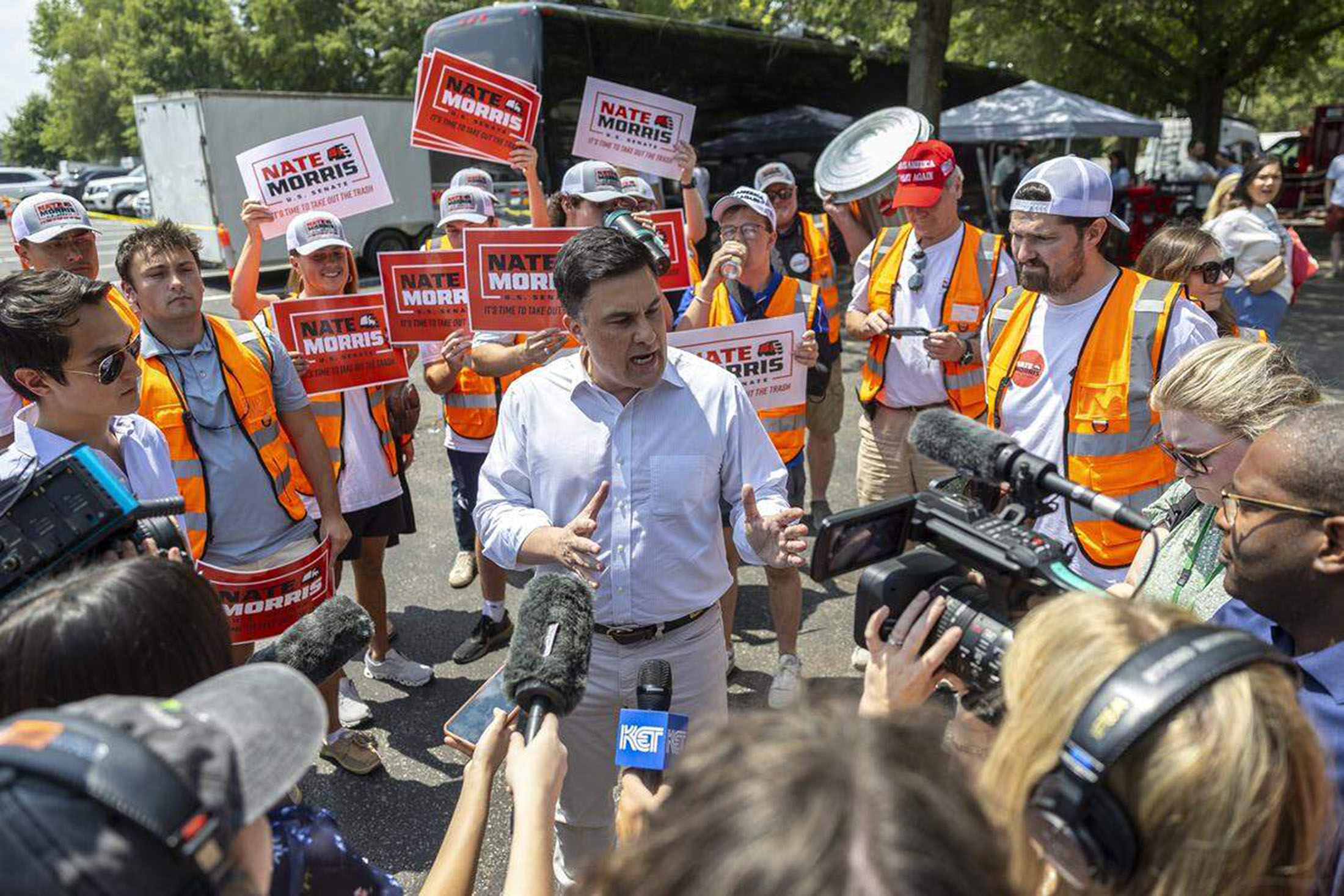 Nate Morris campaigning in Fancy Farm, Kentucky, last summer. Photographer: Ryan C. Hermens/Lexington Herald-Leader/Tribune News Service/Getty Images At first, the donation seemed poised to shake up a tight US Senate primary. Elon Musk, the world's richest man and the most prolific Republican donor during the 2024 election cycle, wrote a $10 million check to a super political action committee backing Nate Morris, a tech entrepreneur close to Vice President JD Vance. The super PAC, Fight for Kentucky, ran ads that touted the Tesla Inc. chief executive officer's support as proof that Morris was "Kentucky's real Trump guy." Axios, which first reported the donation, called its size "stunning" and suggested that Musk's money gave "Republicans a formidable weapon in the expensive battle to keep their congressional majorities." But at this point, some Republicans are griping that Musk may have picked the wrong candidate. Since Jan. 22, Fight for Kentucky has spent roughly $7.5 million, according to Federal Election Commission filings. It aired ads during the Olympic opening ceremonies and NBA games. It also paid more than $1 million for ads on YouTube, according to records from Google. The ads include endorsements from Musk and Charlie Kirk, who announced his support for Morris months before he was assassinated at a rally in Utah. They also feature a clip from Donald Trump Jr.'s podcast in which Trump Jr. praises Morris' business acumen and predicts, "I'm sure we'll do a lot together." Morris may need even more cash for Trump Jr.'s prediction to come true, Max Chafkin and Lydia Beyoud write: Elon Musk Is Backing 'JD Vance 2.0.' Some Republicans Aren't Sure That's a Good Thing  Sarah Pidgeon as Carolyn Bessette Kennedy in FX's Love Story: John F. Kennedy Jr. & Carolyn Bessette. Photographer: Kurt Iswarienko/FX Obsessed with the minimalist 1990s fashion in FX's new limited series, Love Story: John F. Kennedy Jr. & Carolyn Bessette, 20-year-old Amelia Joyce hightailed it to Calvin Klein's SoHo store in late February to buy the look. After all, Bessette Kennedy was famously a publicist at Calvin Klein before she married JFK Jr.; what better place to seek out her style? But instead of finding the brand's flagship stocked with Bessette Kennedy's "classy, monochromatic, simple" aesthetic, the NYU student says she stepped into a sea of logoed sweatshirts, windbreakers and denim dresses. "Nothing really stood out to me," she says. "It didn't seem like they were trying to emulate the show." Joyce walked out empty-handed. She's not the only one trying to mimic the iconic style of Bessette Kennedy—or CBK, in internet speak—and coming up short. According to Google Trends, searches for "Calvin Klein 90s" shot up 850% in the US the week Love Story premiered. Yet on the brand's website, Dina Katgara writes, customers found more fleece joggers and graphic tees than the sleek basics they were looking for: Calvin Klein Is Missing Its Carolyn Bessette Kennedy Moment | |
Travelers Out of Luck | | "When it comes to war, that is pretty much a blanket exclusion across all travel insurance policies. We aren't aware of any travel insurance policies that will cover claims that are directly related to war. And it's quite broad, unfortunately." | | Jodi Bird A travel specialist with Australian consumer advocacy group Choice | | As the war in Iran grounds flights worldwide, hundreds of thousands of travelers scrambling to get home are discovering a harsh reality: Their travel insurance won't cover replacement flights or extended hotel stays. | | |
| Our daily word puzzle with a plot twist. Today's clue is: Three-legged race? Play now! | |
| Like Businessweek Daily? Check out these newsletters: - Odd Lots, with Joe Weisenthal and Tracy Alloway, explores the most interesting topics in finance, markets and economics.
- Power On, with Mark Gurman, has the inside scoop on all things Apple and consumer tech.
- Washington Edition follows Trump's second term through the lens of business, markets and the economy.
- Bloomberg Weekend discusses big ideas and open questions in the fascinating places where finance, life and culture meet.
- Business of Food covers how the world feeds itself in a changing economy and climate, from farming to supply chains to consumer trends.
Explore all Bloomberg newsletters. | |
| |
| You received this message because you are subscribed to Bloomberg's Businessweek Daily newsletter. If a friend forwarded you this message, sign up here to get it in your inbox. | | |









No comments:
Post a Comment