| Read in browser | ||||||||||||||
 The Trump administration is bringing back coal even as usage of the dirtiest fossil fuel has dwindled for decades in the US. Our reporters traveled to Lake Michigan to examine the cost — to public health, the economy and the environment — of America's coal renaissance. Meanwhile, in Africa, efforts to reduce pollution from dirty cooking face a reckoning after the collapse of a company insured by the World Bank and backed by South Africa's Rand Merchant Bank. Did someone forward you this newsletter? Subscribe to Green Daily for more free reads on the politics of climate change. The cost of bringing back coalBy Leslie Kaufman, Eric Roston and Jeff Green Chad Schmucker, 71, lives in Port Sheldon Township on the East shore of Lake Michigan, an area where dunes meet forest and water draws boaters in summer. It would be his dream retirement spot except that it's just south of the J.H. Campbell coal plant, which spews pollutants and makes so much noise that at times his wife can't sleep. 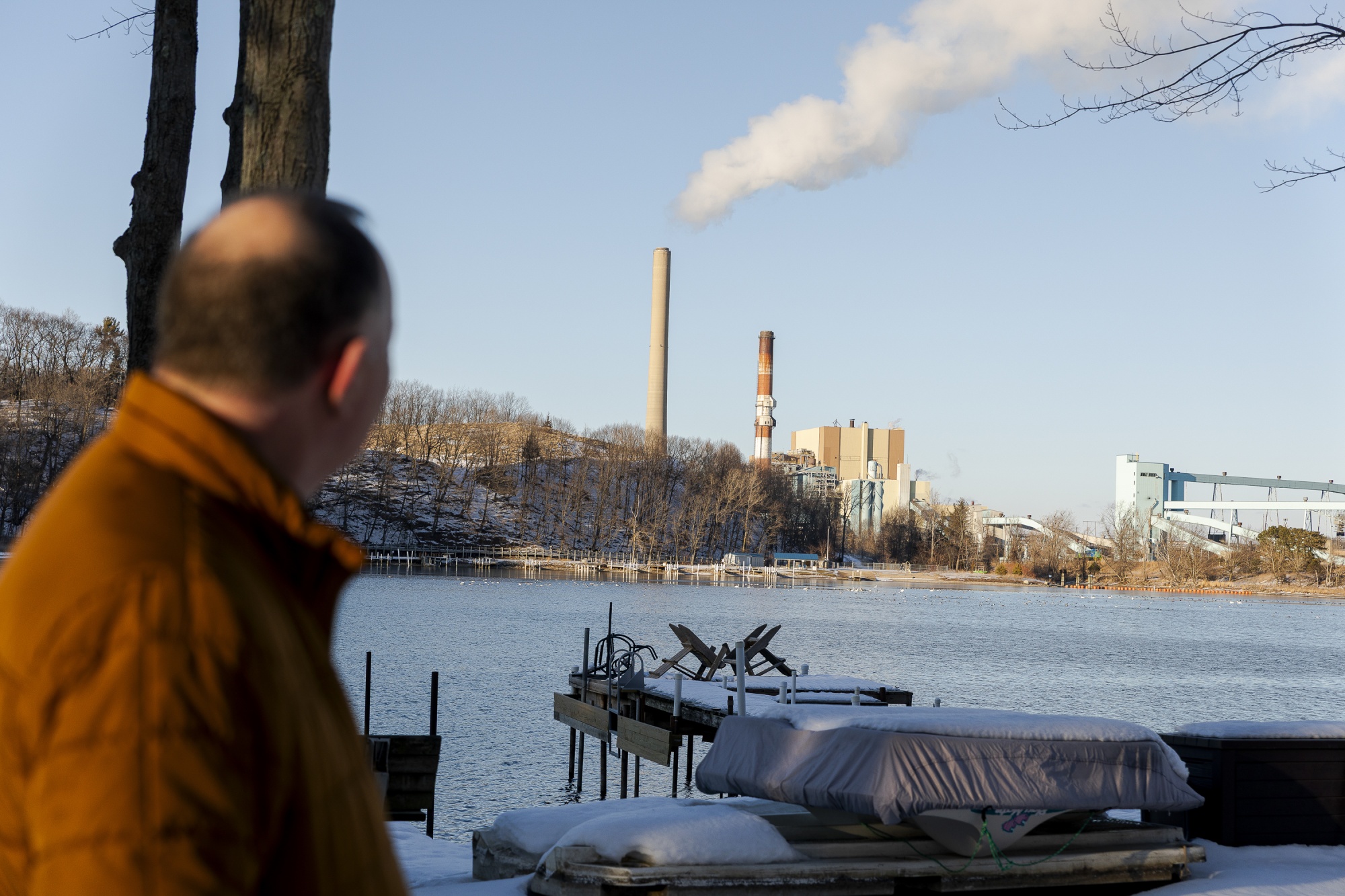 The J.H. Campbell coal plant Photographer: Sylvia Jarrus/Bloomberg Summer brings the sound of tractors pushing coal, the mechanical churn carrying across the shoreline. Then there's the grit. When the machines shove coal into new mounds, "all sorts of clouds of dust go off of it," said Elisabeth Mims, 41, who lives in the shadow of the plant. "Of course, that little celebration was canceled." It was set to close last May, and to celebrate, Schmucker and neighbors planned a party at a little park by the water. "We were going to meet there with all the neighbors around midnight and a few bottles of champagne," he said recently. It was canceled because the US Energy Department, in a highly unusual move, declared a grid-reliability emergency and ordered Campbell to remain open for 90 days. That was just an opening strike.  Elisabeth Mims, and her dog, Frank, outside of her home near the plant. Photographer: Sylvia Jarrus/Bloomberg In August and in November, the DOE extended Campbell by another 90 days. Then in December, the DOE forced three other aging coal plants slated for retirement to stay operational. In many cases the orders came within days of retirement dates that had been scheduled for years. Energy Secretary Chris Wright is keeping the plants open in service of President Donald Trump's plan for a renaissance of what he calls "beautiful clean coal." He has argued that coal is necessary for grid resilience, especially as data centers demand more energy. Last week alone, Wright announced $175 million in government funding to "modernize, retrofit and extend the life" of six coal-fired power plants across the rural South and Ohio and the White House issued an executive order telling the Department of Defense to purchase power from coal-fired facilities. Michigan State Attorney General Dana Nessel has sued to vacate the orders, which she characterizes as a "fabricated emergency" and a costly and unjustified federal overreach. In filings to the Federal Energy Regulatory Commission in January, Consumers Energy, the majority owner of the plant, reports that as of the end of last year, the emergency orders had cost them —for things like more coal, repairs and staffing — $135 million more then they made from selling the plant's power. The roughly $600,000-a-day cost could be passed along to ratepayers across the region. 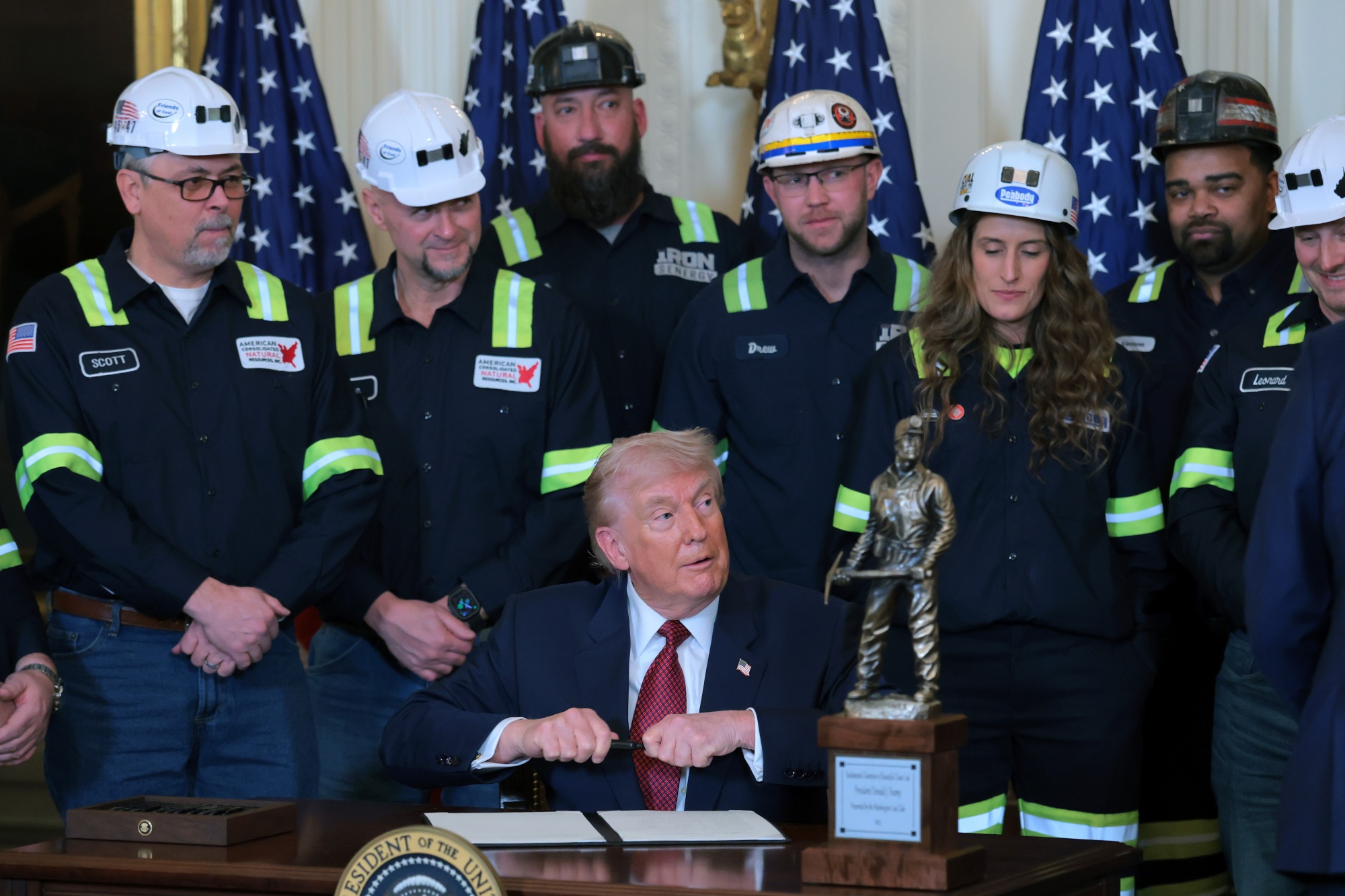 President Donald Trump during an event on the use of coal in February. Photographer: Anna Moneymaker/Getty Images But the true costs of keeping Campbell open go beyond that. Burning coal comes with well documented health and environmental harms, like smog, and the EPA has long counted avoided pollution as a benefit, to balance regulatory costs. The agency quietly ended that practice in January. Ten public interest groups have filed a request for a rehearing with the DOE, saying the Campbell emergency order violates the law. The science of coal pollution is so advanced those harms can be modeled. On page 13 of their petition, they do just that: Each year that the life of the plant is extended, it could cause up to 81 premature deaths and nearly $900 million worth of costs for treating illnesses caused by the pollution including asthma attacks and lung disease. "These harms, which flow directly from the department's order, are actual, specific, imminent and deadly," the groups write. Read the full story on Bloomberg.com and subscribe for unlimited access to exclusive reporting on the Trump administration's energy policy. On its way out16% US power generation coming from coal in 2024, from 40% in 2014 Old and dirty"It's flat-out flying in the face of market-based economic principles" Rachel Cleetus Union of Concerned Scientists senior policy director for climate and energy A clean cooking collapseBy Antony Sguazzin, David Herbling, and Laura Millan The collapse of clean-cooking company Koko Networks will reverberate beyond the $300 million investors lost on what used to be one of the industry's leading businesses. The Kenyan firm sold cooking stoves and clean-burning ethanol to about 1.3 million households, operating a network of fuel kiosks in corner stores and keeping prices low by selling carbon credits on the open market. But the company filed for administration over the weekend of Jan. 31 after Kenya's government demurred for at least eight months over issuing the authorization Koko required to sell its offsets in regulated compliance markets, where they could fetch a higher price. 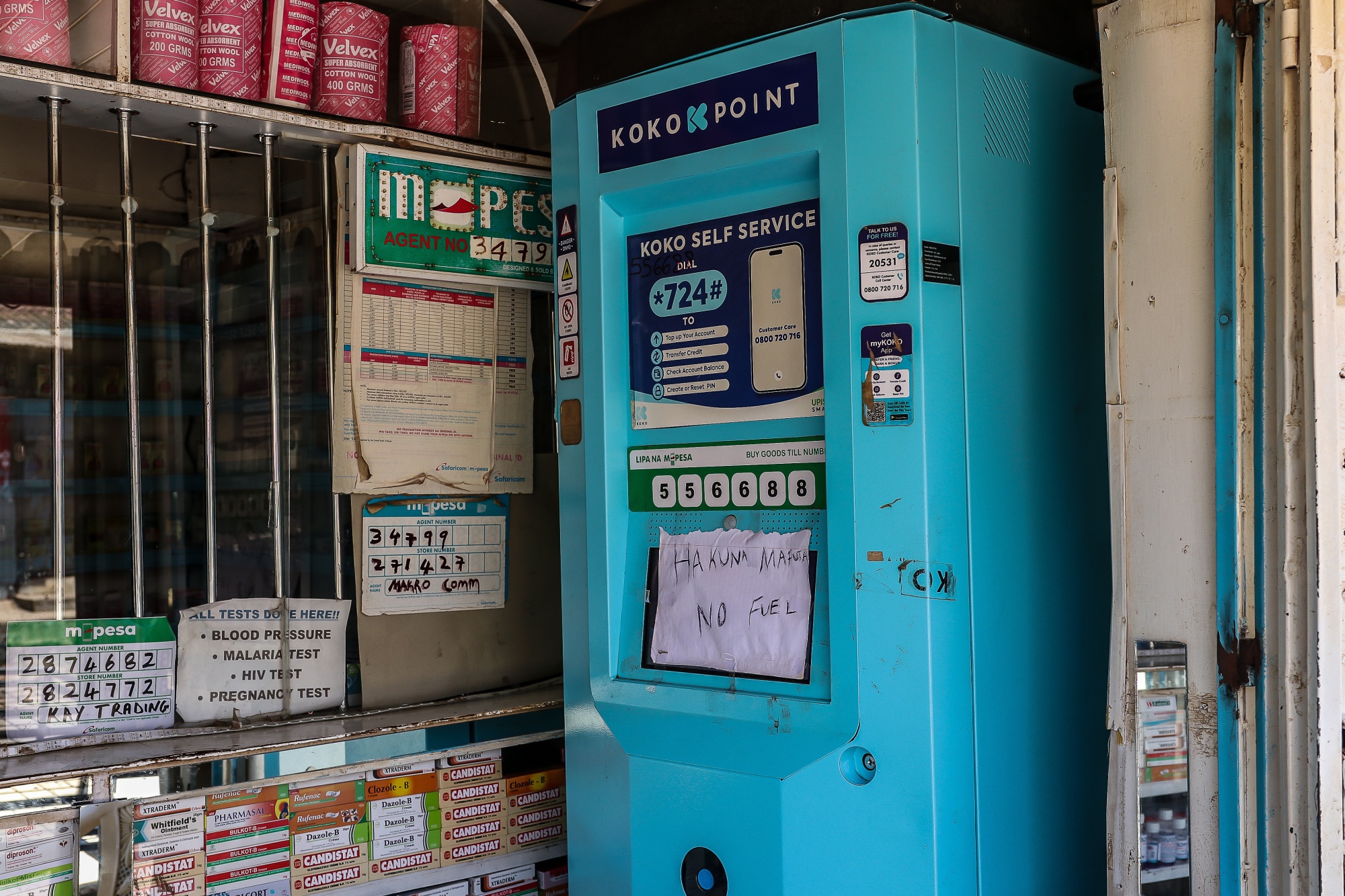 A 'No Fuel' sign on a Koko bioethanol fuel distribution booth on the outskirts of Nairobi. AP Now, a World Bank unit that insured Koko for almost $180 million may be forced to pay out, while one of Africa's largest investment banks is trying to recover a loan secured by carbon-credit income that never materialized. The bankruptcy damages Kenya's once-bright prospects as a destination for emissions offsets projects and highlights the challenges of financing the clean-cooking industry, a key tool in the fight against climate change. Many of Koko's former customers are unable to get the company's ethanol to cook with and all of the company's 700 staff have been laid off. "From an environmental standpoint, this is a very big step back for Kenya and for accelerating clean cooking on the continent," said Ethan Kay, managing director of emerging markets for wood-burning cookstove provider BioLite. "Kenya has become a very challenging place to run a clean-cooking business and that predated the collapse of Koko." Read the full story and subscribe to Green Daily for more stories on Africa's efforts to reduce emissions. This week's Zero listen The BBC Symphony Orchestra perform Aaron Copland Appalachian Spring and Julia Wolfe unEarth Photographer: Mark Allan How can music be used to communicate about the climate crisis and its solutions? This week on Zero, Akshat Rathi talks with Pulitzer Prize-winning composer Julia Wolfe about her recent work, unEarth, which explores climate change and habitat loss through orchestra, voice and poetry. Wolfe discusses how she did her research; captured the clash between humanity and nature; and what the piece means at a time when her home country of the US seems to be moving away from cutting emissions. Listen now, and subscribe on Apple, Spotify or YouTube to get new episodes of Zero every Thursday. More from Green A break in the rain in the Sunset District of San Francisco, California, on Feb. 11, 2026. Hearst Newspapers A massive winter storm bearing down on California threatens snow by the foot across some of its highest mountains, along with the potential for flooding, tornadoes and damaging winds. Flights in and out of New Zealand's capital Wellington have been canceled, homes evacuated and power cut to tens of thousands as strong winds and heavy rain lash the lower North Island. More from Bloomberg
Explore all Bloomberg newsletters. Follow us
You received this message because you are subscribed to Bloomberg's Green Daily newsletter. If a friend forwarded you this message, sign up here to get it in your inbox.
|
Monday, February 16, 2026
The true cost of Trump’s coal push





Subscribe to:
Post Comments (Atom)
The Next Tech Boom Is Already Underway, and Here’s What’s Driving It
A behind-the-scenes force is reshaping industries and creating new profit opportunities… ...
-
PLUS: Dogecoin scores first official ETP ...
-
Hollywood is often political View in browser The Academy Awards ceremony is on Sunday night, and i...


No comments:
Post a Comment