| Read in browser | ||||||||||||||
  Good afternoon from Los Angeles. I was supposed to be on a flight to New York City for this week's Podcast Business Summit, hosted by my colleague Ashley Carman. I am grounded thanks to the storm, but she will still be interviewing some of the industry's biggest names, including Kara Swisher, Pablo Torre and Adam Friedland. Five things you need to know
The Oscar race is shrinkingFewer movies are competing for more Oscars. Sinners earned 16 nominations at this year's Academy Awards, a record for an individual film. One Battle After Another earned 13 nominations, one shy of the previous record. All told, the top five nominees — a group that also includes Frankenstein, Marty Supreme and Sentimental Value — earned 56 nominations, making this the most top-heavy Oscars this century (if not ever). While this has been an exceptional year, it fits into a larger trend. The industry's biggest night is dominated by a shrinking set of pictures. Between 2000 and 2008, an average of more than 18 movies secured at least a couple nominations, and the top movies received an average of seven. In 2005, a high point for diversity, 22 different movies got at least two nominations. The best picture that year, Million Dollar Baby, received seven nominations. This year, six movies secured more than half of all nominations — and that's with an expanded field of best picture nominees, as well as a new category (best casting). 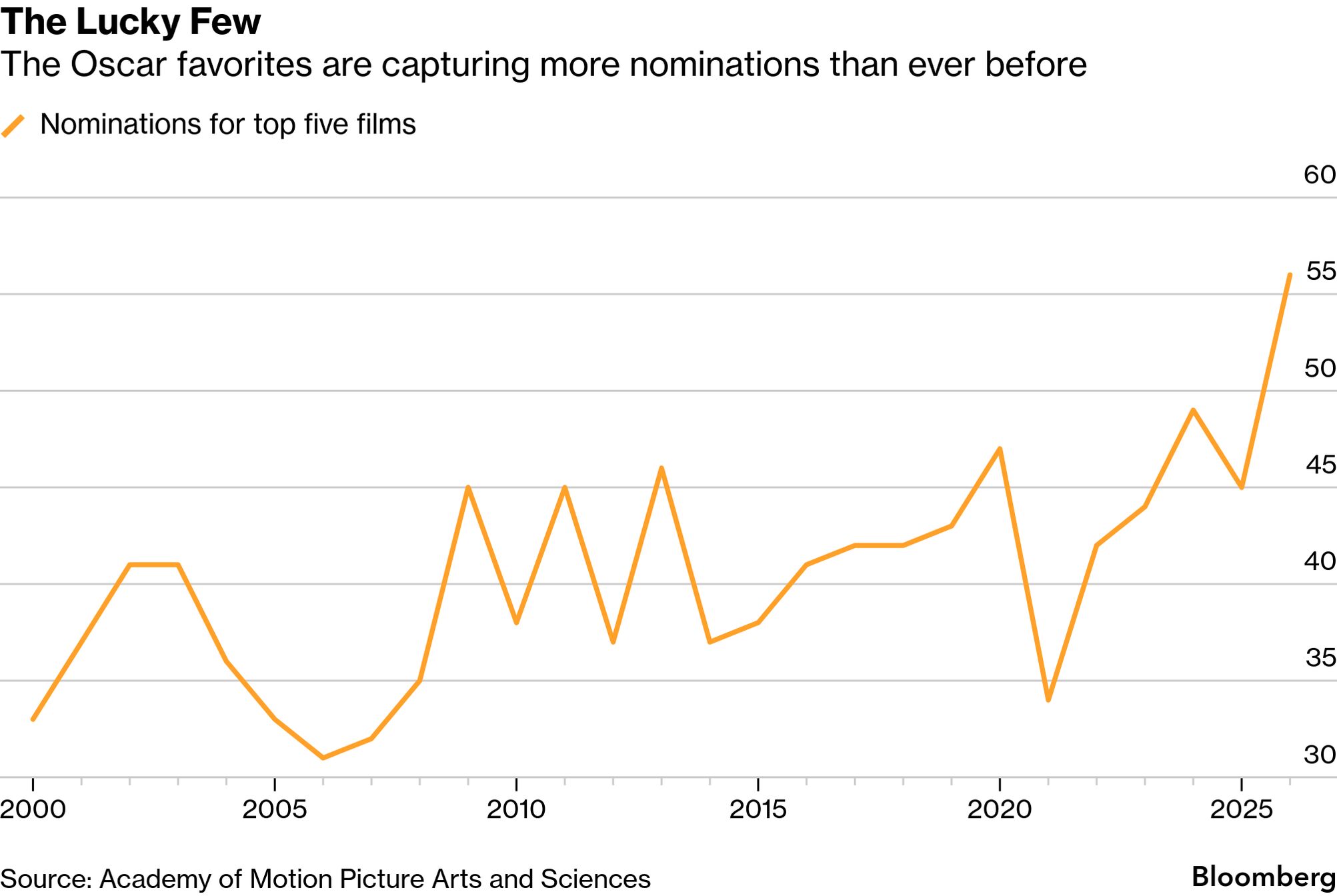 The shrinking number of Oscar contenders reflects a couple major trends in the film business, according to industry experts. Major Hollywood studios release fewer films than they once did – and the movies they do make don't fit the Oscar mold. The number of films released by the six major studios has declined by about 35% since the 2000s, according to the Numbers, a research firm. 20th Century Fox, which used to be a major studio, is now a division of Disney and produces a handful of films a year. Paramount, which used to release about 15 movies a year, hasn't crossed 10 in almost a decade. (That will change this year.) Universal and Sony are the only studios that have maintained or increased their output. They are also two of the three studios that continue to operate specialty divisions known for taking greater artist risk: Universal's Focus Features and Sony Pictures Classics. 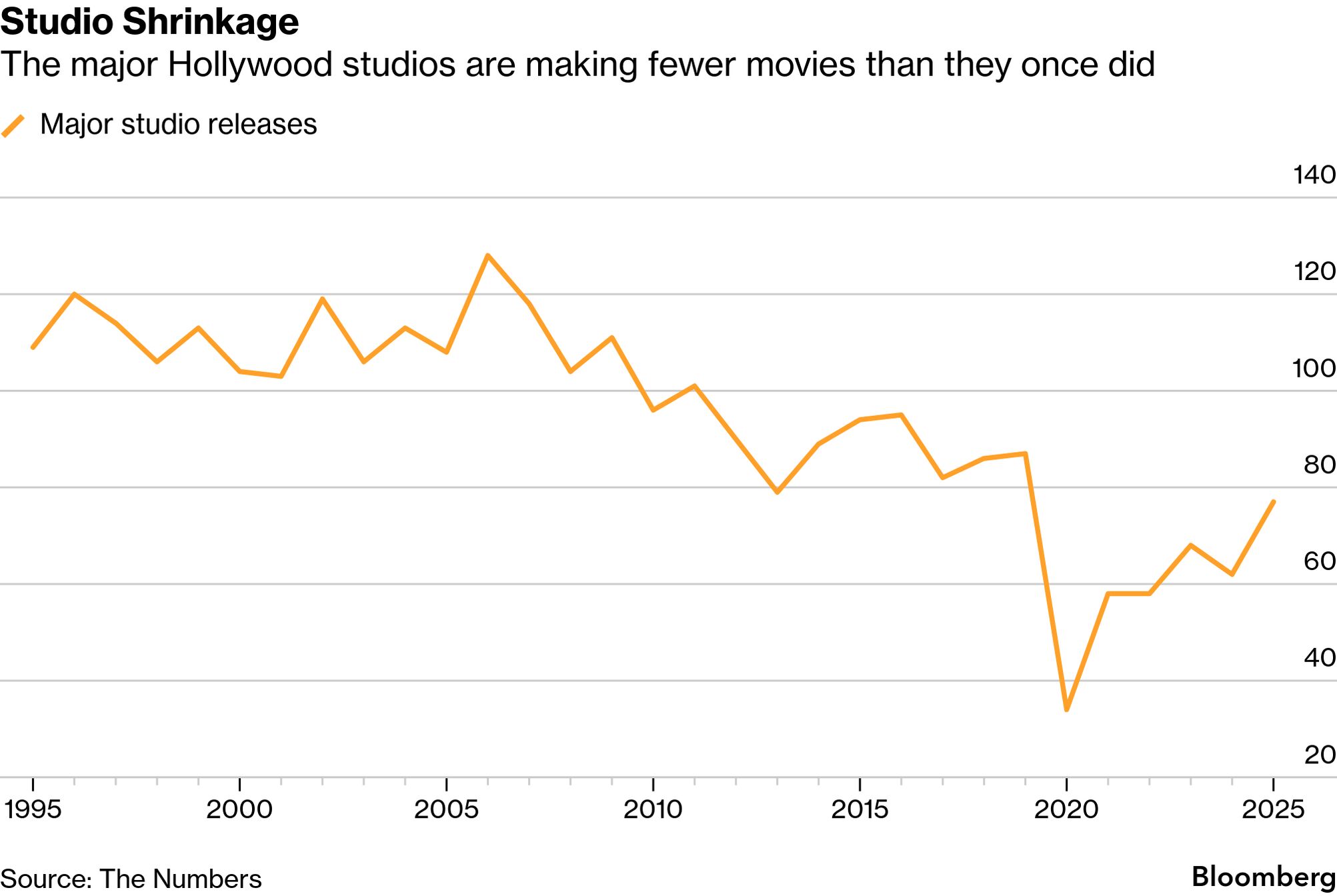 The cut in production isn't as dramatic when you consider the total number of wide releases. They have declined 10% to 20%, per Comscore, another research firm. There has been a surge in independently produced cinema, as well as films for streaming that also screen in theaters. Netflix and Apple bankrolled three of this year's films with multiple nominations, though Amazon is the only streaming service giving most of its movies a more traditional theatrical run. The studio movies getting made today are either expensive blockbusters based on existing intellectual property or low-budget genre fare. Action and adventure movies accounted for more than half of all ticket sales in 2025, per the Numbers. Horror was the third-biggest genre. Most of the films that competed for awards in the 2000s were dramas released by a major studio or one of their sub-labels. Universal won for Gladiator and A Beautiful Mind. Warner Bros. won for Million Dollar Baby and The Departed. In 2005, all five of the best-picture nominees were released by a major studio or one of their labels. (Miramax was owned by Disney.) A year later, Universal had five different movies earn at least four nominations, including two by Focus Features. Some of those specialty labels, including Warner Independent and Paramount Vantage, disappeared during the great recession. Miramax is now a library owned by the Qataris. Focus Features has tweaked its mandate in recent years, though the brand endures, along with Searchlight and Sony Pictures Classics. Studios now make very few adult dramas — the films that have historically competed for Oscars. Dramas accounted for just 7% of ticket sales last year — a drop of about 50% from two decades ago. Comedy, though hardly an awards juggernaut, has fallen even more. 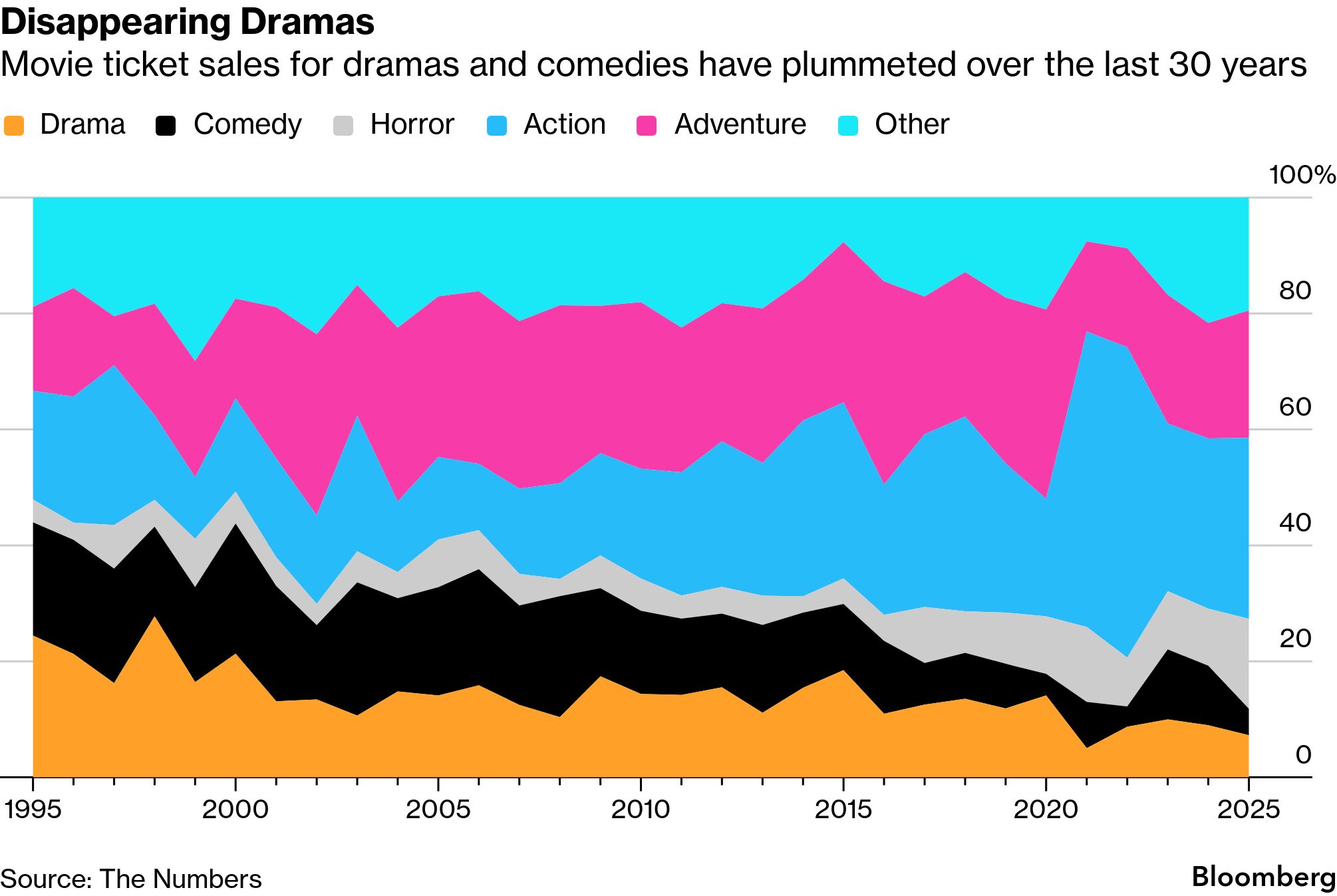 Even Amazon and Netflix, which once stormed film festivals looking for awards contenders, have shifted toward commercial fare that appeals to more customers. Oscar consultants say a shift in priorities and membership at the Academy of Motion Picture Arts & Sciences has also influenced the awards. The group expanded the number of nominees for best picture in 2009 after snubbing The Dark Knight — an effort to create space for blockbusters. Instead, the academy has become even more enamored with the work of auteurs, handing awards to A24, Neon and other independents. Even the films from major studios that earn nominations tend to be those from major filmmakers like Christopher Nolan, Martin Scorsese and Guillermo Del Toro. More recently, the academy has also ushered in a lot of new members, many of them from outside the US. Four films with multiple nominations this year were made in a language other than English. The embrace of foreign films and indies is a common explanation for the shrinking audience for the annual Oscars TV show. The academy routinely honors movies that aren't broadly popular. Anora, last year's best-picture winner, grossed just $20 million in the US. Last year's show attracted an audience of about 20 million people, down more than 50% from the peak viewership in the late 1990s and early 2000s. Yet these criticisms aren't always reflected in the data. The average gross of the best-picture nominees has increased since the early 2000s. In the last three years, the average was north of $100 million thanks to hits like Wicked, Top Gun: Maverick and Oppenheimer. (Last year's Oscars actually hit a five-year high in ratings despite the lesser-known winner.) 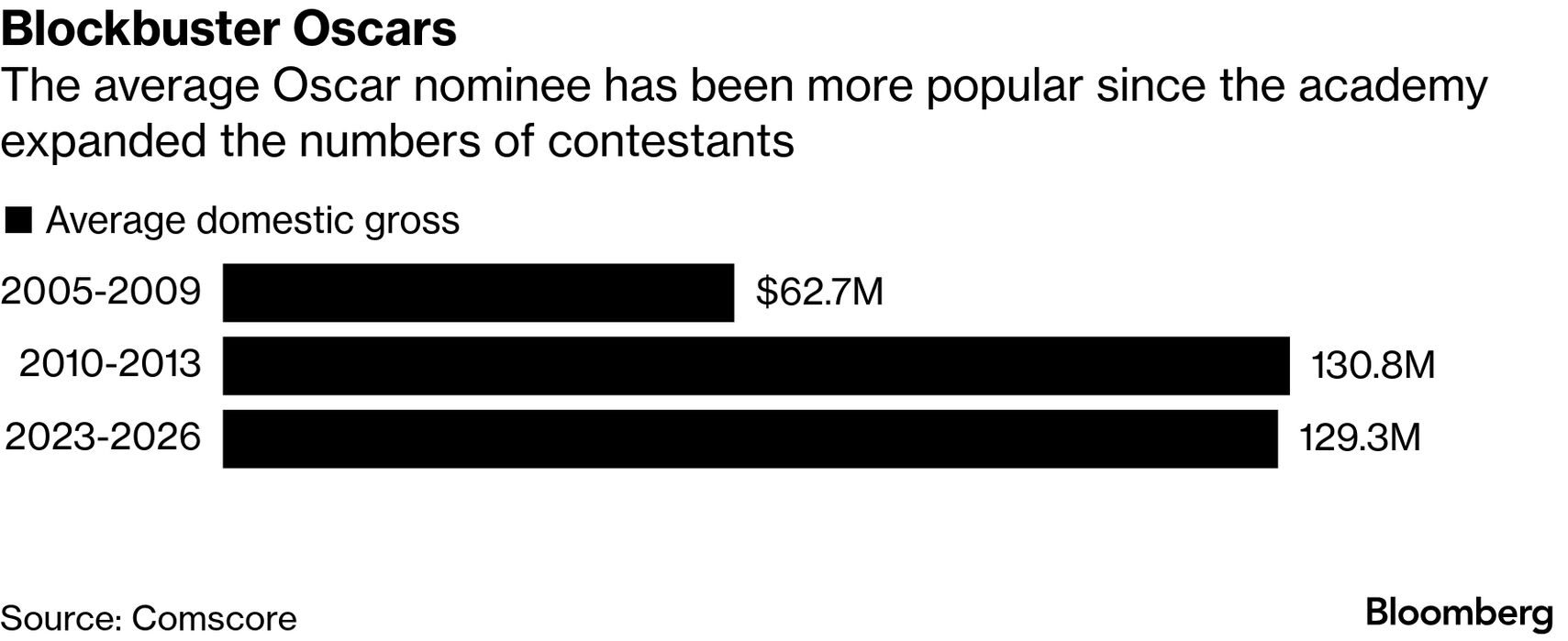 These numbers aren't adjusted for inflation, but that doesn't change the overall point. While it is true that many Oscar winners aren't mass-market films, expanding the list of best picture nominees has led to a mix of big studio releases and indies. Voters get very excited when a studio movie hits the sweet spot. Universal's Oppenheimer ran the table in 2024, as Sinners and One Battle are expected to do this year. This year features the least-popular grouping of Oscar nominees since 2014 (excluding the pandemic). The average film has grossed just $65 million domestically. If studios don't make as many interesting movies, Oscar voters can't be faulted for lavishing praise on the few that tickle their fancy. The Oscars broadcast has plenty of other problems. Viewers have a lot more ways to see their favorite celebrities than they once did. The show is long and less entertaining than the Grammys. Monoculture is over and moviegoing is in decline. That's a bit of a chicken and egg situation. Are the Oscars less popular because the nominees are less popular? Or are the nominees less popular because people go to fewer movies? What is clear is that Oscar nominations don't boost the box office for films the way they once did. In 2005, the five nominees for best picture took in almost as much money after their nominations as before. In 2015, the films actually grossed more post-nomination, thanks to $347 million from American Sniper. This year, the films have grossed $22 million since nominations were announced — or just 3% of their total sales. Scheduling and shorter release windows are factors here. Most of us can catch up with Oscar nominees at home on streaming instead of going to a theater. The best of Screentime (and other stuff)
The Netflix-Paramount war of wordsThe federal government is taking a hard look at Netflix's deal for Warner Bros. Discovery. The Justice Department is investigating whether this deal will give the company too much power over creators in Hollywood. It's a more complex inquiry than your standard merger review. On Saturday, President Trump called for Netflix to fire board member Susan Rice or face consequences. Rice's crime? She warned that companies that caved to threats from Trump would face consequences from Democrats in the future. Irony is dead. Trump has intervened in private enterprise to a degree that his predecessors did not. Just a couple weeks ago, Trump said he'd be staying out of this deal. He doesn't actually have the power to block the deal — the courts do. But Justice can sue to stop it. The risk of a long legal fight is of great importance to Warner Bros. shareholders, who want a sale of the company that gets them paid as soon as possible. Netflix, the studio's preferred buyer, has said time and again it's confident its deal will be approved. As soon as Warner Bros. announced last week it would resume talks with Paramount Skydance, Netflix issued a statement accusing its rival bidder of spreading misinformation about the regulatory process. The company also argued that a sale to Paramount would be worse for Hollywood. Netflix co-CEO Ted Sarandos went on the offensive, granting several interviews, including to Bloomberg TV. The headline out of many of these interviews ended up coming back to the same old debate about movie theaters. Sarandos says Netflix will put Warner Bros. movies in theaters — and even some Netflix films. This is a winning topic for Paramount. No matter how many times Sarandos says it, Netflix is going to struggle to convince people its commitment to theaters is sincere. It also keeps the conversation away from some of Paramount's more dubious claims. Paramount, meanwhile, has cleared a regulatory hurdle and is trying to drive home the idea that it has a major advantage. Netflix says this is another example of Paramount misrepresenting the process. All of these announcements distract from what actually matters. Paramount has until the end of the day Monday to negotiate a new deal with Warner Bros. Paramount needs to offer more money if it still wants to buy the whole company because Netflix already has an agreement to buy the Warner Bros. studios and streaming businesses. Warner Bros. has to update Netflix during its talks with Paramount. When Paramount increases its offer, Netflix has the right to match. That's the ball game. The Neon talksNeon, the film distributor behind Oscar winners Parasite and Anora, has been on the block for a while. Its biggest investor, billionaire Dan Friedkin, almost sold the company to fellow billionaire Steven Rales a few years ago. For months, there have been whispers that Neon is on the verge of selling to the Qataris, though the formal buyer would be a company named Department M. The nature of this deal is pretty fuzzy. Is Department M buying out Friedkin and becoming a major shareholder? Is it investing in a slate of films? Is it somewhere in between? Neon boss Tom Quinn and his spokespeople remain silent. The No. 1 artist in the world is…Taylor Swift. Swift is the best-selling act in the world for the fourth year in a row, per the International Federation of the Phonographic Industry. This is based on sales not consumption. The South Korean group Stray Kids is second, but its consumption pales in comparison to other acts in the top 10 like Bad Bunny (fifth) and Drake (third). Deals, deals, deals
Weekly playlistThank you to my music fairy godmother for recommending Meek. Her song Fabulous is irresistible. More from BloombergGet Tech In Depth and more Bloomberg Tech newsletters in your inbox:
We're improving your newsletter experience and we'd love your feedback. If something looks off, help us fine-tune your experience by reporting it here. Follow us
You received this message because you are subscribed to Bloomberg's Screentime newsletter. If a friend forwarded you this message, sign up here to get it in your inbox.
|
Sunday, February 22, 2026
The Oscars are getting smaller, Netflix attacks Paramount





Subscribe to:
Post Comments (Atom)
Buy This Stock Now
Get my full take on this exciting play right here... ͏ ͏ ͏ ͏ ͏ ͏ ͏ ͏ ͏ ͏ ͏ ͏ ͏ ͏ ͏ ͏ ͏ ͏ ͏ ͏ ͏ ͏ ͏ ͏ ͏ ͏ ͏ ͏ ͏...

-
PLUS: Dogecoin scores first official ETP ...
-
Hollywood is often political View in browser The Academy Awards ceremony is on Sunday night, and i...


No comments:
Post a Comment