| | | The Largest M&A Deal in History | | | |
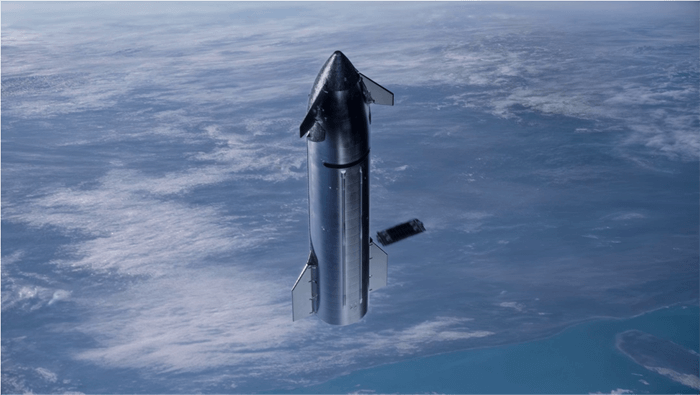
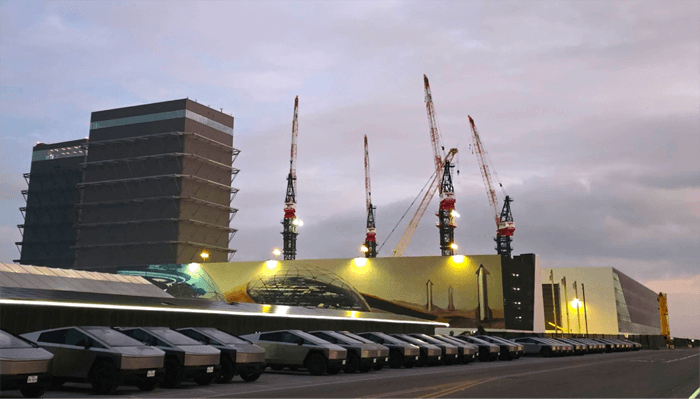
There is no shortage of energy… | | As long as you're not thinking terrestrially. | | While the bankers, journalists, and skeptics have been howling about an AI bubble – and the "impossibility" of meeting future energy demands to supply the committed financing for building out gigawatts of computational power over the next few years… | | Elon Musk and his team at SpaceX have actually been doing something about it. | | In the next two to three years, natural gas production – combined with increased nuclear power production – will supply the electricity to power all new AI data center construction. | | But bringing online new, fourth-generation nuclear fission plants and nuclear fusion plants takes time. It typically takes years. | | Nuclear will eventually scale into an abundant, decentralized energy production architecture that will provide clean, cheap energy for all… | | But the question has been… how do we bridge the gap? | | On Earth, there has been no good answer to that question – other than to "accelerate," "move faster," "iterate more quickly, the Silicon Valley way," and "lean in." | | It's working, and it's impressive to see the kind of investment, technological advancements, and regulatory support for nuclear energy happening at breakneck speed for the first time in history. | | But the industry needs something otherworldly to bridge the gap. It all must happen faster… | | And the answer couldn't be found on Earth. | | | | "AI Satellites" | | | | The scope of the application is breathtaking – so grand as to almost be unbelievable. | | SpaceX is proposing to have an orbital data center constellation of up to 1 million satellites. | | Each satellite will act like a mini-data center, full of GPUs for training and running AI applications. | | They will all be interlinked via optical connections, creating a massive, distributed, interconnected data center in a sun-synchronous orbit around Earth. | | The satellites will operate between altitudes of 500 to 2,000 kilometers in orbits that maximize exposure to the sun for constant power generation. | | Directly from the FCC filing: | | | By directly harnessing near-constant solar power with little operating or maintenance cost, these satellites will achieve transformative cost and energy efficiency while significantly reducing the environmental impact associated with terrestrial data centers. | | | It's safe to say that this was also the first FCC filing to ever mention Kardashev Type II civilizations: | | | Launching a constellation of a million satellites that operate as orbital data centers is a first step toward becoming a Kardashev Type II civilization – one that can harness the sun's full power – while supporting AI-driven applications for billions of people today and ensuring humanity's multiplanetary future among the stars. | | | | For perspective, Starlink's current constellation of satellites is around 9,400. | | The initial FCC authorization is up to 12,000 satellites. | | SpaceX has had future plans to expand to potentially 42,000 Starlink satellites. | | This latest SpaceX filing with the FCC proposes an AI satellite constellation that will be more than 100X the scale of Starlink's current constellation. | | And these "AI Satellites" will be a lot larger than Starlink satellites. | | SpaceX Acquisition of xAI | | The vision and sheer magnitude of what SpaceX has planned are inspirational. | | And far more importantly, not only is it technically feasible, but the economics make sense – which is precisely why we should take this seriously. | | This orbital data center system has become so foundational to SpaceX as a company that it prompted the acquisition of Musk's artificial intelligence company, xAI, which was just announced last night. | | What does an aerospace engineering company have to do with an artificial intelligence company developing the most advanced frontier AI model, and soon the world's first artificial general intelligence (AGI)? | | On the surface, not much. | | But if we look at xAI through the lens of AI data center infrastructure, these businesses are closely aligned. | | After all, Starlink's space-based internet service is responsible for most of SpaceX's revenues and almost all its profit. | | Starlink will generate more than $18 billion in revenue in 2026. | | The Starlink business literally funds the research and development of SpaceX's Starship. | | And Starship is the key to enabling SpaceX/xAI to deploy a 1 million AI satellite constellation. | | SpaceX is the only company that could possibly achieve this. | | From Musk's letter announcing the deal last night: | | | With launches every hour carrying 200 tons per flight, Starship will deliver millions of tons to orbit and beyond per year, enabling an exciting future where humanity is out exploring amongst the stars. | | | | | | Starship deploying satellites | Source: SpaceX | | For anyone who thinks that's impossible, think again… | | SpaceX is already under construction on its $250 million Gigabay facility that has been designed to manufacture up to 1,000 Starships a year. | | Construction will be complete by the end of this year. | | And remember, Starships are designed for reusability. | | | | SpaceX Gigabay Under Construction | Source: X @SERobinsonJr | | As for the economics and math of accomplishing Musk's plans for its orbital data center system, the Starship is what makes everything possible. | | | | Brought To You by Starship | | Initial launch costs per kilogram to low Earth orbit (LEO), by my estimates, will be less than $1,000 this year, down to $200 in 2027, and down to $100 by 2028. | | This is precisely why Musk can be confident in saying, "[His] estimate is that within two to three years, the lowest cost way to generate AI compute will be in space." | | After all, with $100 per kilogram to LEO, zero cost of electricity (free from the sun), and zero costs associated with cooling, orbital will be cheaper than terrestrial. | | Musk went further into the specifics: | | | The basic math is that launching a million tons per year of satellites generating 100 kW of compute power per ton would add 100 gigawatts of AI compute capacity annually, with no ongoing operational or maintenance needs. Ultimately, there is a path to launching 1TW/year from Earth. | | | | The implications are incredible. | | Not only would xAI have control over its own compute needed for running its artificial general intelligence (AGI), it would have enough to pursue artificial super intelligence (ASI). | | And it would have enough capacity to lease computational resources to industry, much in the same way that Amazon Web Services (AWS) or Google Cloud do on Earth. | | For reference, AWS generated $128 billion of revenue in 2025… and is forecasted to bring in $155 billion in revenue this year. AWS's business is valued at more than a trillion dollars alone. | | Given the sheer scale of SpaceX and xAI's business today, and the proposed direction with an orbital data center system… | | It's no wonder that the acquisition of xAI by SpaceX is the largest M&A transaction in history, valued at $1.25 trillion. | | Kardashev Type II | Not only is it the largest deal, but it is the combination of two of the most transformational companies in history. One would think it would be on the front page of every news outlet. And yet, the story only made the sidebar of the print edition of the Wall Street Journal (shown on the right). And it didn't even make the front page of the Wall Street Journal website. Or even the front page of the "tech" section of the WSJ. How's that for media bias? If this latest development weren't spectacular enough, the announcement made by Musk went one step further: By using an electromagnetic mass driver and lunar manufacturing, it is possible to put 500 to 1,000 TW/year of AI satellites into deep space, meaningfully ascend the Kardashev scale, and harness a non-trivial percentage of the Sun's power. This isn't just about an orbital data center system. It's about extraterrestrial manufacturing, taking advantage of low gravity on the moon, and harnessing the free energy provided by our Sun. All to advance human civilization. Ad Astra, Jeff  | | | | | Jan 30, 2026 • 8 min read | | | | | | Jan 29, 2026 • 6 min read | | | | | | | | | | | To ensure our emails continue reaching your inbox, please add our email address to your address book. This editorial email containing advertisements was sent to reunisoft.cryptonews@blogger.com because you subscribed to this service. To stop receiving these emails, click here. Brownstone Research welcomes your feedback and questions. But please note: The law prohibits us from giving personalized advice. To contact Customer Service, call toll free Domestic/International: 1-888-512-0726, Mon-Fri, 9am-7pm ET, or email us here. © 2026 Brownstone Research. All rights reserved. Any reproduction, copying, or redistribution of our content, in whole or in part, is prohibited without written permission from Brownstone Research. | | | | |










No comments:
Post a Comment