| Read in browser | ||||||||||||||
 Political tensions stemming from US President Donald Trump's bid to take over Greenland are slowing down and in some cases halting scientific research essential to understanding the impacts of global warming. Today's newsletter looks at how researchers are navigating the situation, and at the implications of this new setback for collaborative Arctic science. We also bring you the latest on India's $2.2 billion bet on carbon capture storage, and why the choice is controversial. Did someone forward you this newsletter? Subscribe to Green Daily for more free reads on climate and clean technologies. Greenland research at riskUS President Donald Trump's vows to take over Greenland have chilled relationships between American and Greenlandic researchers, halting some projects and making future collaborations uncertain. Ross Virginia, a professor emeritus of environmental studies at Dartmouth College, said a climate program he ran with Greenlandic colleagues was halted by "mutual agreement" due to the tensions. "Direct cooperation is paused while we determine what a future vision for collaborative science diplomacy — particularly involving education and younger students — could look like," he said. Another US scientist, who asked not to be identified for fear of jeopardizing relationships, said some of his research partnerships in Greenland were paused even before Trump escalated talk of annexation in early January, and that he suspended fieldwork out of respect for Greenlanders.  Protesters hold Greenland flags during a demonstration in Copenhagen, Denmark Photographer: Nichlas Pollier/Bloomberg While Trump has recently softened his line on the US gaining control of the Arctic island — a semi-autonomous territory of Denmark and home to about 57,000 people — the tensions are hampering scientific work that is critical to understanding climate change, not just in the polar region but on a global scale. Greenland is warming fast, and its massive ice sheet contains enough fresh water to raise global sea levels by 23 feet. Scientists are investigating how the ice sheet is destabilizing and what that and changes in sea ice mean for the Atlantic Meridional Overturning Circulation, a key ocean current that moves hot and cold water over thousands of miles. The AMOC is thought to be weakening, which could shift weather patterns in many countries. Much of this work is funded by the US National Science Foundation. It supports Summit Station, a US research outpost at the top of the Greenland ice sheet that operates year-round and frequently partners with Greenlandic scientists and communities. NSF currently funds 19 active projects in Greenland consisting of 43 individual awards, with a total funding amount of $26 million, according to a spokesperson. One Greenlandic scientist at a government institution said researchers are more cautious about accepting American funding or working with American scientists because of how it might look. The scientist asked not to be identified as they were not authorized to speak publicly about the geopolitical situation. 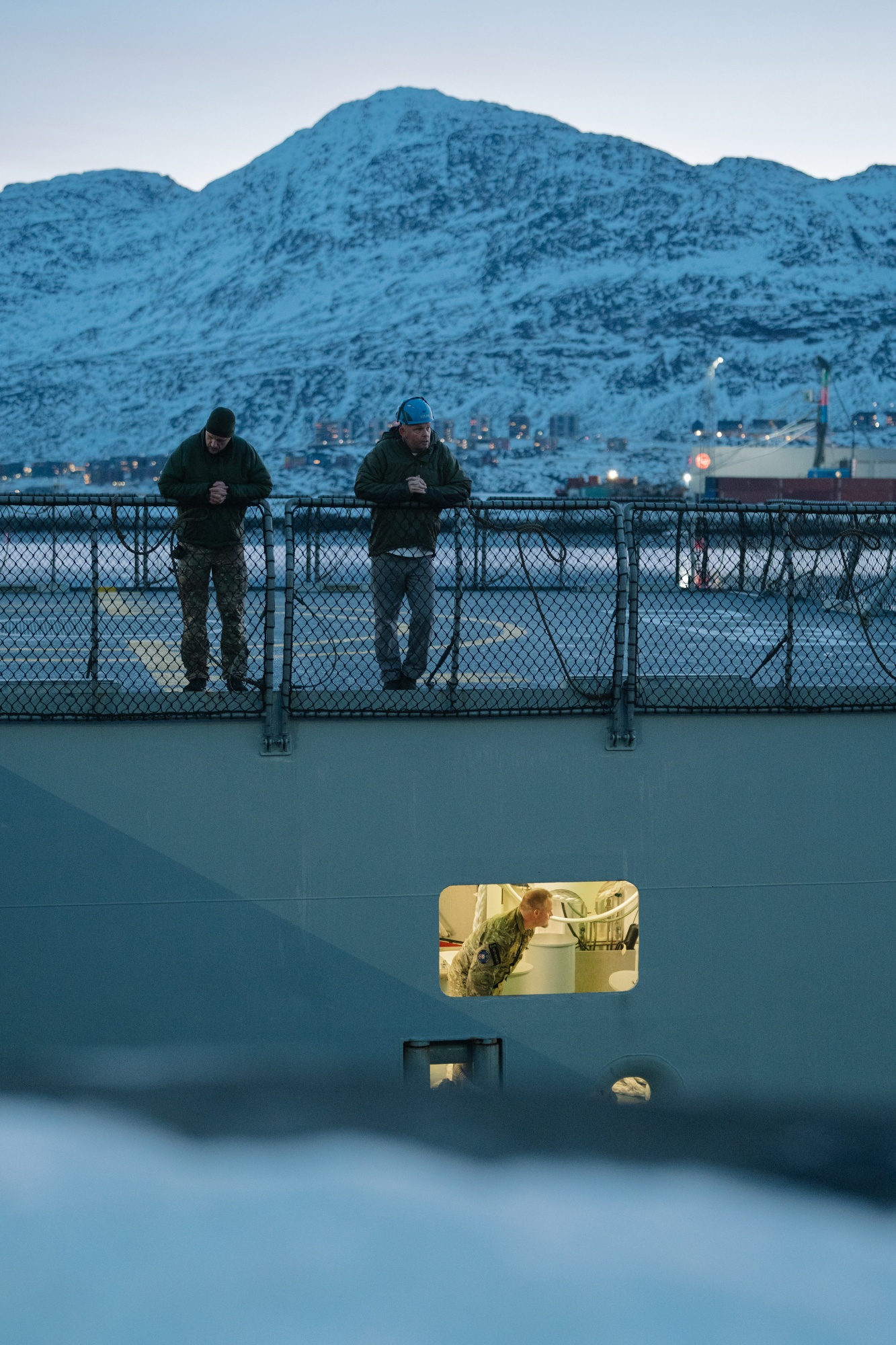 A Danish patrol vessel in the harbor in Nuuk, Greenland Photographer: Juliette Pavy/Bloomberg Fiamma Straneo, an oceanographer at Harvard University who helped organize a joint statement of support for Greenland from US scientists, said she's particularly worried about the consequences for planned projects that haven't yet gotten off the ground. "It's much harder to create new collaborations with federal US funding," she said, citing wariness on the part of Greenlanders. Straneo has worked with local researchers on the island for almost 20 years. Because of fears the US will try to influence politics on the island, she said, "they are very worried about this." Greenland's government did not respond to a request for comment. The setback for collaborative Arctic science comes on the heels of another, prompted by Russia's invasion of Ukraine in 2022. Then, most European Union and NATO member countries suspended or restricted funding for work involving Russia, or its scientists, and a pipeline of critical climate data gathered inside the world's largest Arctic nation was cut off. Geopolitics adds to a growing list of challenges for climate science, including those stemming from Trump's domestic policies. Climate research in Greenland often involves the support of the US military. In Axford's case, she has worked at the Pituffik Space Base, traveled on planes chartered by the Air Force and used military cargo planes to transport equipment. Although a bigger US footprint in Greenland would likely mean an expansion of military infrastructure, Axford said she would stop using it if the US maintained an aggressive stance toward the island. "I hope that many of my colleagues would feel the same," she said. "It just wouldn't be right." Read the full story on Bloomberg.com and subscribe for unlimited access to all stories. Research lifeline$26 million US National Science Foundation funding for 19 active projects in Greenland Unacceptable bidIndia's carbon capture betBy Preeti Soni India's government proposed a 200 billion rupees ($2.2 billion) program to ramp up the deployment of carbon capture utilization and storage technology, to help mitigate the emissions of five heavily polluting sectors. The plan would target power, steel, cement, refineries and chemical over the next five years, India's Finance Minister Nirmala Sitharaman said during her annual federal budget speech Sunday. 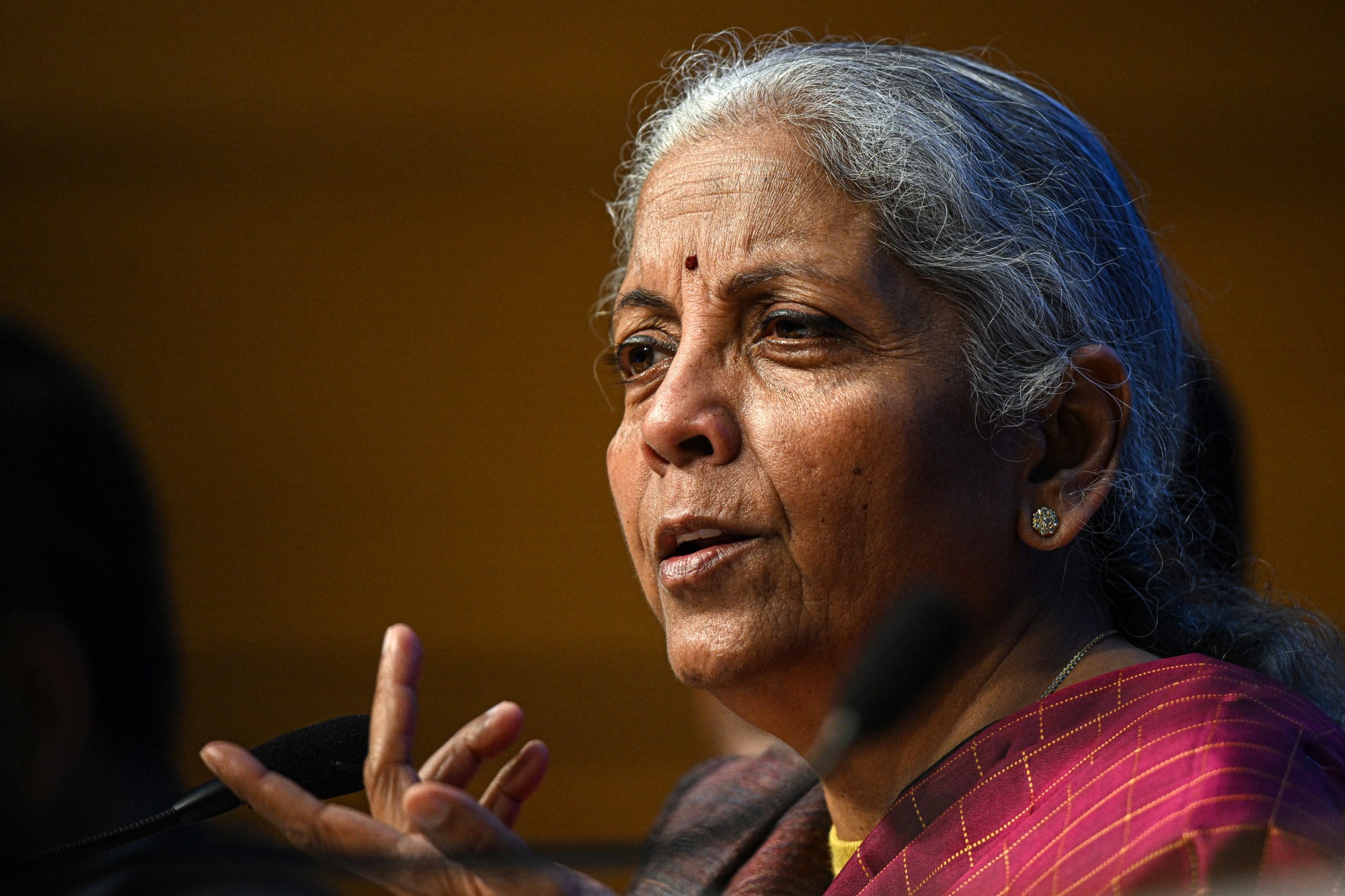 India's finance minister Nirmala Sitharaman Photographer: Prakash Singh/Bloomberg Carbon capture technology, which stores or recycles an industrial plant's emissions, is gaining popularity globally as nations are failing to decarbonize their economies at the pace required to curb climate change. India's booming steel sector in particular is the world's most carbon intensive, due in part to the proliferation of smaller mills that rely on coal as feedstock. Carbon capture infrastructure, which is still in a nascent state, is expensive, typically suited to large industrial clusters and heavily dependent on their geographical position. Read the full story on Bloomberg.com This week's Zero listen What is the best way to tell a climate story? This week on Zero, Akshat Rathi speaks with Booker Prize-winning novelist George Saunders. His new novel Vigil is an exploration of guilt, told on the deathbed of an oil executive haunted by ghosts. Rathi asks Saunders what he learned about climate change, his thoughts on whether AI complements or compromises human creativity, and why literature still matters in the era of TikTok. Listen now, and subscribe on Apple, Spotify or YouTube to get new episodes of Zero every Thursday. More from Green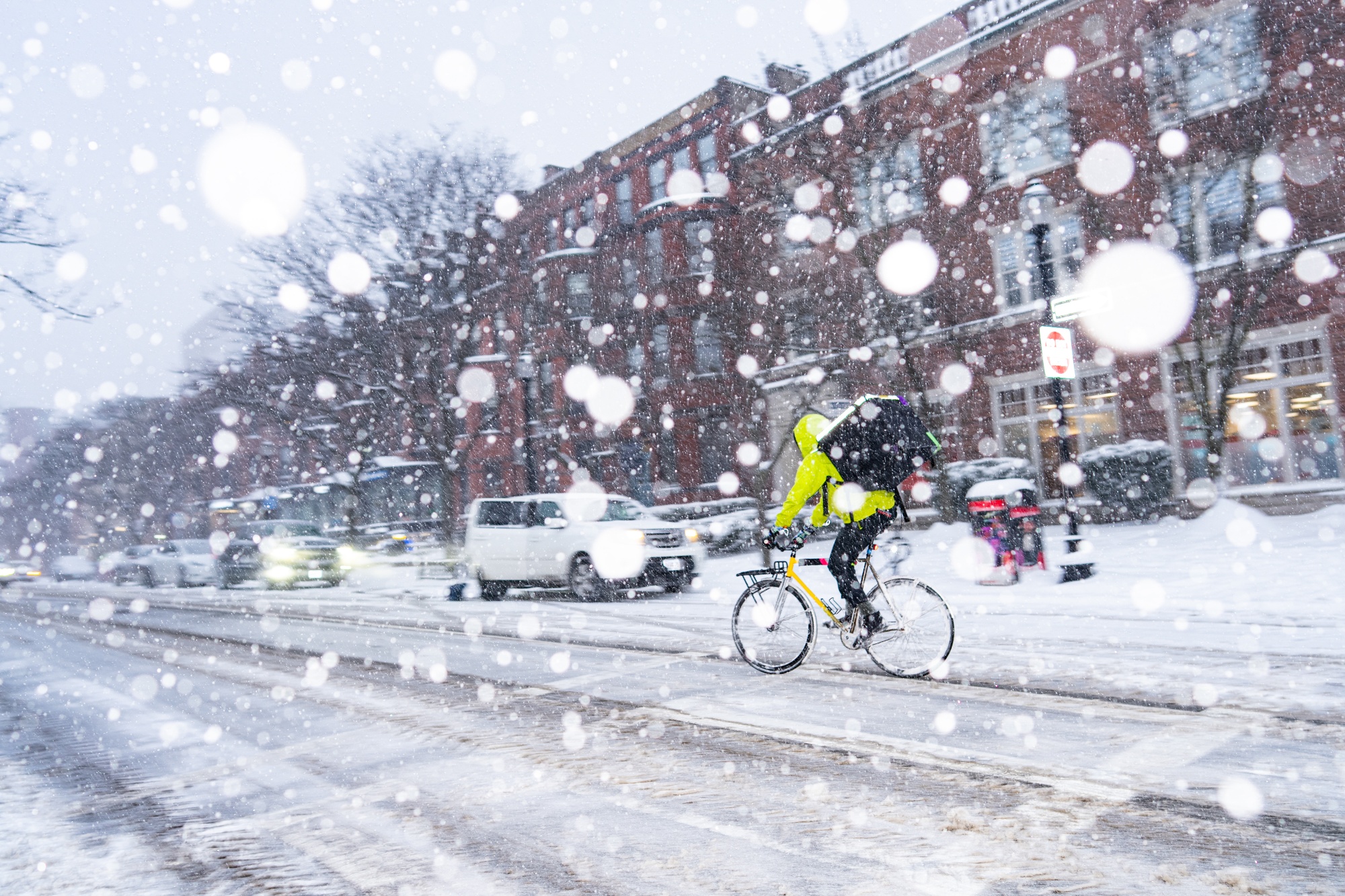 A delivery worker rides a bike during a winter storm in the US. Photographer: Mel Musto/Bloomberg Record-breaking cold is settling across the US South as far as Florida, prompting pleas to conserve power and raising the risks for citrus growers. A winter storm left heavy snow across North Carolina and caused more than 1,400 flights to be canceled across the country. Alphabet's Google, Singapore Airlines and DBS Group Holdings are among companies that will test the city-state's plan for central procurement of sustainable aviation fuel. More from Bloomberg
Explore all Bloomberg newsletters. Follow us
You received this message because you are subscribed to Bloomberg's Green Daily newsletter. If a friend forwarded you this message, sign up here to get it in your inbox.
|
Monday, February 2, 2026
The great Greenland chill





Subscribe to:
Post Comments (Atom)
Nvidia Can Hit Home Runs, but Championships Need a Full Lineup
Every AI superstar needs a setup man. ...
-
Bloomberg Evening Briefing Americas View in browser Who's paying for Donald Trum...
-
PLUS: Dogecoin scores first official ETP ...


No comments:
Post a Comment