| The fallout from Jeffrey Epstein's files continues to shake up politics in multiple countries. Perhaps the most serious reverberations have hit the UK, where Prime Minister Keir Starmer is increasingly at risk, not because he was a friend of the convicted sex criminal, but because one of his appointees was. Bloomberg UK politics editor Alex Morales explains. Plus UPS's future involves more than Amazon deliveries, why taxing the wealthy makes economic sense, and colostrum supplements are on the rise. If this email was forwarded to you, click here to sign up. Keir Starmer's name barely comes up in the millions of documents relating to Jeffrey Epstein that have been released by the US Department of Justice. But the convicted pedophile's papers nonetheless threaten the UK prime minister's job—because the man Starmer chose to represent his government in Washington is mentioned almost 6,000 times. Starmer fired US Ambassador Peter Mandelson in September, after just seven months in the post, when an initial release of Epstein's files showed the envoy's ties with the disgraced financier were far deeper than previously known. Worse, they continued for years after Epstein's Florida conviction in 2008 on state charges relating to child prostitution—though there's no suggestion that Mandelson participated in any such activities. 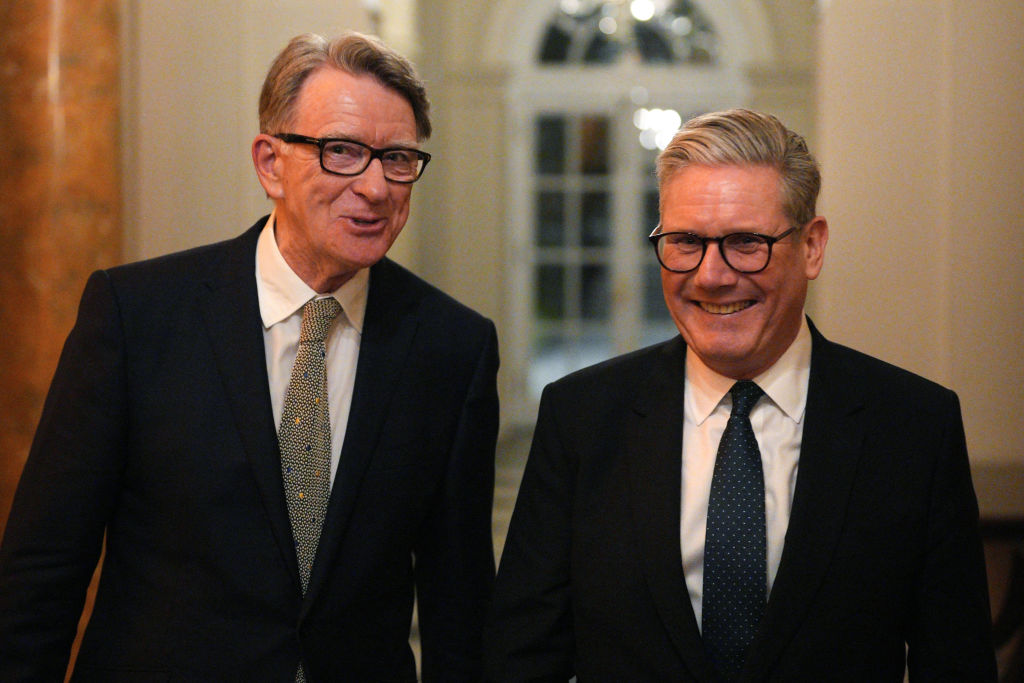 Mandelson and Starmer in February 2025 at the British ambassador's residence in Washington. Photographer: Carl Court/AFP That move kept the pressure off Starmer for a while, but the Justice Department's Jan. 30 data dump of 3 million files contained far more shocking details. Among them: Mandelson appears to have leaked sensitive government information to Epstein at the height of the financial crisis while serving in the cabinet of Prime Minister Gordon Brown. It didn't help that British newspapers plastered their front pages with a picture—also from Epstein's files—of Mandelson in his underwear. "Mandelson betrayed our country, our Parliament and my party," Starmer told the House of Commons last week. "He lied repeatedly to my team when asked about his relationship with Epstein." But in the same session, Starmer conceded that when vetting Mandelson he already knew the appointee hadn't broken with Epstein after the Florida conviction. For the opposition—and more than a few internal party critics—that was a damning admission. The rationale for appointing Mandelson had been clear. He's a canny political operator and had served as business secretary and European commissioner for trade. That experience would be useful when confronted with the White House return of Donald Trump, who was ramping up tariffs on anyone he didn't like. And the appointment did bear fruit when the UK secured better trading terms with the US than its European neighbors could manage. But there was always a risk in choosing a man who had twice resigned from government under a cloud and had earned the nickname Prince of Darkness because of his mastery of political manipulation. Some Starmer critics refused to believe the prime minister—once the nation's chief prosecutor—when he said he'd believed Mandelson's lies. Surely, they insisted, a lawyer with his pedigree should have been more skeptical. Last weekend Starmer's chief of staff quit, saying he took "full responsibility" for recommending Mandelson's appointment. Critics again wondered why the man who actually hired the envoy should get a free pass. Then on Monday the premier's communications chief resigned, and Anas Sarwar, Labour's leader in Scotland (and a longtime Starmer ally), called for the premier's departure. But within an hour of Sarwar's announcement, every member of Starmer's cabinet had voiced support for him—as did his former deputy, Angela Rayner, who's considered one of his most likely challengers. On Monday evening he told his party's Members of Parliament that he would stay in the fight "as long as I have breath in my body." Afterward it was hard to find critical MPs, so it appears Starmer has won himself a reprieve. There are plenty of pitfalls ahead, including a special election this month for a seat in Manchester that should be a Labour stronghold. Both the Greens and the far-right, Trump-loving Reform UK party are mounting strong challenges there. Local and regional elections in May represent an even bigger threat. Labour has trailed Reform for 10 months in the polls, pointing to big losses for Starmer's party. Labour even appears set to lose control of the Senedd (the Welsh Parliament) for the first time since its establishment in 1999. Starmer will also have to comply with a House of Commons resolution passed last week requiring disclosure of all documents surrounding Mandelson's vetting, as well as the envoy's communications with ministers and aides in the run-up to his appointment and during his tenure as ambassador. Starmer's team hasn't said when it will publish those papers as it must examine them to ensure their release won't compromise national security. For Starmer, the risk is that the material contains further embarrassing details—and makes him another casualty of the misdeeds of a man he never knew. Related: One of Dubai's Most Powerful Executives Discussed Sex, Business With Epstein | 













No comments:
Post a Comment