| For every diehard football fan watching the Super Bowl, there's someone else who's there just for the creative commercials (or, this year, the Benito Bowl). Bloomberg Businessweek's Buying Power columnist Amanda Mull has thoughts about the nostalgia trend in last night's ads. Plus: The perception that the FDA is becoming arbitrary is bad for business, and the start of a series on the new realities of finance. If this email was forwarded to you, click here to sign up. When Prince told the world that tonight we're gonna party like it's 1999, the command evoked a particular set of hopes and possibilities. The year, crucially, was 1982, back when 1999 was still an imagined future. The world would be on the cusp of a leap forward in time that implied a leap forward in so many other things—a new millennium would surely bring with it new ideas and technologies and art, or at least new ways of getting funky. While watching last night's Super Bowl, that Prince lyric kept coming to mind in a different way, even though the song itself wasn't used in any ads. (I'd imagine licensing music from Prince's estate isn't the most straightforward endeavor.) In commercial after commercial, viewers got big-budget versions of the paeans to nostalgia that have for years populated a wide swath of "new" pop culture. 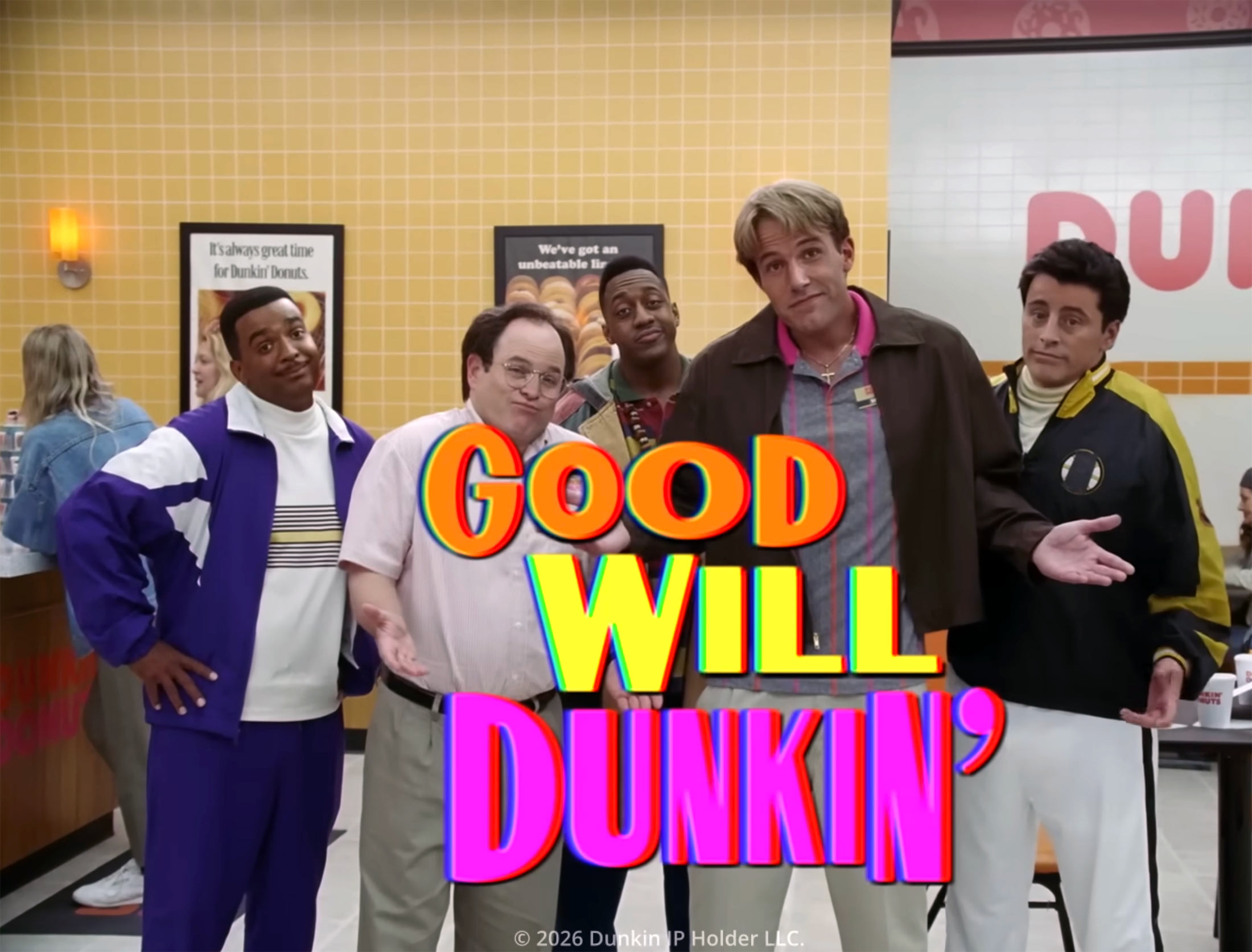 Screenshot of a Dunkin' ad that spoofs the film Good Will Hunting as well as various TV shows of the 1990s. Source: Dunkin/YouTube The Backstreet Boys starred in a T-Mobile ad along with their 1999 hit I Want It That Way, while their 1997 chart-topper Everybody (Backstreet's Back) was the subject of Coinbase karaoke. Comcast Xfinity de-aged Jurassic Park stars Laura Dern, Jeff Goldblum and Sam Neill back to an uncanny version of their '90s selves. Dunkin' ran a spoof of 1997's Good Will Hunting with Ben Affleck and a pastiche of that era's TV stars: Jennifer Aniston and Matt LeBlanc from Friends, Seinfeld's Jason Alexander, A Different World's Jasmine Guy, Fresh Prince of Bel-Air's Alfonso Ribeiro, Family Matters' Jaleel White. (Tom Brady was also there, for reasons that aren't clear beyond what seems to be major media's sincere—though I would argue mistaken—belief that the American people cannot get enough Tom Brady.) I turned 40 in December, putting me and my contemporaries in a sweet spot for advertisers: We're in the 18 to 49 "key demo," but old enough to theoretically have stable lives, growing reserves of disposable income and a willingness to be convinced. These commercials were built in ad agencies' conference rooms and Zoom calls to poke at the soft spots in the skulls of people my age—an imagined nation of former 14-year-olds—who are expected to clap like seals every time novelly configured reminders of our youth pass through our field of vision. Instead, I thought back to a book I read last year, Blank Space: A Cultural History of the Twenty-First Century by the cultural critic W. David Marx. In it, Marx argues that pop culture stalled out somewhere around the turn of the millennium, leaving Americans in a feedback loop of rehashed nostalgia and self-referentiality, without much creative innovation or risk-taking to speak of, especially when audiences and expenditures are at their largest. Although advertising has never exactly been the vanguard of mass cultural innovation, the particular level of tepidity last night—especially when paired with a bevy of ads for AI tools that promise to exempt your future self from various types of creative thought—made it hard not to feel a little insulted. Nostalgia, though, isn't an infinite resource, if it even works at all as an advertising gimmick—I couldn't remember the companies that were responsible for any of these ads off the top of my head, though I had no problem recalling some lower-budget options, like a clever public-health spot about prostate cancer testing. Eventually they'll scrape the last bits out of the bottom of the barrel, and someone's going to need to have a new idea. For inspiration, advertisers might look to Bad Bunny's halftime show, which has so far eclipsed all of their grasping bids for day-after attention by a margin so wide as to be laughable. It, too, had moments of nostalgia, but they were invoked alongside a vision of the future, creative and otherwise: of kids who grow up to make music and win Grammys, of couples getting married and starting lives together, of improved infrastructure in Puerto Rico, of a wider and more joyful view of what it means to be American. Right now, though, plenty of companies seem content stacking millions of dollars on the gas pedal in a car stuck in reverse, and I'm not sure it's going anywhere worth visiting. Related in Bloomberg Opinion: Zara's Bad Bunny Super Bowl Collab Is Worth the Risk |









No comments:
Post a Comment