| Read in browser | ||||||||||||||
 Brazil's economic engine is dealing with too little and too much rain at the same time. The city is grappling with flash floods even as it battles a drought that's caused water shortages for millions. Today's newsletter takes us to Sao Paulo, which is enduring its worst water crisis in over a decade. We also look at the two biggest climate stories this week and how they show the diverging paths the US and China are taking. Did someone forward you this email? You can subscribe to the Green Daily for free climate news to your inbox six days a week. Double whammySao Paulo, one of the world's largest metropolitan areas housing 21 million people, is living through its largest climate-induced stress test in more than a decade as deadly flash floods collide with a severe drought. Water in the region's largest reservoir network is hovering at 32%, the lowest since the region endured its worst water crisis in 2014 and 2015, and is due to dip lower as the dry season approaches. Meanwhile, the Brazilian city has been battered in recent weeks by intense storms that have killed four people, including an elderly couple whose car was swept away by rushing water. 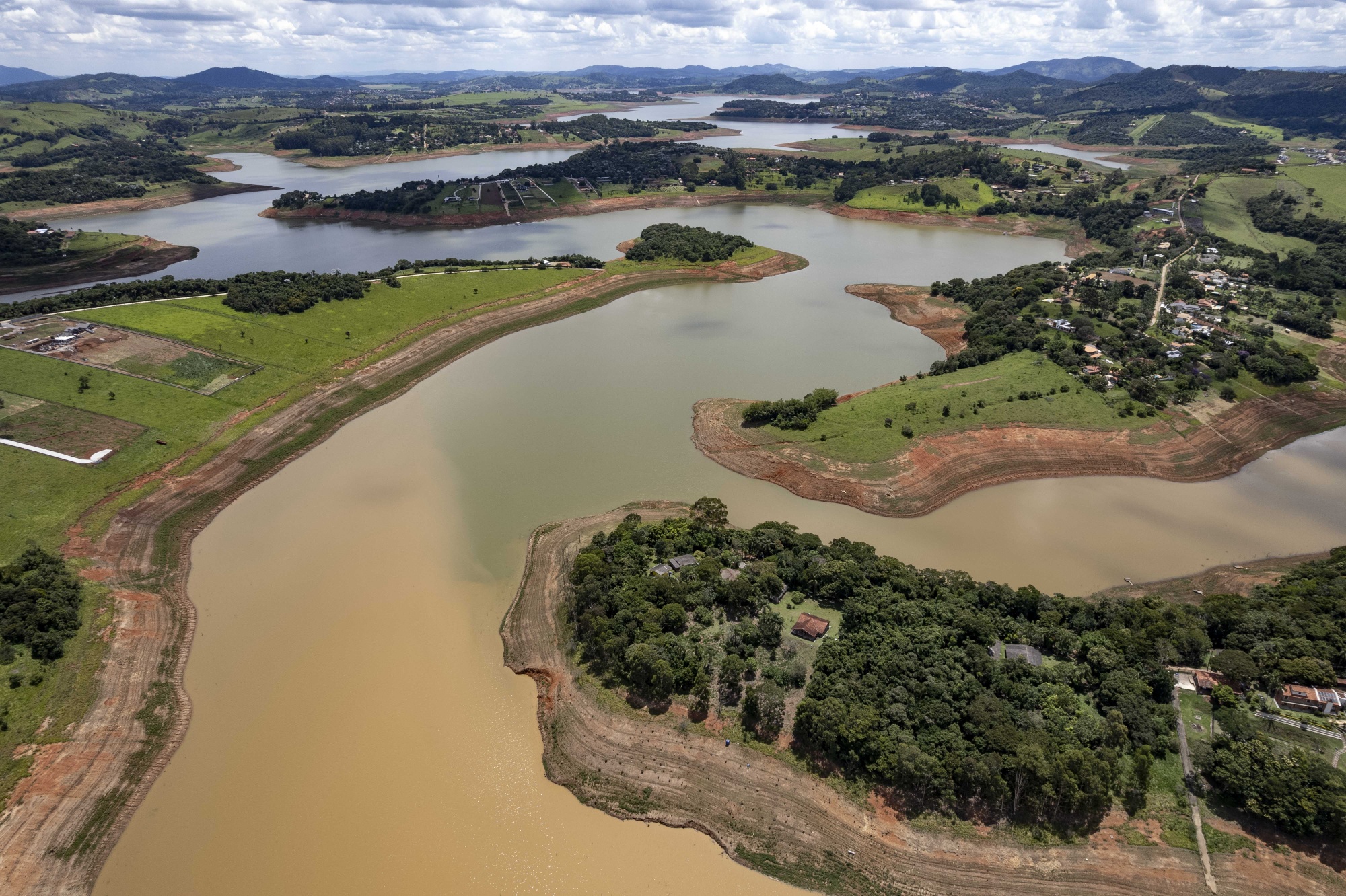 Water level lines appear on the shorelines of the Jacareí River Dam, part of the Cantareira System watershed, during drought conditions in Joanopolis, Sao Paulo state. "What's behind all of this is climate change, derived not only from global warming and greenhouse gas emissions, but also from land use change," said Marcelo Seluchi, a meteorologist from Brazil's National Center for Monitoring and Early Warning of Natural Disasters, also known as Cemaden. The federal agency's data shows that precipitation levels have been falling since the 1960s in much of Brazil, coinciding with widespread deforestation in the central area and in the Amazon. "A forested area evaporates four times more water than pasture," said Seluchi. "This moisture is a fundamental input for causing rain, along with that which comes from the ocean." On the other hand, rising temperatures allow the atmosphere to hold more moisture. That saturated air releases far greater amounts of water in a short time when it rains, producing intense downpours and flash flooding, he said. The unfolding crisis in Sao Paulo is shaping up to be the city's largest since a historic drought over a decade ago nearly crippled water supplies for Brazil's economic engine, home to about 10% of the country's population Back then, the Cantareira reservoir system operated under varying restrictions for almost 600 days, impacting millions of people. Several neighborhoods only received water for two to three days a week due to rotating cuts and had to resort to water trucks. Impoverished areas in the outskirts, where water tanks are a luxury, suffered the most. 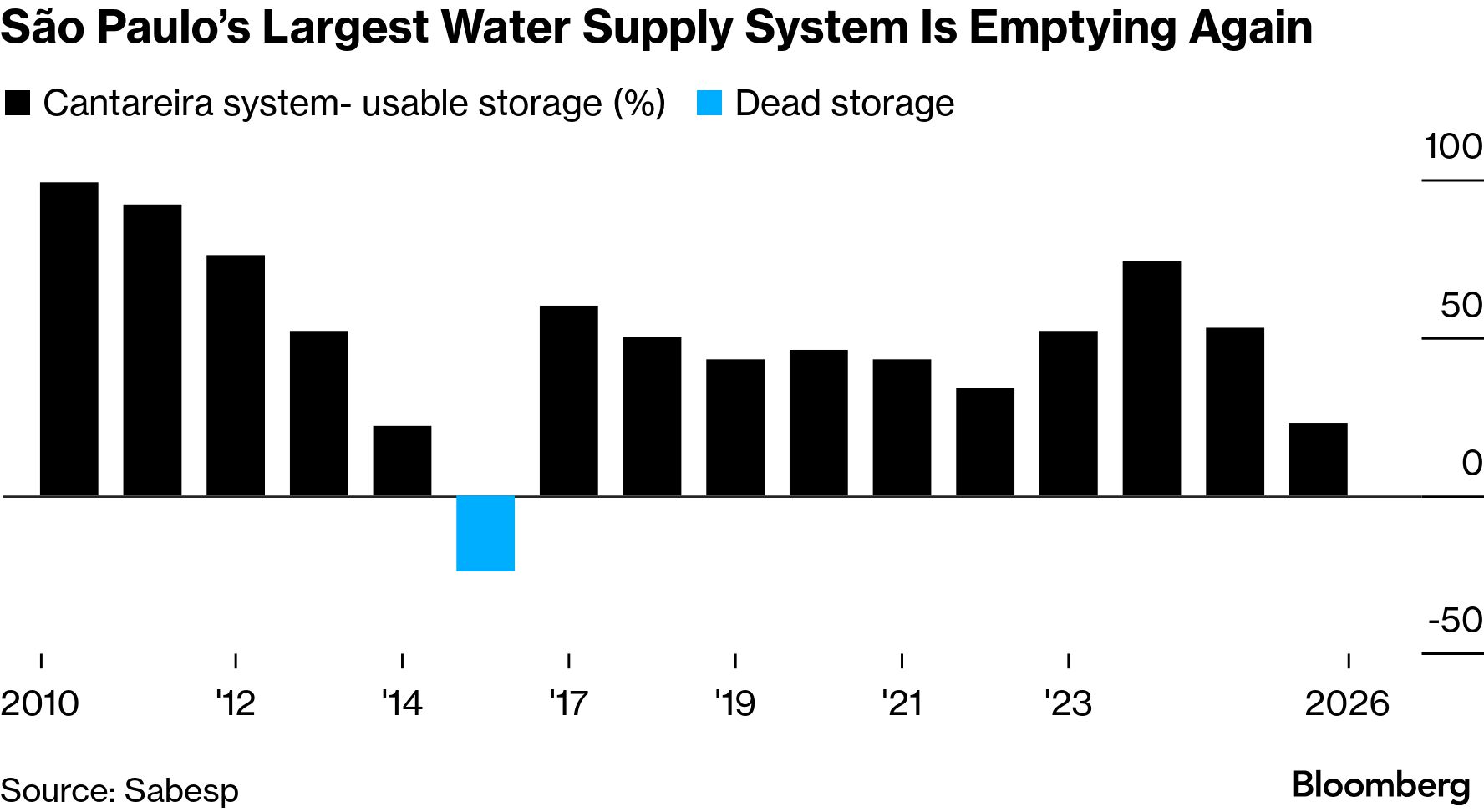 The crisis affected everything from restaurants to factories, some of which were forced to halt production. Several companies and condominium complexes resorted to drilling their own wells. Drought-related losses totaled $5 billion in 2014 alone, ranking as the world's fifth-costliest natural catastrophe that year, according to a report by insurer Munich Re. Now, parts of the city are experiencing similar strains. Pedro Facchini owns a burger shop at the iconic Paulista Avenue, located in one of Sao Paulo's most affluent neighborhoods. The water cuts off at 10 p.m. every day, but his business continues to operate for another hour and a half. He can't install a water tank because the restaurant is located inside a gallery. "In the days I can't store water to wash the dishes, I have to stop serving and lose revenue," Facchini said. Read the full story about Sao Paulo's extreme weather. Subscribe to Bloomberg News for the latest climate coverage. Tipping point20% The amount of the Amazon rainforest that has been deforested, by some estimates. That raises the risk that one of the world's largest carbon sinks could shift irreversibly to become a source of global warming. Preparing for the worst"The most responsible course of action is to operate the system as if the worst-case scenario were already in effect." Luz Adriana Cuartas Researcher at Cemaden Like Sao Paulo, many cities are increasingly being forced to prepare for extreme weather that has only become an issue in recent decades. Two pathsBy Lili Pike and Zahra Hirji This week's major climate news played out on a split screen with the world's two superpowers signaling different paths for the future. In the US, the Environmental Protection Agency walked back its own authority to set regulations curbing greenhouse gases from major sources. Meanwhile, in China, initial analysis by the Centre for Research on Energy and Clean Air for Carbon Brief showed that carbon emissions fell 0.3% last year — the first dip to occur since the Covid-19 pandemic. 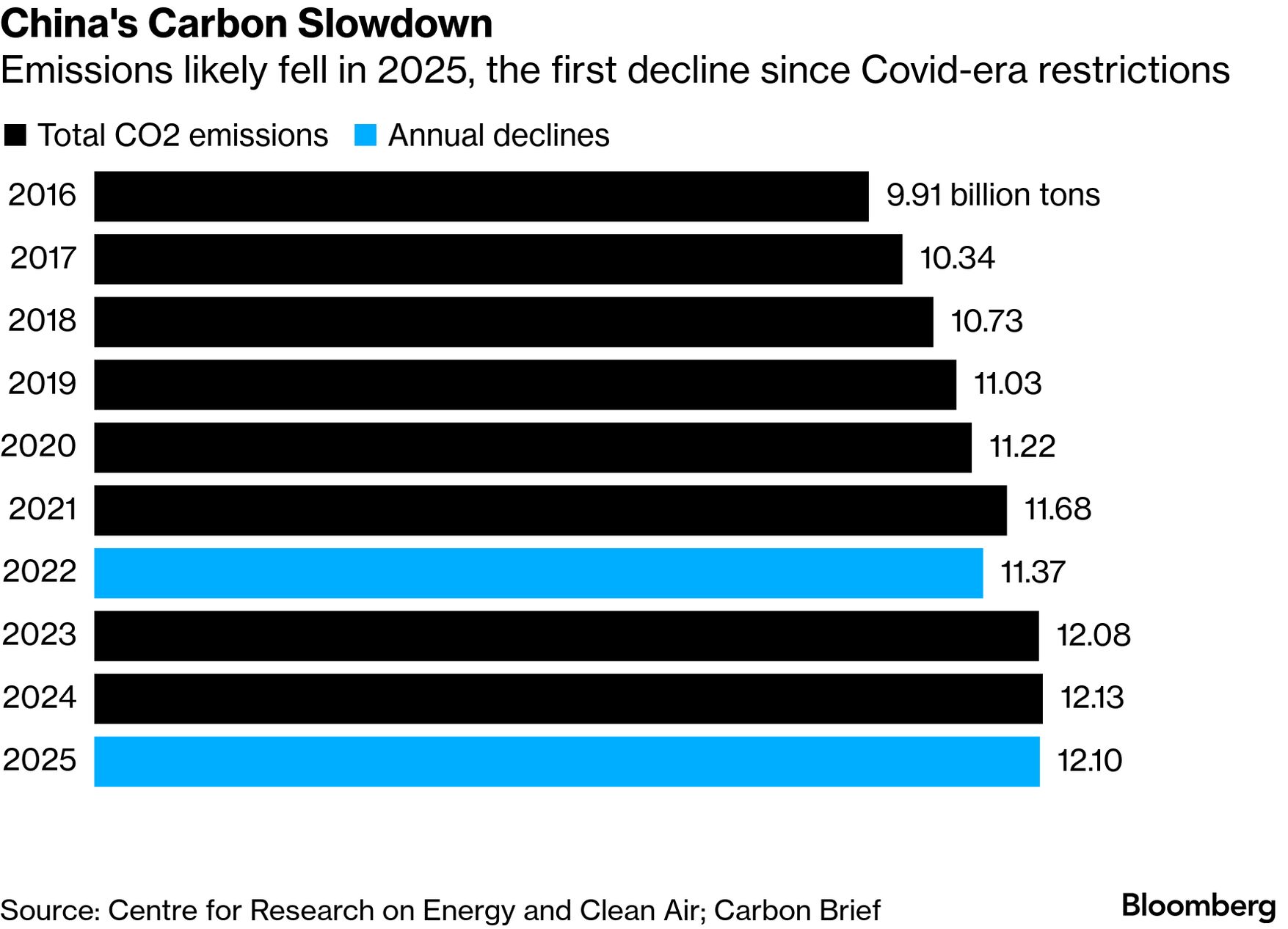 The decline in China's emissions, while small, may mark a turning point for the world's largest polluter. It was driven by factors including strong electric vehicle sales and clean power generation — the result of a decade of increasingly stronger policies aimed at protecting the environment and developing green industries. In contrast, US emissions increased last year after a two-year decline, according to an estimate released last month by the research firm Rhodium Group. This increase comes as the Trump administration is systematically and aggressively moving to dismantle not only many of former President Joe Biden's most impactful climate policies, including cutting key pieces of the Inflation Reduction Act, but also decades-old climate rules. The campaign culminated on Thursday in its decision to rescind the so-called endangerment finding, a landmark 2009 scientific determination that greenhouse gases are harmful and which supports a swath of federal climate policy, as well as the repeal of Biden-era greenhouse gas standards for cars and trucks. 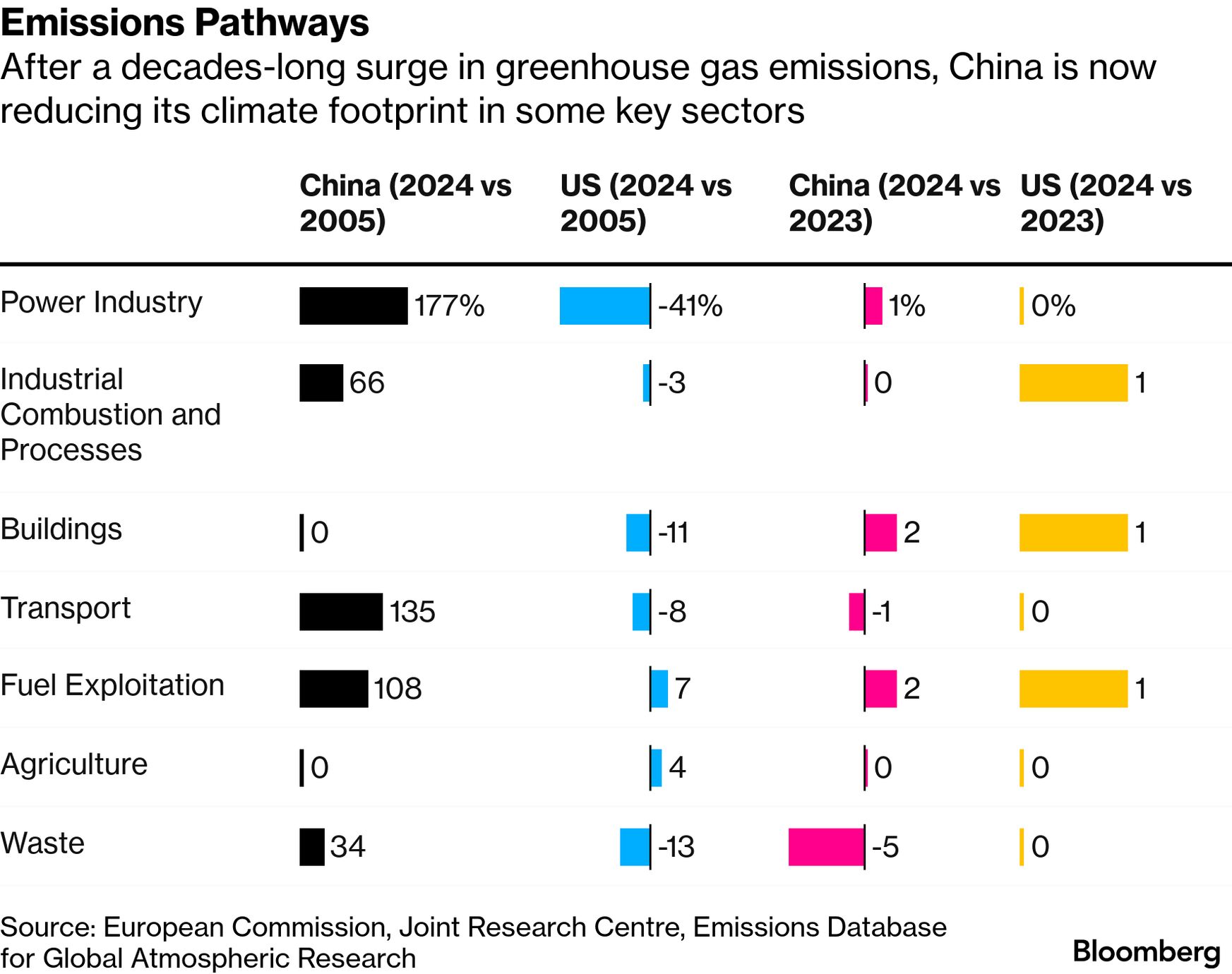 China's climate record remains far from perfect. The country continues to build out its coal-fired power plant fleet to ensure energy security, a rising petrochemical industry threatens to undo climate gains and its pace of decarbonization trails what climate scientists say is required to prevent catastrophic impacts. But overall, Chinese leaders envision a future in which clean energy dominates while the US is betting on a future powered by fossil fuels. The Trump administration is not only throwing its full support behind increasing coal, gas and oil production, but it's also actively trying to halt the growth of solar and wind. The juxtaposition is a significant reversal from a decade ago when the Obama administration was coaxing China into joining the Paris Agreement. Click here to read the full story and see more charts comparing the two superpowers. More from Green Indigenous protesters at a road block outside of the Cargill grain terminal, along the Tapajós and Amazon Rivers in Santarém, Pará state, Brazil, on Feb. 9. Photographer: Raimundo Pacco/Bloomberg In global crop powerhouse Brazil, major farming groups supported new laws that made it easier to fast-track roads and riverways crossing the Amazon rainforest. Now, they are facing the backlash in a crucial shipping route for corn and soybean exports. They are protesting the launch of a public bidding process to dredge the Tapajós River and a decree signed by President Luiz Inácio Lula da Silva that paves the way for the privatization of the management of three rivers across the Amazon, totaling about 4,000 kilometers (2,500 miles). Both initiatives have been made easier by the new legislation approved last year. The Trump administration issued new guidance on the use of foreign materials and components in US clean energy projects, in a move that would further limit access to lucrative tax credits. The Australian arm of Octopus Group plans to spend as much as $14 billion on renewable projects over the next five years, one of the largest investment plans in the country's green sector. The European Central Bank fined Credit Agricole $9 million, after concluding that France's second-largest lender failed to properly manage financially material climate-related and environmental risks. This week's Zero Bloomberg How can music be used to communicate about the climate crisis and its solutions? This week on Zero, Akshat Rathi talks with Pulitzer Prize-winning composer Julia Wolfe about her recent work, unEarth, which explores climate change and habitat loss through orchestra, voice and poetry. Wolfe discusses how she did her research; captured the clash between humanity and nature; and what the piece means at a time when her home country of the US seems to be moving away from cutting emissions. Listen now, and subscribe on Apple, Spotify or YouTube to get new episodes of Zero every Thursday. More from Bloomberg
Explore all Bloomberg newsletters. Follow us
You received this message because you are subscribed to Bloomberg's Green Daily newsletter. If a friend forwarded you this message, sign up here to get it in your inbox.
|
Friday, February 13, 2026
Sao Paulo’s climate paradox





Subscribe to:
Post Comments (Atom)
-
PLUS: Dogecoin scores first official ETP ...
-
Hollywood is often political View in browser The Academy Awards ceremony is on Sunday night, and i...


No comments:
Post a Comment