| Read in browser | ||||||||||||||
 London's commercial real estate market is getting a facelift. Glass facades are out and green features are in as private equity firms help to overhaul offices across the city. Today's newsletter looks at why, at a time when emissions goals and ESG investing are faltering, climate-friendly transformations are still in vogue. Plus, the US Supreme Court agreed to hear from big oil companies that want to stop dozens of climate lawsuits. Did someone forward you this newsletter? Subscribe to Green Daily for more free reads on climate change and finance. Real estate makeoverPrivate equity cash has emerged as a rapidly growing force in reshaping the look of London's offices, more than tripling its footprint over the past three years to 13% of the total, according to fresh data obtained by Bloomberg. Among firms putting money into refurbishing offices in the UK capital are Blackstone and Brookfield Asset Management. Plans include ditching sheer glass facades, introducing green terraces and adding gyms. Money is also going into making sure buildings can withstand heavier rainfall and hotter summers, PE managers and consultants interviewed by Bloomberg said. The deals mark a bright spot in an otherwise difficult time for the broader private-equity market, which in 2025 was sitting on $3.8 trillion of unsold assets, according Bain & Co. But when it comes to London offices, "private equity are thinking this is a great moment in time to buy buildings that are cheaper and sell them in a few years' time when they're worth more again," says Simon Glenn, head of London capital markets at Colliers. Blackstone has been among active bidders for London office real estate in recent years, though it is yet to announce a deal. It's now refurbishing Broadgate Quarter, near Liverpool Street station in the City of London that it originally bought in late 2015, with upgrades set to include fully electric heating and cooling as well as a fitness studio. 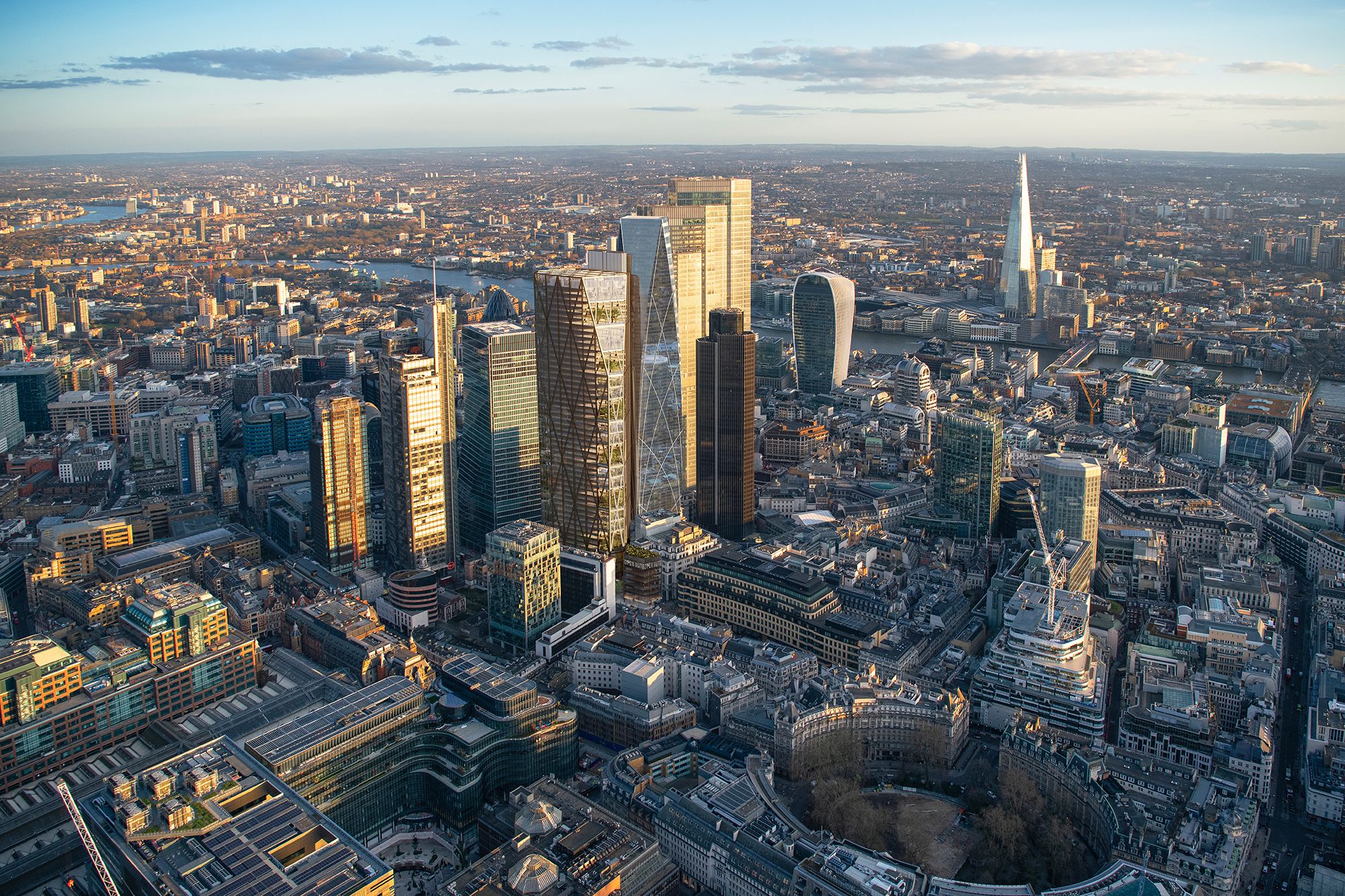 An aerial view of Brookfield's Bishopsgate development. Source: Brookfield Properties/RSHP James Rosenfeld, a managing director at Blackstone's real estate group, says the goal is to attract "tenants who are willing to pay a premium in order to be in buildings with those characteristics." PE firms spent £1.24 billion ($1.68 billion) on buying London offices last year, which is 13% of the total, according to Colliers. As recently as 2022, PE represented just 4% of all deals, equivalent to £540 million. At the same time, Knight Frank and the London Property Alliance estimate that the current stock of below-prime central London office buildings could be worth £262 billion if upgraded. Firms including DWS, the fund management arm of Deutsche Bank, Hines Interests, and Henderson Park Capital Partners have been looking for opportunities to buy out landlords ahead of a deadline in the early 2030s, when UK offices will have to meet much stricter energy efficiency rules. Landlords that don't invest in upgrades stand to lose money. And as existing investors in some cases find themselves having to "sell out of obsolete buildings," there are opportunities for PE to buy, says Christophe Kuhbier, managing director at Henderson Park. Cushman & Wakefield, a real estate consultancy, estimates that 76% of London's office stock is currently at risk of "obsolescence" in light of new energy efficiency regulations due to take effect in the UK in the coming years. Henderson Park's most recent purchase is 70 Fenchurch Street, a 25-year-old building designed by the modernist architect Richard Rogers and notable for its trademark external steel girders and glass lifts. The seller was Lloyd's Register, which moved next door. Lars Huber, head of Europe at Hines, says the real estate investor is spending "easily a couple billion a year" on a retrofit strategy in cities across Europe through a variety of funds. Those upgrades always include environmental improvements, he said. Hines recently sold a mixed-use office and retail building on Bond Street in London's West End district, after refurbishing it to add air-source heat pumps and a roof terrace. High construction costs and the challenge of gaining planning permission for new buildings have made retrofit a compelling model, he said. The wave of office renovations underway is set to alter the look of London. Dan Scanlon, UK president of Brookfield Properties, says the glass skyscrapers that have long dominated the city's financial district are now falling out of favor. 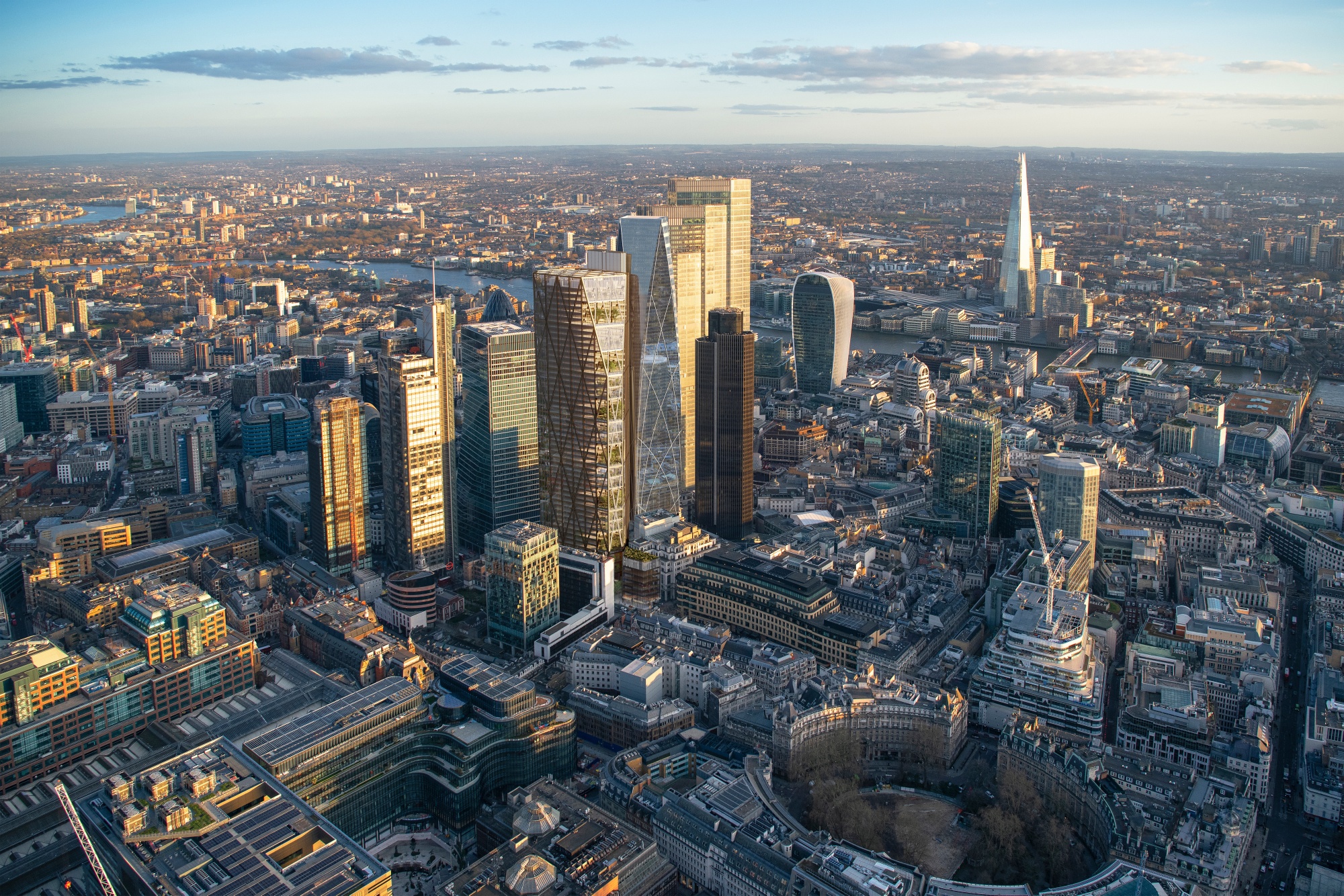 Aerial view of Brookfield's Bishopsgate development. Brookfield last year got permission to redevelop 99 Bishopsgate, in the heart of London's financial district. Scanlon said the plan is to retain the foundations but rebuild the rest of the building, reducing the number of windows and introducing more solid walls on the building's south-facing side in order to adapt to rising temperatures brought on by climate change. Those design changes mean there'll be less need for air-conditioning to cool the building's occupants during increasingly hot summers. "We've orientated this building so that, effectively, you've got a lot of solid elements on the south face of the building to protect against the sun in the heat of the day," Scanlon said. Read the full story and subscribe to Bloomberg News for more stories about sustainable buildings. The big picture5C How much hotter London's Tube stations are compared to outside air temperatures in summer. It's a reminder that there's more to climate-proofing the city than building renovations. Preparation pays"We are continuing to see climate-related events driving up property premiums and creating issues for companies." Sierra Signorelli US and commercial insurance chief executive officer, Zurich Insurance Insurers are offering a new service: Engineers who can spot climate risks, allowing property owners to make upgrades before disasters hit. Big caseBy Greg Stohr The US Supreme Court agreed to hear an appeal by Exxon Mobil and Suncor Energy in an industry bid to stop dozens of city and state lawsuits that blame oil companies for climate change. The justices will review a Colorado Supreme Court ruling that said the city and county of Boulder could use state law to press a suit against the two companies. Similar suits around the country ultimately could cost the industry billions of dollars if the Supreme Court lets them go forward. The decision to hear the Colorado case came after the Trump administration, business groups and conservative organizations filed a flurry of briefs urging the court to take up the appeal. 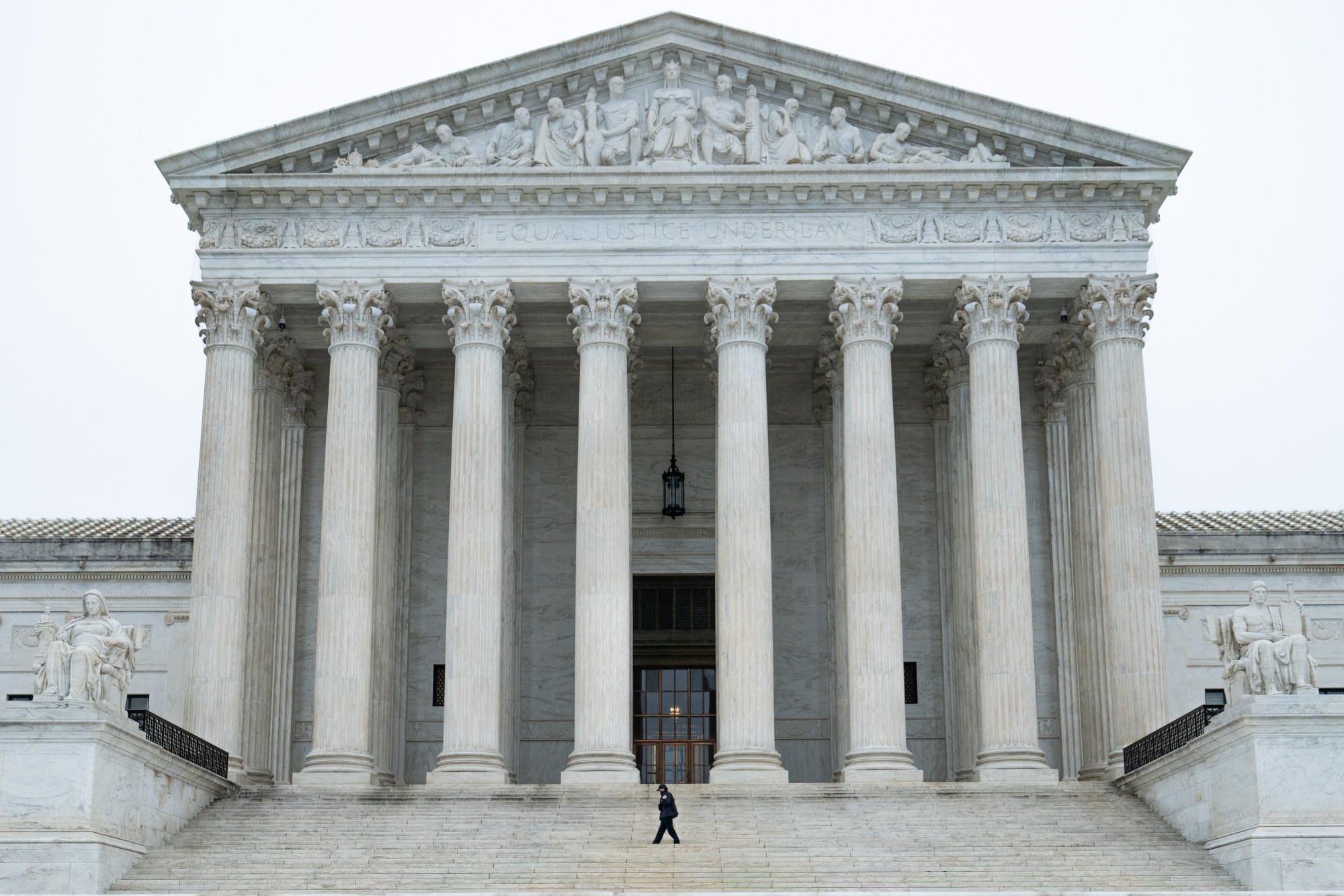 The US Supreme Court in Washington. Photographer: Annabelle Gordon/Bloomberg "The stakes in this case could not be higher," Exxon and Suncor argued. The suits seek to "impose untold damages on energy companies for the physical and economic effects of climate change." Boulder says the oil companies misled the public about the risks of climate change and knowingly contributed to the phenomenon by producing and promoting fossil fuels. Boulder says the companies should cover some of the costs state and local governments are incurring to cope with the problem. The oil companies argue in their appeal that the Constitution doesn't permit state-law suits aimed at addressing a global issue like climate change. "Boulder, Colorado, cannot make energy policy for the entire country," the companies contended. Boulder urged the Supreme Court not to hear the appeal, blasting the companies' argument as "a constitutional theory they have yet to convince any appellate court to adopt." The court will hear arguments and rule in the nine-month term that starts in October. This week's Zero In 2024, Ethiopia did something revolutionary. It banned the import of fossil fuel cars and cut tariffs on electric vehicles. This week on Zero, Akshat Rathi talks with producer Oscar Boyd and Ethiopia-based EV entrepreneur Yuma Sasaki about the EV boom that ensued and what that tells us about the growth of EVs in rapidly developing countries like Ethiopia. Listen now, and subscribe on Apple, Spotify or YouTube to get new episodes of Zero every Thursday. More from GreenEurope's largest business lobby called for reforms to the region's multi-billion euro carbon market to better support industry, piling on more pressure to amend the bloc's main emissions-cutting tool. The European Union's Emissions Trading System, which puts a price on each metric ton of CO2 released into the atmosphere by industry, has come under fire in recent weeks for adding to the financial burden of companies already battling high energy costs and stiff global competition. The European Commission, the bloc's executive branch, is due to review the market later this year. BusinessEurope, a powerful trade group that represents 42 national business federations, said that while it remained in favor of keeping the ETS, the pace of planned emissions cuts needed to be reconsidered. An injection of liquidity could come from permits currently stashed in a market reserve, according to a report seen by Bloomberg. Air France-KLM and hotelier Accor will need to cough up financial penalties to bondholders because they failed to meet greenhouse gas targets. Mozambique expects to secure about $10 billion in financing from the World Bank in the coming years to support economic growth and job creation, the finance minister said. More from Bloomberg
Explore all Bloomberg newsletters. Follow us
You received this message because you are subscribed to Bloomberg's Green Daily newsletter. If a friend forwarded you this message, sign up here to get it in your inbox.
|
Tuesday, February 24, 2026
Private equity greens London’s offices





Subscribe to:
Post Comments (Atom)
Who starred in "I Love Lucy"?
Quiz Treat has a feast of fun trivia in store for you! Play against others for extra points! Try Battle mode ▶ Bonus Quiz! 60 PTS Entert...

-
PLUS: Dogecoin scores first official ETP ...
-
Hollywood is often political View in browser The Academy Awards ceremony is on Sunday night, and i...


No comments:
Post a Comment