| Plus: American football is on borrowed time | |
| |
| Welcome to the weekend! After a season of heavy rainfall in Mexico, one crop had a bumper year — a fruit whose Nahuatl root translates, delicately, to "testicle." The glut sent prices plunging in the US. Which crop was it? Find out in this week's Pointed quiz. Speaking of bumper years, tune in to the latest episode of The Mishal Husain Show, where David Miliband, CEO of the International Rescue Committee, talks about the 20 urgent global crises his team says will demand aid in 2026. Train your brain with today's Alphadots puzzle, and don't miss tomorrow's Forecast on the AI-driven software slump. For full access to Bloomberg, subscribe! | |
| |
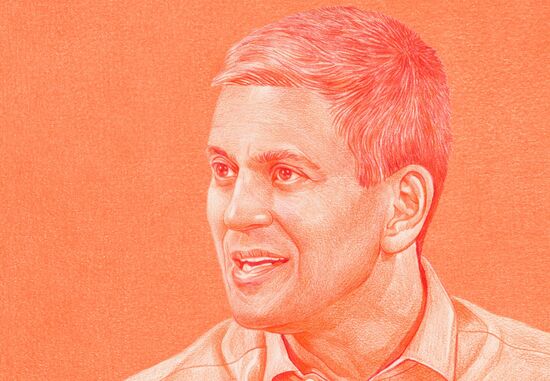
| At this particular moment, David Miliband may not regret missing out on the job of UK prime minister. Britain is rattled by Donald Trump and Keir Starmer is grappling with the fallout from a trove of Epstein emails. But Miliband's own post-political role is hardly serene. As CEO of the International Rescue Committee, he's trying to stretch a shrinking aid budget across a growing list of global crises, just as governments — especially the US — pull back. "The US was the anchor of the global system," Miliband tells Mishal Husain. "The anchor's being pulled up." | |
| |
| For decades, the world didn't just trust the US to deliver aid — it parked its money there, too. That bet paid off, but it also concentrated risk. Capital flowed "uphill" into American markets long after the economic case weakened, inflating asset prices, warping portfolios and starving faster-growing economies of investment. Now, as political uncertainty rises and old tailwinds fade, that imbalance is starting to unwind. Sony Kapoor argues this rebalancing away from the US could ultimately lift growth and make the global economy more resilient. | |
| |
| As the US pulls up its anchor, it starts watching the boat instead of the horizon. That inward turn is visible in Minneapolis, where federal agents have clashed with protesters amid an immigration crackdown. Their tactics — raids, roving patrols, aggressive crowd control — aren't new, Fola Akinnibi writes. What is new is using them in US cities. This conscious blurring of the line between border enforcement and policing is epitomized by the increasing operational overlap of Immigration and Customs Enforcement and Customs and Border Protection. | |
| |
| New Year Sale: Save 60% on your first year
Enjoy unlimited access to Bloomberg.com and the Bloomberg app, plus market tools, expert analysis, live updates and more. Offer ends soon. | | | | | | |
| |
| Osaka
At a wagyu restaurant in Osaka, manager Ryoji Shiokawa is rethinking his customer base. Once buoyed by Chinese tour groups, his business is down about 30% since Prime Minister Sanae Takaichi's comments on Taiwan helped chill relations with Beijing. With a snap election looming, Osaka offers a glimpse of the trade-offs behind Japan's tougher posture: fewer visitors, slower sales and business owners quietly recalibrating. Still, Shiokawa likes Takaichi, and says his expectations of her are modest; just "please don't start a war."  Photographer: Amanda Saviñón for Bloomberg Boston / Brooklyn
On a frigid league night, curlers sweep furiously as a 44-pound granite stone slides across a municipal rink, drawing cheers when it knocks an opponent's rock aside. Once a niche Olympic curiosity, curling has built a small but steady following in the US, and clubs are now capitalizing on the Milan‑Cortina Winter Olympics to lure newcomers. The sport's low barrier to entry and social appeal are helping, but limited ice time and the high cost of facilities raise doubts about whether the Olympic spotlight will translate into lasting growth.  Photographer: Miska Draskoczy/Brooklyn Lakeside Curling Club | |
| |
| The Fed is starting to look more like the Supreme Court. As political pressure mounts, monetary policy is being shaped less by the authority of the chair and more by shifting coalitions, narrow votes and the growing importance of swing members. The age of the organization man is over, and we may miss it. Charismatic leaders and personal brands are increasingly eclipsing institutions, and weakening the systems once designed to restrain power and dampen volatility. American football is living on borrowed time. Chuck Klosterman argues that the sport's scale, violence and media dominance have turned it into a simulacrum — profitable and relevant, but detached from the society that created it. | |
Sweating the Farm | | "Sometimes I feel like I'm falling off the back of the treadmill, or I've put way too much in my mouth, but I just have to keep chewing." | | Jemima Penfold A next-gen farmer in Australia | | The Penfold family runs a cattle operation the size of a city, but their story carries a warning. As Australian farms scale up to stay competitive, rising debt and soaring land values are turning succession into a major challenge. The Penfolds' effort to hand the business to the next generation offers a window into what it now takes for family farming to endure. | | |
| |
| The $3 billion Winter Olympics: Only if the snow holds. Host cities are spending billions to stage winter sports in a warming climate, and leaning on artificial snow. A €22–€25 set lunch at Sandi in Milan: Yes. Modern Italian cooking and a serious wine program come without the scene-y pricing that defines much of the city. A Tesla: If you love the software. Otherwise, competition is fierce and customer service is mid. Many defectors aren't leaving EVs — just Tesla. A $71,200 Audemars Piguet Neo Frame Jumping Hour: If you can swing it. The watch face is basically a black window and a minute arc, but that's the whole point. A $7,700-a-night Aman cruise: Sure, why not? The price isn't about where you're going — it's about having a luxury hotel experience transplanted onto a yacht.  Photographer: Sinot Yacht Architecture & Design | |
| |
| Everyone loves a good tech movie, but a movie with tech isn't the same as a movie about tech. To parse the difference, Johns Hopkins professor Michael Luca looked back at movies from the turn of the century to figure out which ones held up. The best ones leaned in on prescient trends — think Minority Report and surveillance capitalism — but all of Luca's picks make for great weekend watching.  Photographer: AJ Pics/Alamy /www.alamy.com | |
| |
| |
| Enjoying Bloomberg Weekend? Check out these newsletters: - Businessweek Daily for fresh perspectives on business, economics, politics and tech.
- Business of Food for a weekly newsletter on how the world feeds itself in a changing economy and climate, from farming to supply chains to consumer trends.
- CityLab Daily for today's top stories, ideas and solutions, from cities around the world.
- Pursuits for a guide to the best in travel, eating, drinking, fashion, driving and living well.
- Screentime for a front-row seat to the collision of Hollywood and Silicon Valley.
Explore all newsletters at Bloomberg.com. | |
| |
Like getting this newsletter? Subscribe to Bloomberg.com for unlimited access to trusted, data-driven journalism and subscriber-only insights. Before it's here, it's on the Bloomberg Terminal. Find out more about how the Terminal delivers information and analysis that financial professionals can't find anywhere else. Learn more. Want to sponsor this newsletter? Get in touch here. | | | You received this message because you are subscribed to Bloomberg's Bloomberg Weekend newsletter. If a friend forwarded you this message, sign up here to get it in your inbox. | | |












No comments:
Post a Comment