 Despite potentially missing its 2026 launch targets, AST SpaceMobile is seeing growth through new contracts, major tech backing, and strong... ͏ ͏ ͏ ͏ ͏ ͏ ͏ ͏ ͏ ͏ ͏ ͏ ͏ ͏ ͏ ͏ ͏ ͏ ͏ ͏ ͏ ͏ ͏ ͏ ͏ ͏ ͏ ͏ ͏ ͏ ͏ ͏ ͏ ͏ ͏ ͏ ͏ ͏ ͏ ͏ ͏ ͏ ͏ ͏ ͏ ͏ ͏ ͏ ͏ ͏ ͏ ͏ ͏ ͏ ͏ ͏ ͏ ͏ ͏ ͏ ͏ ͏ ͏ ͏ ͏ ͏ ͏ ͏ ͏ ͏ ͏ ͏ ͏ ͏ ͏ ͏ ͏ ͏ ͏ ͏ ͏ ͏ ͏ ͏ ͏ ͏ ͏ ͏ ͏ ͏ ͏ ͏ ͏ ͏ ͏ ͏ ͏ ͏ ͏ ͏ |
| | Written by Jordan Chussler 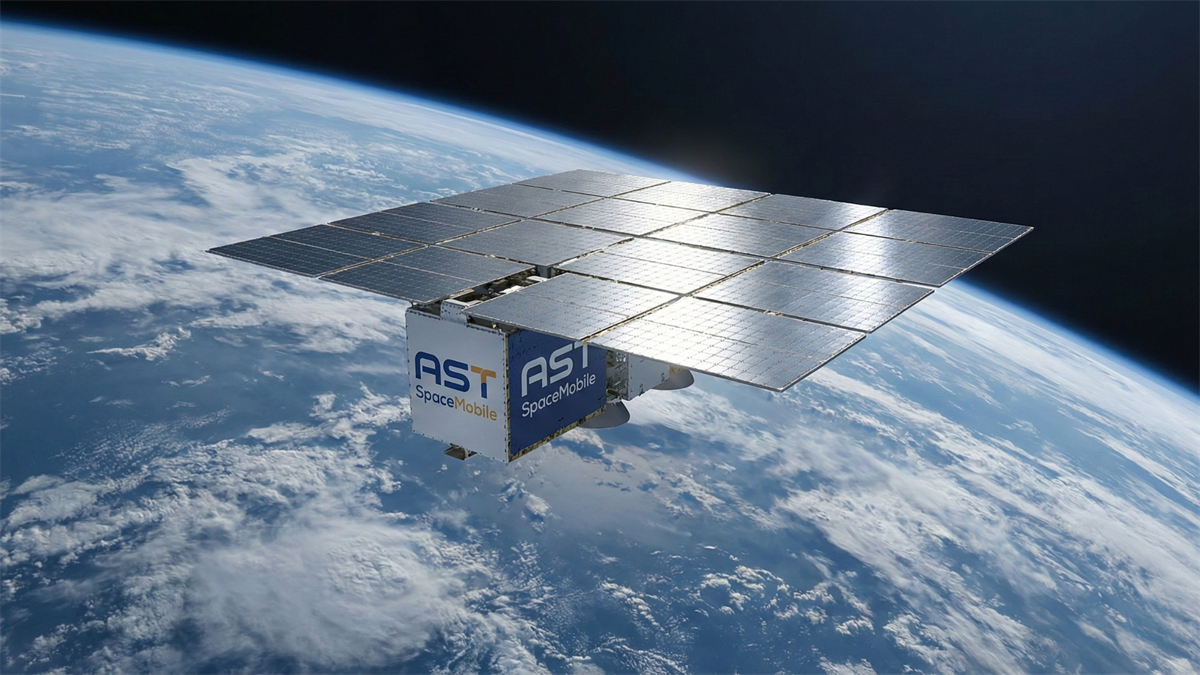
After gaining more than 240% over 2025, AST SpaceMobile (NASDAQ: ASTS) has continued its strong—albeit volatile—run into 2026. Shares of ASTS have climbed 24% year-to-date despite some trademark ups and downs, including more than five double-digit pullbacks ranging from 10% to more than 14%. But the stock continues to bounce back on bullish news, including last month’s announcement that the space-based cellular communication services firm was awarded a government contract for the Missile Defense Agency Scalable Homeland Innovative Enterprise Layered Defense (SHIELD) indefinite-delivery/indefinite-quantity (IDIQ) contract. More recently, Jeff Bezos-founded Blue Origin announced on Jan. 22 that it will be using its New Glenn-3 (NG-3) heavy lift rocket to transport AST SpaceMobile’s next-generation Block 2 BlueBird satellite into low Earth orbit (LEO) “no earlier than late February.” Blue Origin’s New Glenn-3 will be capable of transporting up to eight of AST SpaceMobile’s BlueBird satellites at a time. The mission will mark the first occasion since Sept. 12, 2024, that one of the company’s satellites launches from the United States. But in late January, global communications industry publication Light Reading reported that at its current pace, AST SpaceMobile is at risk of missing its launch target of 45 to 60 satellites in orbit by the end of 2026. Here’s what prospective investors and current shareholders need to know about the near-term future of the company, which aims to provide what it refers to as “the world’s first space-based mobile broadband network.” All Eyes Are on Tentative BlueBird 7 Launch in Late February AST SpaceMobile's BlueBird 7 satellite is currently in preparation at the Launch Complex 36 installation at Cape Canaveral Space Force Station. The 2,400-square foot array is one of dozens the company intends to put into LEO by the end of the year, with a launch cadence of every one to two months, on average. But as Michelle Donegan, senior editor at Light Reading, points out, that may prove to be a tall order for the Midland, Texas-based aerospace company. “AST has fallen behind schedule from its original plans outlined last year and adjusted expectations in the last few quarters, sparking questions about whether it can still achieve its ambitious target in a compressed timeframe and provide sufficient coverage for a continuous service by year-end for its mobile operator partners,” Doengan wrote. Doengan added that AST SpaceMobile’s Q1 goal of five orbital launches now appears to be out of reach, and that “the company would need three more launches before the end of March to meet this interim goal.” However, the firm will not report earnings again until March 2, so public information about its progress toward the quarterly launch goal is increasingly unlikely. Additionally, no details have been provided on AST SpaceMobile’s website since the Blue Origin launch vehicle news was announced. AST SpaceMobile’s Clients Are Lined Up and Awaiting Broader Services Doengan quoted multiple satellite analysts whose sentiment about whether AST SpaceMobile can meet its goals boils down to “that’s not happening.” But the good news is that even if the company is not able to meet its self-imposed launch targets in 2026, longer term, AST SpaceMobile is on track to continue disrupting and cutting into SpaceX’s Starlink dominance in the 4G and 5G satellite-to-phone market. In addition to its federal government contracts, the company—which is 95% vertically integrated, providing it with pricing power and supply chain control—has already secured partnerships with Verizon Communications (NYSE: VZ), AT&T (NYSE: T), and Vodafone Group (NASDAQ: VOD). Additionally, it has signed commercial pacts with Japanese tech conglomerate Rakuten (OTCMKTS: RKUNY), real estate investment trust American Tower (NYSE: AMT), and BCE (NYSE: BCE), formerly Bell Canada Enterprises and one of Canada’s largest telecommunications and media companies. But the biggest prize boost may come from Alphabet (NASDAQ: GOOGL), which holds more than 8.9 million shares of ASTS—a position it opened in early 2024 and expanded in 2025. That amounts to more than 23% of Alphabet’s investment portfolio, making it the Magnificent Seven company’s largest holding. Wall Street’s Long-Term View In the short term, analysts are skeptical about ASTS’ performance, with a consensus Reduce rating and an average 12-month price target that implies potential downside of nearly 56%. Fundamentally, the company is sound. AST SpaceMobile’s financial health falls into the Green Zone according to TradeSmith, where it has been for more than nine months. While not yet profitable due to heavy investment in the build-out of its space-based cellular network, revenue growth increased by more than 1,239% in Q3 2025. Meanwhile, institutional ownership has been decidedly bullish, with 341 buyers over the past 12 months injecting $2.04 billion into ASTS, compared to 113 sellers liquidating just $325.61 million.  Read This Story Online Read This Story Online |  Markets have been volatile lately, but dependable income opportunities still exist for investors who know where to look. We're reviewing a small group of high-yield dividend stocks that continue to generate strong cash flow despite shifting conditions. Our latest guide outlines three companies operating in energy, consumer staples, and consumer finance, each producing billions in free cash flow and offering yields above typical market averages. These are established, cash-producing businesses built to reward shareholders through consistent payouts, not speculation. If steady income matters in today's market, this breakdown is worth a closer look. Access the free dividend income guide and review all three stocks today |
| Written by Ryan Hasson 
Alphabet (NASDAQ: GOOGL), the world’s second-largest public company, once again delivered a standout earnings report, all but reinforcing its dominance across search, cloud, and artificial intelligence. The tech giant reported its fourth-quarter and full-year 2025 results after the close on Wednesday, Feb. 4, topping expectations across the board and surpassing a significant milestone: more than $400 billion in annual revenue for the first time in company history. Shares initially traded lower in after-hours trading, dipping as much as 6% as investors reacted to Alphabet’s aggressive capital expenditure outlook for 2026. That move, however, proved short-lived. By the end of extended trading, shares were down just 0.39% as the market digested the strength of the underlying results and the company’s long-term growth investments. Overall, the earnings report highlighted Alphabet’s continued execution across its core businesses, accelerating momentum in cloud computing, and rapid expansion of AI adoption across its ecosystem. Alphabet Tops EPS and Revenue Estimates For the third consecutive quarter, Alphabet exceeded both earnings and revenue expectations. The company reported earnings per share of $2.82, comfortably ahead of consensus estimates of $2.59. Revenue came in at $113.83 billion, beating forecasts of $111.43 billion. For the full year, Alphabet generated $402.8 billion in revenue and $10.81 in earnings per share (EPS), reflecting year-over-year (YOY) growth of 17% and 34%. These figures underscore the company’s ability to scale profitably even as it invests heavily in next-generation technologies. Google Cloud once again stood out as a primary growth driver. Fourth-quarter cloud revenue reached $17.66 billion, up 48% year over year and well above estimates of $16.18 billion. On an annualized basis, Google Cloud surpassed a $70 billion revenue run rate. Perhaps more importantly, demand visibility continues to strengthen. Alphabet reported that its cloud backlog surged 55% quarter over quarter to $240 billion, up from $155 billion in the September quarter. New enterprise customers during the period included Anthropic and Meta Platforms (NASDAQ: META), further validating Google Cloud’s competitive positioning in the AI infrastructure race. Search and YouTube Growth Stays Strong in Q4 Beyond cloud, Alphabet’s core advertising engine continues to grow at a healthy pace. Search revenue rose 17% YOY in the fourth quarter, demonstrating that concerns around AI disruption have yet to impact Google’s core business materially. YouTube also delivered solid results. In 2025, YouTube generated more than $60 billion in revenue from advertising and subscriptions combined. Across YouTube, Google One, and other services, Alphabet now boasts 325 million paid consumer subscriptions, reinforcing the durability and diversification of its revenue streams. On the AI front, Alphabet disclosed that Gemini now has more than 750 million monthly active users. Additionally, the company processes over 10 billion tokens per minute through direct API usage, highlighting rapid enterprise and developer adoption. These metrics help explain why Alphabet continues to prioritize AI investment so aggressively. 2026 Capex Outlook: Why Spending Is Surging Despite the strong operating performance, Alphabet’s outlook for capital spending dominated investor attention. The company expects capital expenditures in 2026 to range between $175 billion and $185 billion. During the earnings call, Chief Financial Officer Anat Ashkenazi explained that the increased investment will primarily support AI compute capacity for Google DeepMind, meet surging cloud customer demand, and fund strategic investments across Alphabet’s “Other Bets.” She also emphasized that capital spending will be directed toward improving user experience and driving higher advertiser returns across Google’s services. While the size of the capex figure initially unsettled the market, it reflects the reality of competing at scale in AI and cloud infrastructure. AI and Cloud Strategy: Alphabet Bets Big to Defend Leadership Alphabet delivered another blowout quarter, executing across virtually every major business line. Cloud continues to scale rapidly, margins are expanding, search remains resilient, and YouTube provides steady, high-margin growth. Gemini’s adoption metrics further suggest that Alphabet’s AI strategy is gaining real dominance. The only point of friction for investors was the size of the company’s capital expenditure outlook. However, for Alphabet, sustained leadership in AI, cloud, and digital advertising requires continued aggressive investment. The company is clearly betting that spending big today will allow it to win even bigger over the long term. So far, the returns on that strategy appear to be paying off. Read This Story Online |  By 2030, AI will add $15.7 trillion to the global economy.
That's more than the current GDP of China and India combined.
But here's what most investors miss: The companies building AI's foundation today will capture the lion's share of that wealth.
Not the chatbot makers. Not the app developers. The infrastructure providers. Click here to get your free copy of this report |
| Written by Chris Markoch 
Pfizer Inc. (NYSE: PFE) helped boost the Dow Jones Industrial Average (DJIA) the day after delivering a double beat in its fourth-quarter earnings report. Revenue of $17.56 billion topped analysts' estimates of $16.93. On the bottom line, Pfizer delivered adjusted earnings per share (EPS) of 69 cents, beating estimates of 57 cents. Highlighting the report was Pfizer’s announcement of positive topline results from the Phase 2b study for its lead GLP-1 drug candidate.
PFE stock closed up 4% on Feb. 4 as analysts and investors had an opportunity to digest the report. The bullish thesis is that while GLP-1 headlines may drive near-term excitement, Pfizer’s more durable upside is likely to come from its expanding oncology pipeline and its accelerating use of artificial intelligence across R&D. That starts with the company’s push into obesity, where it reported a notable clinical update alongside the quarter. Pfizer Wants a Piece of the Weight-Loss Drug Pie The weight loss drug market is expanding at a rapid pace. In fact, data shows that the global GLP-1 market will grow from $62.2 billion in 2025 to $157 billion by 2035. That is good for a compound annual growth rate (CAGR) of 9.7%, and why billions of dollars are flooding into the industry from companies looking to carve out their own slice of market share. For Pfizer, that comes from its lead GLP-1 candidate, MET-097i. The company announced results from its Phase 2b VESPER-3 study. The trial met its primary endpoint and showed a statistically significant, placebo-adjusted weight loss of up to 12.3% at 28 weeks. Pfizer also highlighted that patients continued to lose weight after transitioning from weekly to monthly dosing, with no plateau observed by the end of the 28 weeks. The Growth Driver Investors May Be Missing Immediately after the report, conventional wisdom pointed to the positive clinical trial results as the cause for the stock’s gain. That may be true, but if so, investors should note that it’s a sugar high. While Pfizer's drugs show promise, it will take time for that to translate to the company’s balance sheet. Plus, the GLP-1 trade, while not necessarily getting crowded, is expanding. And as the earnings report from Eli Lilly & Co. (NYSE: LLY) shows, the largest Big Pharma member isn’t planning to give up its obesity drug leadership role anytime soon. However, there are other reasons to be bullish on PFE. Specifically, that comes from the company’s oncology portfolio. Data from Business Research Insights values the global oncology drugs market at approximately $264.92 billion in 2026. That's projected to climb to $648.08 billion by 2035, reflecting a CAGR of around 10.3%. A Growing Pipeline Gives Pfizer Many Shots on Goal As of late 2025, Pfizer has approximately 60 candidates in its product portfolio, which translates to just as many opportunities to capture market share. The company’s portfolio was enhanced tremendously after its acquisition of Seagen in 2023. Today, Pfizer's portfolio combines both late-stage candidates, such as Vepdegestrant, a next-gen targeted protein degrader (PROTAC), paired with atirmociclib, a selective CDK4 inhibitor, to tackle ER+/HER2- metastatic breast cancer in later-stage trials. Pfizer has two other candidates in late-stage trials, including: - Sigvotatug vedotin, an antibody-drug conjugate (ADC), is in Phase 3 testing (e.g., Be6A LUNG-01) against metastatic non-small cell lung cancer, leveraging Pfizer's Seagen-acquired ADC expertise.
- Sasanlimab targets bladder cancer, while the bispecific PD-1xVEGF agent (PF-4404) combines with Padcev to treat urothelial cancer, positioning these treatments for potential blockbusters amid oncology growth.
But as noted earlier, Pfizer could be bringing multiple drugs to market in the next five to 10 years. That's where the story gets even better with the company’s commitment to artificial intelligence (AI), which is becoming essential to many stocks in the biopharmaceutical sector. Pfizer integrates AI across R&D via partnerships like Boltz for biomolecular modeling, XtalPi for molecular design, and Data4Cure for oncology data analytics, speeding target identification by at least 50% with tools like OncoScout. Internally, platforms like "Charlie" handle data mining, predictions, and content generation, while collaborations with NVIDIA (NASDAQ: NVDA) optimize discovery and manufacturing. These efforts were critical in the company’s rapid development of Paxlovid and support 2026 catalysts in oncology and obesity. Pfizer is targeting $1.2 billion in savings by 2027 through efficiency gains. Industry-wide, AI is projected to boost productivity 35% to 45% by refining preclinical decisions and trials, making it a core competitive edge rather than optional hype. Pfizer has positioned itself at the forefront of those AI adoption efforts, which should provide a boon to investors in the medium and long terms. Read This Story Online |  It could be in your 401(k) anchoring your portfolio.
But our independent Weiss Ratings, which have correctly called nearly every major financial event of the 21st century, just slapped this popular stock with a "SELL".
And it's not the only one.
We found nine other popular but toxic stocks. Click here to discover the 10 toxic stocks and protect your wealth now |
| More Stories |
| |
|
And it’s thanks to a little-known niche in the options market. View in browser View in browser While most folks were m...

-
Trader Plans Bids at $94K, $82K for P...
-
PLUS: Dogecoin scores first official ETP ...
-
Hollywood is often political View in browser The Academy Awards ceremony is on Sunday night, and i...
|



![[INSIDE] The 'safe' stock that could bankrupt you in 2026](https://www.marketbeat.com/images/webpush/files/thumb_20250729150709_pushdigital-marketing-1433427640.jpg)


No comments:
Post a Comment