| Also this week: Oslo opens new government quarters on the site of tragedy, and it's a tough time to be a Black developer. |
| |
| Welcome to our weekly CityLab newsletter, which you can find in your inbox every Friday starting today. Sign up for the newsletter if you haven't already. We'd love to hear your feedback and ideas at citylab@bloomberg.net. In a dense city like New York, where do you find room for a mansion, much less a mega-mansion? For some ultra-wealthy buyers, the answer is hiding in plain sight: They're buying two — sometimes even three — adjacent townhouses and simply merging them together to create single-family homes right in the heart of Manhattan. Bloomberg News has identified 19 of these combos in the borough since 2010, across what used to be 40 separate buildings. Most are in historic neighborhoods popular among the highly affluent, with more than half located in the West Village. The exterior facade remains much the same, but inside, these conjoined homes that once held multiple apartments have been gutted and transformed into one capacious space with luxury amenities like a wine cellar and basement media room. These combos are just the tip of the iceberg: Wealthy buyers have consolidated thousands of rental units by rolling up small apartment buildings into single-family homes. They're one way the city loses housing even as it scrambles to add more units. "We don't talk about the removals from supply," said one housing expert. "We only talk about new construction." Read more from Paulina Cachero and Sophie Alexander, with graphics and data analysis by Marie Patino and Aaron Gordon this week on CityLab: The Rise of the Manhattan Mega-Mansion — Linda Poon | |
| |
| Oslo rebuilds on the site of tragedy
In 2011, Norway's deadliest terror attack killed dozens of people just outside of the prime minister's office and damaged surrounding buildings. Fourteen years later in that very spot, the Norwegian capital has unveiled a new, modernist government quarter, with a redesign that emphasizes "more openness, more democracy and more humanity." 'DEI is over'
The real estate industry has always been tough for Black and Hispanic developers. The Trump administration's campaign against diversity programs is adding to the challenge. A coming eviction wave after ICE
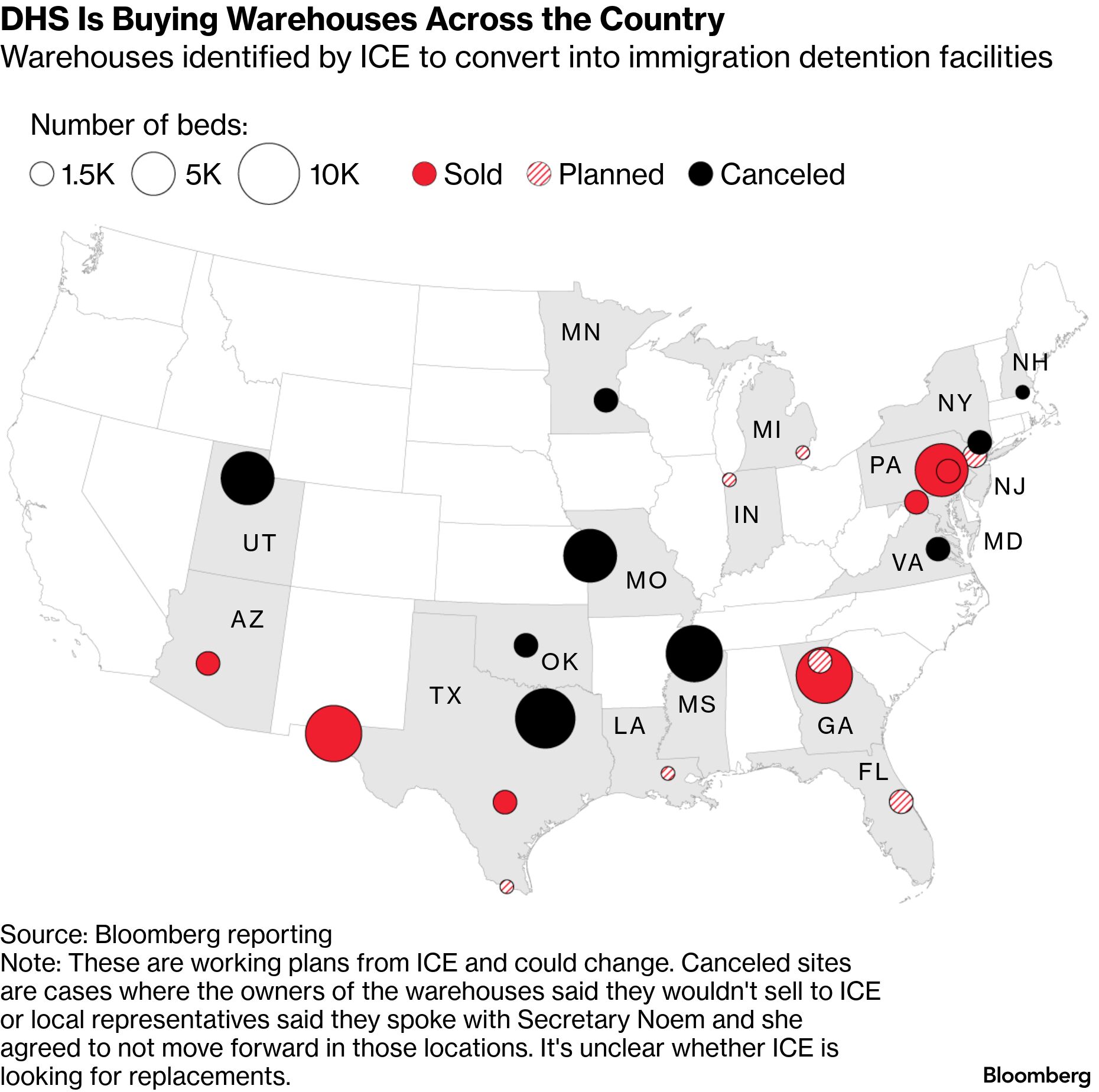
Trump's federal immigration crackdown in Minneapolis is winding down, but not before setting off a potential renters crisis. Officials are seeking aid to keep people housed. Do computers drive better than humans? Autonomous vehicle companies like Waymo have pointed to their own data showing fewer deadly crashes as evidence that self-driving technology makes roads safer. But don't pop the champagne just yet. Here's one insurance expert's assessment of the debate: "Waymo can talk about how great their vehicles have performed according to their own research, but someone needs to replicate it." Tracking ICE's warehouse jails | The US Department of Homeland Security is plowing ahead with its $38 billion plan to build a government-owned immigration jail network. Many of the planned sites are currently vacant warehouses, seven of which have been sold to the agency. Find out where. | |
| Just as the US Northeast was finally digging itself out of the region's first major snowstorm from January, this week brought another round of wintry mix. Some of the hardest-hit places, like Michigan, are facing a road salt shortage — bad news for cities, but good news for the environment. In the past, cities have sought out more eco-friendly ice-melt alternatives, from beet juice to leftover beer. In 2023, CityLab contributor Sarah Holder suggested a bold idea: What if we had a 15-minute city for friendship? This week, we heard from reader Beatrize Stephen-Pons, who took the idea to her own community and reports back: I began prioritizing every new connection with someone who lived within a 15-minute walk of my apartment. People I met introduced me to people they knew. Today, after over two years of planned biweekly events, impromptu potlucks and grocery store run-ins, the 15-minute neighborhood has become a source of support for many. Neighbors exchange and borrow resources freely. People who developed unexpected health concerns found themselves among neighbors helping with tasks they struggled to do. People who move prioritize staying in the neighborhood.
The main departure from your article is prioritizing community slightly beyond friendship. In my mind, the difference between a community and a friend group is that the breakdown of any one friendship or many would not halt the momentum of a community the way it can in a friend group. The members of a community do not need to all be close to still step up and help.
Readers: Send us your stories for inclusion in a future newsletter. | |
-
The G.O.A.Ts of LA: The grass-grazing animals are helping the wildfire-prone city prepare for the next Olympic Games. (Smart Cities Dive) -
As it turns out, building luxury homes can help put lower-income people in housing. A study on the effects of a new condo project in Honolulu lays out exactly how. (Atlantic) -
Barely two months into the job, NYC Mayor Zohran Mamdani has already been hit with two snowstorms that put his leadership to the test. How did he do? (Vital City) -
Speaking of winter, the frigid cold can kill EV batteries, but that didn't stop Madison, Wisconsin, from electrifying its buses — and keeping them running. (Grist) -
While concerns over labor and economic disruption temper optimism about the future of AI, South Korea has nothing but "good vibes" toward the technology. (Politico)
Have something to share? Email us. And if you haven't yet signed up for this newsletter, please do so here. | |
| |
| |
| You received this message because you are subscribed to Bloomberg's CityLab Weekly newsletter. If a friend forwarded you this message, sign up here to get it in your inbox. | | |












No comments:
Post a Comment