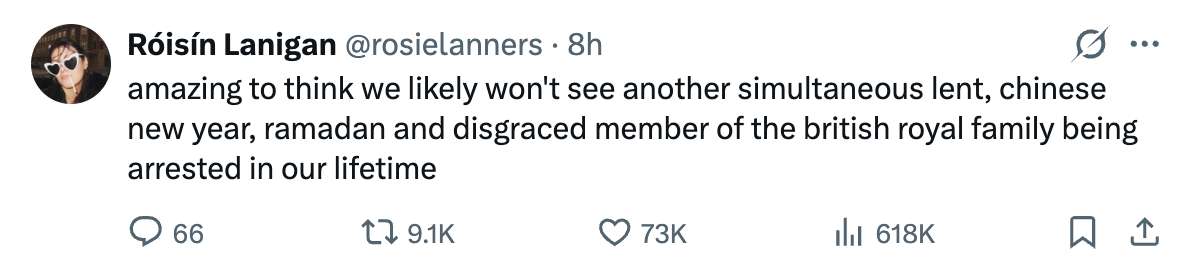
| Welp. There goes the British royal family's 379-year streak of not having anyone in handcuffs. Former prince Andrew Mountbatten-Windsor was arrested on the morning of his 66th birthday on suspicion of committing misconduct in public office during his time as trade envoy for the United Kingdom. My condolences for the uneaten cake. "A charge or a court action does not automatically follow an arrest," Martin Ivens notes. "But it does put Andrew on notice that he can no longer tell untruths about a relationship with Jeffrey Epstein that continued long after the financier was convicted and imprisoned for procuring a minor." King Charles III, who pledged to "support" any police inquiry and declared that "the law must take its course" after his brother's arrest, spent the day doing what royals do best: acting as if nothing is wrong. Here he is, sitting front row at London Fashion Week: 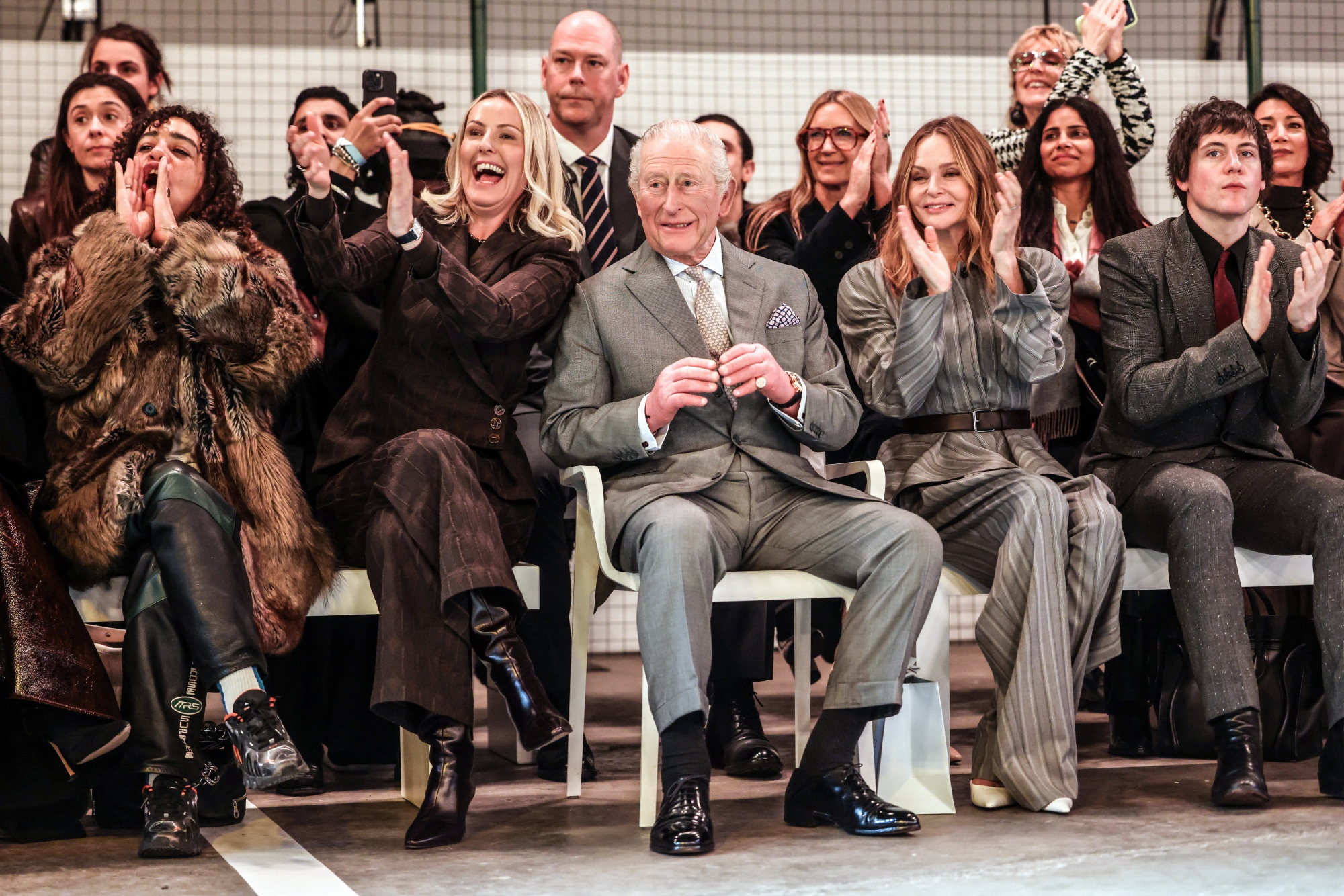 Photographer: Richard Pohle/AFP Never underestimate the crown's unwavering commitment to show face during a PR nightmare. As Martin notes, "the monarchy has been surviving scandals for decades, even centuries," pointing to Queen Victoria's "wicked uncles" and the collapse of Charles' fairy-tale marriage to Princess Diana. Still, as Rosa Prince notes, the moment is "extraordinary" for the British public. "The disclosures about Mountbatten-Windsor have become extensive, painting a picture of decades of apparent malfeasance — an ugly convergence of money, young women and travel to exotic climes where few questions were asked," she writes. Although the former prince has consistently denied the lurid allegations about his ties to the late pedophile financier, his arrest should be seen as a wake-up call for the crown. "A constitutional monarchy is a contract," she says. "Through the accident of birth, one lucky family attains riches, prestige and fame. It's not too much to ask that in return they behave with decorum. This time, the scale of the potential wrongdoing is too great to bury under the privilege of monarchy." Call me old-fashioned, but if I was hosting my first-ever meeting for "the Board of Peace," a brand-new board that I have ratified and made myself chairman of, I probably wouldn't want to risk entangling my country in its third war in the Middle East since 1991. And yet, here's Bloomberg News' latest report on Iran: The US military is stationing a vast array of forces in the Middle East, including two aircraft carriers, fighter jets and refueling tankers, giving President Donald Trump the option for a major attack against Iran as he pressures the country to strike a deal over its nuclear program.
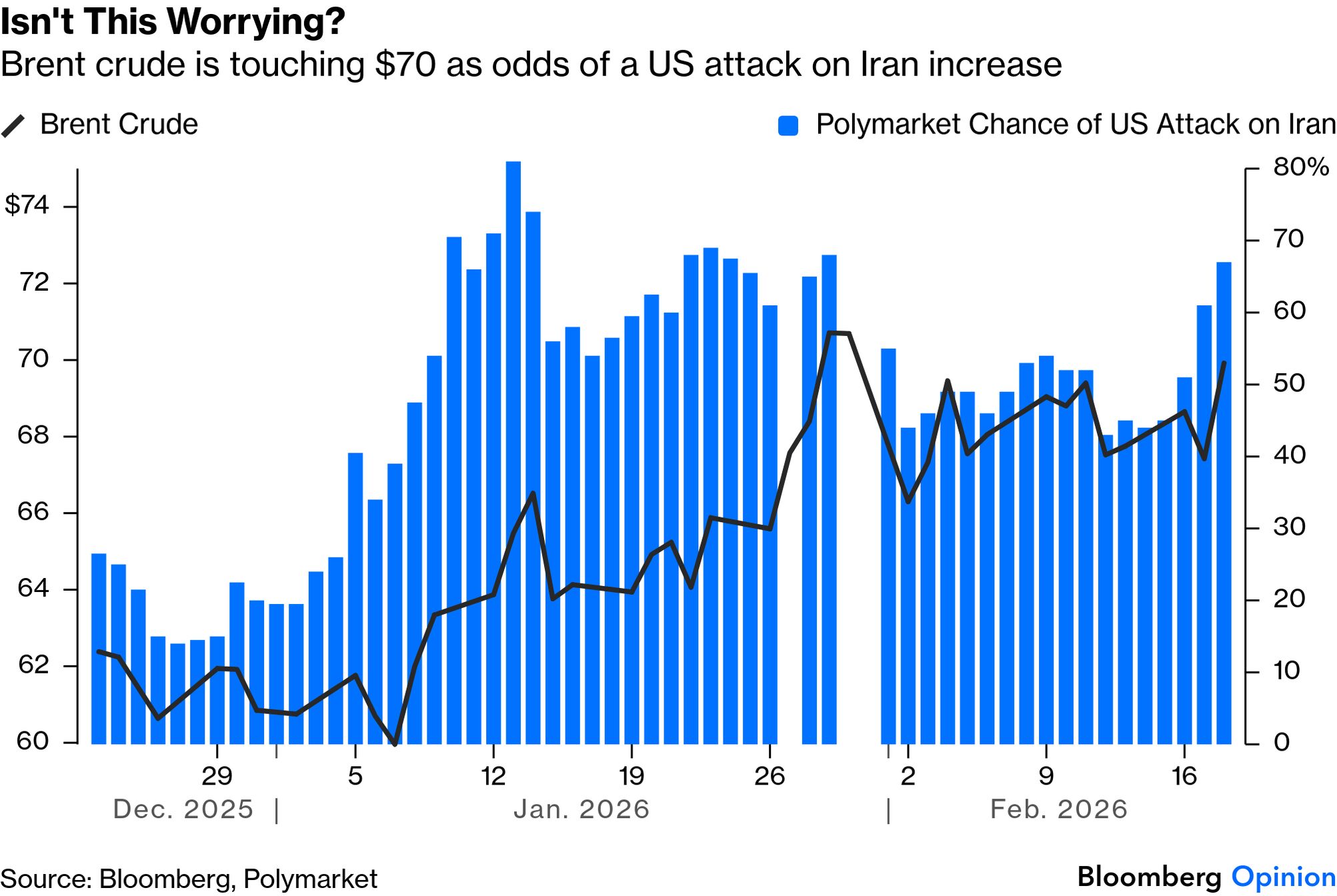
But never mind Trump's warning that the US is "ready, willing, and able" to use "speed and violence, if necessary" against Iran. Andreas Kluth sees the Board of Peace's roughly $17 billion in pledges toward humanitarian and reconstruction efforts in Gaza as a Trumpian ego trip in disguise. "I can't think of a single president in American history who had quite that sense that it was all about him," Stephen Walt, a scholar of international relations at the Harvard Kennedy School, told Andreas. "So much of what [Trump] does," he said, "is designed to bring adulation from others or pretend that he has it." Even amid the false adulation, the elephant in the room, Iran, couldn't be ignored during Thursday's inaugural peace meeting. "Maybe we're going to make a deal," Trump told the crowd of representatives from more than 45 nations. "You're going to be finding out over the next probably 10 days." In the meantime, just watch oil prices rise: "In anything like normal times, the US-Iranian saga would have dominated the news bulletins since the turn of the year, and markets would turn on it," John Authers argues. "The country's ability to administer a major oil supply shock, and its willingness to do so if attacked, are not in doubt." And yet, Javier Blas says the Trump administration feels secure. On Wednesday, when asked about the risk of a price spike in a military conflict with Iran, US Secretary of Energy Chris Wright told Javier he expects the market to react similar to when the US bombed nuclear facilities in Iran last June: "Oil prices blipped up and then went back down." That, the energy secretary said, is "perfect evidence of Trump's energy dominance agenda, you know, growing production in the United States." While it's true that America is up to its neck in oil, Javier worries that Washington is being lulled into a false sense of security. "The risk is that US officials might misread Tehran's risk tolerance to respond far more forcefully to any American attack than it did in the past. If the Islamic Republic feels its survival is at stake, the regional energy industry could become a target." | 










No comments:
Post a Comment