| Tesla is a car company. Or is it? Bloomberg Businessweek senior reporter Max Chafkin, co-host of the Everybody's Business podcast, writes today about its new mission statement "amazing abundance" and what that has to do with AI. Plus: Carvana is thriving while its entire business runs on a cycle of borrowed money. If this email was forwarded to you, click here to sign up. Last Wednesday night, Tesla Inc., which most people still think of as an electric carmaker, reported its fourth-quarter earnings. They were, generally, not great. What had been a fast-growing company is now shrinking. Tesla's once-healthy margins are dwindling, and its still-ample cash reserves are falling. But the real news was that Tesla's visionary chief executive officer had once again revised his vision. Among other things, Elon Musk said that he was canceling two of Tesla's car models—its luxury sedan, the Model S, and its midsize sport utility vehicle, the Model X—and that the company would focus exclusively on developing a robotaxi network and humanoid robots. Musk spun this as positive, describing the end of the S and X lines as an "honorable discharge," before explaining that the change will coincide with a massive increase in spending on new robotics factories and enormous quantities of artificial intelligence chips. Amid the announced $20 billion in capital spending (up from $8.5 billion last year), along with plans to shell out even more in the coming years, it was easy to miss a further development: Tesla had decided to give Musk's money-hemorrhaging artificial intelligence venture, xAI, $2 billion in investment capital. This made sense, Musk said, because xAI's chatbot, Grok, could eventually serve as "an orchestra conductor" for Tesla's robotaxis and robots—a lofty goal for a seemingly rough-hewn tool best known for its sex chats and "Mecha Hitler" alter ego. Musk also announced that he had, once again, updated Tesla's mission statement. "Sustainable abundance," which Tesla had only recently adopted, is out. "Amazing abundance" is in. Musk said he revised the mission "to send a message of optimism about the future," which would somehow involve "AI and robotics" giving everyone in the world "universal high income." He continued, "I mean, there's going to be a lot of change along the way, but that is what I see as the most likely outcome." I have no idea what this means, and I'm not sure even the most sophisticated Tesla shareholders do either. Over the past few years, a company that was once defined by the goal of producing as many affordable electric cars as possible—a mission Musk articulated with reasonable precision and clarity in the company's original "Master Plan"—has evolved into a meme stock attached to a declining (and yet still profitable) car business. Tesla, according to Musk, intends to spend huge sums of money to transform itself into an AI company, despite the fact that its robotaxi business barely exists beyond a handful of cars in Austin and that its humanoid robot project remains, as Musk himself concedes, in the research and development phase. Tesla's shift away from cars and toward AI hype has been well-documented, but what's strange is that the vibes-based approach seems to be creeping into other parts of Musk's empire. Like Tesla, SpaceX had long been defined by a clear mission: Musk was building a successful rocket business to, as he often said, fund exploration and colonization of Mars. I suppose that's still the plan, but with Musk sprinting to an initial public offering—an outcome he long suggested he'd never consider because he worried the demands of public markets would prevent him from reaching his ultimate goal—he's pivoting SpaceX to AI too. The new plan, according to Musk, is to operate data centers in space for AI companies (and, assumedly, for his own AI ventures). Just in case that far-off and extremely vague pitch isn't enough to push Musk's rocket company to the $1.5 trillion valuation he's said to be seeking, SpaceX plans to start selling the stock in conjunction with a "rare planetary alignment" and Musk's birthday, according to the Financial Times. 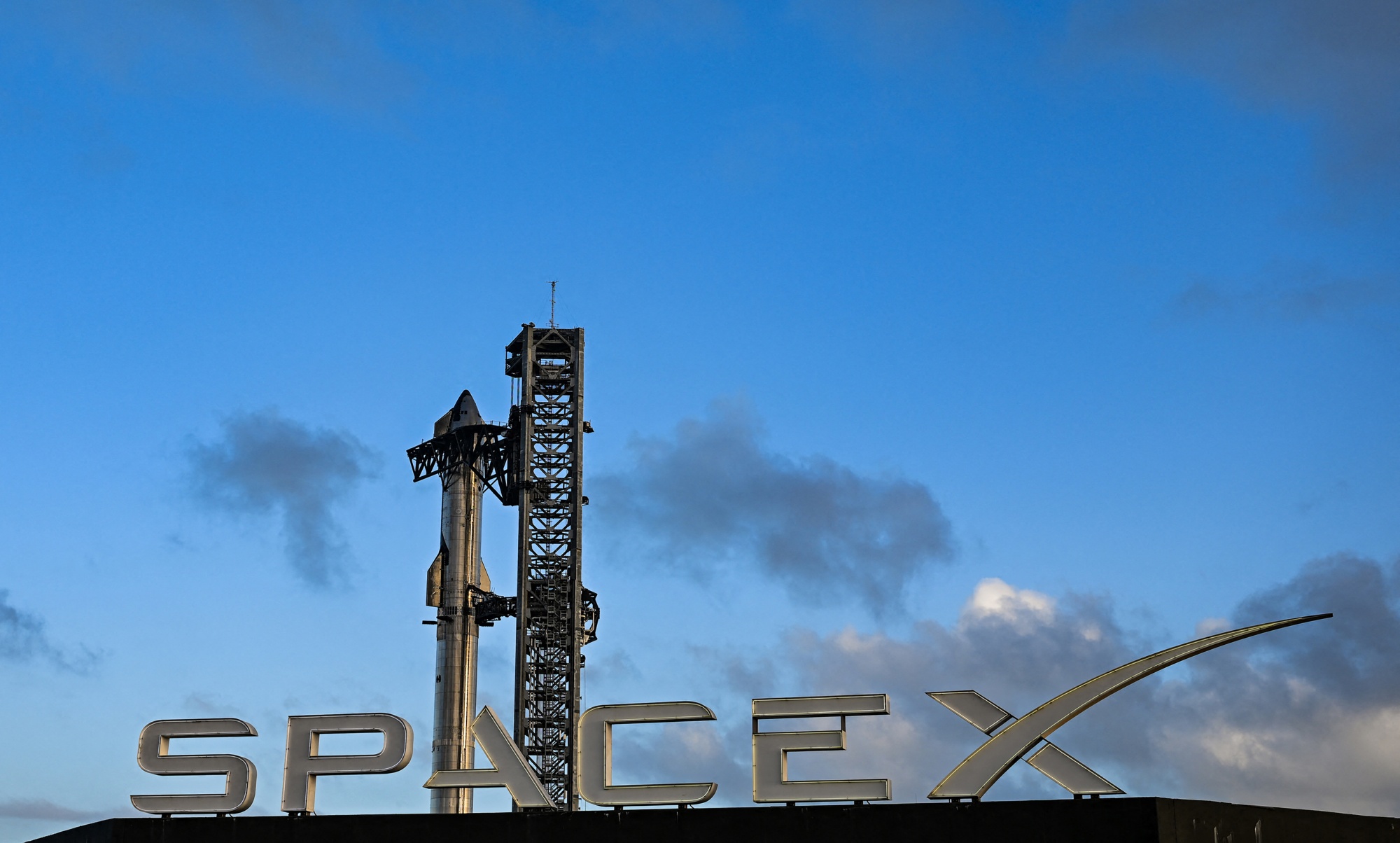 A SpaceX Starship sits on the launch pad in Boca Chica, Texas, in November 2024. Photographer: Chandan Khanna/AFP/Getty Images Musk also has a fallback plan. Last week Bloomberg reported that SpaceX was "considering a potential merger with Tesla." Musk's rocket company is also in advanced talks to acquire xAI. The plans make about as much sense as the idea of choosing your IPO date based on an astrological phenomenon, though they would all wind up in roughly the same place, which is finding a way to provide funding to Musk's costly AI ventures. Investors, for now, don't seem to care—Tesla's stock has been more or less flat since the merger reports surfaced last week—and Musk, for his part, has seemed focused on other matters. He spent the weekend doing what looked like damage control after the Department of Justice released millions of pages of documents related to its investigation and prosecution of Jeffrey Epstein. Some of them featured Musk, among other well-known business and political figures. "I knew that I would be smeared relentlessly, despite never having attended his parties or been on his 'Lolita Express' plane or set foot on his creepy island," Musk wrote on X, responding to news media reports about an email in which Musk appeared to ask, "What day/night will be the wildest party on your island?" He posted dozens of times about Epstein, mostly to mock others whose emails were also in the document dump. The term of art for this is "tweeted through it." Of course, none of this had anything to do with his erstwhile goals of making life multiplanetary and bringing on a sustainable energy revolution. But very little of what Musk says these days does either. |










No comments:
Post a Comment