| Read in browser | ||||||||||||||
 Welcome to Balance of Power, bringing you the latest in global politics. If you haven't yet, sign up here. As Saudi Arabia's crown prince forges ahead with economic reforms, he's shifting his geopolitical strategy in a way that — at least according to Israeli officials — makes normalization with the Jewish state a distant prospect. Mohammed bin Salman wants to attract much more investment and more foreigners to the kingdom. His government is opening the stock and property markets to outsiders and relaxing liquor laws. At the same time, with oil prices having slumped, Riyadh has been compelled to pare back and delay key elements of MBS's gigantic Vision 2030 diversification project. Last month, it announced it would no longer host the 2029 Asian Winter Games at Trojena, a ski resort under construction in the desert. With Saudi borrowing on international bond markets soaring, the kingdom needs additional foreign investment to fulfil its huge ambitions and provide enough jobs for its 35 million people. 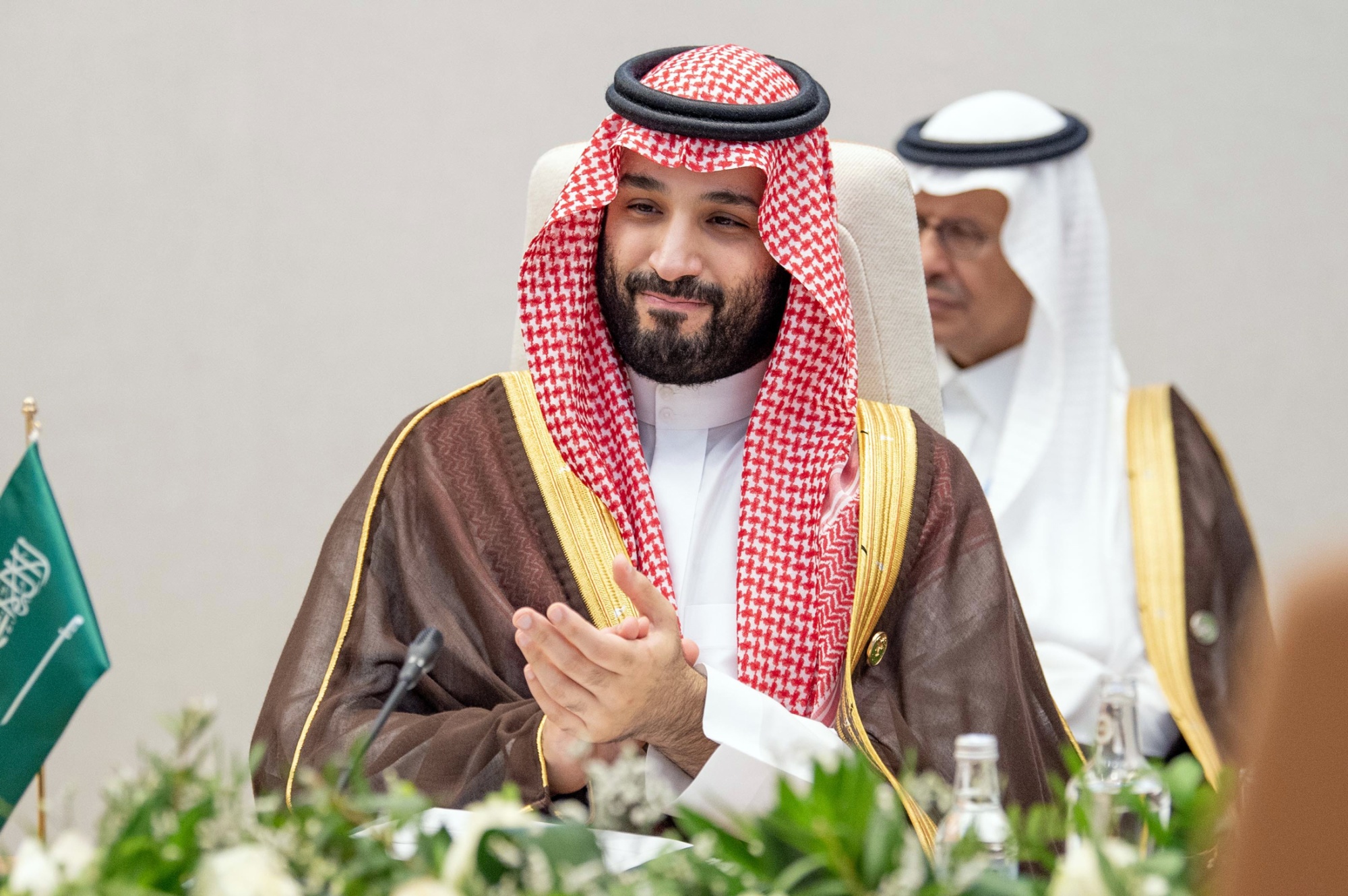 Mohammed bin Salman. Source: Anadolu/Getty Images It's hard to assess exactly how important cementing ties with Israel — a high-tech power well placed to bolster Saudi ambitions — will be to the success of MBS's grand scheme. Before the war in Gaza erupted in 2023, Saudi Arabia saw recognition of Israel as an important element of its reform drive. It was also motivated by the prospect of US security guarantees. Israeli defense capabilities could help protect oil fields. MBS's government now seems to realize normalization won't happen soon. It says it still wants it, though, provided Israel accepts a Palestinian state. In the meantime, Riyadh is strengthening defense ties with Pakistan and Turkey. Tensions with the neighboring United Arab Emirates — one of the few Gulf states to have formal ties with Israel — have mounted, stoking Israeli fears. While the Saudis say there's nothing anti-Israel about their policies, for the time being at least, the two countries are drifting further apart. — Paul Wallace 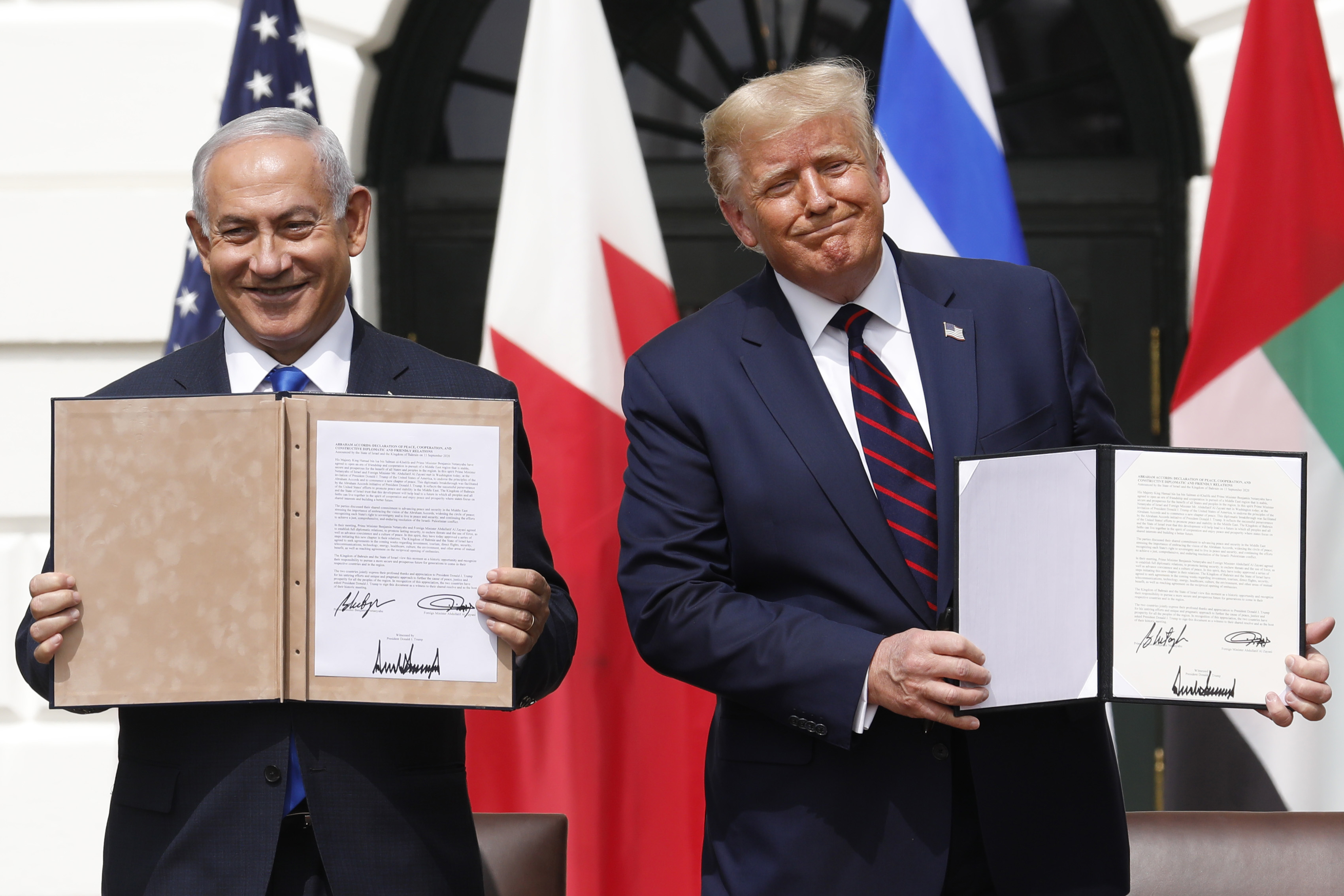 Israeli Prime Minister Benjamin Netanyahu and US President Donald Trump in 2020. Photographer: Yuri Gripas/Abaca/Bloomberg Global Must ReadsTrump announced he'd roll back punitive tariffs on India in return for an accord under which Prime Minister Narendra Modi would agree to stop buying Russian oil. Modi confirmed the pact, posting on social media that "Made in India products will now have a reduced tariff of 18%." He didn't provide further details on oil or on agricultural imports, which have been a major sticking point for New Delhi. 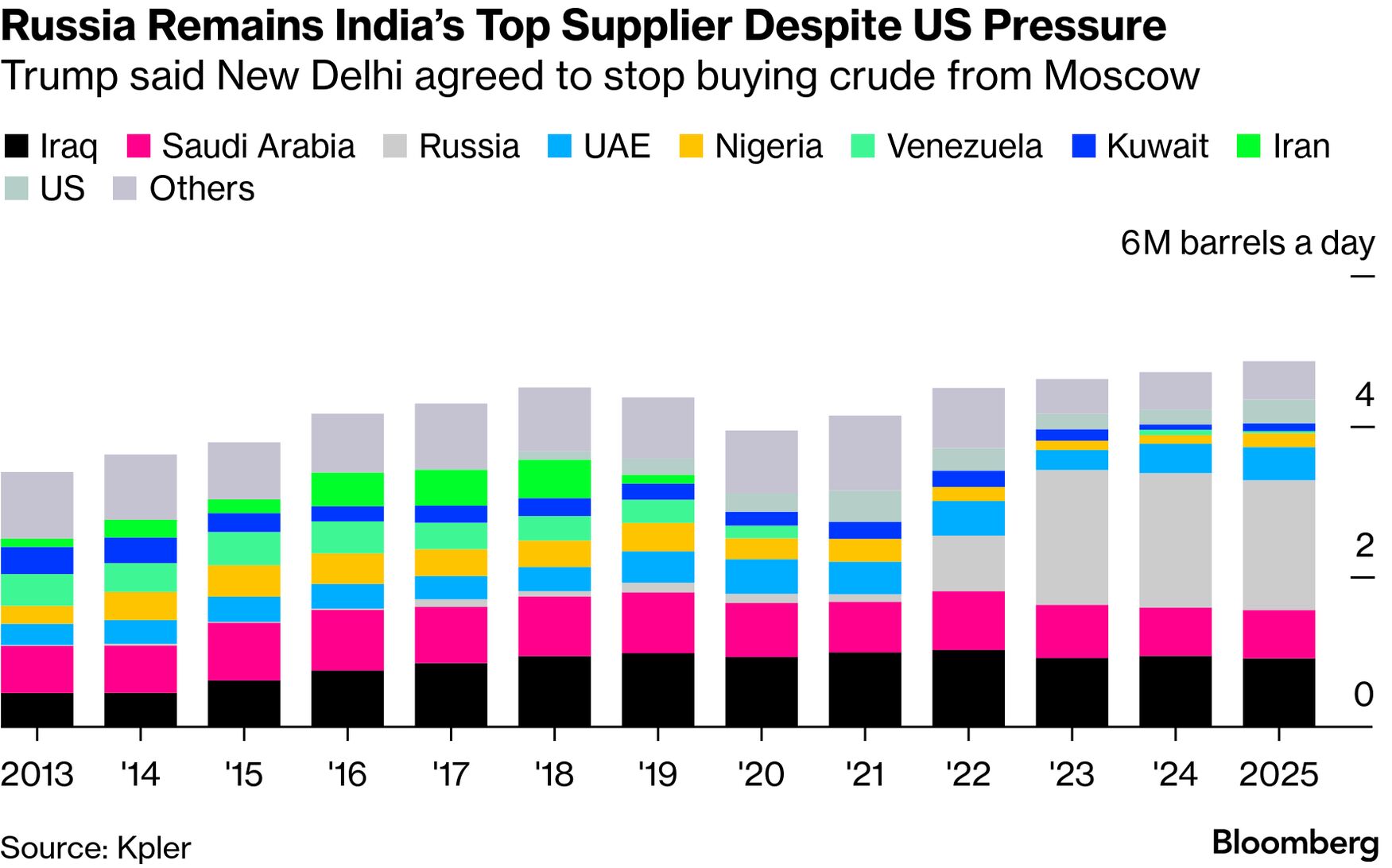 Trump raised the prospect of US talks with Iran over a new nuclear deal in coming days amid a flurry of diplomacy aimed at averting war, saying "If we can work something out that'd be great, and if we can't, probably bad things would happen." Iranian President Masoud Pezeshkian said he'd ordered his foreign minister to pursue negotiations with Washington "provided that a suitable environment exists." Ukraine faced the biggest Russian missile and drone attack this year after the Kremlin ended a brief moratorium on strikes against energy infrastructure sought by Trump ahead of peace talks this week in the UAE. Russia struck with 450 drones and more than 70 missiles, Ukrainian President Volodymyr Zelenskiy said, hitting the capital Kyiv and other major cities as temperatures dipped below -20C (-4F). 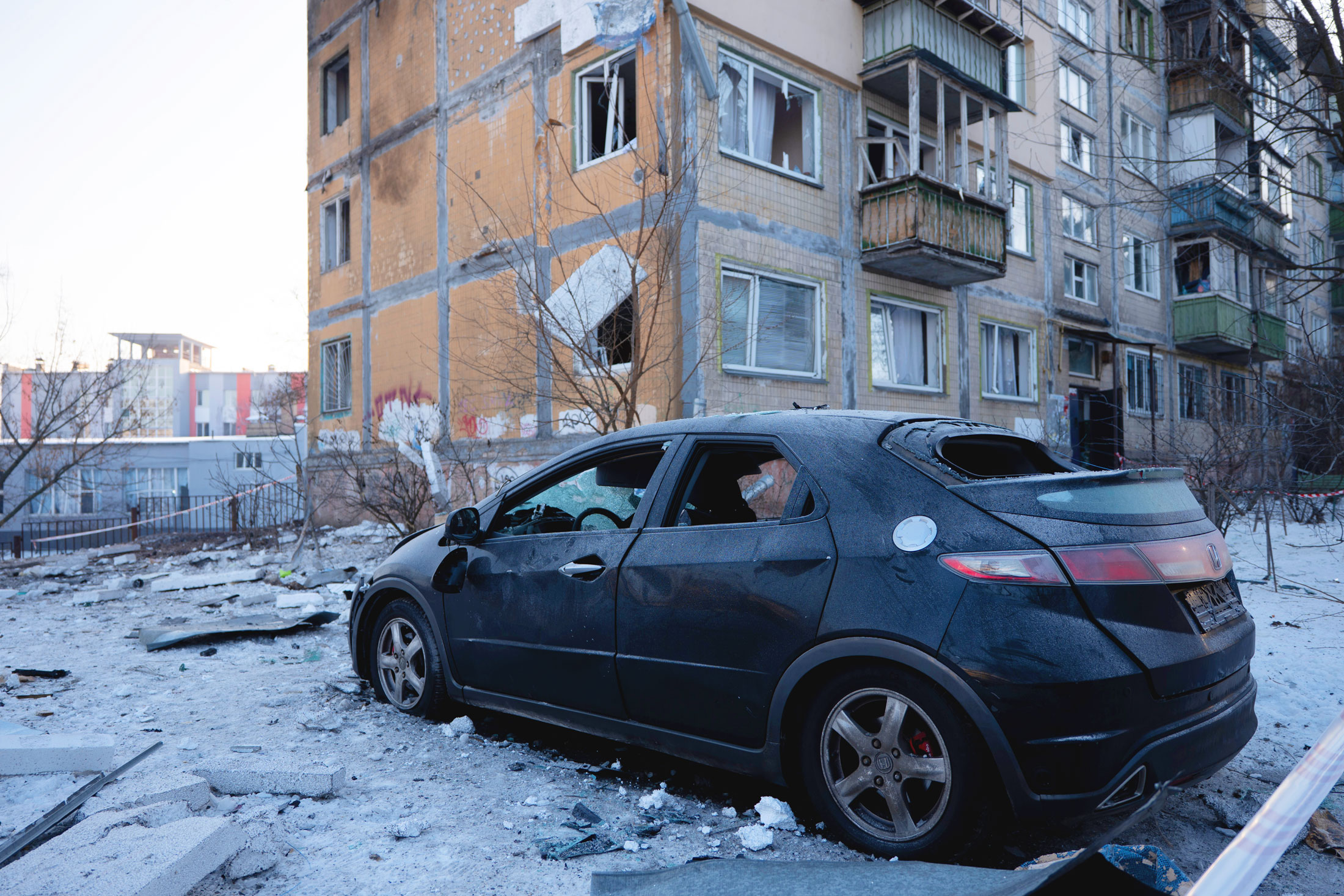 A damaged building in Kyiv today following a Russian attack. Photographer: Dan Bashakov/AP Photo Trump is set to launch a strategic critical-minerals stockpile with $12 billion in seed money to insulate manufacturers from supply shocks as the US works to pare back its reliance on Chinese rare earths and other metals. Similar to the nation's existing emergency oil stockpile, it will focus on minerals — including gallium and cobalt — used in products such as iPhones, batteries and jet engines. In the rough-and-tumble of Thai politics, few have played the game better than Newin Chidchob, co-founder of the ruling Bhumjaithai party. A former cabinet member once seen by Bangkok's power brokers as a crooked provincial boss but simply known as "uncle" by locals in rural Buriram, he's now the best shot to help royalist parties form the next government if they can deny pro-democracy reformers a majority in a Feb. 8 election. 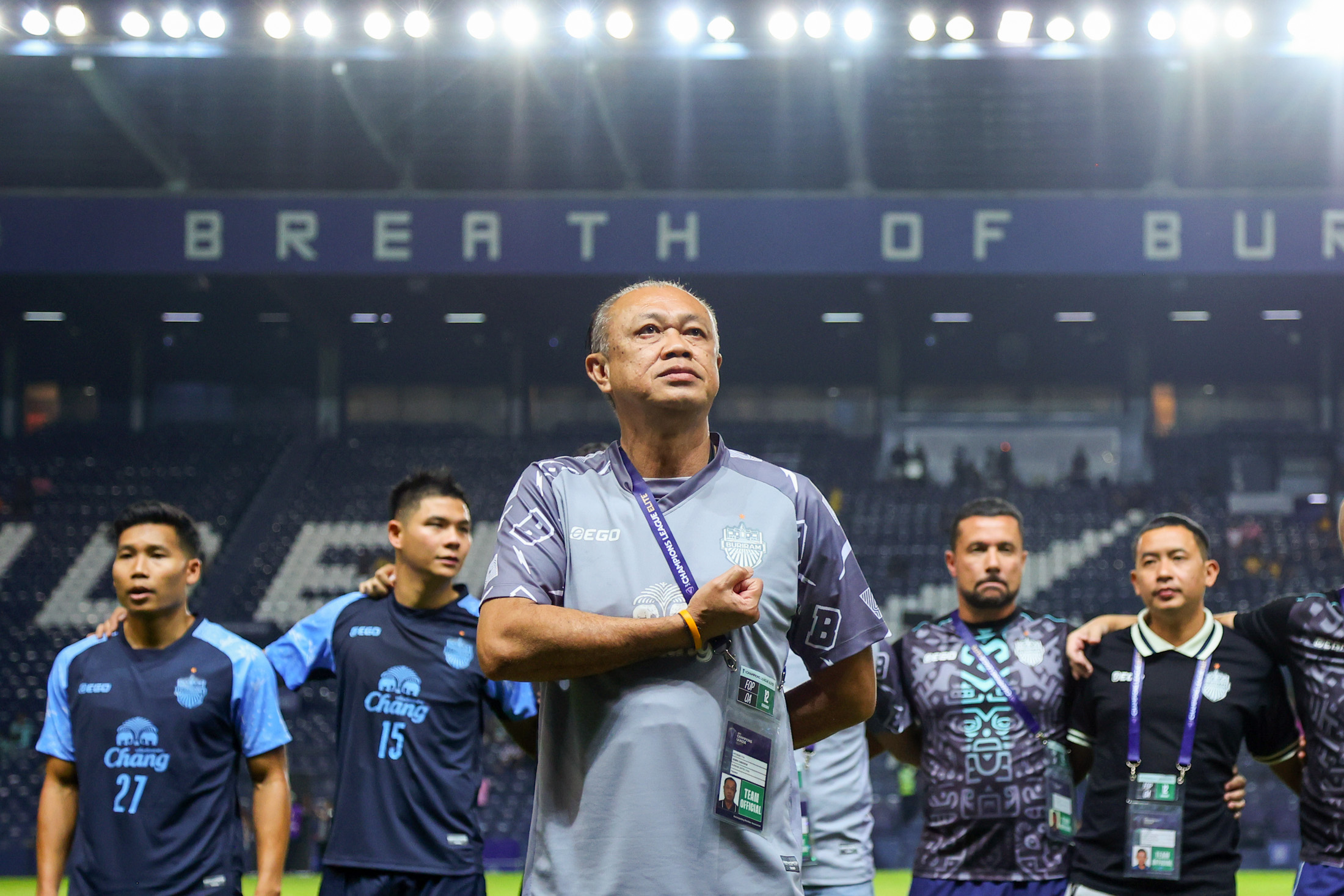 Newin Chidchob at a soccer match in February 2025. Photographer: Pakawich Damrongkiattisak/Getty Images Scottish Parliamentary elections on May 7 will be a first major test of Nigel Farage's ability to translate popularity into votes since his Reform UK party vaulted to the top of British polls. Read our feature here on what's at stake for the architect of Brexit lionized by English nationalists. President Javier Milei's government announced it's holding off on using new methodology to measure Argentine inflation just hours after the country's chief statistician resigned because of what the economy minister said was a disagreement over the timing of the rollout. A US judge ruled a wind farm being developed by Ørsted off New York's Long Island can resume work halted by the federal government, the fifth such court win for an industry Trump has sought to cripple. Former US President Bill Clinton and his wife, ex-Secretary of State Hillary Clinton, agreed to appear before a congressional committee investigating disgraced financier Jeffrey Epstein, preempting a House vote planned this week to hold them in criminal contempt if they continued to defy subpoenas. 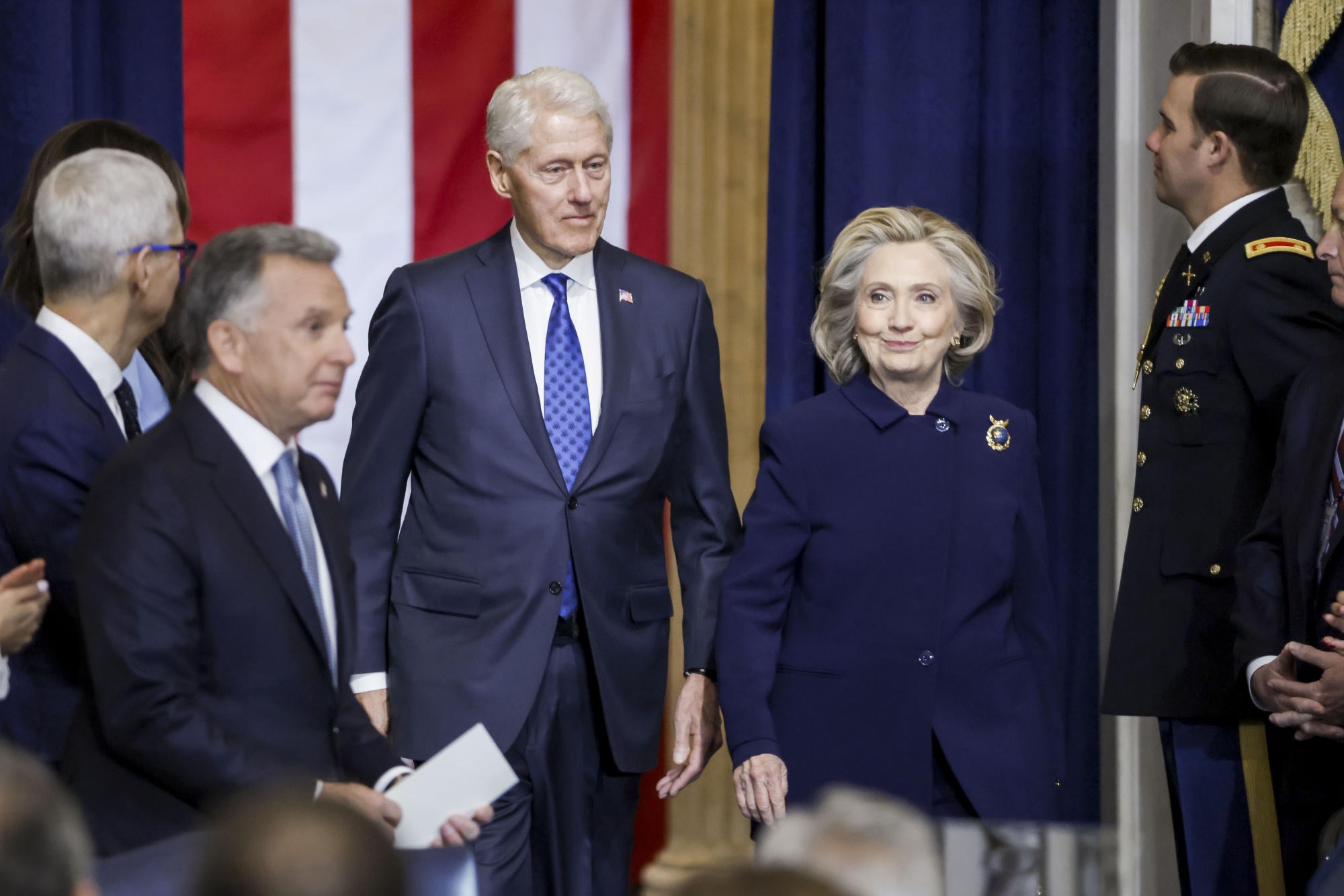 Bill and Hillary Clinton. Photographer: Shawn Thew/Pool/Getty Images Sign up for the Washington Edition newsletter for news from the US capital and watch Balance of Power at 1 and 5 p.m. ET weekdays on Bloomberg Television. Chart of the Day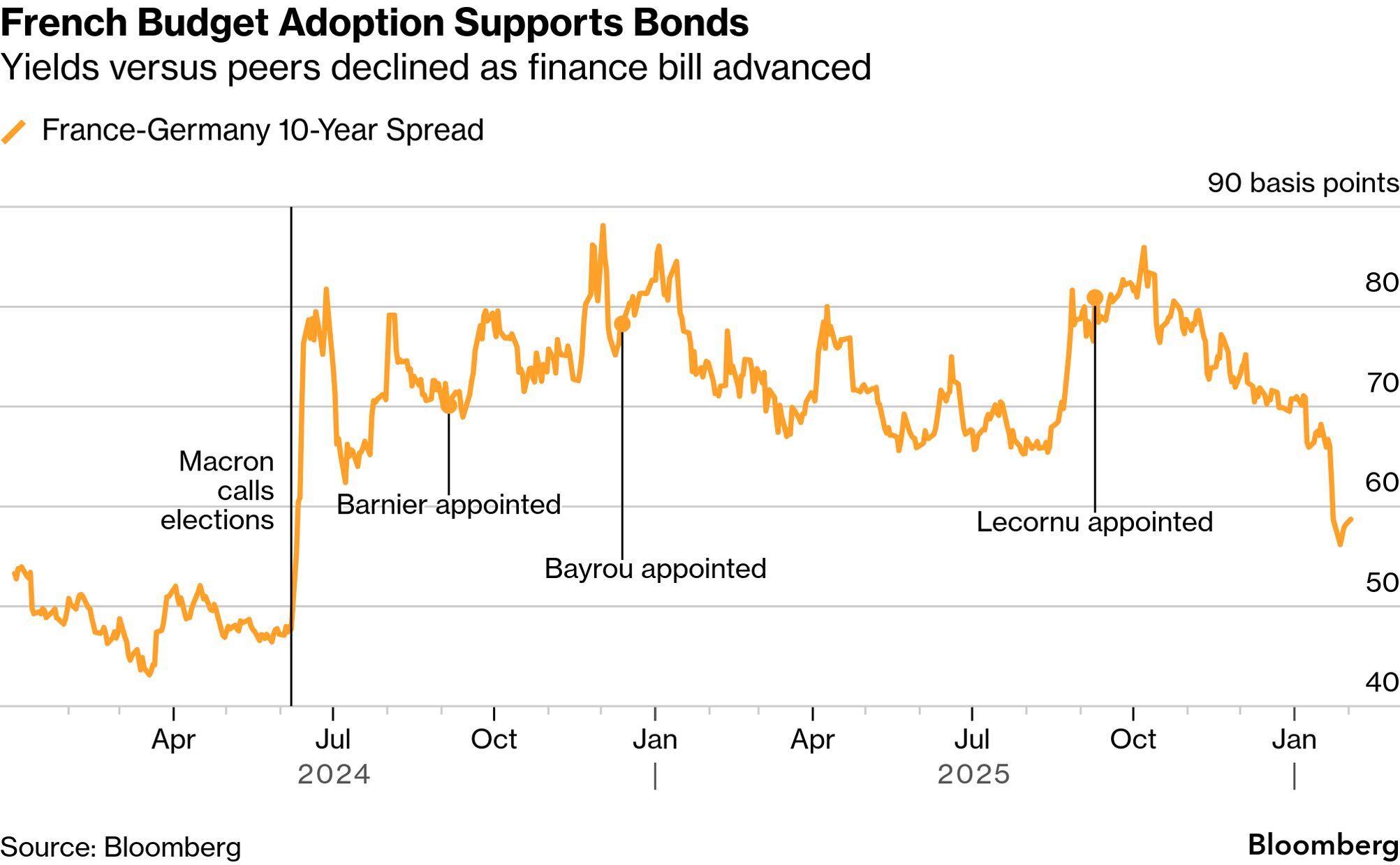 France's parliament adopted a budget for 2026 after Prime Minister Sébastien Lecornu survived two no-confidence votes yesterday, ending months of upheaval that spooked investors. The country is now set for a period of relative calm, with fewer trigger points for lawmakers, and opposition parties are also shifting their focus to municipal elections in March and the buildup to the presidential vote in 2027. And FinallyChina banned concealed door handles on electric vehicles, the first country to outlaw a design popularized by Tesla that is facing global scrutiny due to a spate of deadly incidents. Cars sold in the nation will require mechanical release both on the inside and outside, according to new rules. While the regulations will only impact EVs sold in China, its global influence means it could resonate elsewhere. Tesla's doors are already the target of a US safety probe, while European regulators are looking to impose rules of their own. 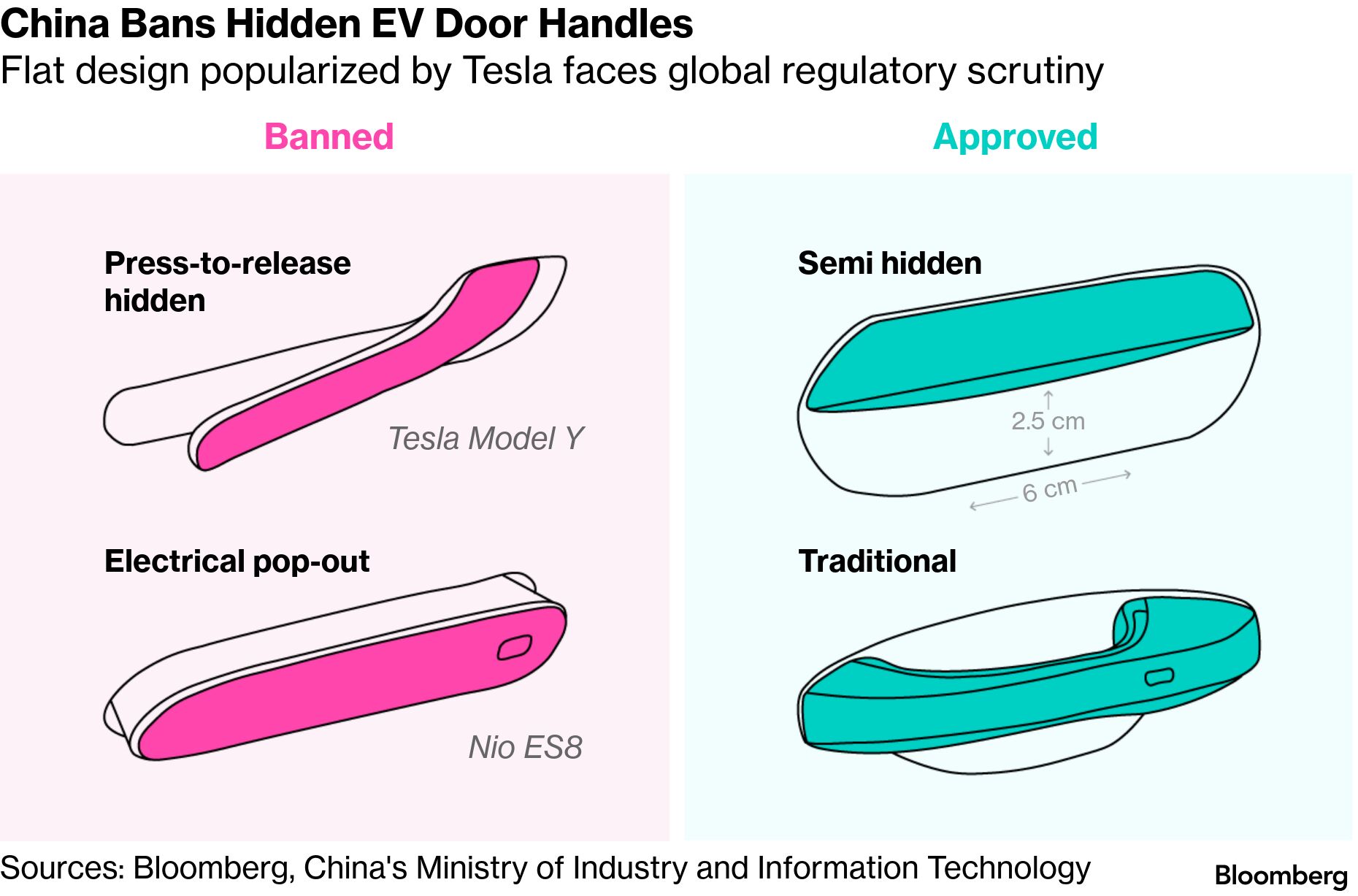 Thanks (belatedly) to everyone who answered Friday's quiz question, and congratulations to Elaine Milbank, who was first to name France as the nation where lawmakers last week approved a ban on young people using social media. More from Bloomberg
We're improving your newsletter experience and we'd love your feedback. If something looks off, help us by reporting it here. Follow us
You received this message because you are subscribed to Bloomberg's Balance of Power newsletter. If a friend forwarded you this message, sign up here to get it in your inbox.
|
Tuesday, February 3, 2026
Drifting apart





Subscribe to:
Post Comments (Atom)
Bitcoin rebounds, HYPE steals spotlight
PLUS: CZ hoax fuels memecoin madness ...

-
Bloomberg Evening Briefing Americas View in browser Who's paying for Donald Trum...
-
PLUS: Dogecoin scores first official ETP ...


No comments:
Post a Comment