| Read in browser | ||||||||||||||
 US flood maps were created for a different climate, a move that masks the real risk for many communities today. To help residents get a grip on how exposed their properties are, Connecticut is serving up a risk-mapping tool for floods and other calamities. Today's newsletter looks at how Connecticut's experiment is being received. Plus, China is tightening its air pollution rules, and why AI weather models weren't better at predicting New York's biggest snowstorm in a decade. Someone forward you this newsletter? You can subscribe to the Green Daily for free climate and energy news six days a week. Real estate underwaterBy Leslie Kaufman and Prashant Gopal Connecticut is taking an unusual step to confront a growing national problem: flood maps that lag reality. The state has launched a public climate-risk mapping tool where residents can see the estimated flood exposure of their property — along with wildfire, wind and other climate risks. The tool, which is accessible through the insurance department's website, is powered by the same type of private risk-modeling firm that insurers turn to for setting rates. Severe flooding in western Connecticut in 2024, in which three people died and thousands of properties were destroyed or damaged, underscored for state officials just how wide the gap can be between mapped risk and lived experience. Interim Insurance Commissioner Josh Hershman emphasizes that the portal is informational only; it does not change insurance requirements or zoning rules. The goal, he said, is to close information gaps before the next disaster strikes. "If you don't see water, you might not think you have a flood risk," he said. "This is about giving consumers as many tools as possible so they can make an educated decision." 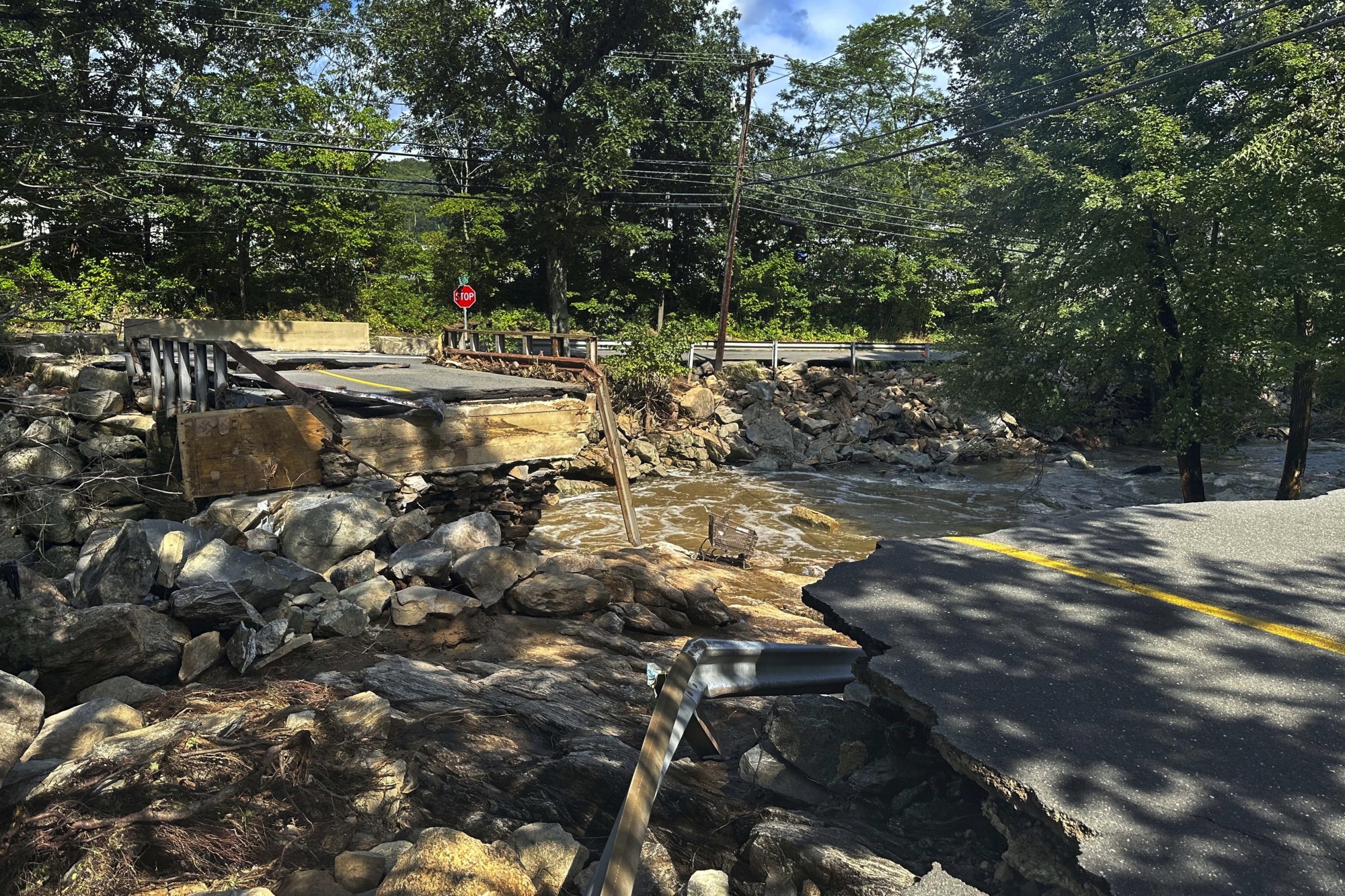 A bridge washed out in Oxford, Connecticut, after torrential rains in August 2024 Photographer: Dave Collins/AP The initiative has ignited a familiar debate over the unintended consequences of risk disclosure. A lot of wealth is tied up in home values, and homeowners and some in the real estate industry complain that the models aren't transparent or regulated; they worry about devaluation. Alexander Chingas, an agent with the Bross Chingas Bross Team at Coldwell Banker Realty in Westport, said that the models have led buyers to rule out homes that are perfectly good. "The problem is some people don't look at the tools as a starting point but rather view them as final and absolute," Chingas said. Only people seeking federally-backed mortgages for homes in a zone that the Federal Emergency Management Agency designates as a severe risk are required to get flood insurance. On its website, FEMA says that on average, 40% of the flood insurance claims it gets for the National Flood Insurance Program are outside of these zones. And the actual number of people experiencing flooding is likely greater than that, because that figure doesn't represent those without flood insurance. Connecticut decided to partner with hazard risk modeler First Street Technologies Inc. — which rates risk on a scale of one to 10 — in large part to have people re-examine whether they need flood insurance. Before launching the portal, the department asked First Street to compare its projections with the August 2024 flood footprint. The state found the modeled maps closely aligned with properties that experienced flooding. First Street said their model identifies approximately 81,000 more properties (all types, not just residential structures) facing severe flood risk than FEMA does. That difference, they said, is largely because FEMA maps do not include localized flooding from heavy rainfall. There is debate about which of the many private risk models is more accurate. A recent paper published in the Journal of Catastrophe Risk and Resilience analyzed the performance of seven of the most widely used private risk models against actual NFIP claims data and found that while three — Verisk, KatRisk and Moody's R.M.S. — represent historical flood losses within a 4 % differential of actual NFIP claims, First Street reports flood damage estimates "nearly twice as high." Read the full story to see how the real estate industry is responding. Policy problems13% The percentage of homeowners with the highest premium hikes who dropped their flood insurance policies after FEMA revised its rates in 2021. Safety first"You have to be careful how you convey the information." Mark Pestrella Director, Los Angeles County Public Works Using risk models requires a high degree of care given the impact any proclamations can have on property values and neighborhood perceptions. China tackles air pollutionBy Lili Pike China is planning its first major tightening of national air quality standards since 2012, as it seeks to extend a largely successful anti-pollution campaign that's reshaped parts of its economy. New limits on a range of pollutants will be phased in from March and strengthened further in 2031, according to documents posted online by the country's Ministry of Ecology and Environment. The stricter rules are intended to reduce health risks, support the ambition of "building a beautiful China" and align the nation with international best practice, the ministry said in a Tuesday statement. 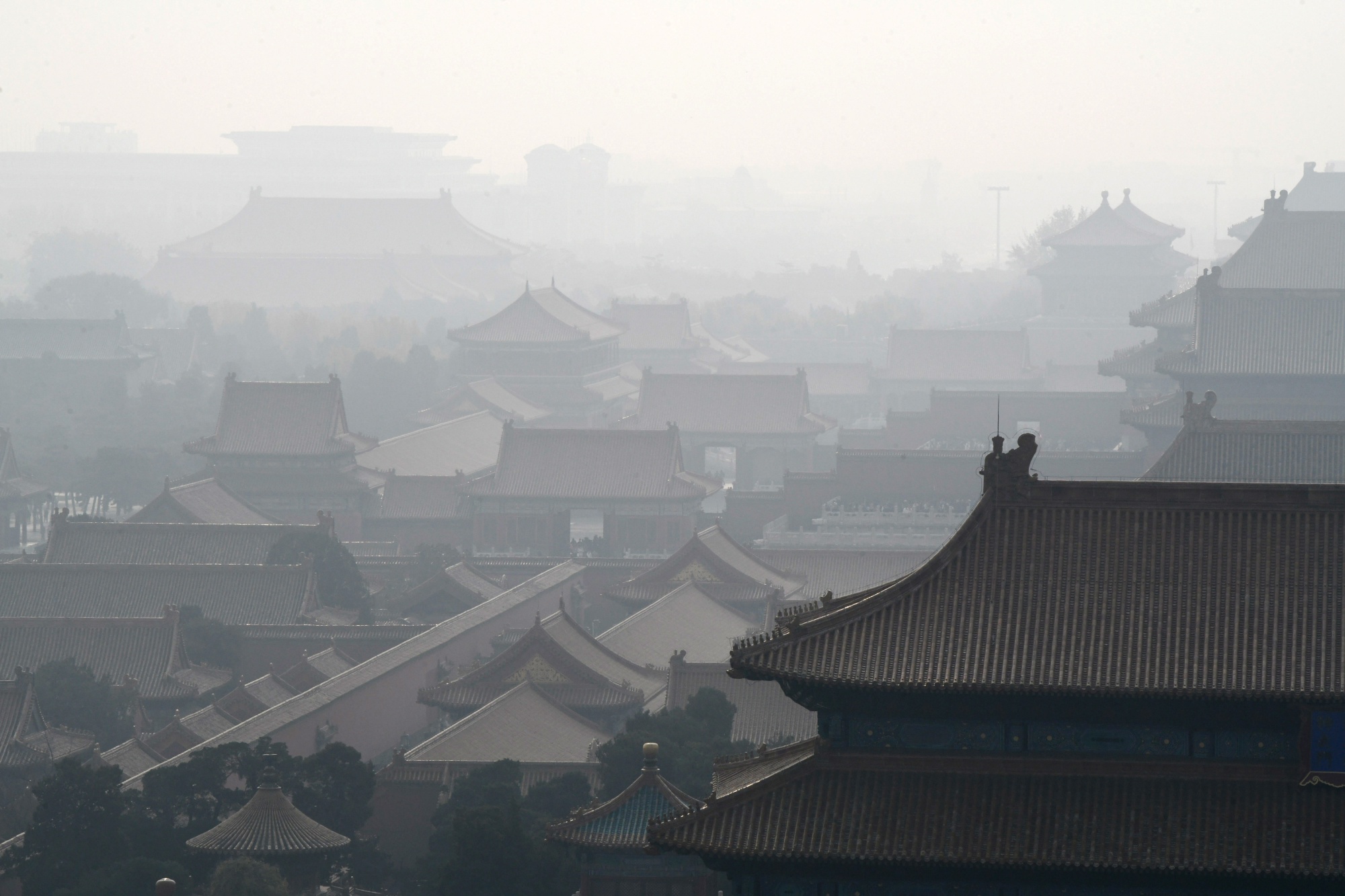 The Forbidden City shrouded in smog in Beijing in 2024. Bloomberg President Xi Jinping has frequently emphasized efforts to keep China's "skies blue, waters clear and lands pollution-free," and supported previous air pollution targets credited with dramatically curbing pollution, particularly in the nation's largest cities. Energy-intensive sectors like the coal-to-chemicals industry and aluminum have seen some production shift from coastal areas to less densely populated regions in recent years under the environmental campaign, and also to take advantage of cheaper power and resources. While that's delivered benefits in megacities, parts of western China have experienced worsening air quality. China's move contrasts with action in the US to roll back pollution controls and to rescind the Environmental Protection Agency's crucial "endangerment finding" that underpinned key regulations. Still, China's new limits remain weaker than guidance issued in 2021 by the World Health Organization, which recommends an annual average PM2.5 limit of 5 micrograms and a 24-hour limit of 15 micrograms. This week's Zero In 2024, Ethiopia did something revolutionary. It banned the import of fossil fuel cars and cut tariffs on electric vehicles. This week on Zero, Akshat Rathi talks with producer Oscar Boyd and Ethiopia-based EV entrepreneur Yuma Sasaki about the EV boom that ensued and what that tells us about the growth of EVs in rapidly developing countries like Ethiopia. Listen now, and subscribe on Apple, Spotify or YouTube to get new episodes of Zero every Thursday. More from GreenTwo days before New York's biggest snowstorm in a decade began, forecasters were still unsure how much snow would fall. One traditional US model had consistently predicted a major hit, while newer artificial intelligence systems weren't so certain. The long-running Global Forecast System, or GFS, signaled the storm would be a whopper for much of the Northeast. Because of lingering skepticism about the GFS' past performance — and the fact that it stood alone in predicting massive impacts — many forecasters waited until Friday afternoon before declaring the possibility of more than a foot of snow for parts of New York. Providing advance warning for this week's storm meant forecasting where incoming waves of cold air and moisture would land and interact with a streak of low pressure in the jet stream, days in advance. So far, AI models haven't made that task much easier, said Bob Oravec, a senior branch forecaster for the US Weather Prediction Center in Maryland. "There's no perfect model yet," Oravec said. "That's the problem." Read the full story about how well the models forecast the blizzard. 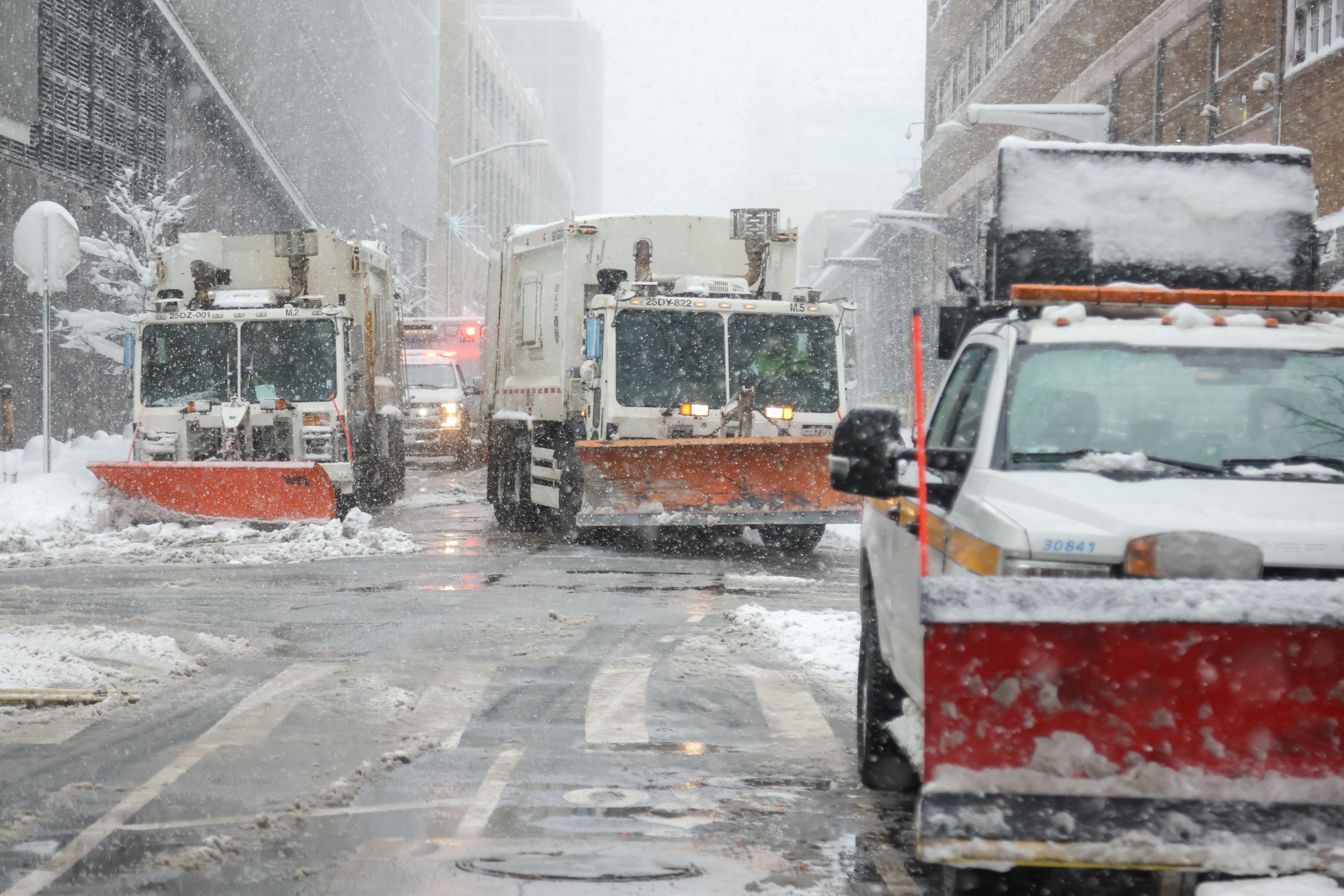 Snow plows in New York on Monday. Photographer: Michael Nagle/Bloomberg The Supreme Court tariff decision is impacting a wide array of imports, including climate tech. With the court knocking down tariffs and Trump raising at least some of them back up, here are the technologies and countries that have won a reprieve and the ones that will feel the squeeze as new levies go into effect. Speaking of feeling the squeeze, the Trump administration set preliminary duties of 126% on solar imports from India after determining the country unfairly subsidized manufacturing. The administration also hit solar equipment from Indonesia and Laos with duties. After a massive sewage spill in the Potomac River outside Washington, DC, attracted the ire of President Donald Trump, federal officials are taking on a larger role in the disaster response — a job that could last months. More from Bloomberg
Explore all Bloomberg newsletters. Follow us
You received this message because you are subscribed to Bloomberg's Green Daily newsletter. If a friend forwarded you this message, sign up here to get it in your inbox.
|
Wednesday, February 25, 2026
Connecticut’s flood risk experiment





Subscribe to:
Post Comments (Atom)

-
PLUS: Dogecoin scores first official ETP ...
-
Hollywood is often political View in browser The Academy Awards ceremony is on Sunday night, and i...


No comments:
Post a Comment