Wednesday, February 18, 2026

College grads still have an edge, but for how long?

A degree is no guarantee.
View in browser
Bloomberg

This is Bloomberg Opinion Today, a virtual cart full of Bloomberg Opinion's opinions. Sign up here.

Today's Agenda

Work in the AI Era

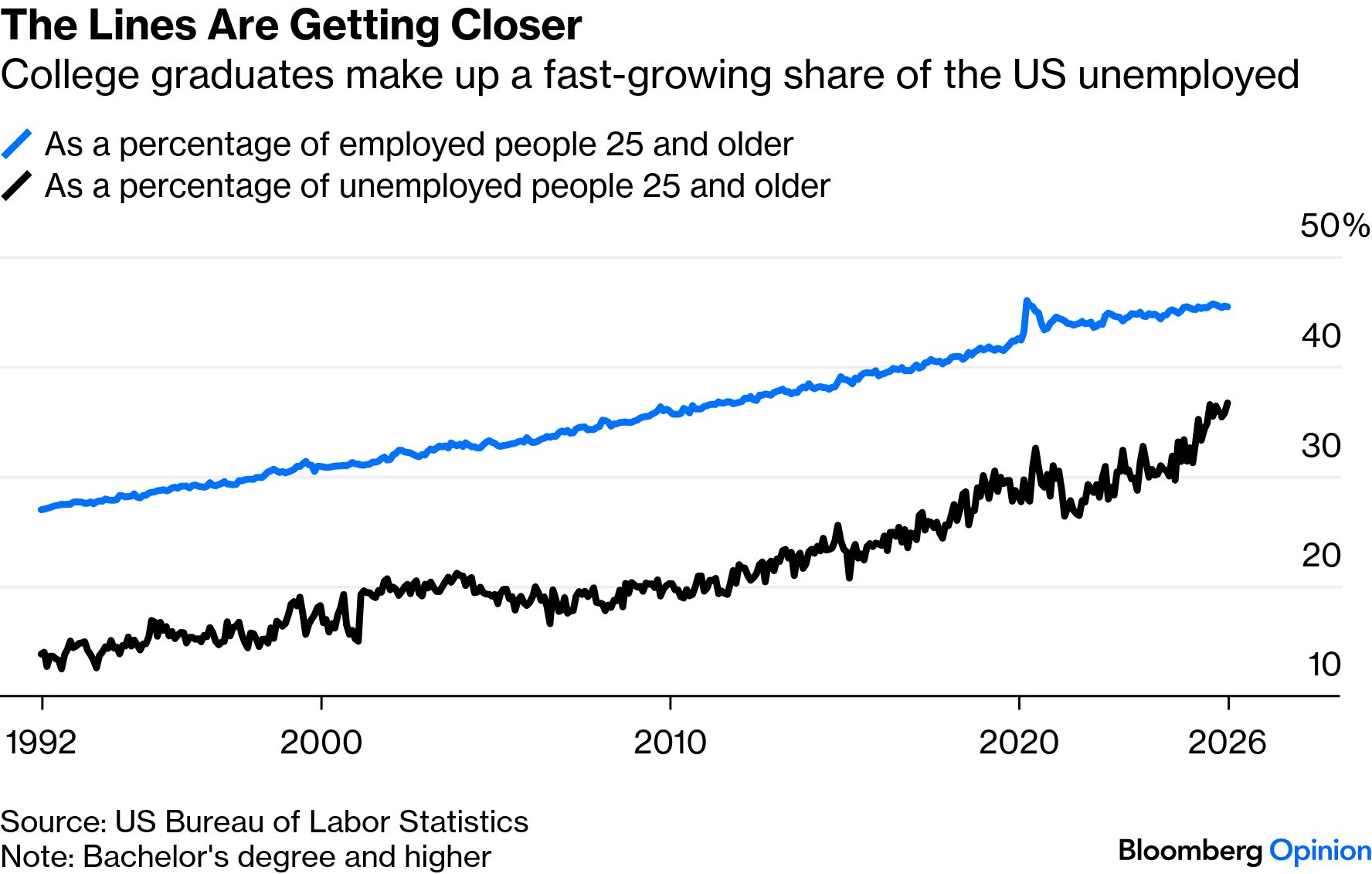
Here's a chart you wouldn't want to see as a recent college graduate:

"The percentage of unemployed Americans with four-year college degrees hit a record in January, at 36.6% of those 25 and older," writes Justin Fox. "In part this is because people with college degrees make up a much larger share of the US labor force than they used to — the 45.4% of employed 25-and-older Americans with bachelors' degrees or higher in January was also near an all-time high. But observe the two lines together in a chart and the picture is not exactly reassuring."

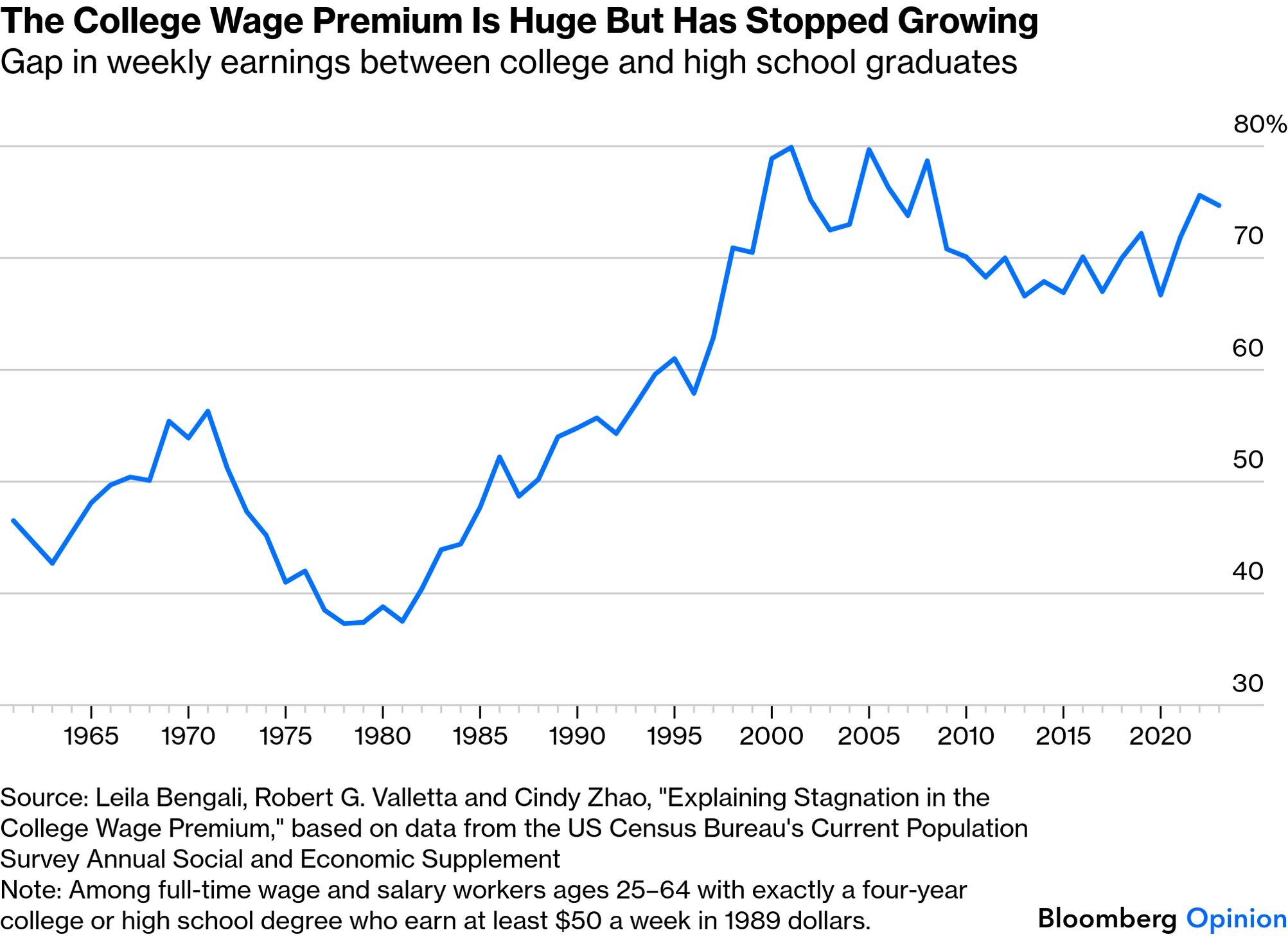
Also not reassuring? This chart: 

Amidst chatter about how artificial intelligence will possibly render tens of millions of white-collar careers obsolete, the college wage premium is sitting stagnant after experiencing decades of growth. The vibes aren't great out there for new job-seekers who are struggling to find someone — anyone! — with a pulse to review their resume on LinkedIn. But, as Parmy Olson explains in this video, a lot of the AI panic ignores hard data. In fact, Justin says "forecasting AI's effect on employment at this point is still akin to throwing darts blindfolded."

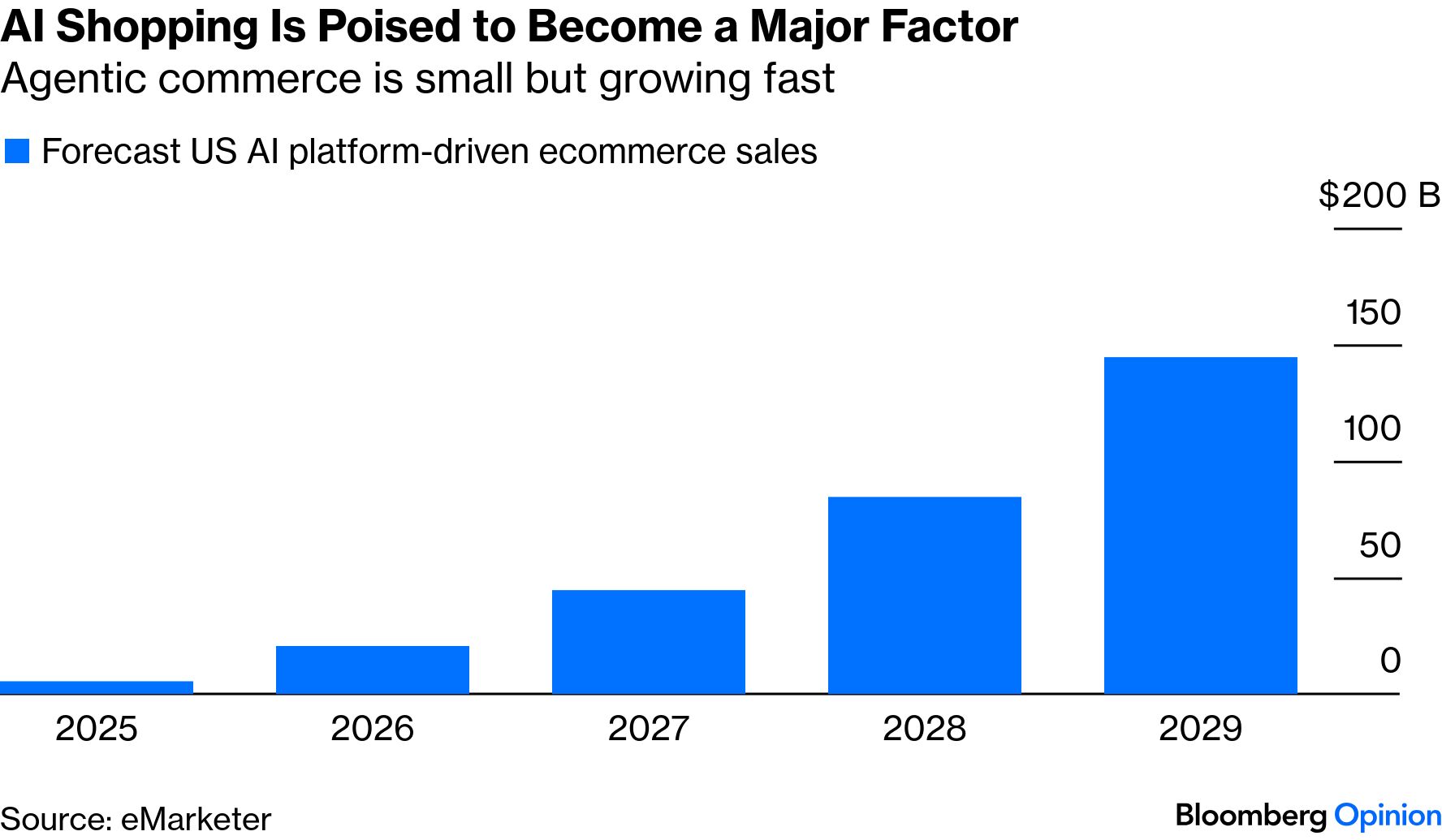
What we can do, though, is try and imagine how AI might impact work itself. In the realm of retail, for instance, Andrea Felsted says merchants will soon have a new customer to woo: the bots. "It's still early days, but we are entering the age of agentic commerce, where autonomous artificial intelligence chatbots will be the ones selecting and buying the goods. It's a shift that has the potential to rewire digital shopping," she writes.

In order to succeed, Andrea says "companies must ensure that their sweaters or snacks can be found easily by bots and seamlessly popped into virtual carts." That will require them to familiarize themselves with the mechanics of large language models.

"For example, a person might ask ChatGPT to find them a face cream that is suitable for people with eczema. To appeal to the bot, a retailer or brand should not simply describe the cream on its website as fragrance-free. Instead, the description should explicitly state that the product has no scent, additives or preservatives; it should list the ingredients ... The more conversational commerce becomes, the more important this so-called generative engine optimization will be."

Back when I was applying for jobs, I put SEO — search engine optimization — on my resume. Now, it's ... GEO? Perhaps things aren't so different after all.

My Eyes, They Burn

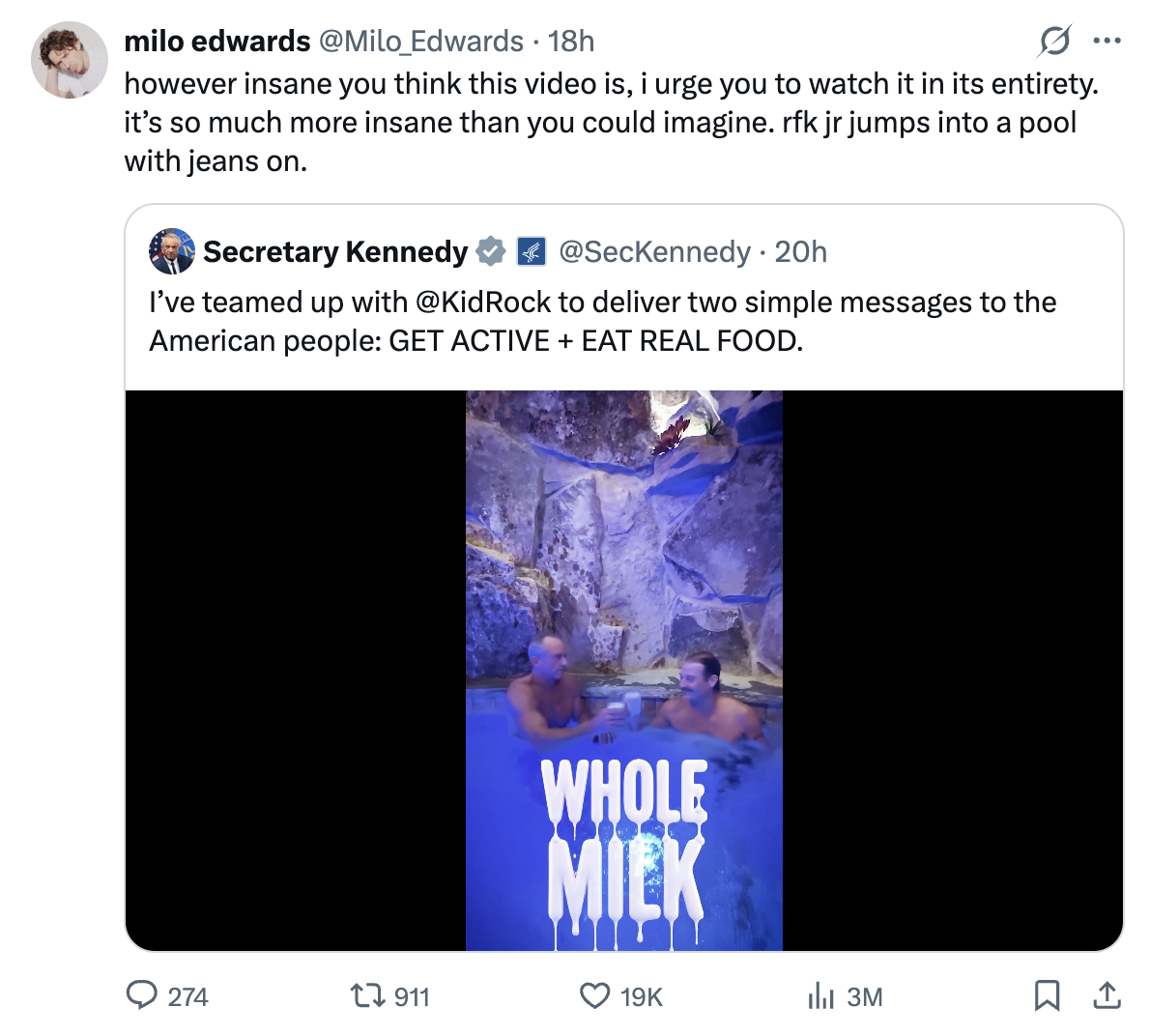
"One Year of RFK Jr. Has Left Public Health Devastated," is the headline on Lisa Jarvis' latest column. But after seeing this video of him and Kid Rock shirtless, cheersing with whole milk in what looks to be a subterranean grotto while wearing JEANS, I think it's safe to say that he's left our eyeballs devastated, too.

I cannot unsee it. Still, don't let the bizarre social media stunt distract you from the dozens of dangerous decisions that Lisa says the health secretary has made over the course of a year. Under his watch, the Centers for Disease Control and Prevention has been gutted and filled with vaccine skeptics who are either radio silent or misleading Americans. The National Institutes of Health has been rocked by an exodus of Ph.D. talent and research funding cuts. And the Food and Drug Administration has been marked by chaos, thanks to a revolving door of leadership changes.

"The question is what comes next from Kennedy," Lisa writes. "He surely isn't done with vaccines. Next in his sights is a remaking of the National Vaccine Injury Compensation Program, the fund that pays people who suffer from a rare side effect from a shot. When he got rid of half of the panel that determines compensation last month, it set off alarm bells: If he names members open to growing the list of covered injuries to include ones not backed by science — for example, autism — it could quickly bankrupt the fund and eventually prompt some companies to stop making shots."

Thinking the Unthinkable

"Germany is seriously debating whether it needs the bomb," is a sentence I hoped I'd never read in my lifetime, yet there it is, written by Katja Hoyer in the aftermath of the Munich Security Conference.

"Haunted by Cold War memories and legally restricted, it's unlikely to go there," she notes. "But it should use this historic opportunity to reset its relationship with nuclear technology in all its guises."

As it stands, there are only two powers in Western Europe with nuclear capabilities: France and Britain. Even if that status quo remains, there's still the matter of nuclear energy. Germany's remaining atomic reactors were shut down in 2023 at the peak of the Russian oil and gas crisis. In the years since, it's shifted to liquefied natural gas, 96% of which comes from the US.

"This exposure is as much a factor of national strength as military deterrence. The world's third-largest economy imports almost 70% of the energy it needs. That's a huge vulnerability," Katja argues. "If Germany is ready to debate the military use of nuclear technology, then why can't it step back and reconsider civilian use, a field where it has the expertise and legal authority to change tack?"

Telltale Charts

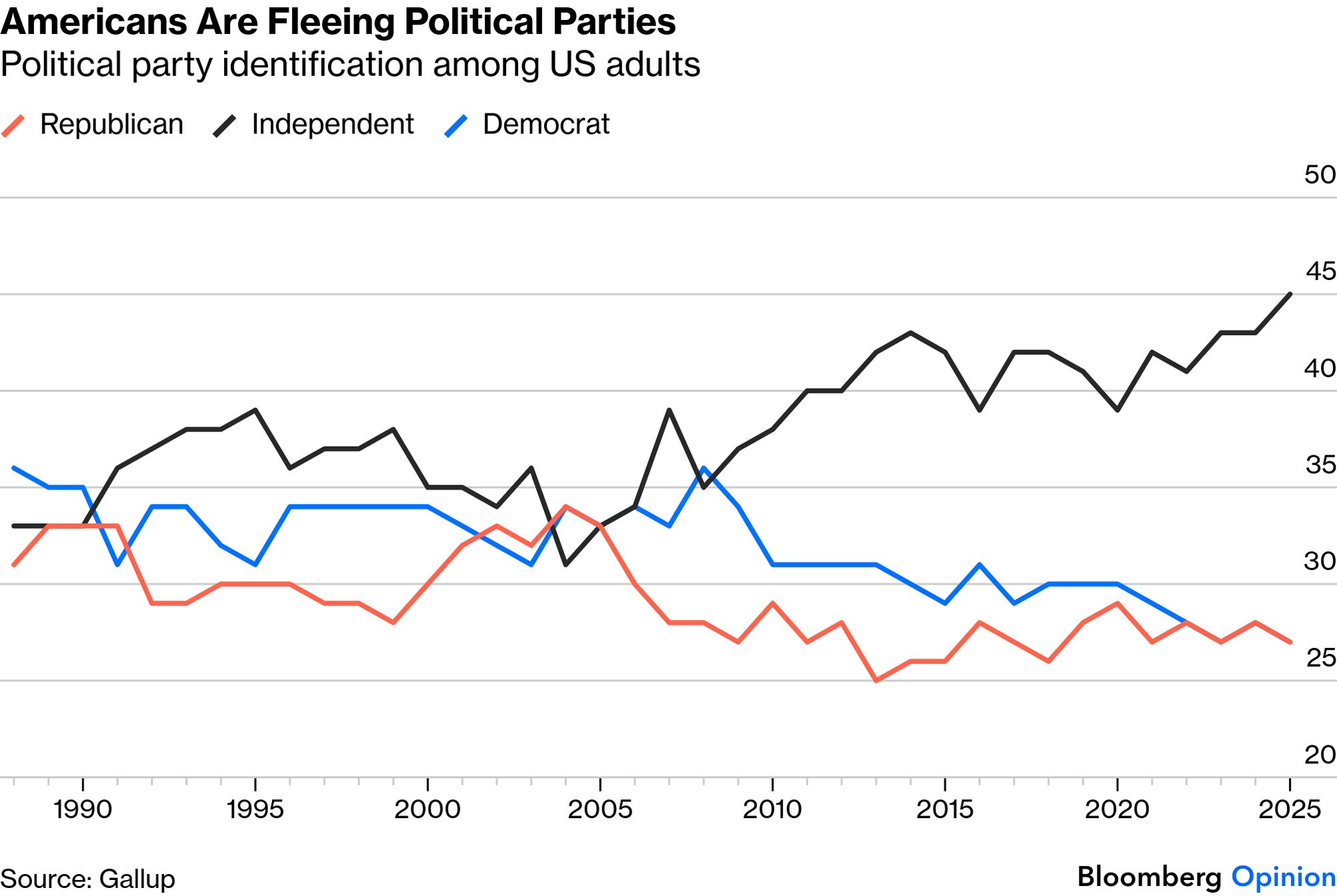
In 1988, the year that Jesse Jackson finished second-place in the Democratic primary, only 33% of Americans identified as independents. Now, that figure sits at 45% — an uptick that David M. Drucker says is driven by disenchanted voters fleeing both sides of the aisle. Might Democrats use Jackson's playbook to get the party back on track? As Nia-Malika Henderson says in her tribute to the late political icon, "he abhorred bland and cautious centrism and urged his party, now locked in a similar struggle over its identity, to embrace a racially inclusive economic populism." He once compared America to a quilt with "many patches, many pieces, many colors, many sizes, all woven and held together by a common thread." Today, that thread appears more fragile than ever. Those who work to repair it, rather than tear it apart, will succeed.
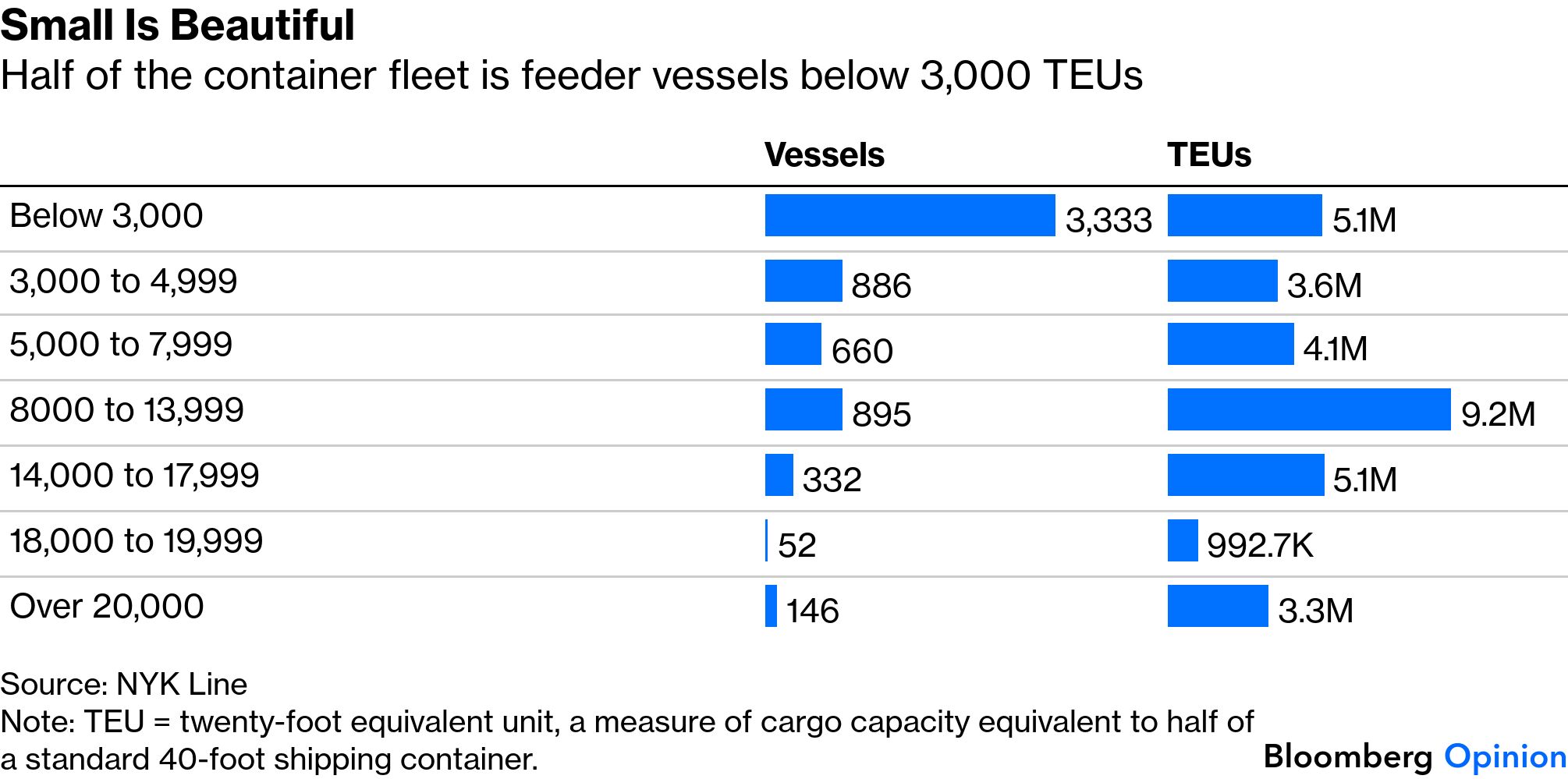
My understanding of the shipping industry is, admittedly, stuck in the past. (Let's just say Charlotte Doyle did a number on me in fifth grade.) So when I heard news of an electric-powered ship with batteries that can hold as much charge as 380 Tesla Model 3s, I got excited! But David Fickling says there's one caveat: Ning Yuan Dian Kun — the e-ship in question — is only 740 TEUs, which is teeny compared to the mega-containers the media often focuses on. Even so, smaller smaller feeder vessels play an important role. "Just over half the global container fleet is below 3,000 units," David explains. "That means they're also significant contributors to marine pollution. In a typical year, about half of emissions from container shipping come from vessels carrying less than 8,000 TEUs, with about a fifth below 3,000." A battery-powered feeder fleet would be a welcome development.

Further Reading

California's finances are a mess. A wealth tax won't change that. — Bloomberg editorial board

The US is multitasking two very different peace deals. — Marc Champion

Mexico can and should call Trump's bluff on trade. — Juan Pablo Spinetto

Warner Bros. is smart to test Larry Ellison's pain barrier. — Chris Hughes

Russian expats are pushing Phuket and Bali to adopt stablecoins. — Andy Mukherjee

Private credit should worry about a singularity in software debt. — Paul J. Davies

ICYMI

Mark Zuckerberg takes the stand.

EBay is buying fashion darling Depop.

Ethiopia's EV transition is in full swing.

A deadly avalanche in Sierra Nevada.

Kickers

A local dog crashed the Olympics.

The Tony Clark sister-in-law scandal.

Presidential chatter about UFOs and aliens.

YouTube's earliest video is museum-worthy.

Notes: Please send face cream and feedback to Jessica Karl at jkarl9@bloomberg.net.

Sign up here and find us on Bluesky, TikTok, Instagram, LinkedIn and Threads.

Follow Us

Before it's here, it's on the Bloomberg Terminal. Find out more about how the Terminal delivers information and analysis that financial professionals can't find anywhere else. Learn more.

Want to sponsor this newsletter? Get in touch here.

You received this message because you are subscribed to Bloomberg's Opinion Today newsletter. If a friend forwarded you this message, sign up here to get it in your inbox.
Unsubscribe
Bloomberg.com
Contact Us
Bloomberg L.P.
731 Lexington Avenue,
New York, NY 10022
Ads Powered By Liveintent Ad Choices

No comments:

Post a Comment

The riskiest thing to do right now is to do nothing.

f any of your money is in an index fund right now, this message is for you. ͏  ͏  ͏  ͏  ͏  ͏  ͏  ͏  ͏  ͏  ͏  ͏  ͏  ͏  ͏  ͏  ͏  ͏  ͏  ͏  ͏ ...