| Read in browser | ||||||||||||||
 India, the world's third-largest polluter, this week held its first major national climate conference. Today's newsletter looks at what happened at Mumbai Climate Week and where the country stands on its green commitments. We also break down the emissions that could result from what would be the biggest US gas power plant, and bring you details on the EPA's latest deregulation move. Did someone forward you this newsletter? Subscribe to Green Daily for more free reads on the politics of climate change. Clinton's message to IndiaIndia has been urged to push forward global action on climate change even as President Donald Trump rolls back emissions reduction policies in the US. "It is not possible for us to wait any longer," former Secretary of State Hillary Clinton said in Mumbai, addressing India's first major national climate conference. "We cannot wait for the political change that I know will come to the United States, because that's a few years off — we have to do the innovation and build the models here." Clinton, who has previously backed a $50 million fund focused on alleviating climate impacts in India, was the flagship speaker at the three-day event in finance hub Mumbai, which gathered investors, policymakers and executives in an effort to tout the nation's credentials to lead the developing world's efforts to address global warming. "The front line of the fight against global climate change is right here in the Global South, and I have full confidence that India can be the innovator, the implementer," Clinton told the forum Wednesday. "I want to be a cheerleader for the efforts that can come out of India." 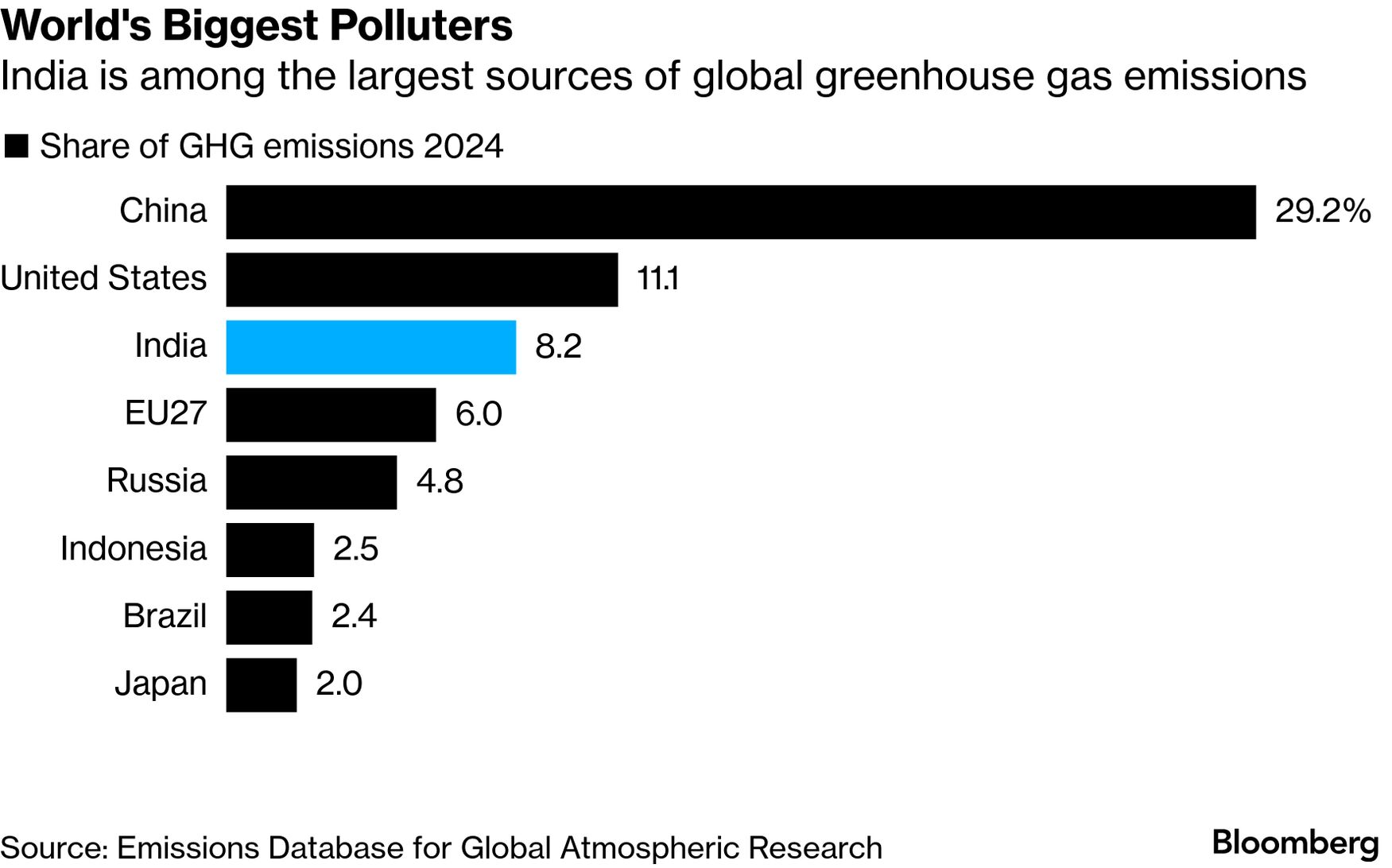 India's rapid adoption of renewable energy is an indicator of that potential for green leadership, according to Subrahmanyam Pulipaka, chief executive officer at the National Solar Energy Federation of India. "I don't see a better time for us to announce ourselves on the world's stage," he said on the sidelines of the conference. "You now have a true representative who can lead meaningful deliberations." Despite the buzz in Mumbai — with prominent actor Dia Mirza and cricket icon Sachin Tendulkar among 2,000 conference delegates — India's commitment to accelerate climate action remains uncertain. Prime Minister Narendra Modi's government missed a 2025 deadline to submit new emissions-cutting plans to the United Nations, and is still yet to publish a revised strategy. Modi was also among global leaders to skip November's UN climate talks in Brazil. Read More: Rich Nations Must Hit Net Zero and Pay Up on Climate, India Says More ambitious green policies in India are seen as vital because emissions are continuing to sharply rise, the population is expanding and energy demand is surging. Coal currently accounts for nearly three-quarters of power generation, and the government has been weighing proposals to keep building new plants through 2047 — a plan that could scupper Modi's target to hit net zero by 2070. 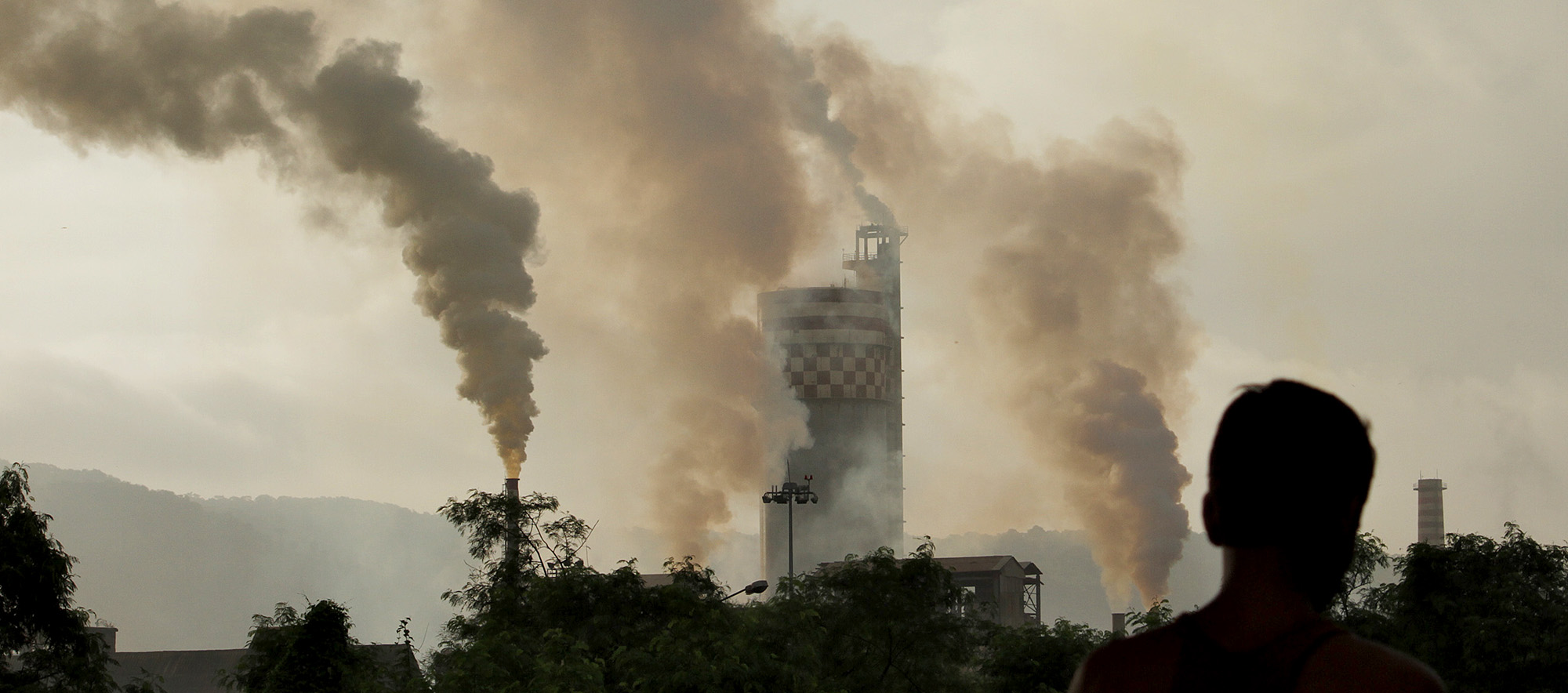 A man stands in front of a chemical factory as it discharges exhaust into the air of Mumbai. Photographer: Dhiraj Singh/Bloomberg Sessions at the conference also focused on pressing worries about the impact of air pollution on public health, and the effects of extreme heat on India's large outdoor workforce. Asset managers and lenders flagged other concerns too. A lack of policy clarity in the past has deterred investment in green technologies, while more still needs to be done to localize supply chains, scale up carbon markets and balance India's coal-dominated grid in favor of cleaner fuels. Cheaper and better quality battery storage is making it "possible for renewables to be able to replace fossil fuels," said Woochong Um, CEO of The Global Energy Alliance for People and Planet. "What's challenging is the regulatory, the soft part." Transition bill$21 trillion The estimated cost of investment needed for India to hit net zero by 2027, according to a draft government plan. Investment opportunity"India as an ecosystem is powerful and attractive." Lawrence Yanovitch Chief Executive Officer of the One Planet Sovereign Wealth Funds Emissions giantBy Aaron Clark and Eric Roston US President Donald Trump's proposal for a massive gas-fired power plant in Ohio would likely create one of the nation's largest sources of carbon dioxide emissions from electricity generation. While details of the potential $33 billion development are scarce so far, it's intended to be led by SoftBank Group Corp. and is envisaged as having capacity of 9.2 gigawatts, according to a fact sheet from the US Department of Commerce. That would make the project the biggest US power plant, according to BloombergNEF data, capable of supplying millions of homes with electricity yet also delivering a significant climate impact. 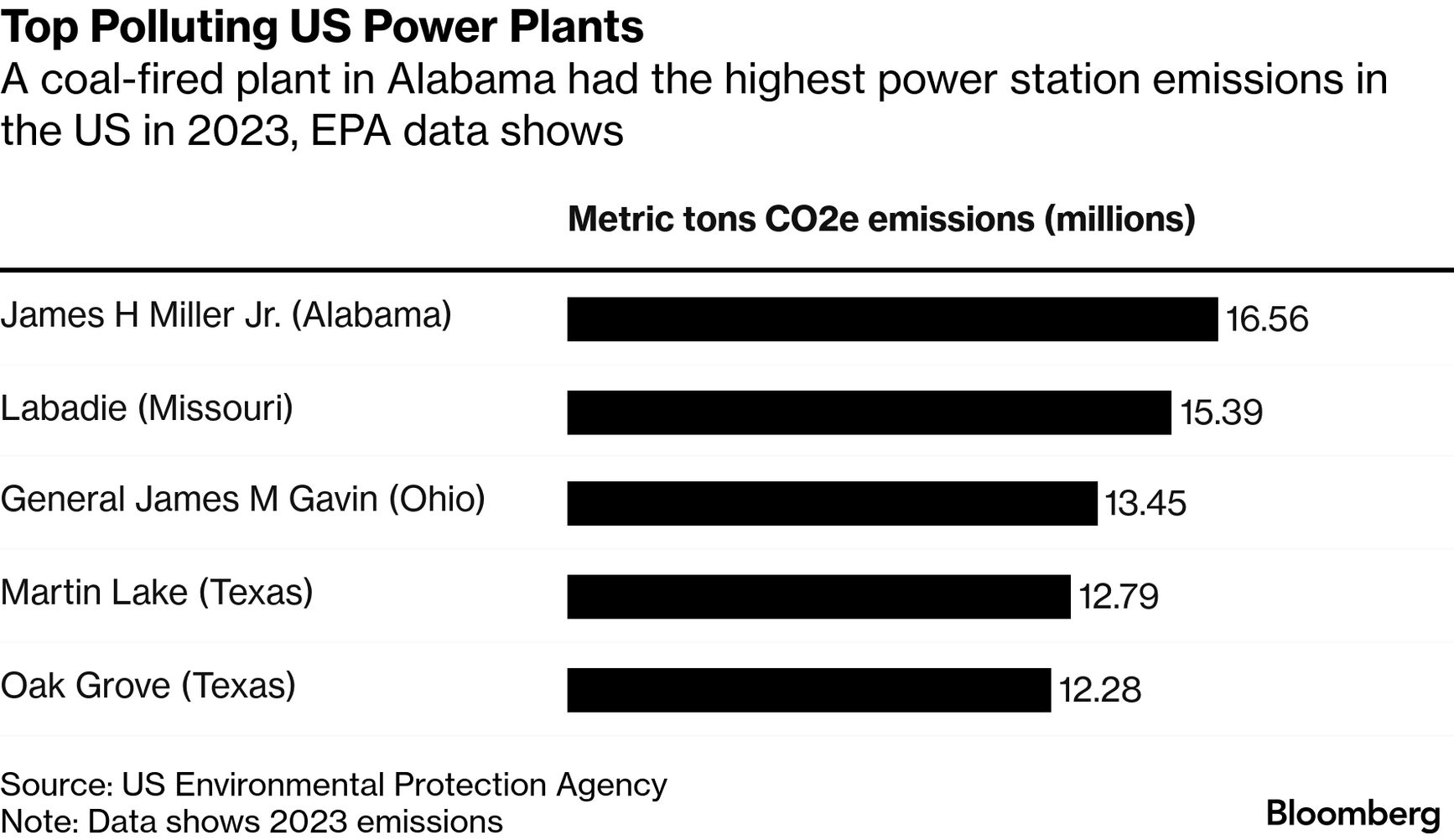 SoftBank declined to comment. The Commerce Department didn't immediately respond to requests for comment. Assuming the new plant operated at a capacity factor of 65% and deployed typical combined-cycle gas turbine technology, it would likely emit about 19.4 million metric tons of carbon dioxide a year, according to Helen Kou, head of US power analysis at BNEF. A separate Rhodium Group estimate found such a plant might emit 16.2 million tons annually. Read the full story about how much pollution could come from the project. Another rollbackBy Zahra Hirji The Environmental Protection Agency on Friday rolled back regulations limiting mercury and other toxic air pollution from power plants, the latest in a series of moves by President Donald Trump's administration designed to boost the nation's shrinking coal sector. The 2012 Mercury and Air Toxics Standards for power plants rule — called MATS for short — requires the facilities to reduce emissions of mercury and other metal air pollutants, such as arsenic and lead, which have been linked to heart attacks, cancer and developmental delays in children. President Joe Biden's administration strengthened the rule in 2024. Now Trump's EPA is undoing those changes, claiming that they put an undue burden on coal plants in particular. "The Biden-Harris administration's anti-coal regulations sought to regulate out of existence this vital sector of our energy economy," said EPA Administrator Lee Zeldin. "The Trump EPA knows that we can grow the economy, enhance baseload power, and protect human health and the environment all at the same time." Weekend listen For years, a major drag on Ethiopia's budget has been subsidizing gasoline for consumers. Bloomberg In 2024, Ethiopia did something revolutionary. It banned the import of fossil fuel cars and cut tariffs on electric vehicles. This week on Zero, Akshat Rathi talks with producer Oscar Boyd and Ethiopia-based EV entrepreneur Yuma Sasaki about the EV boom that ensued and what that tells us about the growth of EVs in rapidly developing countries like Ethiopia. Listen now, and subscribe on Apple, Spotify or YouTube to get new episodes of Zero every Thursday. More from Bloomberg
Explore all Bloomberg newsletters. Follow us
You received this message because you are subscribed to Bloomberg's Green Daily newsletter. If a friend forwarded you this message, sign up here to get it in your inbox.
|
Saturday, February 21, 2026
Clinton’s India climate plea





Subscribe to:
Post Comments (Atom)
The $650 Million Trade That Exposed Wall Street’s Best-Kept Secret
Plus, how to follow the smart money into AI's next big winners... The $650 Million Trade That Exposed Wall...
-
PLUS: Dogecoin scores first official ETP ...
-
Hollywood is often political View in browser The Academy Awards ceremony is on Sunday night, and i...


No comments:
Post a Comment