| Welcome to Bw Reads, our weekend newsletter featuring one great magazine story from Bloomberg Businessweek. Today we're sharing Champe Barton's article about Sig Sauer pistols. Owners have been suing the company for alleged design defects in its flagship handgun, the P320. Its solution is to ban the lawsuits. This story was published in partnership with The Trace, a nonprofit newsroom covering gun violence in America. You can find the whole story online here. If you like what you see, tell your friends! Sign up here. In 2010 a group of weapons technicians gathered at the training academy of Sig Sauer Inc. for a routine test referred to as the "shake and bake." The technicians, a mix of military and law enforcement professionals, had reached the final round of a course certifying them to repair Sig firearms. To graduate they needed to strip a couple dozen pistols, all from the gunmaker's P226 DAK line, down to their screws and springs. They would scramble the parts in a bin, then set about reassembling each gun from scratch. The test began as usual; the technicians rebuilt the guns without issue. But when they pulled the triggers, the weapons, which had functioned properly beforehand, no longer worked. Two former instructors who were present told me the technicians had reassembled their guns correctly. (These instructors asked to remain anonymous for fear of professional retribution.) That suggested the problem lay with the weapons. Identical guns should have interchangeable parts. When they don't, it can indicate poor manufacturing. That same year, Sig's chief executive officer and president, Ron Cohen, sat for an interview with the magazine Management Today. Cohen had staged a dramatic turnaround at the New Hampshire-based company. When he'd taken charge five years earlier, it had recently become independent of its iconic German parent, Sig Sauer GmbH. It was sputtering, eking out tiny margins on guns still built with parts from Germany. But under Cohen's stewardship, sales had tripled, and the company had added product lines and hundreds of employees. In the interview, Cohen extolled the company's transformation. He compared Sig to Mercedes-Benz, then mused about what it might cost to continue expanding: "How do you grow Mercedes to be four times bigger while not losing your edge of being the quality leader? How do you grow without losing those parts of you?" Over the next 15 years, Sig surged to the front of a fiercely competitive US pistol market and edged out industry heavyweights for government contracts. But while business grew, so did claims of shoddy manufacturing. 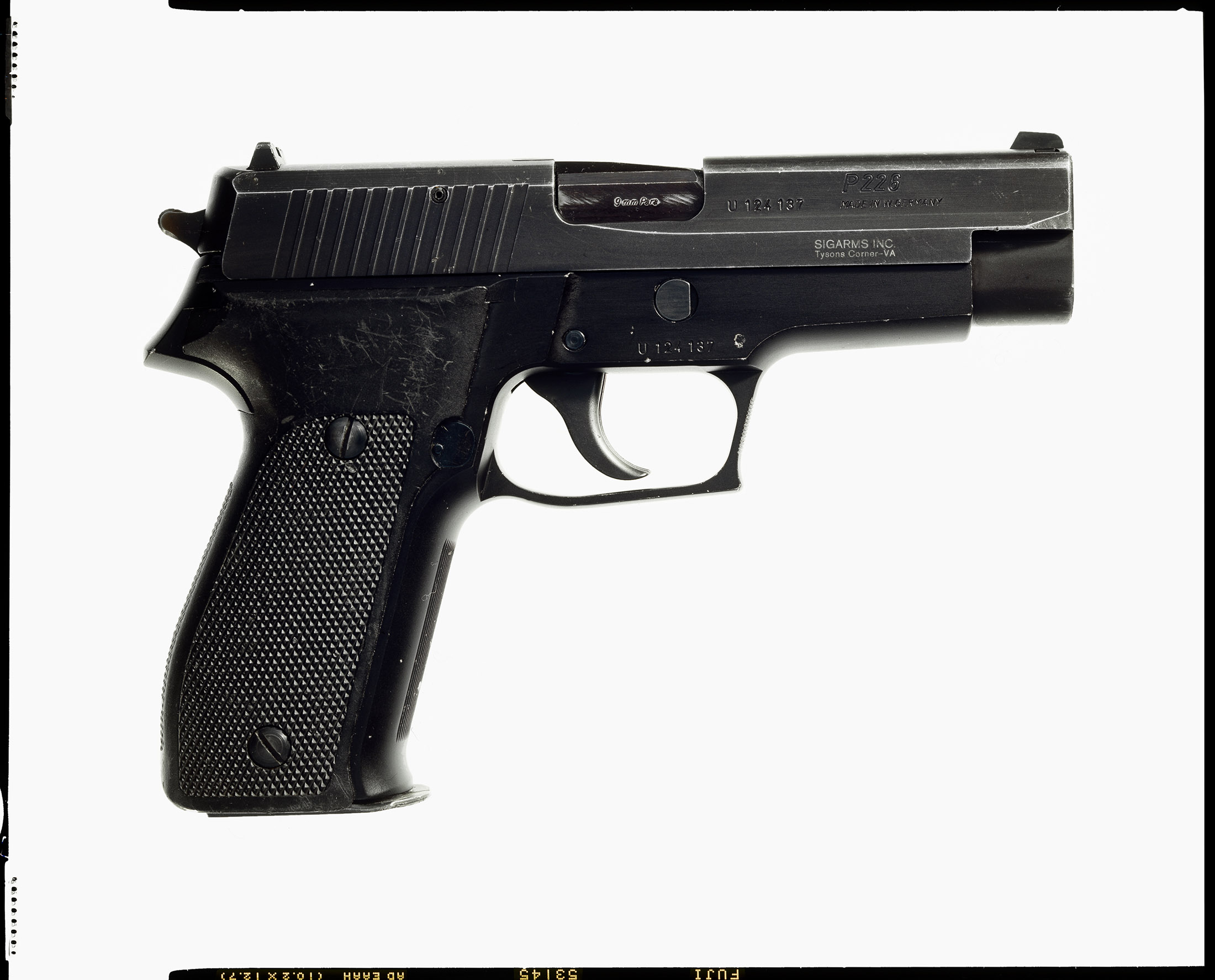 The Sig P226. Photographer: Michel Delsol/Getty Images Although the P226 DAK was gradually discontinued, subsequent models faced similar criticisms. By far the greatest number of complaints have been directed at Sig's current flagship pistol, the P320, introduced in 2014 and available for roughly $500 today. The P320 is the engine of the company's furious growth over the past decade. But since 2016, more than 150 people have alleged in lawsuits and police records that their P320s fired when they didn't pull the trigger. Shootings have blown holes through veterans' thighs, shattered police officers' knees and killed a Pennsylvania father. In November 2022 alone, eight people suffered gunshot wounds from their P320s. An additional 18 people reported P320 injuries in 2025, including three Immigration and Customs Enforcement agents injured by their duty pistols and a Utah man shot through the penis on Valentine's Day. While many gunmakers have faced allegations of defect-related shootings, Sig has been the subject of far more than others in the past decade. The disparity has stymied Sig's growth in the law enforcement market, where the P320 once threatened to dethrone the company's chief competitor, Glock Inc. In the past few years, at least seven of Sig's biggest US customers, including the Houston and Denver police departments and ICE, have stopped using the P320 amid fears about officer safety. Dozens of smaller agencies have done the same. Sig declined to comment for this story, but the company has previously denied that the P320 is capable of firing without a trigger pull. In response to questions for an investigative story about P320 shootings that I co-wrote for The Trace, an online newsroom where I'm a reporter, and the Washington Post in 2023, Sig cited accounts of unintentional discharges with other firearms—specifically, 1998 coverage detailing a spate of unintentional shootings at the Washington, DC, Metropolitan Police Department and a 2017 Trace story about the increase in accidental shootings at businesses—as evidence that issues with the P320 are neither uncommon nor suggestive of a defect with the gun. "These reports, among others, support three conclusions," the company wrote at the time. "(1) unintentional discharges are not uncommon amongst both law enforcement and civilians, (2) improper or unsafe handling is one of the most common causes of unintentional discharges, and (3) unintentional discharges occur with several types of firearms and are not unique to the P320." The company further noted that "despite years of litigation and extensive discovery, no one, including plaintiffs' 'experts,' have ever been able to replicate a P320 discharging without a trigger pull," and that the P320 conforms to applicable US standards for safety. "The SIG Sauer P320 model pistol is among the most tested, proven, and successful handguns in small arms history," the company wrote. The causes of handgun misfires can be notoriously difficult to isolate, as they can result from slight shifts of tiny parts inside a weapon. Internal components may be distorted by temperature, moisture or general wear, experts say, especially if the parts were not manufactured correctly. The uncertainty has spawned an abundance of theories about what has caused P320s to go off. Sig consistently blames user error. Plaintiffs' attorneys have demonstrated that the gun can discharge after being bumped or rattled with its trigger only slightly depressed, as it might be in a warped holster or from inadvertent finger pressure. YouTube firearm influencers have published videos purporting to show the same. But dozens of former employees who worked at Sig as far back as the 1990s told me the most likely explanation for the alleged problems associated with the P320 predates the model altogether. According to more than 100 hours of interviews and to documents I obtained—internal email exchanges, meeting notes and manufacturing process instructions—Sig has frequently cut corners in ways that affect quality, potentially jeopardizing the integrity of parts used to build millions of guns and hundreds of thousands of P320s. The former employees said that changes set in motion years ago have undermined the reliability of the brand's products and that Cohen has fostered a culture prioritizing production numbers above all else. In a press release last March defending the safety of the P320, Sig disputed that design or quality-control problems have contributed to P320 shootings. "SIG SAUER stands behind the quality, safety, and design of all our products," the release read. It went on to dismiss criticism as a "campaign to highjack the truth for profit," mounted by "clickbait farming, engagement hacking grifters." Several former employees I contacted stood by the company and dismissed quality concerns as the grumblings of disgruntled ex-staffers. John Brasseur, a former vice president of product management who worked at Sig from 2010 to 2022, says he never felt Cohen's decisions jeopardized the reliability of Sig's firearms. "I will absolutely tell you that there was never a time where it was quantity over quality," Brasseur says. In many industries, manufacturers must design and build their products to federally mandated safety standards before sending them into the marketplace. But the gun industry is exempt from all federal consumer-product safety regulation. Unlike hair dryers, mattresses and even BB guns, firearms do not need to meet minimum safety standards. Imagine a weapon that explodes in customers' hands or fires backward at its users. It would violate no federal gun-safety regulation. No government agency has authority to investigate or force a recall. Judges and juries have the power to determine whether a firearm is defective, but they're generally limited to awarding financial damages. Only in extreme circumstances can judges issue injunctions banning products. Three times, juries have found the P320 defectively designed; in two of those cases, victims were awarded millions of dollars. (A fourth jury decided in Sig's favor in 2022, though the judge in that case called the plaintiff "credible in every respect.") More than 100 similar lawsuits await trial in state and federal courthouses across the country. Sig, characteristically, has gone on the offensive: In New Hampshire, where most of the cases are filed, the company persuaded state legislators last year to pass an amendment that might bar such claims before evidence can be heard. Keep reading: Even a Decade of Accidental Shootings Hasn't Slowed America's Top Pistol Maker |











No comments:
Post a Comment