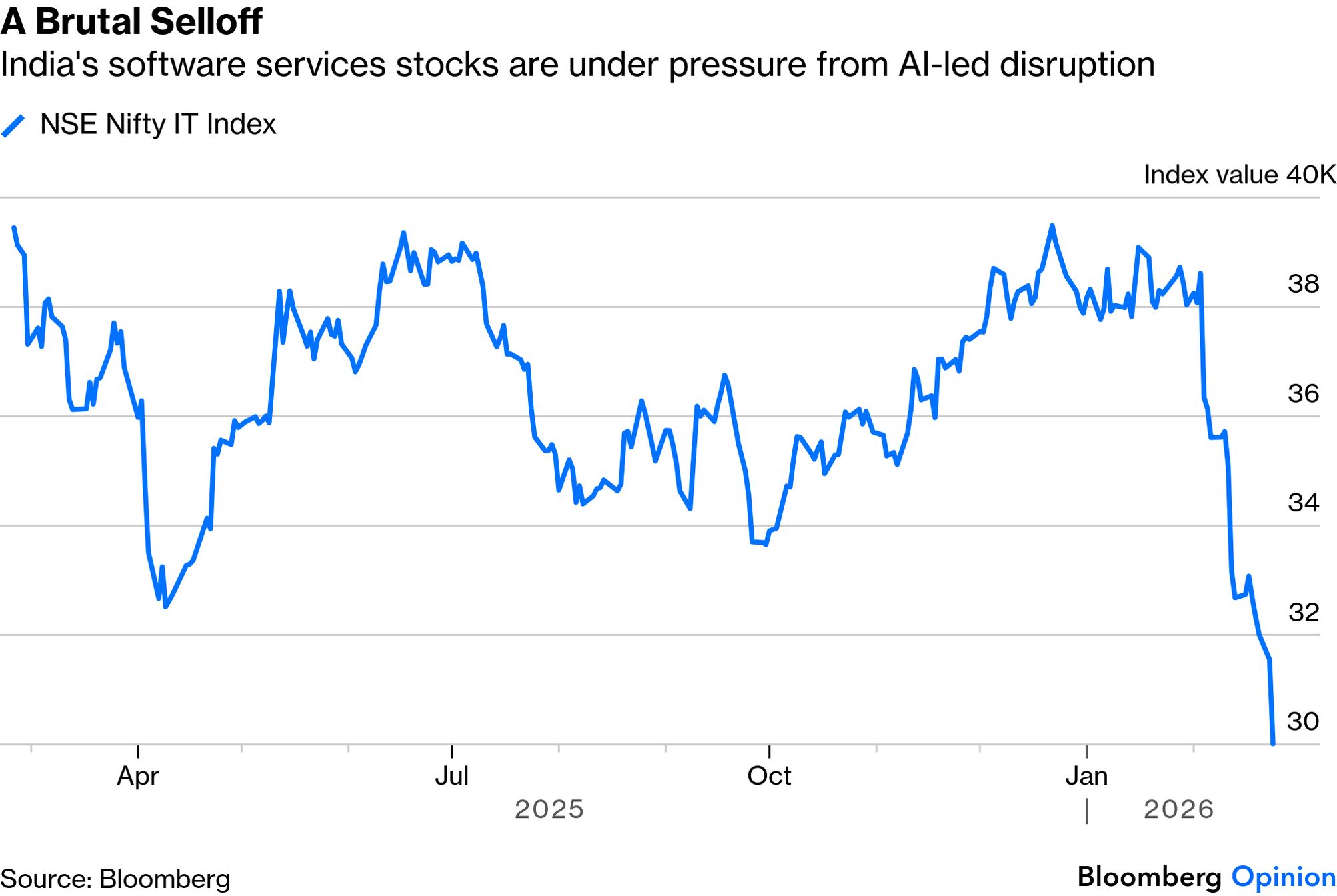
| This is Bloomberg Opinion Today, a majestic manifestation of Bloomberg Opinion's opinions. Sign up here. The Reign in Spain and the Murrain in Britain | Andrew Mountbatten-Windsor may be almost universally despised, but he is still eighth in the royal line of succession to the British throne. And, even if he never becomes king, there is still the off chance that — if something incredibly catastrophic occurred — he might be regent for an underage monarch. Imagining how the disgraced ex-prince might hang around gives everyone the creeps. Rosa Prince says that if Prime Minister Keir Starmer's government gets its act together, it can coordinate preventative action through Labour's 400-or-so seats (out of 650) in the House of Commons, plus the assistance of the 14 other Commonwealth realms where the king is head of state. Those countries are likely to be more than obliging to expunge the Epstein-tarred royal, once criminal investigations are dealt with. He has denied all wrongdoing. Given the labyrinthine web of laws and conventions that make up the UK's constitution, there are bound to be hiccups. For example, King Charles III may have stripped his brother of his titles, but Mountbatten-Windsor is still technically the Duke of York. Only parliament can remove or extinguish that peerage — even though his mother, the late Queen Elizabeth II, unilaterally granted her second son the title upon his 1986 marriage to Sarah Ferguson. It's a legislative prerogative that goes back to 1689! And that's separate from what Parliament must do to fix the line of succession. In Spain, there is a clearer constitutional procedure for reforming the monarchy — including abolishing it. To prevent that, there's been a lot of royal self-policing by Charles' distant cousin Felipe, who is king there, starting with an upheaval in the reigning House of Bourbon. I wrote about the situation in connection with the anniversary of a 1981 military rebellion that sought to reinstate the authoritarian policies of Francisco Franco. The plotters failed because Felipe's father, King Juan Carlos, heroically stood with democracy — even though he came to the throne as Franco's designated heir. It helped inspire a decade of democratic resurgence around the world, including the fall of the Marcos dictatorship in my native Philippines and the collapse of the Warsaw Pact. The monarchy became Spain's most trusted institution. In the early 2000s, however, scandal and controversy diminished Juan Carlos's status — and he abdicated in 2014. To preserve the Bourbon hold on the monarchy, Felipe has kept his father in reputational, if not geographic, exile. There was indeed some trepidation that documents from the era, released this week, would further tarnish his historic role. Instead, a handwritten note by one of the plotters complained that their first mistake was "to keep 'the Bourbon' free and to expect him to behave like a gentleman." Sometimes, old heroism doesn't fade away. Oh Deer, Oh Deer, Oh Deer, Oh Deer! | In a column at the end of last year, I mentioned that London restaurants were serving more venison not because the meat was posh, but because it was cheap. The population of invasive deer species had exploded, and seasonal hunting had increased their availability to chefs. They've also become a threat to local wildlife and the environment. So much so that Lara Williams, who's a vegetarian, says she'll allow herself to eat the occasional venison burger. "It's the one meat option that actually aids environmental aims." The UK deer population is now about 2 million — a size that threatens tree cultivation (the deer munch on saplings) and the native wildlife that depend on forest coverage. They also spread Lyme disease-bearing ticks. Experts believe culling as many as 500,000 to 750,000 deer a year will help restore the balance. This month, the government issued a new 10-year deer management plan to help bring down the numbers, including more leeway for farmers and landowners to shoot intrusive wild cervids. That will likely expand the market for lean deer meat, making venison more available for home kitchens as well as restaurants. It's economics to the rescue of the environment. As Lara says, "I believe that if we have to take an animal's life, it's wasteful not to eat it." "Three months after China declared Hainan the world's largest 'free-trade port'… The island has been marketed as a major gateway for what President Xi Jinping called the era of 'opening up.' Beijing wants to show the world that China isn't only a major exporter … but is keen to welcome foreign imports… Unfortunately, this isn't about rediscovering a taste for Hermes scarves and Chanel handbags. Rather, gold jewelry is by far the most sought-after item. ... China's middle class is indeed responding to Hainan's zero-tariff policies, but not by consuming. They're speculating and arbitraging instead, hoping that the gold price, which has reached a high of $5,417 per ounce this year, will keep on rising." — Shuli Ren in "China's Gold Rush Comes to Xi's Tariff-Free Paradise." 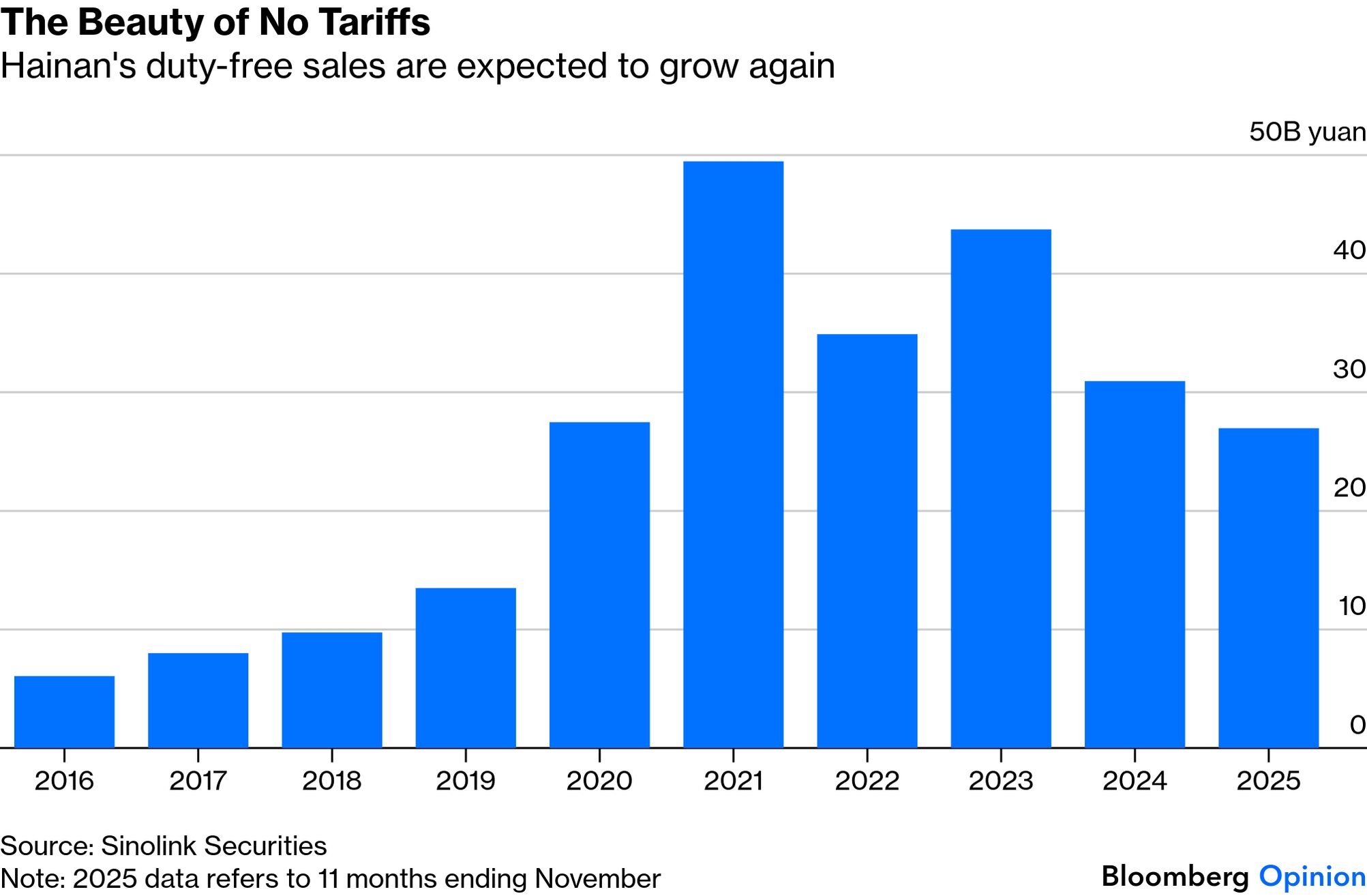 "For a quarter-century, software services have been India's calling card. No longer. The next 25 years belong to tokens — the Lego bricks of the artificial-intelligence era. As AI agents require quintillions of them to supplant human effort, India is pitching its tent there. But is that wise? … Outsourcing companies like Tata Consultancy Services Ltd. and Infosys Ltd. may initially meet the challenge by helping clients build AI agents. They may even protect their margins by shrinking their workforce and adopting more artificial intelligence in their code-writing workflow. But at some stage, these franchises won't be large-scale employment generators. That will leave policymakers to grapple with the question: 'What do we do with our 375 million young people?'" — Andy Mukherjee in "To Trade Coders for Legos, India Needs a Better Deal." A war that Trump could really prevent. — Marc Champion Can cricket save Imran Khan? — Mihir Sharma Why two Siemens aren't bigger than one. — Chris Bryant How "AI safety" vanished. — Catherine Thorbecke Europe's Great Leap Forward. — Marcus Ashworth AI is dispelling two investing myths. — Shuli Ren Will AI endanger the big CEO bonus? — Paul J. Davies Monsanto plays chicken over Roundup. — Chris Hughes Walk of the Town: London in Chicago, Via France | I keep dwelling on how cold it was in the US during the first half of February. And it wasn't just in New York City (which this week suffered another winter superstorm along with much of the northeast). I was in Chicago from Feb. 1 to 5, and on the day I decided to take a two-mile evening walk outdoors, thermometers registered 28 degrees Fahrenheit (-2.2 C)— with relatively gentle 16 mph winds pushing temperatures even lower as they swirled over Lake Michigan into the city. I persisted, warming myself with thoughts of London. You see, I'd been heartened the day before by the French Impressionist Claude Monet at the Art Institute of Chicago. I'd missed the exhibition of 21 of his paintings of foggy London at the Courtauld Gallery that closed in January 2025. But the Institute had at least four of the hundred or so Monet that painted at the end of the 19th century. He was fascinated by the interplay of mist and light in the British capital. He told one art dealer: "Without the fog, London would not be a beautiful city. It's the fog that gives it its magnificent breadth. Its regular, massive blocks become grandiose in that mysterious cloak." 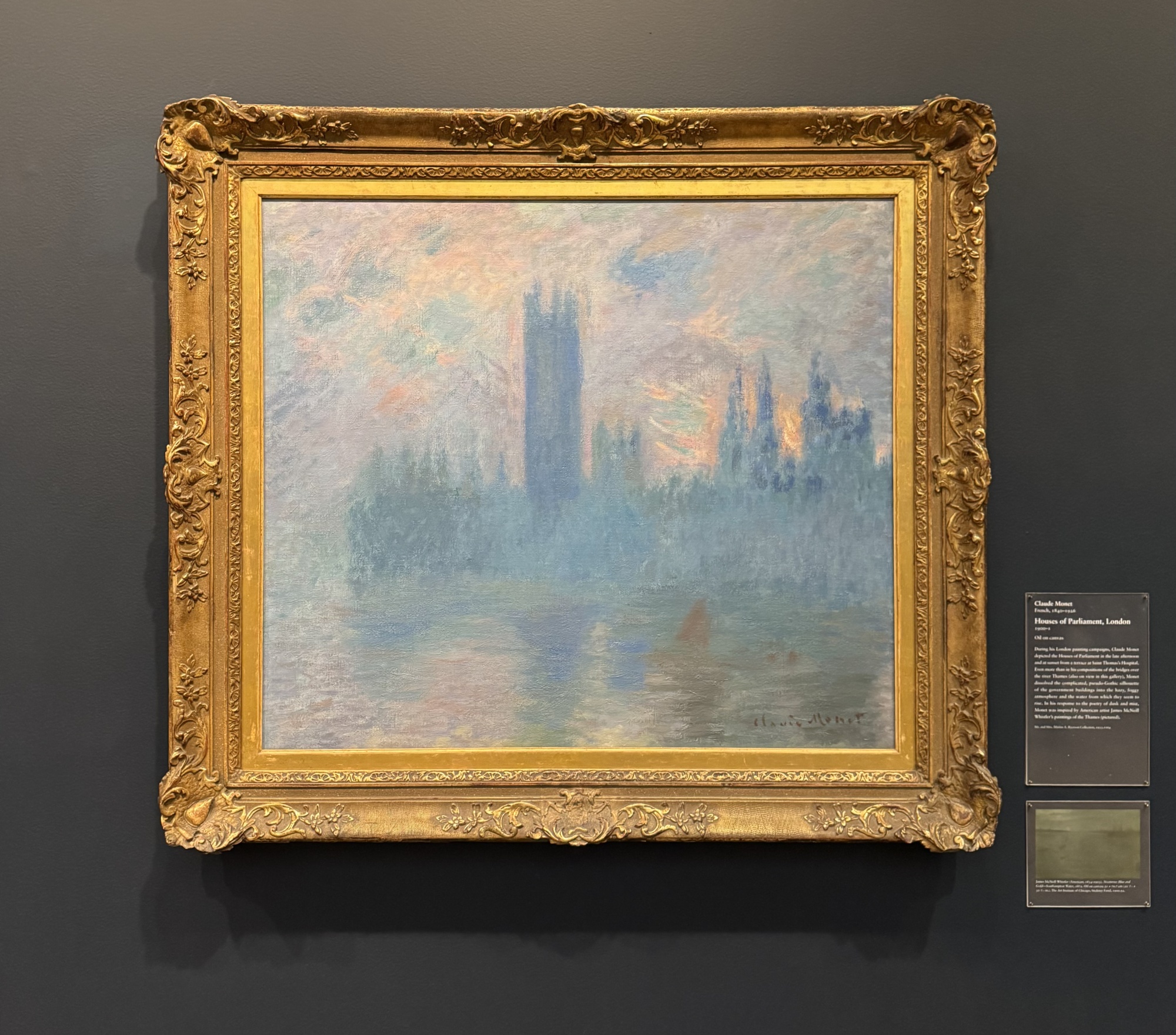 Monet's "Houses of Parliament" across the Thames, in the Art Institute of Chicago Photograph by Howard Chua-Eoan/Bloomberg Monet's grandiose cloak, alas, was a combination of river mist and industrial coal soot. Smog, in other words. So much for romanticizing the weather. In any case, I absorbed his depiction of the Houses of Parliament, imagining the building bathed in tropical humidity instead of pollution. The heat lasted only until I stepped out of the Art Institute and back into the frigid reality of Chicago. Economics is a terrifyingly dismal science. 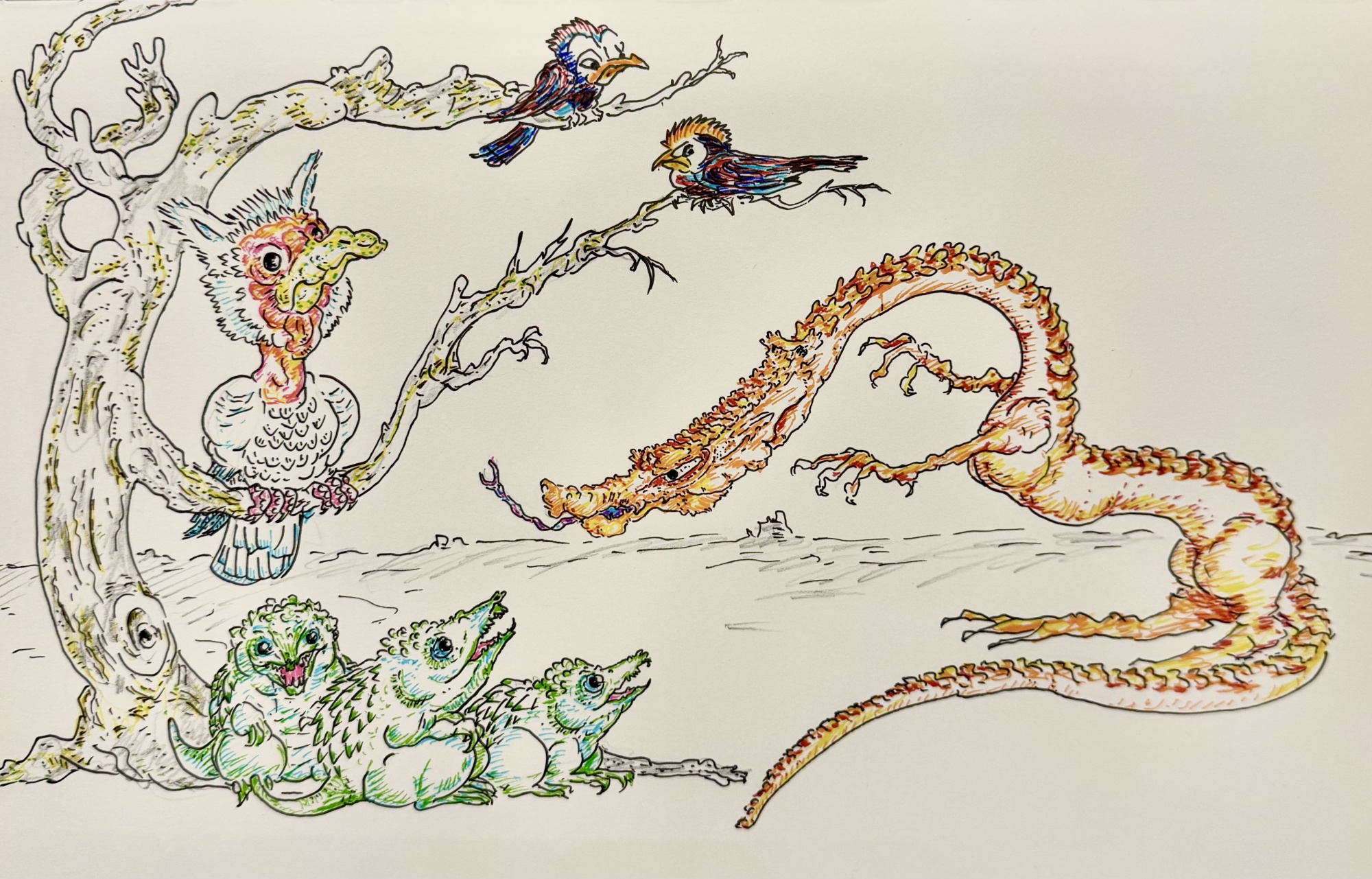 "Ooooh, tell us how you foiled the dot plot again, please!" Illustration by Howard Chua-Eoan/Bloomberg Notes: Please send leading indicators and feedback to Howard Chua-Eoan at hchuaeoan@bloomberg.net. Sign up here and find us on Bluesky, TikTok, Instagram, LinkedIn and Threads. | 








No comments:
Post a Comment