| Read in browser | ||||||||||||||
 Electric vehicle owners, rejoice. It's never been easier to find a fast charger. The US added plugs at a record rate last year, with a huge uptick in the fourth quarter. That's despite a slump in EV sales and the end of federal incentives. We also bring you the latest figures on China's green finance sector, which has gone from $1 trillion to about $6.8 trillion in just a decade, and a profile of Cao Renxian, an obscure billionaire who minted his fortune making industrial-scale batteries and is about to step into the global spotlight. Someone forward you this email? You can subscribe to Green Daily for free climate news to your inbox six days a week. Fast chargers for allBy Kyle Stock The time it takes to fuel an electric vehicle, long a stumbling block to EV adoption, is shrinking in the US, as more capable cars and trucks plug into a rash of new, high-speed charging machines. US charging networks added about 11,300 ultra-fast cords last year, up 48% from 2024, according to Paren, a data platform focused on EV infrastructure. And the high-speed buildout is only accelerating: In the fourth quarter, nearly one in four new chargers were capable of pumping at rates of 250 kilowatts or more, which can typically add 100 miles of driving range in less than 10 minutes. 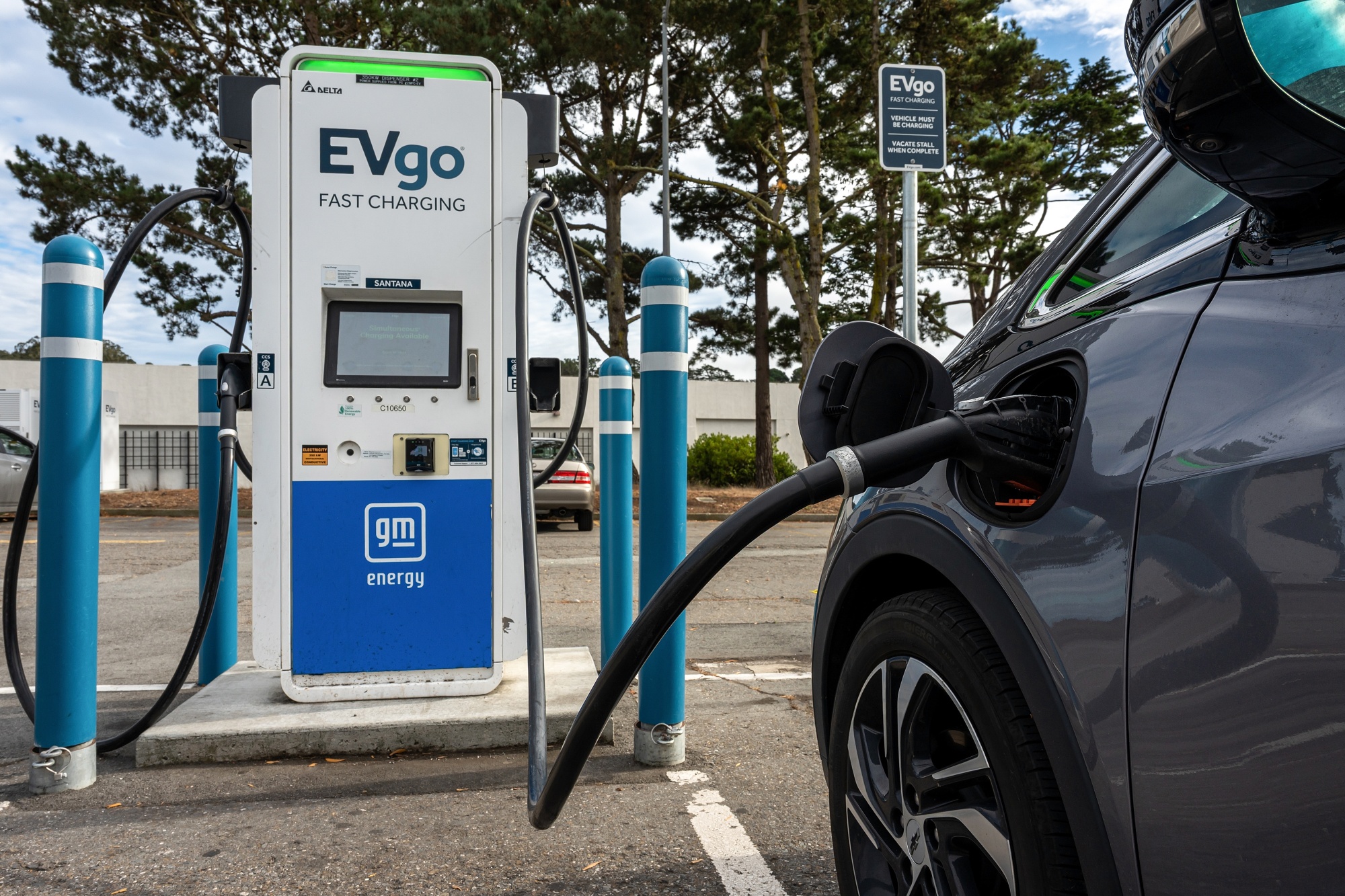 An EVgo fast charging station Photographer: David Paul Morris/Bloomberg "Rising charge rates are a significant tailwind," said Badar Khan, chief executive officer of EVgo Inc., one of America's largest charging networks. "If the energy is going in faster, you don't actually need higher utilization." In EVgo's two most recent quarters, utilization — a measure of how much time its chargers are occupied — dropped for the first time since the company's 2021 IPO, in part because its chargers were delivering more electricity per hour on average. The shift to speed should both delight drivers and bolster the business case for charging networks. Ultimately, faster charging may be the final nudge in converting another crowd of EV skeptics. 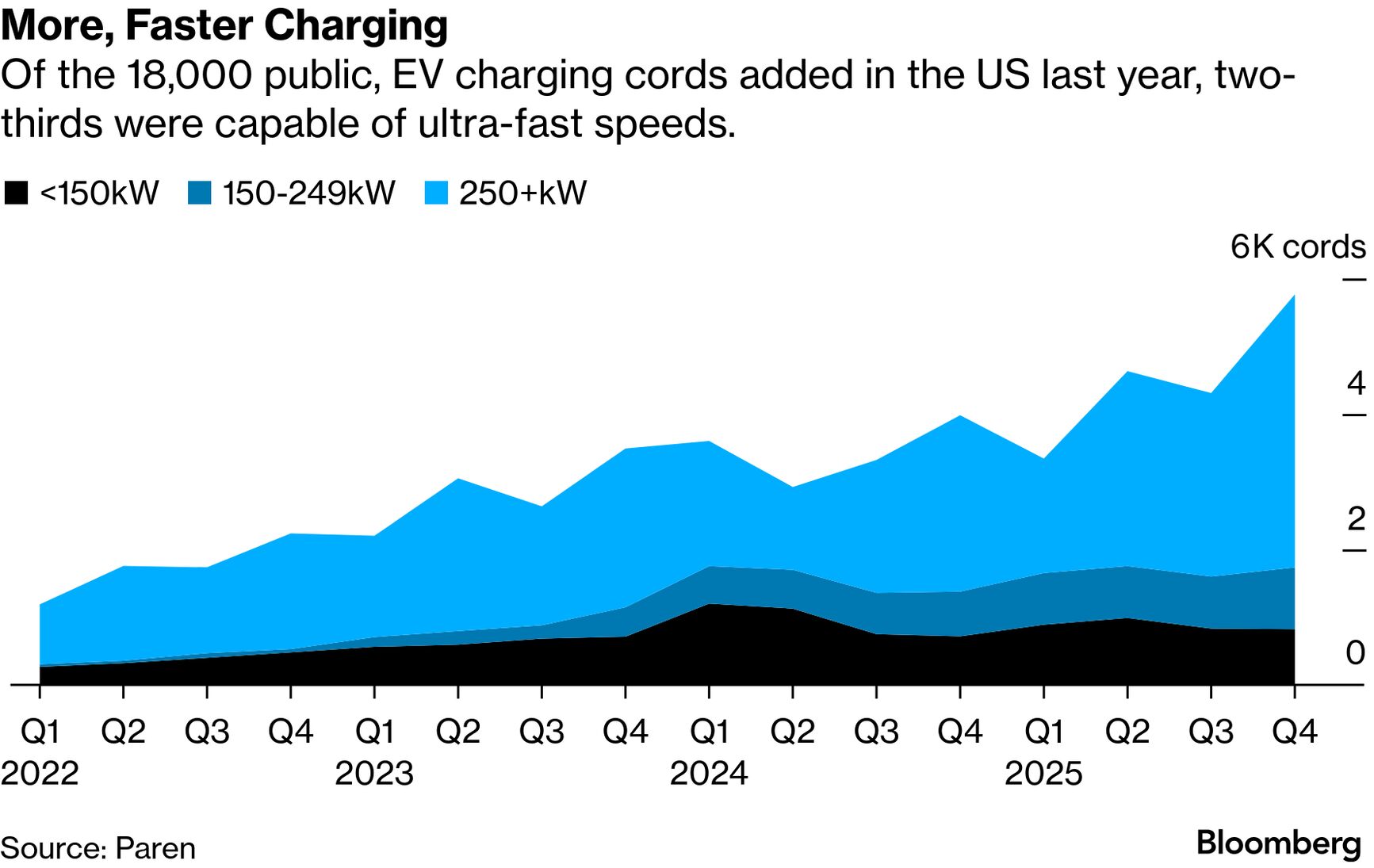 Charging speed is a complicated equation that depends on a range of things, from the type of car being charged to the ambient temperature. But the charger itself is typically the most important factor. A 300-kilowatt charger, all else being equal, can theoretically juice a 100 kilowatt-hour battery from empty to full in about 20 minutes, whereas it would take a 100-kilowatt charger three times as long. At EVgo, about 60% of the charging cords are ultra-fast — 350 kilowatts or better. That's up from 15% four years ago. "Pretty much everything we've been installing in the last two or three years is 350 [kilowatts]," Khan said. "If the driver is charging the same amount of kilowatt-hours, then the session times will go down." 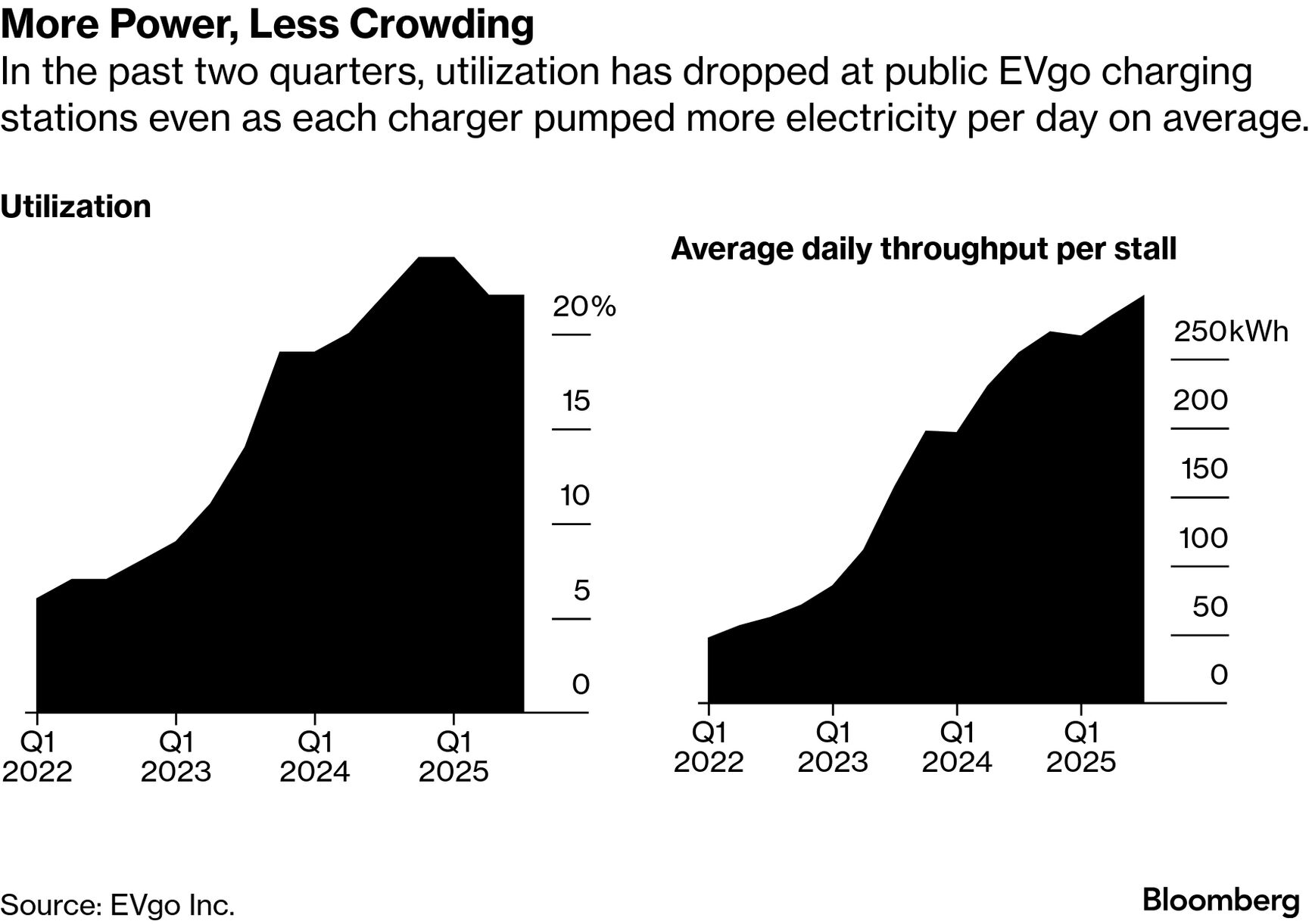 To date, charging networks have aimed for a narrow sweet spot when it comes to traffic, being busy enough to make money, but not so crowded as to put off drivers. With faster charging equipment —and cars capable of topping up more quickly — EV stations can pump more electrons in less time and help customers avoid lines. While it's far more expensive to build a fast station than a slower one, the push for speed may mean networks eventually won't need quite as many stations, according to Krishna Esteva, head of product at Stable Auto, a startup that helps networks decide where to build chargers.  The Electrify America mobile app Photographer: Jamie Kelter Davis/Bloomberg Ultimately, the charging race has engendered a virtuous cycle in the car world, according to Electrify America CEO Robert Barrosa. More and faster charging stations will spur EV sales, which, in turn, will pump up charging profits. "When you buy an electric car, that's the first thing you think about," he said. "We've got to get that calculus out of consumer minds to really make the transition happen faster." Read the full story, including how EVs are helping speed up charging. Upping the ante5 The number of minutes Chinese automaker BYD Co. says it takes to top up some of its recent EV models with 400 kilometers of range. The breakthrough isn't available in the US, though. Tesla's future"This quarter officially marks the fundamental shift from EV company to an all-in bet on robotaxi, energy and Optimus." Andrew Rocco Analyst, Zacks Investment Research Tesla reported a major slump in annual EV sales on Wednesday. The company plans to discontinue the Model S and X vehicles and devote that plant capacity to building humanoid robots. This week's Zero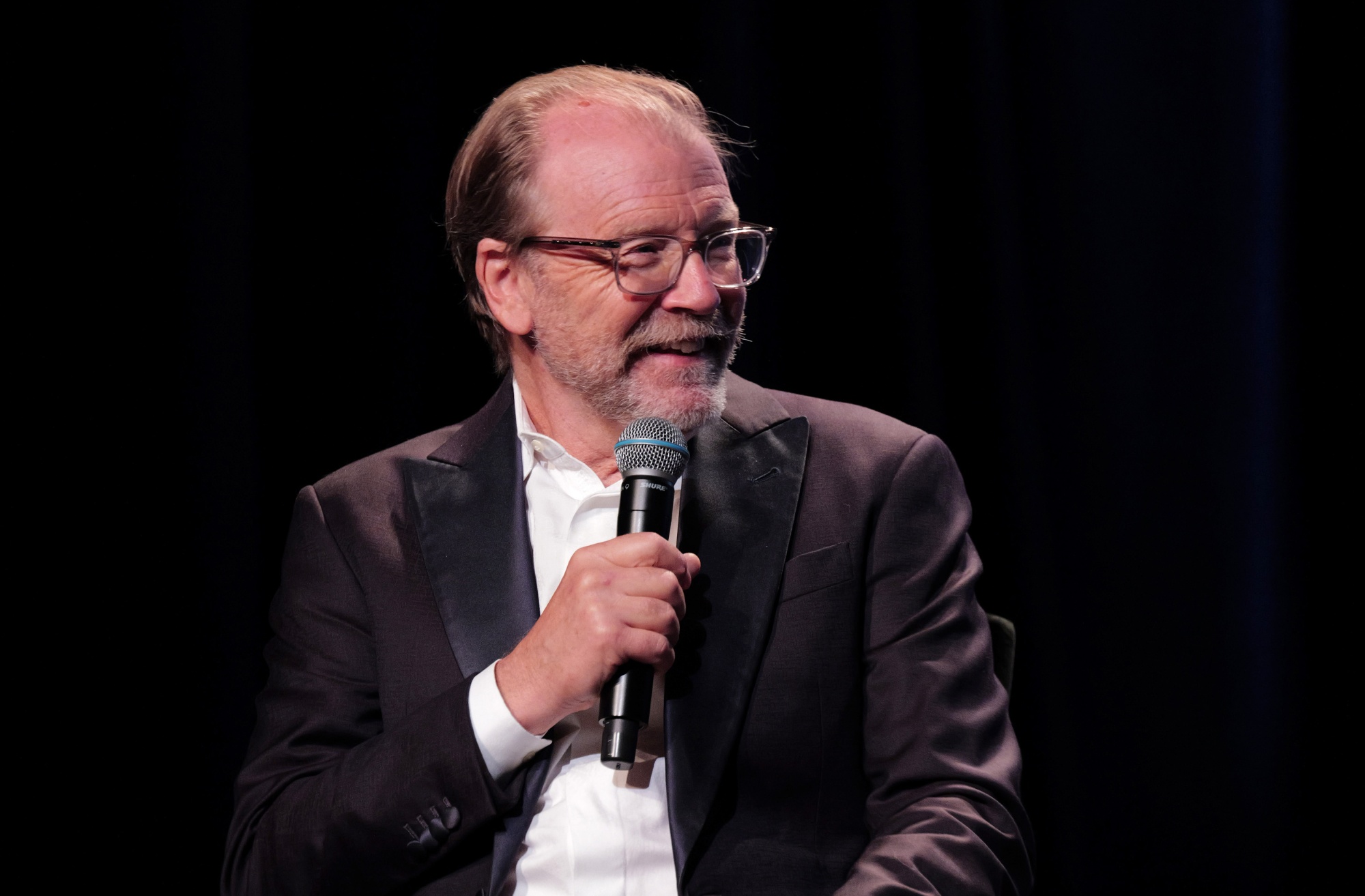 George Saunders Getty Images North America What is the best way to tell a climate story? This week on Zero, Akshat Rathi speaks with Booker Prize-winning novelist George Saunders. His new novel Vigil is an exploration of guilt, told on the deathbed of an oil executive haunted by ghosts. Rathi asks Saunders what he learned about climate change, his thoughts on whether AI complements or compromises human creativity, and why literature still matters in the era of TikTok. Listen now, and subscribe on Apple, Spotify, or YouTube to get new episodes of Zero every Thursday. A green finance behemothBy Lili Pike Growth in China's green finance sector has accelerated over the past decade and balances now total about $6.8 trillion, according to a former adviser to the nation's central bank. 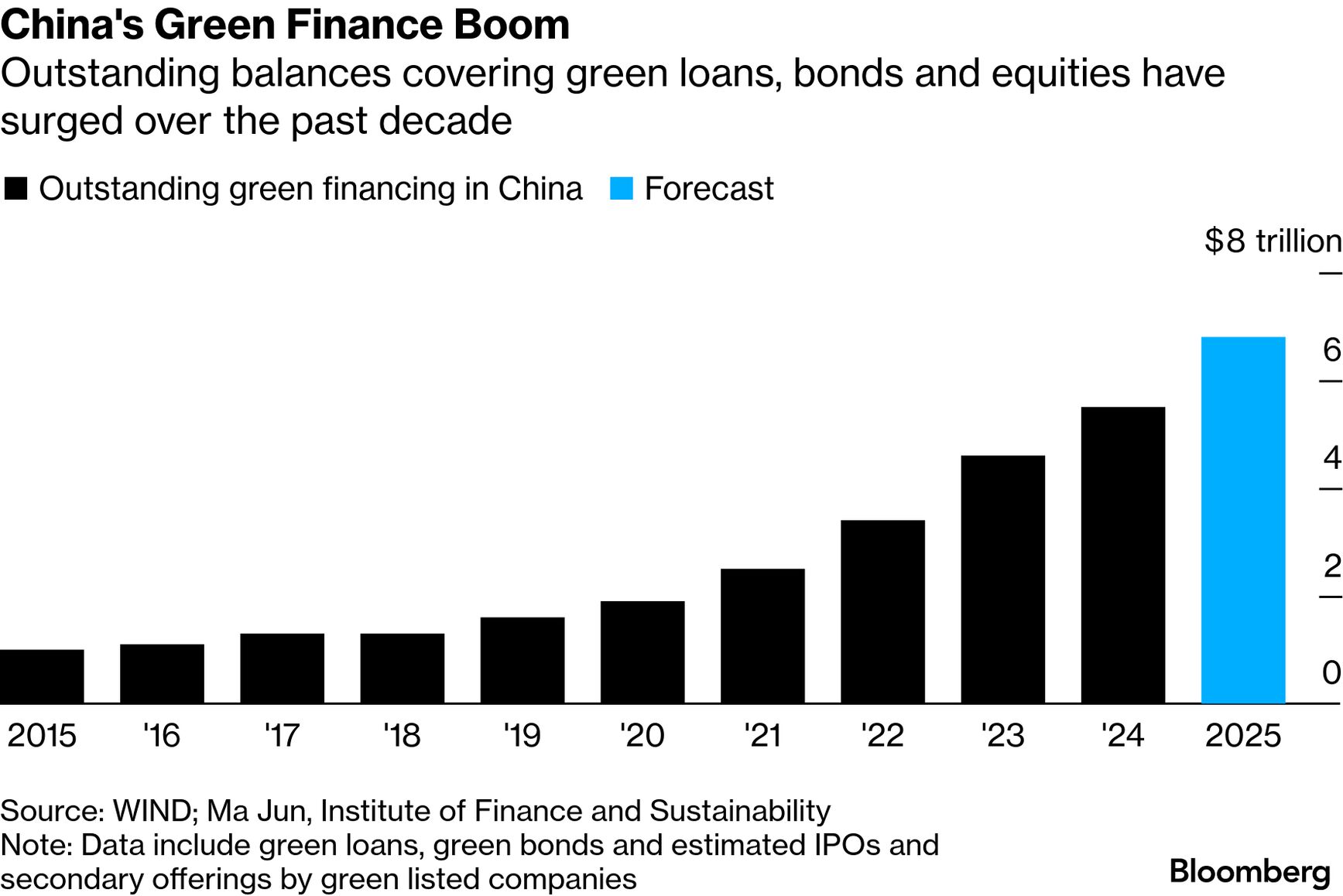 The value of outstanding green financing — covering green bonds, loans, and equities — has jumped from around $1 trillion in 2015, said Ma Jun, founder and president of the Beijing-based Institute of Finance and Sustainability and a former member of the monetary policy committee of the People's Bank of China. "By far this is the largest green finance system in the world," he said Wednesday, speaking at a United Nations Environment Programme Finance Initiative online event. Growth in the sector is likely to remain strong, according to Ma, who has led development of key policies. Read the full story on Bloomberg.com More from Green Snow-covered homes in Sharpsburg, Pennsylvania on Monday. Photographer: Justin Merriman/Bloomberg As weekend temperatures plummeted below freezing across the US, 27-year-old Jahdaya Francis turned off the radiators in her Yonkers, New York apartment and huddled around a small space heater. A few states away, in Prince George, Virginia, 36-year-old Samantha Smith shut off the electricity to half of the home she shares with her young daughter. "I'm sleeping in the living room with a heated blanket on my loveseat, wearing sweatpants, socks, a long T-shirt and a North Face jacket," Smith said. "But it's not very warm." The deep freeze gripping much of the US is colliding with some of the highest energy costs in years — further straining households already squeezed by stubbornly high food and housing prices. Read the full story about how much energy prices are rising. Cao Renxian is one of China's richest men in an industry the world can't live without, yet almost no one outside the business knows his name. That obscurity may not last much longer. Losses tied to floods in Southeast Asia may grow as much as 10-fold in the coming years due to the rise of extreme weather events, according to Willis Towers Watson. More from Bloomberg
Explore all Bloomberg newsletters. Follow us
You received this message because you are subscribed to Bloomberg's Green Daily newsletter. If a friend forwarded you this message, sign up here to get it in your inbox.
|
Thursday, January 29, 2026
The fast charging future is here





Subscribe to:
Post Comments (Atom)
Les entreprises continuent de parier sur Bitcoin, regard tourné long terme
Bienvenue dans la Daily du 29 janvier 2026.☕️ ͏ ͏ ͏ ͏ ͏ ͏ ͏ ͏ ͏ ͏ ͏ ͏ ͏ ͏ ...
-
Hollywood is often political View in browser The Academy Awards ceremony is on Sunday night, and i...
-
PLUS: Dogecoin scores first official ETP ...


No comments:
Post a Comment