| Some Americans who are behind on their student loans got a reprieve this month when the Education Department pulled back on its plan to take the money directly from their paychecks. Education policy reporter Liam Knox writes today about why the turnabout is notable. Plus: Can companies get men to buy in to new contraceptives in development? If this email was forwarded to you, click here to sign up. President Donald Trump entered his second term with a cohesive and aggressive student loan agenda: erase the forgiveness measures that were a hallmark of Joe Biden's administration, replace lenient repayment plans with more stringent ones, limit the government's role in future student lending and crack down on delinquent borrowers. His administration quickly followed through. In the first 100 days it raised eligibility requirements for public-service loan forgiveness and overhauled Biden-era repayment programs. In May it restarted collection efforts for the first time since the Covid-19 pandemic; Education Secretary Linda McMahon said in a news conference this month that the government has since recouped around half a billion dollars. And in December the administration announced it would begin garnishing the wages of borrowers in default—the millions of Americans who haven't made a payment on their student loans in more than a year. But three weeks later, Trump suddenly reversed course. Just days after the first cohort of 1,000 defaulters was supposed to receive notice that their paychecks would be lighter, the Education Department said it was halting wage garnishment indefinitely. The pause came on the heels of a major affordability push from the White House that has defined the first month of a consequential midterm election year. Trump's proposals have touched on a slew of kitchen-table issues, including housing accessibility, credit card debt and surging electricity prices. 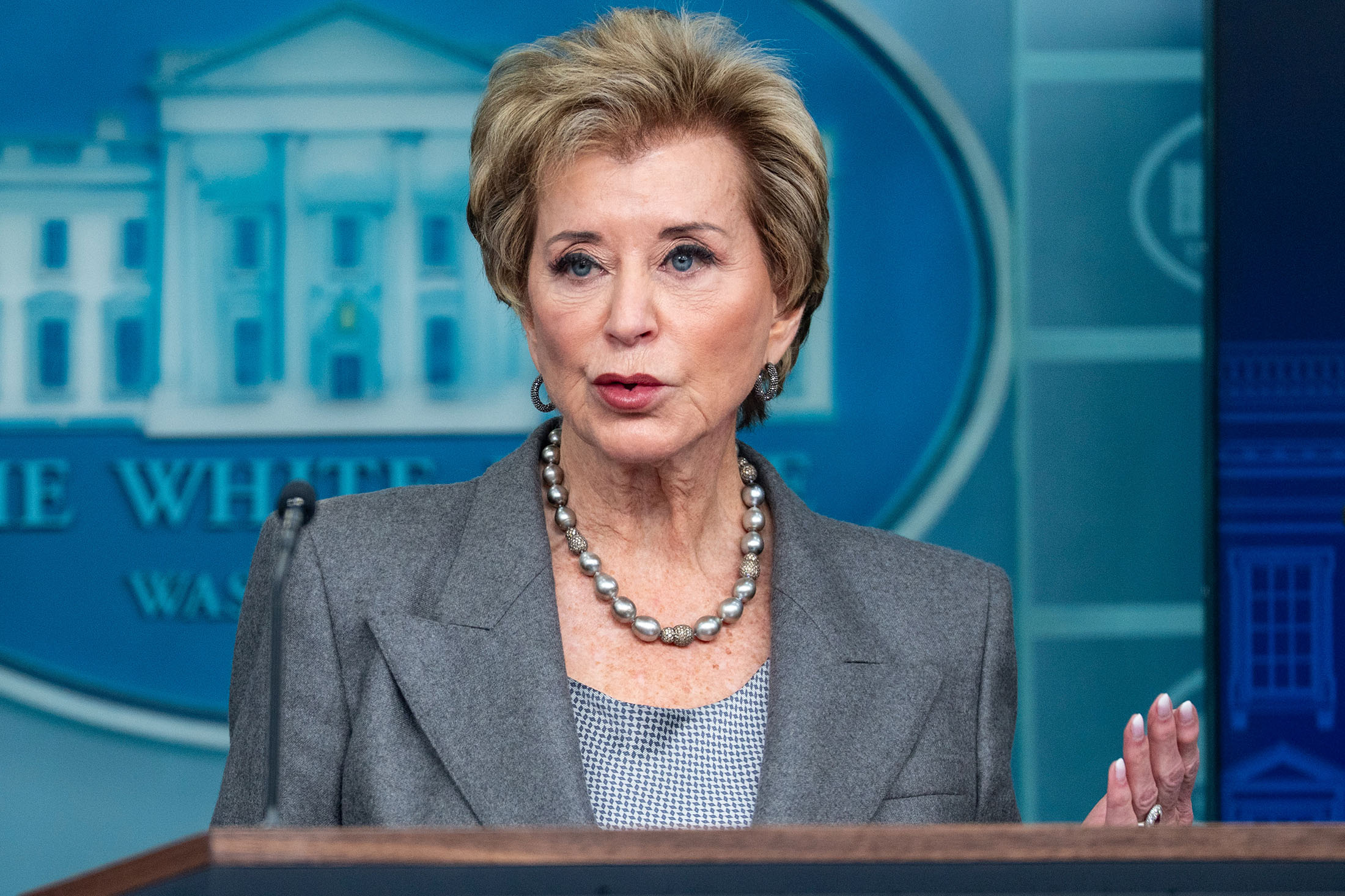 McMahon at a White House news conference in November. Photographer: Bonnie Cash/Bloomberg The government can seize up to 15% of a defaulted borrower's salary; it can also withhold tax refunds. That, when combined with resumed regular collections, has the potential to put a dent in many constituents' finances—just as Trump and Republicans try to convince voters that they're the party of affordability. Many Democrats who put the issue at the center of their campaigns won office decisively last fall. With roughly 40 million Americans holding a collective $1.6 trillion in student loans, that's a lot of voters. Education Department officials said the pause is temporary as they implement new repayment options and give borrowers a chance to take advantage. And it's not the first time the administration has abruptly abandoned more drastic student debt policies: Last summer it scrapped a plan to offset defaulted borrowers' Social Security benefits, days before it was set to begin. But the timing of the garnishment pause has raised eyebrows among advocates and researchers. Protect Borrowers, a debt relief advocacy group, attributed the move to "months of pressure" from critics and borrowers "amidst the growing affordability crisis." The Committee for a Responsible Federal Budget, a nonpartisan think tank, called the move an "incoherent political giveaway." There are currently 5 million borrowers in default, according to government data. But that number could balloon this year: An additional 6 million borrowers are in delinquency, according to an analysis from the American Enterprise Institute. Legislative changes to student debt relief, such as the elimination of some income-based repayment programs for new borrowers, could exacerbate the default rate. Even Americans who make their payments on time often struggle to manage their federal student debt burden, an average of around $39,000 per borrower, according to the Education Data Initiative; federal loans make up more than 90% of all US student debt. And more than 40% of borrowers report making trade-offs between student loan payments and basic needs, according to a December survey from The Institute for College Access and Success. The Trump administration is attempting to position itself as a champion of working people and Republicans as voters' best chance at lowering living expenses. Hard-liners in the administration want to crack the whip on borrowers, saying the string of reprieves during the pandemic and under Biden have led them to brush off repayment responsibilities. The White House's about-face on garnishing wages shows that those may be contradicting goals. As midterm campaign season gets underway, Trump will have to decide whether the student loan crackdown he promised is worth the political risk. | 









No comments:
Post a Comment