| Read in browser | ||||||||||||||
 While parts of the East Coast gear up for another snowstorm, the weather is different in the western US. There, snow has been in short supply and ski resorts are suffering. As drought conditions become more common, resorts and state water agencies are turning to cloud seeding to make it snow. Today's newsletter looks at their efforts and why leading researchers are skeptical. Plus, your weekend listen and read. Let it snowBy Kyle Stock Despite a barren start to Colorado's ski season, Winter Park Resort opened on Halloween and served up holiday powder. The ski area's secret is a contraption a few miles upwind of the chairlifts that looks like a meat smoker strapped to the top of a ladder. When weather conditions are just right, a Winter Park contractor fires up the machine, burning a fine dust of silver iodide into the sky — a process known as cloud seeding. Ideally, the particles disappear into a cloud that is cold enough and wet enough to produce snow, but may need a nudge. The silver iodide becomes the nuclei for water droplets, like iron filings to a magnet. Those droplets freeze and fall from the sky as snowflakes, freshening up the slopes of the resort as it tries to lure the Gore-Tex-clad masses between Denver and larger, busier ski destinations further west. Doug Laraby, who has helped run Winter Park for nearly four decades, says the resort leaned heavily on its cloud seeding equipment over the Christmas holiday, sprinkling the skies as fresh powder fell days before the critical New Year's weekend. At the moment, Winter Park has more snow than Breckenridge, Keystone and a host of bigger resorts nearby. "For us," Laraby explains, "that was a million-dollar storm." 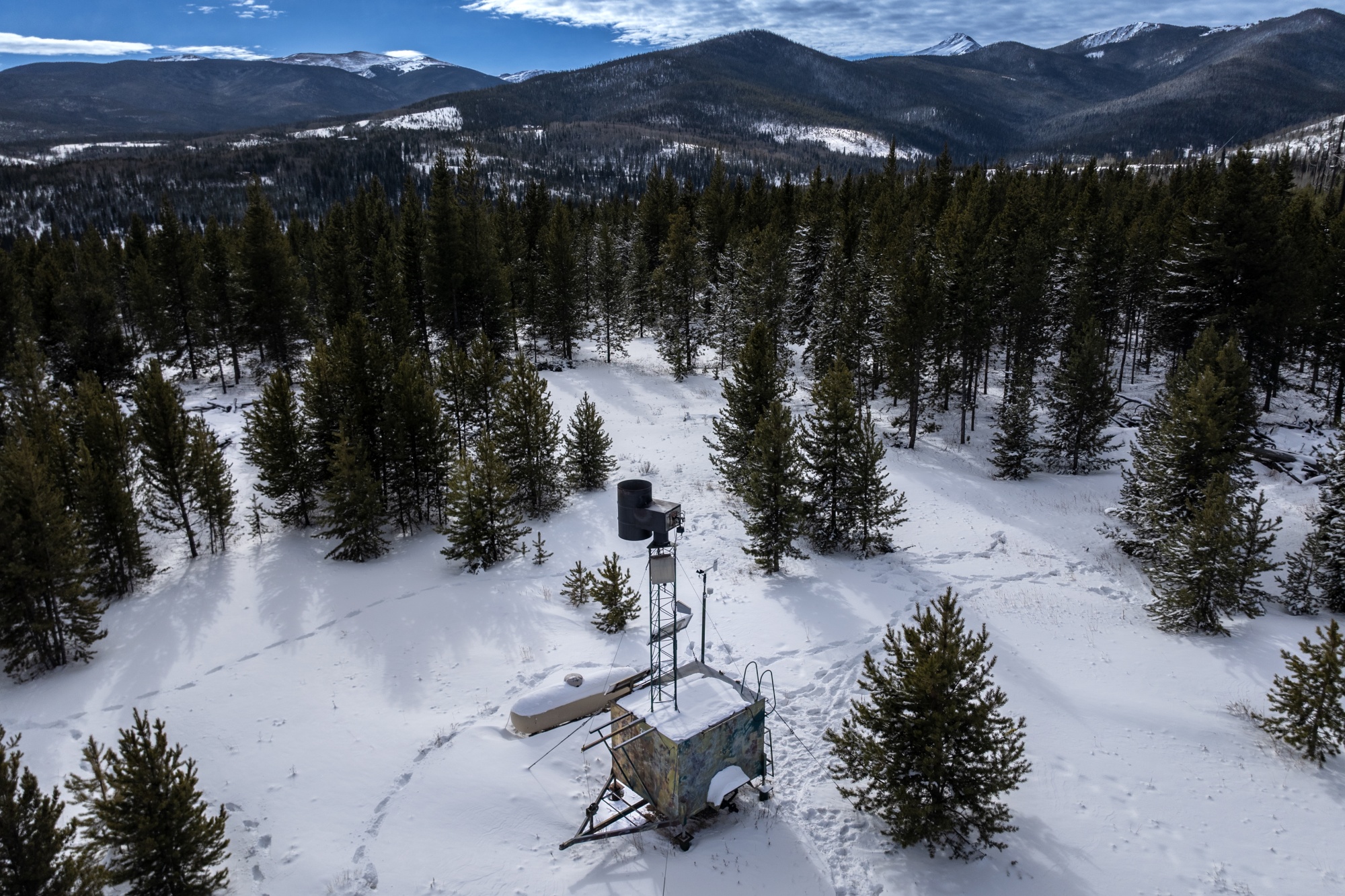 A cloud seeding generator near Winter Park. Photographer: Chet Strange/Bloomberg Resorts are increasingly seeking solutions to freshen up the brown slopes spanning the American West this winter, even as the East Coast gears up for a major storm. Last month, Vail Resorts Inc. — which owns nearly 50 resorts across the US and Canada — said it would miss revenue projections due to subpar snowfall this season. The dramatic lack of precipitation in the Rockies "limited our ability to open terrain" and, in turn, crimped spending by both locals and destination guests, Chief Executive Officer Rob Katz said in a statement. In a battle to improve — or at least maintain — snowpack in the face of rising temperatures and drought, Alterra Mountain Co.-owned Winter Park is one of a growing number of groups in the American West doubling down on cloud seeding, from state governments and ski hills to utilities and watershed management agencies. They're banking on the strategy to buoy the $6 billion US ski industry, while keeping rivers and reservoirs at healthy levels come spring. Despite the promise, though, companies are still trying to amass data showing the technology can actually deliver appreciable amounts of powder. And scientists studying cloud seeding have cast doubt on just how effective it is. Katja Friedrich, an atmospheric science professor at the University of Colorado, concedes that cloud seeding works in a lab. "But out there," she says, gesturing to cirrus clouds sweeping over the Front Range outside of her office, "it's a totally different business." 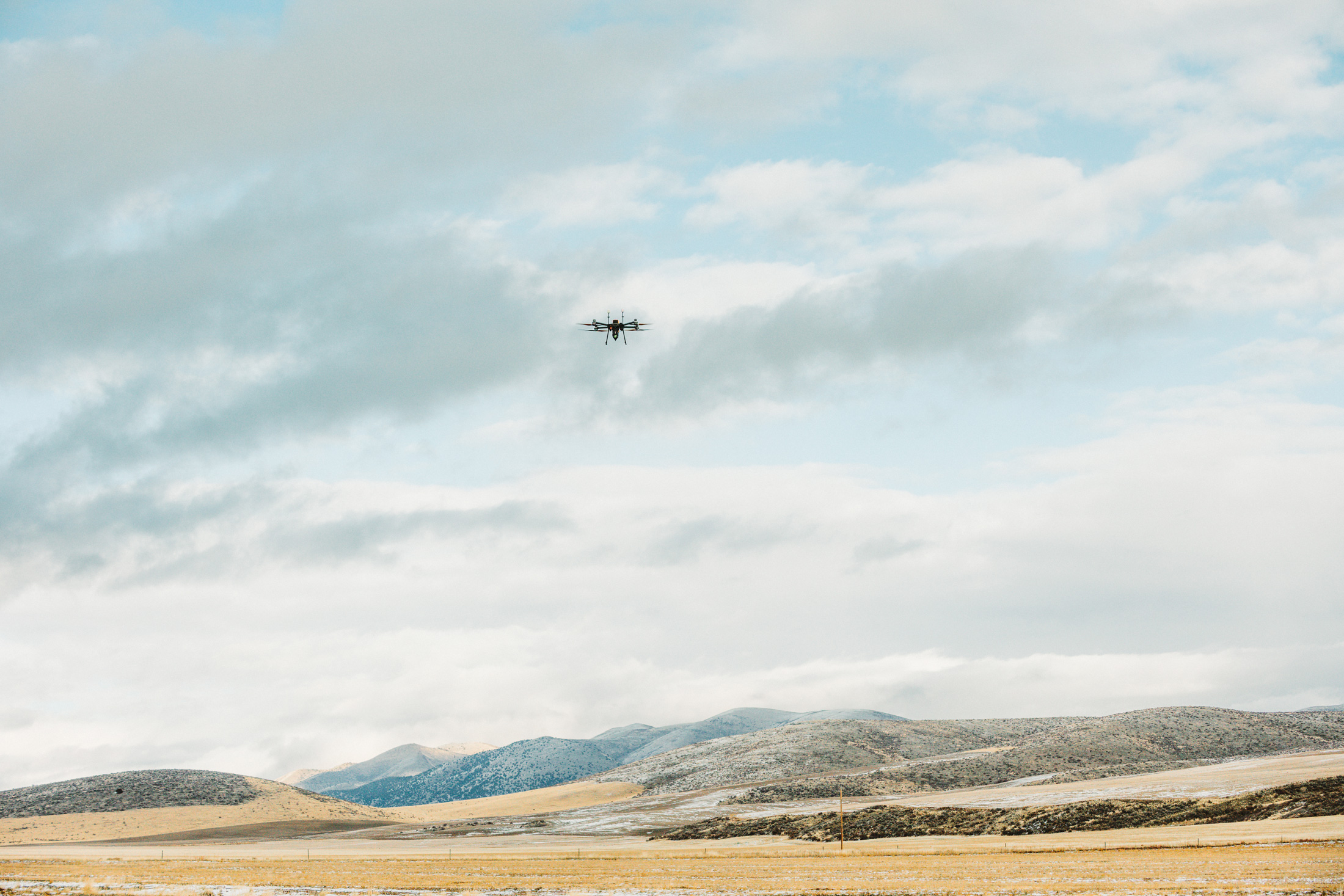 A Rainmaker drone flying near Pocatello, Idaho. Photographer: Nico Abegg-Guzman Private companies are playing a growing role, most notably Rainmaker Technology Corp., a startup that is now the lead cloud seeding contractor for Utah, which has built one of the most aggressive programs in the American West. From a warehouse in Salt Lake City, founder Augustus Doricko, a 25-year-old with a resplendent mullet and whisper of a mustache, manages a crew of 120, mostly young people working to make it snow on mountains they might otherwise be climbing or skiing. This year, the state of Utah will pay Rainmaker $7.5 million, part of a cloud seeding blitz that began three years ago. With the Great Salt Lake at historic low levels, Utah lawmakers approved a tenfold increase in funding, committing at least $5 million a year to operations and another $12 million to upgrade and expand a fleet of almost 200 cloud seeding machines on the ground. Rainmaker is charged with generating enough snow to help partially refill the lake. The company also has a contract with Snowbird Resort, located to the east of Salt Lake City, and much of its seeding will happen near Powder Mountain and Snowbasin resorts, located further north, although neither ski area is a client. "Anything we can do to increase water levels is going to be well worth the funding," says Jonathan Jennings, a meteorologist with the Utah Department of Natural Resources. When Doricko visits potential customers, be they utilities, ski resorts or state agencies, his sales script is simple: "It's the only way you can bring new water supply to the Rocky Mountain West." More often than not these days, the pitch lands. Idaho has also hired Rainmaker this winter, eager to fill its reservoirs and keep farmers happy. All told, the company has about 100 drones flying across Western skies. "I understand why people are buying it, because they're so desperate," Friedrich says. "But if you ask me, there's no scientific proof" that it produces a meaningful amount of water. But powderhounds are increasingly convinced: When the storms rolled through the state Dec. 28, Winter Park says its cloud seeding efforts conjured 12 inches of snow, triple what fell on Vail. "If you ask me, it enhances the efficiency of these storms," Laraby says. "I think it's awesome." Read the full story to see how conspiracy theorists are also impacting the industry. Water on the cheap25 The United Arab Emirates is heavily reliant on desalination to meet its growing water requirements. But that's 25 times more costly than cloud seeding, according to Abdulla Al Mandous, director general of the National Center of Meteorology. Combatting misinformation"I understand why emotions are running high and people are scrutinizing cloud seeding to see if it's to blame. Categorically, it's not." Augustus Doricko Founder, Rainmaker Conspiracy theorists latched onto Rainmaker's operations in Texas as the cause of deadly flooding last July, despite evidence to the contrary. Overcoming misinformation is another challenge the cloud seeding industry faces. Readers really liked🚧Data centers have a secret source of carbon emissions Your weekend listen What is the best way to tell a climate story? This week on Zero, Akshat Rathi speaks with Booker Prize-winning novelist George Saunders. His new novel Vigil is an exploration of guilt, told on the deathbed of an oil executive haunted by ghosts. Rathi asks Saunders what he learned about climate change, his thoughts on whether AI complements or compromises human creativity, and why literature still matters in the era of TikTok. Listen now, and subscribe on Apple, Spotify, or YouTube to get new episodes of Zero every Thursday. Your weekend readNew York's congestion pricing plan was — to put it delicately — a contentious topic before its implementation and in the immediate aftermath. But with a year of data, the results show a wealth of benefits from more on-time buses and foot traffic to more revenue for the MTA to perform vital upgrades. (And, of course, less congestion.) Residents in the outer boroughs and suburbs of Manhattan were among the most vocal opponents, but the data reveals something else: They've benefited the most in terms of travel times. This weekend's excerpt comes from David Zipper, who covered the new findings for CityLab. 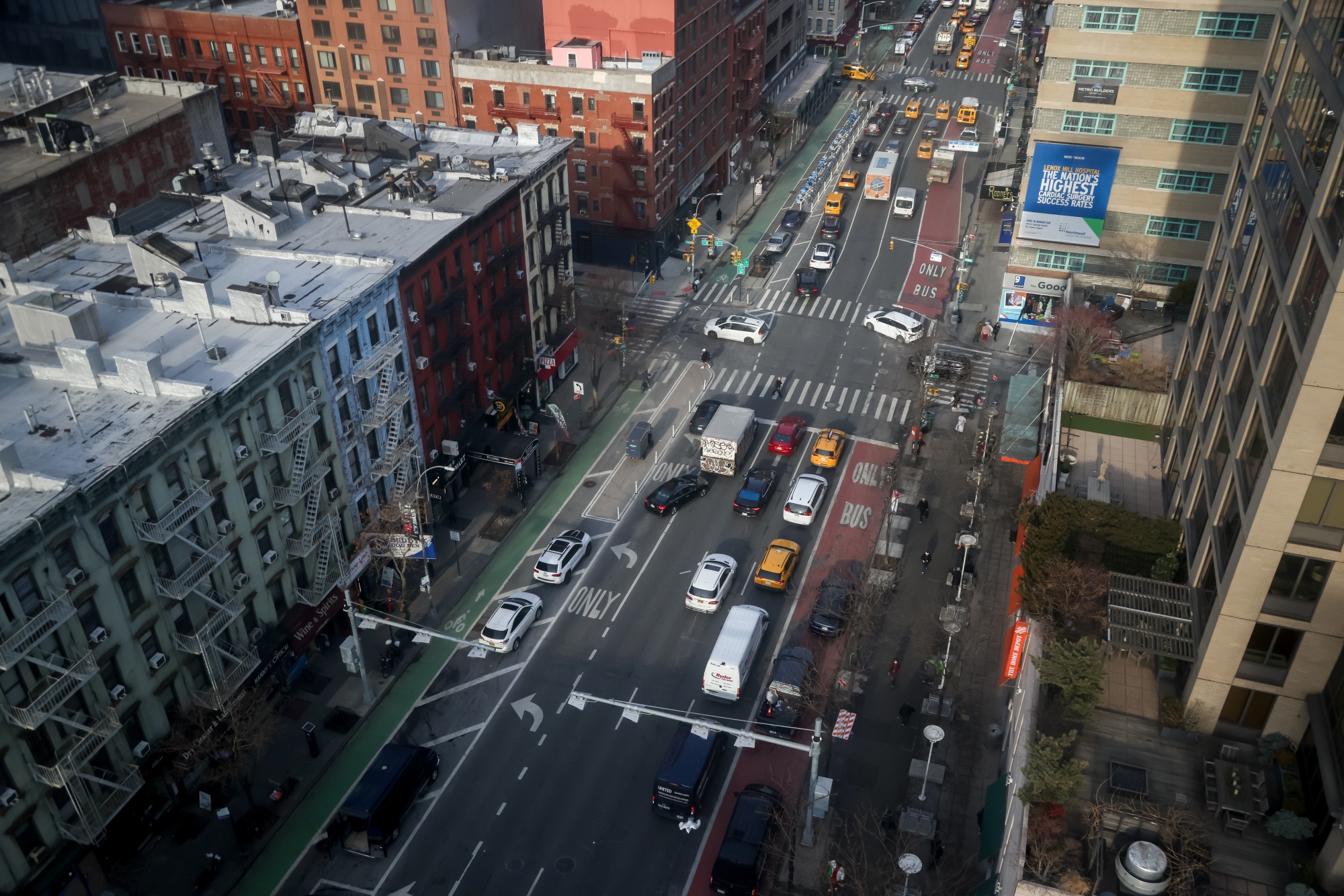 E-ZPass readers and license plate-scanning cameras over First Ave. Photographer: Michael Nagle/Bloomberg Along with upgrading transit service, a top goal of New York City's congestion pricing program has been untangling gridlock within Manhattan's central business district. "The project's purpose is to reduce traffic congestion in the Manhattan CBD," MTA official Allison de Cerreño declared in 2022, more than two years before most drivers began paying $9 to enter parts of the island during peak hours. Data collected since the program began in January 2025 show that Manhattan's streets are indeed flowing faster, with taxis and buses reporting quicker trips inside the congestion relief zone. But here is a twist: The majority of drivers' time savings has accrued to those traveling outside the toll zone entirely — for instance, those commuting from Brooklyn to Queens or within Northern New Jersey. While Manhattan has been in the spotlight, local trips taken by people in outer boroughs and suburbs — places home to many of congestion pricing's most vociferous critics — have reclaimed the most travel time. Contrary to widespread fears, there is no evidence that drivers seeking to avoid the toll have slowed journeys in places like Staten Island or the Bronx. That is the unexpected finding of a new National Bureau of Economic Research working paper. A group led by Yale economist Cody Cook, Stanford economist Shoshana Vasserman, and Google researcher Aboudy Kreidieh used detailed trip data from Google to reach their conclusions, which offer lessons not just for New Yorkers, but also for those hoping to introduce congestion pricing elsewhere. Drivers, it appears, need not go downtown to come out ahead. As they expected, the researchers determined that the $9 charge has sped up vehicle journeys into Manhattan, nudging some people who would otherwise drive at peak times to instead ride transit, drive earlier or later, or forgo the trip entirely. Because traffic thinned, those still opting to enter Manhattan by car saved roughly 83,000 hours per week, averaging around three minutes per journey, according to the NBER paper. But drivers who never ventured into the toll zone also saved time: As a group, this cohort, including those traveling within Bergen County or from the Bronx to Brooklyn, racked up savings exceeding 461,000 hours per week. An average journey became just eight seconds faster, but because there were over 100 times more of them than Manhattan-bound trips, their aggregated savings were more than five times greater. To understand why congestion pricing's total time savings mostly accrued to those traveling outside Manhattan, consider that most drivers heading into the island traverse roadways outside the congestion relief zone as they approach it from Long Island, New Jersey or wherever they began their journey. By shrinking the number of peak-time cars flowing into the toll zone, congestion pricing reduces traffic on outlying roadways, where remaining drivers — including those who never had Manhattan on their itinerary — can now go faster. A climate group violationA US judge on Friday declared the Energy Department violated federal law when it brought on a group of five researchers who met in secret last year to produce a report downplaying the severity of climate change. The Environmental Defense Fund and Union of Concerned Scientists argued in their lawsuit that the team of researchers, dubbed the Climate Working Group, was an advisory committee that's legally required to hold open meetings, provide open records, and maintain balance and influence in their work under federal law. US District Judge William Young concurred, saying the group was "not exempt" from the law, though no further action by the Energy Department is needed. As part of the court proceedings, the Trump administration produced thousands of records tied to the Climate Working Group's meetings, discussions, and drafts. The Energy Department disbanded the team in September, but its influence lives on. The group published a controversial report last summer that many climate scientists accused the administration of misrepresenting their work. The Environmental Protection Agency repeatedly cited the report in its proposal to rescind the endangerment finding, which underpins federal US climate standards for cars and other emission sources. Young dismissed allegations against the Environmental Protection Agency, which is set to soon release its final decision on the endangerment finding. The Energy Department didn't respond to a request for comment. More from Bloomberg
Explore all Bloomberg newsletters. Follow us
You received this message because you are subscribed to Bloomberg's Green Daily newsletter. If a friend forwarded you this message, sign up here to get it in your inbox.
|
Saturday, January 31, 2026
Cloud seeding’s “million-dollar storm”





Subscribe to:
Post Comments (Atom)
-
Revolutionary Stem Cell & PRP —Start Your Journey Today ...
-
You’ve shown interest in Regenerative Medicine ...


No comments:
Post a Comment