| Read in browser | ||||||||||||||
 For years, many Europeans have enjoyed what Americans can't have. Balcony solar has taken off there, while American homes and apartments have been left in the dark. But that may be changing: California recently introduced legislation that would legalize installing cheap DIY solar systems to protect against blackouts and help with affordability. It's not the only state, either. That's the subject of today's newsletter. Plus, our San Francisco bureau was busy yesterday with visits from Governor Gavin Newsom and PG&E Chief Executive Officer Patti Poppe. We've got the details. For more on one of the world's biggest economies and its global influence, subscribe to Bloomberg's weekly California Edition newsletter. DIY solar punkBy Todd Woody As electricity prices soar and rooftop solar subsidies vanish, some US renters and homeowners are surreptitiously installing solar panels on balconies and backyards without their utility's permission. Legislation recently introduced in nearly two dozen states would legalize "plug-in solar" systems, jumpstarting a nascent market for an affordable source of renewable energy. Also called balcony solar, such systems usually comprise two to four solar panels that are plugged into wall outlets. They typically cost about $2,000 or more and generate enough electricity to power a refrigerator, electronics and lights, potentially shaving several hundred dollars a year from utility bills. Some plug-in solar systems come with batteries to store power for use during peak demand when electricity rates spike and when storms or heat waves knock out the grid. 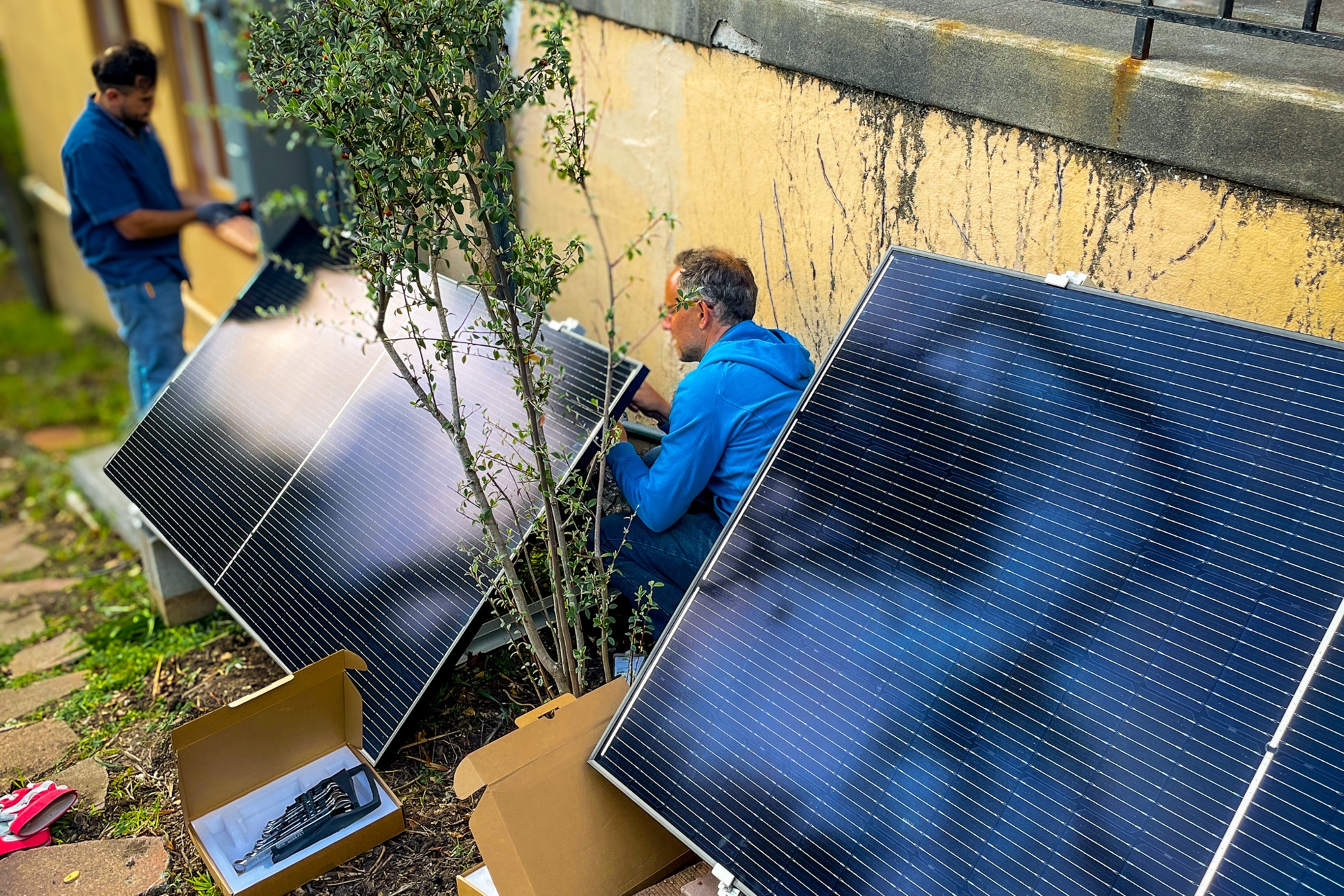 solar panels Source: Bright Saver Millions of balcony solar systems have been deployed in countries like Germany, which regulates the technology. But only about 5,000 have been installed in the US, according to advocates, most without utility authorization. That's because plug-in solar has remained in the shadows due to a lack of safety standards and often costly requirements imposed by utilities, but that's changing. Utah in 2025 enacted a law allowing plug-in solar without utility approval and other states are considering similar legislation, including New York and California, the nation's largest solar market. "The impact of California passing legislation would be huge and will get manufacturers to come into the market," said Kevin Chou, cofounder and executive director of Bright Saver, a Bay Area nonprofit that sells do-it-yourself plug-in solar systems and has pushed to legalize the technology. Under the legislation introduced in January in California, residents could install plug-in solar systems without utility authorization. But those systems couldn't generate more than 1.2 kilowatts of electricity and must be certified by a nationally recognized testing lab. Legislation in other states contains similar requirements. Utah's Republican-dominated legislature unanimously approved a plug-in solar bill in 2025, and the state's Republican governor signed it into law. Although pro-renewable energy Democrats hold a supermajority in the California legislature, the bill introduced by state Senator Scott Wiener, who is running to replace US Representative Nancy Pelosi, is likely to face opposition from some landlords, homeowners associations and utilities, according to Chou. Utilities have expressed concern about plug-in solar's impact on the ability to balance the grid if the systems feed excess electricity to the network without their knowledge. Landlords may worry about solar panels falling off balconies or how they change the look of a building, he said. Homeowners associations, which regulate everything from house colors to landscaping, may object to the aesthetics of backyard solar. California's three big investor-owned utilities currently require plug-in solar owners to apply and secure approval to interconnect to the grid, just as owners of rooftop solar must do. Chou estimates that more than a thousand plug-in solar systems have been installed in California. But PG&E and San Diego Gas & Electric have yet to receive any interconnection applications for the equipment, according to spokespeople. Read the full story to find out what the future holds for US balcony solar. Space solar4,000 The number of satellites startup Reflect Orbital wants to put in space. The reason? Using them as mirrors to reflect sunlight on solar farms at night. Brave new utility"PG&E is a very different company than it was prior to bankruptcy." Gavin Newsom Governor, California Newsom said he no longer favored having the state get into the utility business on his visit to the bureau, where he also spoke about Trump, this year's midterms and California's proposed wealth tax. The affordability fight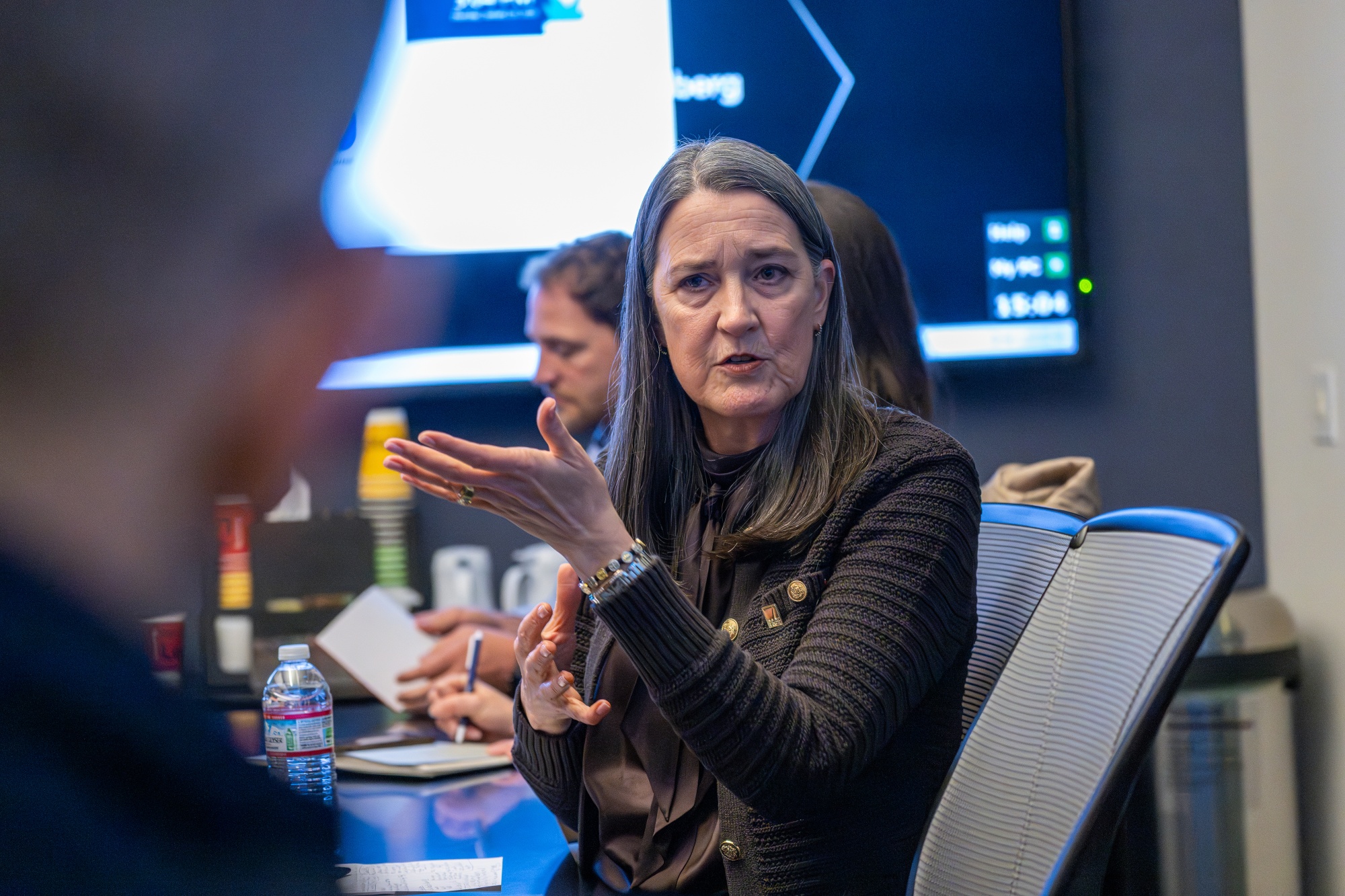 PG&E CEO Patti Poppe during an interview in San Francisco on Thursday. Photographer: David Paul Morris/Bloomberg By Mark Chediak and Michelle Ma PG&E Corp. head Patti Poppe says her company's best defense against politicians vowing to break it up is to lower her customers' bills. California's largest utility finds itself under attack, five years after it emerged from bankruptcy. Billionaire investor Tom Steyer, now running for governor, airs TV ads pledging to end the company's monopoly and make electricity more affordable. Officials in PG&E's former hometown of San Francisco, angered by a recent blackout that darkened a third of the city, want to seize its equipment. Poppe, the utility's chief executive officer since 2021, says PG&E is focused on delivering reliable service and steady bills, after years of increases. Those elements are key to winning back customer trust, battered after a string of devastating wildfires blamed on the company's equipment. PG&E's electric rates more than doubled between 2016 and 2024, as the state ordered the company to pour more money into wildfire prevention and infrastructure upgrades. Since then, however, residential rates have dropped about 11%, according to the company, and PG&E is seeking regulatory approval to keep them level through 2027. "We believe it is no longer enough for utilities to say they care about affordability; regulators and investors will demand proof of proactive behavior," wrote Jefferies Financial Group Inc. analysts in a January note. Read the full story to hear how PG&E is managing data center power demand. This week's Zero What is the best way to tell a climate story? This week on Zero, Akshat Rathi speaks with Booker Prize-winning novelist George Saunders. His new novel Vigil is an exploration of guilt, told on the deathbed of an oil executive haunted by ghosts. Rathi asks Saunders what he learned about climate change, his thoughts on whether AI complements or compromises human creativity, and why literature still matters in the era of TikTok. Listen now, and subscribe on Apple, Spotify, or YouTube to get new episodes of Zero every Thursday. More from Green Pricing information near a BYD Seal at a Berlin dealership. Photographer: Liesa Johannssen/Bloomberg Chinese automakers built nearly one in 10 passenger cars sold in Europe last month, a record share that caps a year of rapid growth led by brisk sales of hybrid and battery-powered vehicles. With December's 9.5% share of the European car market, Chinese brands outsold South Korean rivals including Kia Corp. on a quarterly basis for the first time, based on figures from researcher Dataforce. BYD Co. and its peers are poised to make further inroads as trade barriers fall and a Chinese export push accelerates. The advance was strongest for the electrified cars that account for the bulk of Europe's growth. Chinese automakers used their competitive edge in battery technology to win customers for EVs and hybrid-electric vehicles from Spain to Greece, Italy and the UK. Read the full story. China's $6.8 trillion green finance boom is expected to keep growing, according to a former adviser to the nation's central bank. "By far this is the largest green finance system in the world," said Ma Jun, who's now the founder and president of the Beijing-based Institute of Finance and Sustainability. Companies that help firms comply with climate rules are seeing an uptick in M&A deals, amid a bet that a wave of new regulation will eventually reverse the sector's sharp downturn. While some governments are weakening or scrapping regulations, 39 jurisdictions — covering about 60% of the global economy — are adopting or introducing rules. More from Bloomberg
Explore all Bloomberg newsletters. Follow us
You received this message because you are subscribed to Bloomberg's Green Daily newsletter. If a friend forwarded you this message, sign up here to get it in your inbox.
|
Friday, January 30, 2026
California’s DIY solar push





Subscribe to:
Post Comments (Atom)
The Cycle Has Turned for These Overlooked AI Plays
After a 55% crash, this sector is back – and AI is fueling the move… The Cycle Has Turned for These Overlooked...
-
PLUS: Dogecoin scores first official ETP ...
-
Hollywood is often political View in browser The Academy Awards ceremony is on Sunday night, and i...


No comments:
Post a Comment