| Read in browser | ||||||||||||||
  Welcome back to Pursuits Weekly, our look at the world's biggest culture stories, as well as ideas and recommendations around travel, dining and art. This week, with great sadness, we're writing about Rob Reiner — not about his tragic death, but about his supreme achievements. Sign up here to get this newsletter every Saturday in your inbox. And definitely check out our massive Where to Go in 2026 package, travel czar Nikki Ekstein's annual labor of love, which we'll be coming back to every week for the next few months. Love story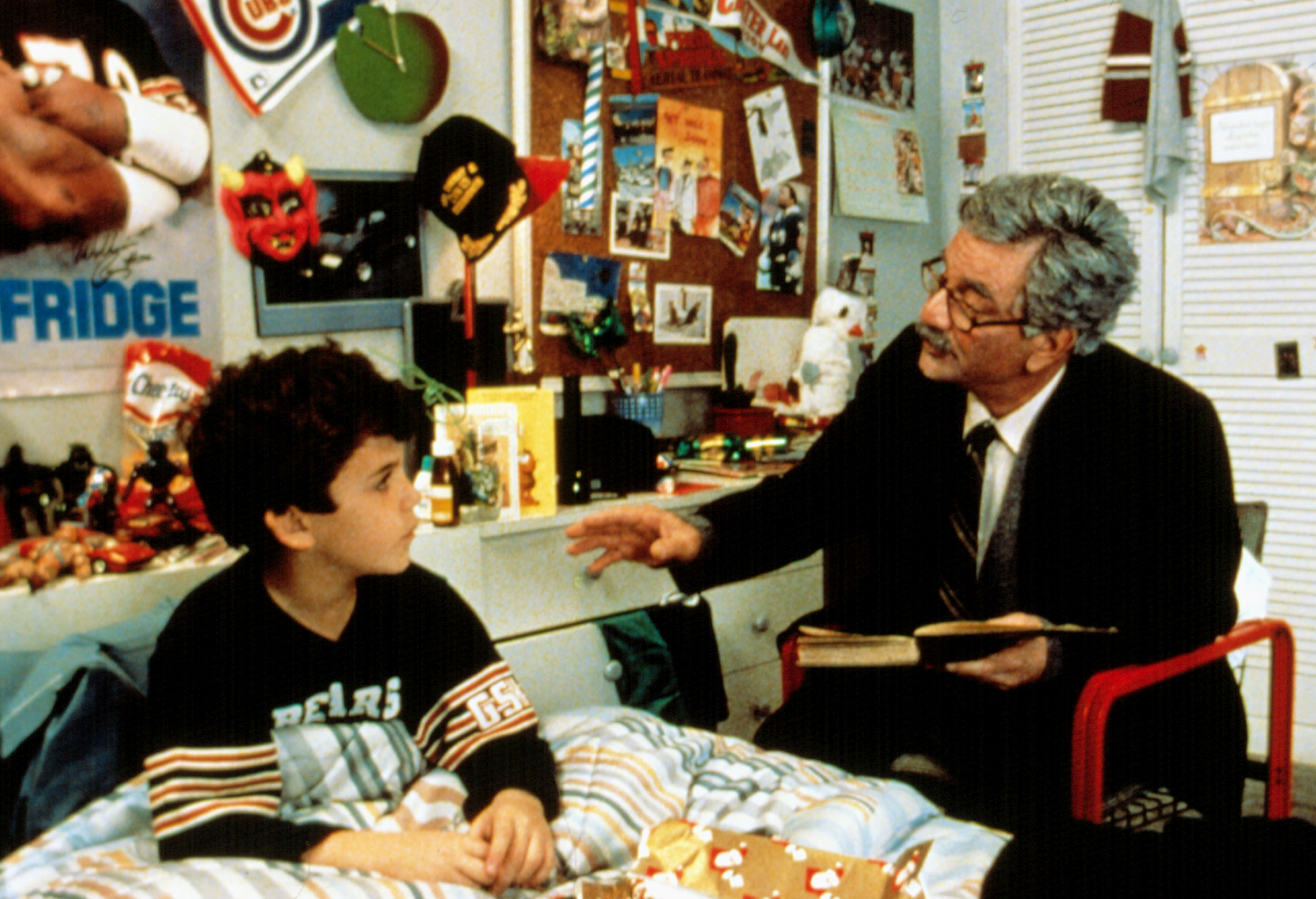 Fred Savage and Peter Falk, in the movie of the book, reading the (magnificent) book that became the movie. Photograph: 20th Century Fox Film Corp./courtesy Everett Collection Your local multiplex is dominated this weekend, I'm sure, by the $400 million CGI spectacle that is James Cameron's Avatar: Fire and Ash, a movie that comes close to being an amusement park attraction. (My local Regal cinema is asking $38.50 apiece for 4DX 3D tickets to the movie, which come with "seat movement plus realistic effects like wind, fog and scents.") There are lots of reasons why people will be watching what Esther Zuckerman describes as Cameron's "heartwarming hokum." Narrative prowess, however, isn't one of those reasons. Just look at Alistair Ryder's review, which uses words like "incomprehensible," "convolutions" and "nonsense." Rob Reiner was no James Cameron. While Cameron will spend thousands of hours and millions of dollars making his fantastical creatures as detailed and magical as possible, Reiner's fan favorite Rodents of Unusual Size were, well, not that. Reiner's eminence was on another axis entirely: He was arguably the greatest storyteller of his time. His best movies tend to involve a framing device, a person telling the story — Peter Falk's grandpa in The Princess Bride; the grown-up writer Gordie Lachance in Stand by Me; Reiner himself, playing Marty DiBergi, in This Is Spinal Tap. Rather than descending from sideshows and spectacles, these movies situate themselves in the much more ancient tradition of folklore and orality. All of them could easily become a compelling monologue, a tale spun by a master raconteur entrancing a rapt audience. You can't say that about Avengers: Infinity War. Better yet, because Reiner was working squarely within Hollywood's heyday — from, say, 1939 (The Wizard of Oz) to 2003 (Elf) — his films, rewatched countless times on cable TV or VHS, became an integral part of American culture. They weren't just stories that were told — they were stories that were retold, often by direct quotation. "It goes to 11." "You can't handle the truth." "I'll have what she's having." Or any of dozens of lines from The Princess Bride, probably the most quotable American film ever made. Because he was working in Hollywood, Reiner was generating what theorist Walter Ong called "secondary orality," a new and awesomely powerful form of oral culture that emerges from film and video. "Secondary orality generates a sense for groups immeasurably larger than those of primary oral culture," Ong wrote in Orality and Literacy, which was published in 1982, just as Reiner's directorial career was about to take off. Secondary orality explains how a single word ("Inconceivable!"), when dropped into a conversation, can generate warmth and smiles across a vast range of interlocutors, conjuring not only Wallace Shawn's indelible performance as Vizzini in The Princess Bride but also the movie as a whole. No one has that kind of broad cultural reach anymore. Society has fragmented too much. I might joke, for instance, that "the only other person who shares Alex Karp's inability to sit in a chair is Roman Roy." But if you laugh at that joke, it's not because it's funny, but because you're congratulating yourself on grokking both of the references. Storytelling as an art form is eternal. TikTok alone is responsible for a whole raft of fascinating new storytelling techniques, and the term is increasingly appearing in silly corporate job titles. But Reiner stands out as having done something truly special in the annals of the craft. He started with superlative screenplays from the likes of William Goldman and Nora Ephron — then he sprinkled his own genius on top. As Rolling Stone's David Fear writes, Reiner's best movies "are all about the lightning captured in a bottle when performers, interactions, scripts, and capital-M movie moments come together." By the numbers In deep water. Photographer: Will Warasila for Bloomberg Businessweek $1.1 billion: The amount private equity firm Strategic Value Partners paid brand conglomerate Vista Outdoors for its Revelyst subsidiary in January. The subsidiary includes beloved fly-fishing brand Simms. Andy Becker reports that things haven't gone well since. $19,000: The asking price of a Rolex Air-King with a Domino's logo that caught Sam Lessin's eye. "Should I buy this?" the former Facebook exec asked his followers on X. "I kinda love it." $4,100: The rent on Jake McFadden's downtown Manhattan studio apartment. The luxury studio is here. 1,200: The number of different questions you might encounter while taking the theory test that must be passed before you can get a German driver's license. Jessica Loudis reports that the test covers "everything from proper conduct when encountering a horse-drawn carriage to the impairments associated with driving on meth." 624: The number of pages in A24's $50 book about Texas. 576: The number of pages in the Florida book, which is also $50. $449.99: The price of a McLaren P1 hypercar. In Lego. $124.99: How much discount store Ross is charging for a Zodiac watch that normally retails for $1,795. 300: The height in feet of the proposed 25-story Arquitectonica-designed residential development that Safeway wants to build on the site of one of its San Francisco supermarkets. The Nimby vs. Yimby is fierce with this one. The outer limits of fashion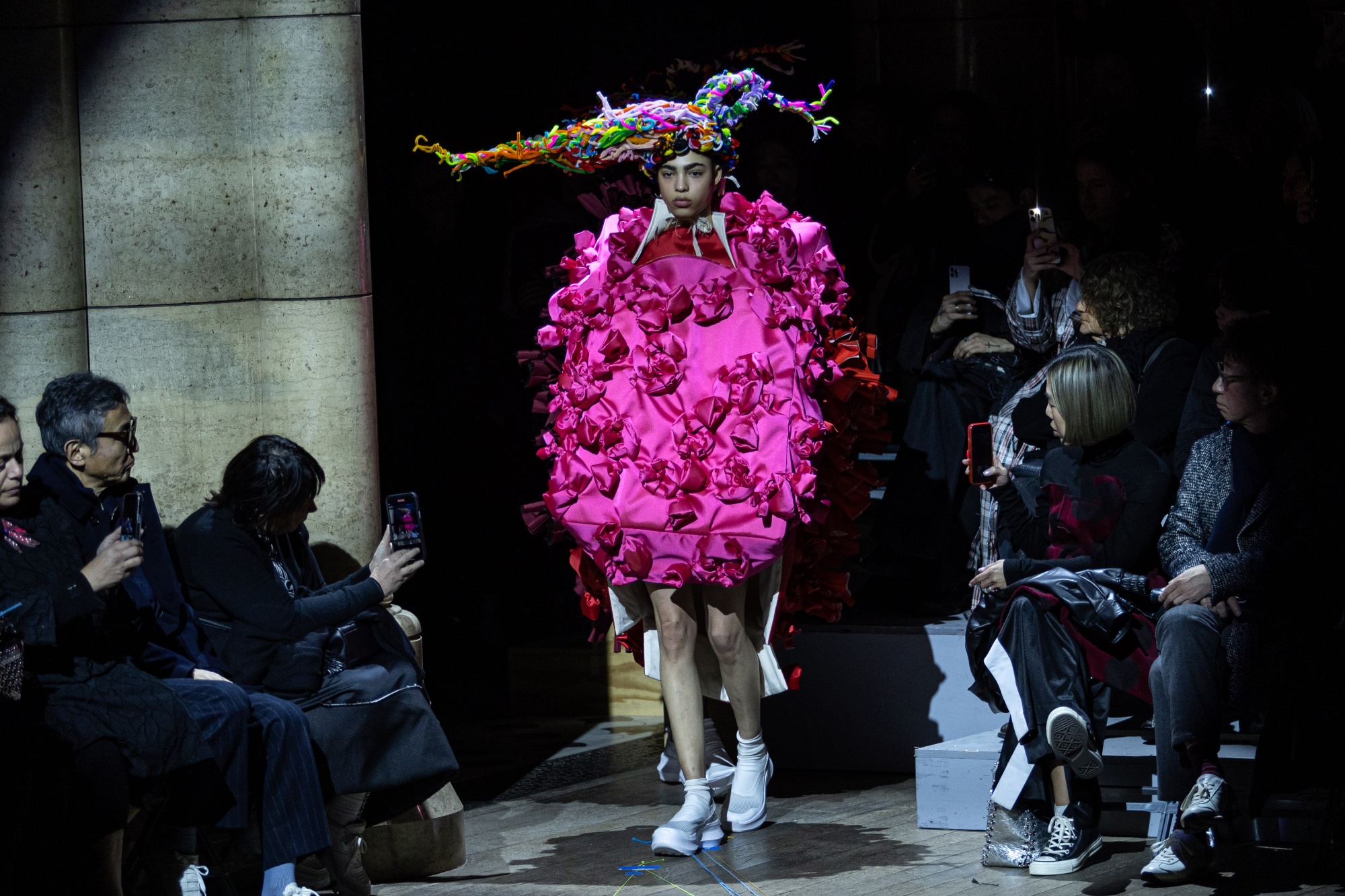 Rei Kawakubo's fall-winter 2023-24 collection. In her world, this counts as ready-to-wear. Photographer: Victor Lochon/Gamma-Rapho/Getty Images The blockbuster "Westwood | Kawakubo" exhibition has opened at the National Gallery of Victoria in Melbourne. Devoted to two icons of feminist fashion — Vivienne Westwood and Rei Kawakubo of Comme des Garçons — it's a timely reminder of what avant-garde fashion can achieve in a world that's seeing "a complete turn away from individual appearances or an acceptance of strange beauties," as Fashion Institute of Technology chief curator Valerie Steele told the Saturday Paper. "At the heart of their practices are these ideas of freedom and rebellion and independence and autonomy," says the NGV's Danielle Whitfield. The exhibition runs through April 19. Nilgai by mouth Photographer: Courtesy King Ranch "Hunting for food is on the rise in the US, a shift catalyzed by the pandemic and underpinned by an argument that doing so is healthier, better for the environment and even good for the species being hunted. As an unrepentant meat eater, I was curious to see if I could participate in the process — if I could look my dinner in its large, now blank, eye." Madison Darbyshire traveled to King Ranch in the Rio Grande Valley to hunt nilgai, the bovids — "both destructive and delicious" — that weigh as much as 660 pounds and are becoming increasingly popular as hunted meat. "It was a hunt, but it felt more like a very intense nature walk in full camo carrying heavy guns," she writes. Where the megabucks are going in collectibles The 1954 Mercedes-Benz W 196 R Stromlinienwagen, which sold for $54 million in February at RM Sotheby's. Courtesy of Mercedes-Benz AG/RM Sotheby's "The energy has returned to the saleroom," says Christie's Chief Executive Officer Bonnie Brennan. Between them, Christie's and Sotheby's sold at least eight artworks for more than $60 million this year, in a sign that big money has started to return to the art market. At Christie's the top three sales were conducted privately — probably the first time that's ever happened, according to Chief Operating Officer Ben Gore. Sotheby's had a particularly good year, with $5.7 billion in total auction sales, comfortably beating the $4.7 billion at Christie's. The house's top three lots were Gustav Klimt paintings from the Leonard Lauder collection, which brought in $394 million between them. Sotheby's top 10 lots also included two cars and a 700-year-old masterpiece of Chinese calligraphy. We're nowhere near the feverish levels of 2021-22, but maybe that just means the current bull market in collectibles is a little bit more sustainable. New for subscribers: Free article gifting. Bloomberg.com subscribers can now gift as many as five articles a month to anyone they want. Just look for the "Gift this article" button on stories. (Not a subscriber? Unlock limited access and sign up here. We're improving your newsletter experience, and we'd love your feedback. If something looks off, help us fine-tune your experience by reporting it here. Follow us
You received this message because you are subscribed to Bloomberg's Bloomberg Pursuits newsletter. If a friend forwarded you this message, sign up here to get it in your inbox.
|
Saturday, December 20, 2025
The greatest storyteller





Subscribe to:
Post Comments (Atom)
If you missed Bitcoin at $100… don’t miss this.
A new way of owning stocks could be the next financial breakthrough. ͏ ͏ ͏ ͏ ͏ ͏ ͏ ͏ ͏ ͏ ͏ ͏ ͏ ͏ ͏ ͏ ͏ ͏ ͏ ͏ ͏ ͏ ͏ ...

-
PLUS: Dogecoin scores first official ETP ...
-
Hollywood is often political View in browser The Academy Awards ceremony is on Sunday night, and i...


No comments:
Post a Comment