Friday, December 19, 2025

Five science takeaways from AGU

Trump's moves made it a meeting like no other |
View in browser
Bloomberg

The world's biggest Earth science conference had a shocking backdrop this year, with the Trump administration announcing that it plans to close an iconic climate research lab. Suffice to say, that changed the tone of the gathering. 

Today's newsletter shows you how scientists responded and brings you five takeaways from the American Geophysical Union's annual meeting. Plus, California has been hit by its worst snow drought since 2001. We break down why and what it means for the rest of the winter. 

Please subscribe to Bloomberg News for the latest on climate and weather science and its impact on society.

From AI to dimming the sun

By Eric Roston

Tens of thousands of the world's top experts on hurricanes, drought, heat and volcanoes descended on New Orleans for a weeklong conference.

A day into the meeting, they found themselves reeling over a disaster none of them saw coming: The Trump administration's plan to shutter one of the world's most significant climate research facilities. Doing so would be equivalent to pulling the engine out of a car hurtling down the highway, judging by scientists' reactions.

Despite being under a cloud, though, attendees of the annual American Geophysical Union conference had work to do. After all, thousands of scheduled talks weren't going to give themselves.

Over the week, five key themes emerged, showing how rapidly climate science is shifting in response to worsening weather, the Trump administration and the rapid rise of artificial intelligence. Here are the takeaways.
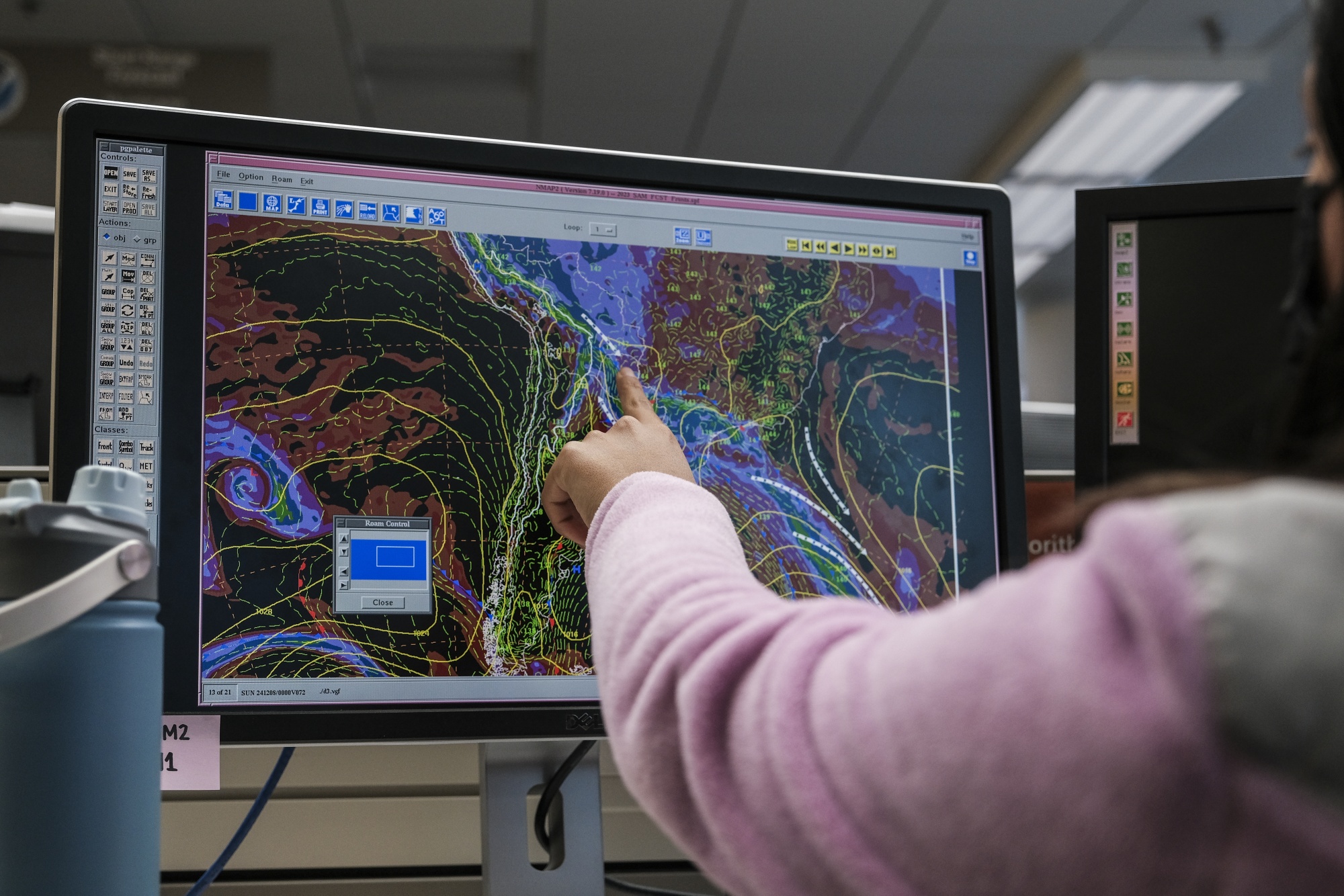
A meteorologist monitors weather activity. Photographer: Michael A. McCoy/Bloomberg

Artificial Intelligence

Machine learning techniques have helped scientists translate their global models into regional impacts for at least 15 years. But advances in computing have further improved their ability to model the future — albeit still imperfect — including how society responds to disaster. 

University of Illinois researchers studying July's catastrophic floods in Texas found that large-language models they used to simulate officials' responses to weather warnings were "consistent with the real-world handling of this crisis." That can help improve decision-making in the face of the next flood. 

Meanwhile, a team at Brigham Young University is trying to train large-language models to translate a national river model into real-time, actionable consumer hydrological data. Their goal, professor Dan Ames said in a talk, is to turn a hard-to-access model "into conversations on your iPhone."

Geoengineering

Dimming the sun to cool the planet has long been a fringe idea. But this year's AGU featured dozens of talks and posters covering the once-taboo topic. The consensus: much more research is needed.

Douglas MacMartin, a professor of engineering at Cornell University, walked his audience through some of the many tough questions about artificially lowering the temperature, including how to answer some of them with small-scale experiments.

Other talks focused on the knock-on effects of putting cooling particles in the atmosphere, relying on volcanic eruptions as a stand-in for human intervention  — a relatively new area of study with few answers so far. But areas where more research has been done have yielded some harrowing answers. If the world startsgeoengineering and then stops, it has the potential to double the impact of rising temperatures, according to Anthony Harding of the Georgia Institute of Technology.

Adaptation

The arrival of climate change's impacts has added urgency to adaptation, and the geoscientists are on it. The diverse impacts of everything from heat to floods mean that all manner of researchers have a role to play in preparing communities living in at-risk areas. 

Winslow Hansen of the Cary Institute of Ecosystem Studies, for example, shared findings that roughly 94 million acres of the US West are overdue for wildfire because of decades of fire-suppression policy. That type of information can allow fire agencies to use prescribed fire to thin forests most at risk and policymakers to implement rules to protect communities

Attribution

Scientists are pushing the boundaries of estimating the role greenhouse gas pollution plays in altering extreme weather. A talk on 2021's Hurricane Ida found that while the storm was once a one-in-8,000-year event, it's now a 2,000-year event and, thanks to continued greenhouse gas pollution, it has a 50% chance of happening again in the next 50 years. This type of forward-looking attribution can also be a tool for adaptation planners.

NCAR's fate

Disassembling NCAR is the latest assault on science by the Trump administration. Some researchers at AGU were ready to fight. About 7,000 people made calls between Wednesday night and Thursday afternoon, or sent letters to their members of Congress urging them to protect NCAR, said Antonio Busalacchi, the president of the consortium that runs the center.

But some saw NCAR's dismantling as a reason to leave the US. Space physicist Alexandros Chasapis is planning to move back to France to continue his research. 

"The fact that this is on the table on its own is causing damage," he said of closing NCAR. "Even if they walk this back tomorrow, you lose trust."

What was clear to countless researchers at AGU is the scientific value of NCAR. "Every scientist has benefited in some way from what NCAR does," said Marc Alessi, a science fellow at the nonprofit Union of Concerned Scientists.

Bloomberg at AGU

$53 billion
The minimum cost to reconstruct Gaza. Bloomberg remote sensing journalist Krishna Karra has used satellite data and a machine learning model to map destruction and population movements in Gaza, and he presented the work at AGU.

Flying blind

"To shutter this facility is, frankly, a national security risk."
Kim Cobb
Director, Institute at Brown for Environment and Society
Cobb, who served on an intelligence council under former President Joe Biden, pointed to the value of studying extreme weather and working across fields including machine learning and AI.

A brown Christmas

By Brian K Sullivan

California is getting plenty of rain this winter — but what's really needed is snow.

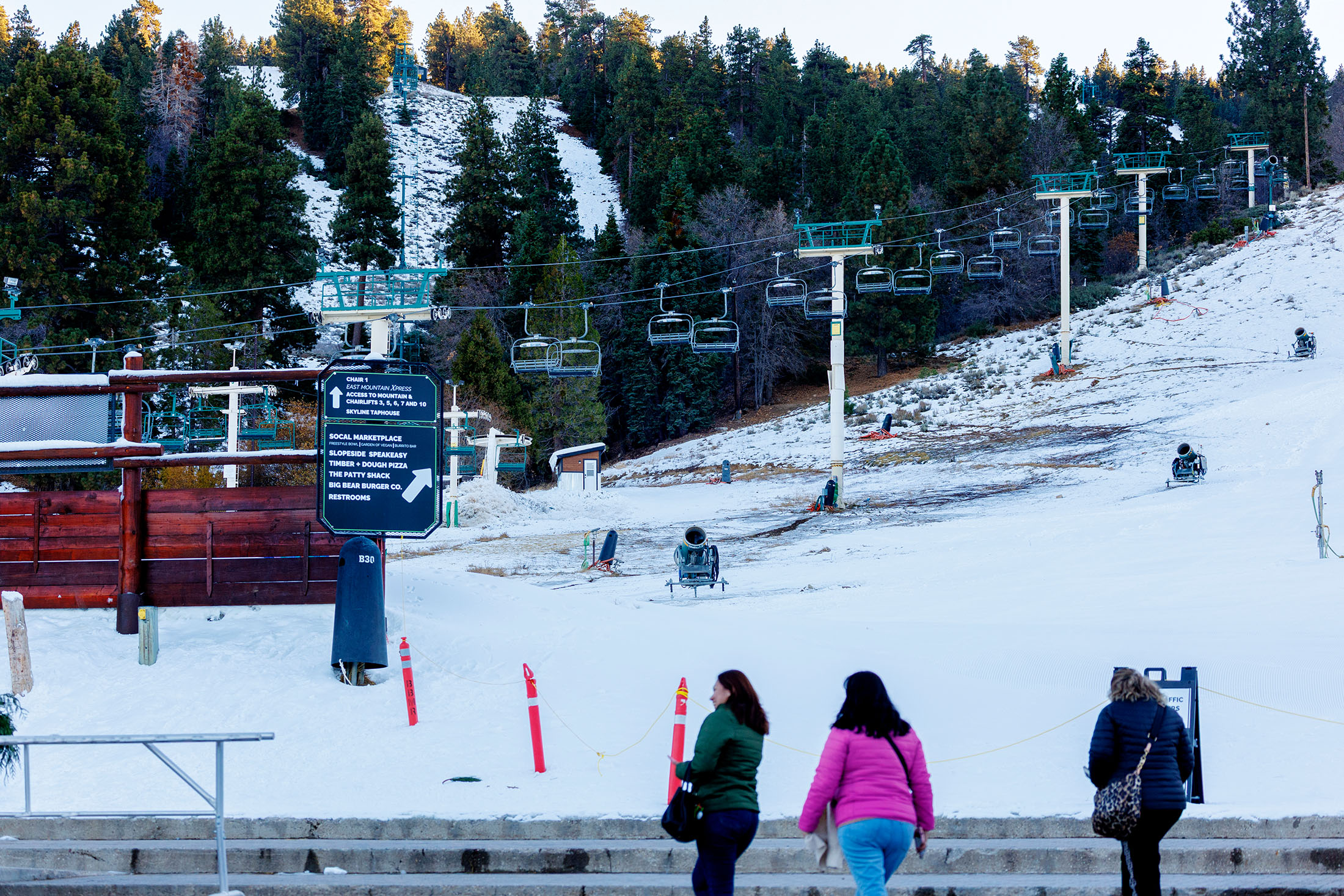
While record warm temperatures have ensured that a series of massive Pacific storms known as atmospheric rivers dump heavy rain across the West, the balmy weather has led to one of the lowest snow covers since 2001. The forecast calls for more rain next week.

With all the warmth, precipitation has fallen as rain instead of snow across many basins, leading to snow drought, the National Integrated Drought Information System, a federal agency, said in a report released earlier this month. "Nearly every major river basin in the West experienced a November among the top five warmest on record."

Low snow levels at Snow Summit in Big Bear Lake, California, in early December. Photographer: Gina Ferazzi/Los Angeles Times

The threats created by a lack of snow in winter or limited overall precipitation are actually similar: wildfires, future drought and low reservoir levels.

The West's water supplies are built on snow, which provides California with 30% of its supply. Without this resource, yields from the region's crops and hydroelectric dams fall while the risk of wildfires increases.

For years, scientists have worried that the changing climate would throw off this seasonal interplay by pushing warm winter storms onshore, bringing more rain than snow and raising the line where snow falls higher into mountain ranges. While it's not conclusive that climate change is responsible for this year's snow drought, there are signs that the warming world is having an impact.

"The culprit, uniformly, is anomalous to record-breaking warmth, both in places where it has been raining and in places where it has been dry recently," said Daniel Swain, a climate scientist with the University of California Agriculture and Natural Resources. "Climate change has greatly increased the odds of seeing extremely low early-season snowpack as is presently occurring, and that trend will continue to worsen with further warming."

As of Dec. 10, most of California, Nevada and Oregon had less than 50% of the snow water equivalent the states would typically have for this time of year, according to the drought agency, which is part of the National Oceanic and Atmospheric Administration. Snow water is a measure of how much liquid is locked up in the ice.

Swain said conditions had worsened this week, with western snow at record low levels across many observation sites.

Read the full story to see what the forecast holds.

More from Green

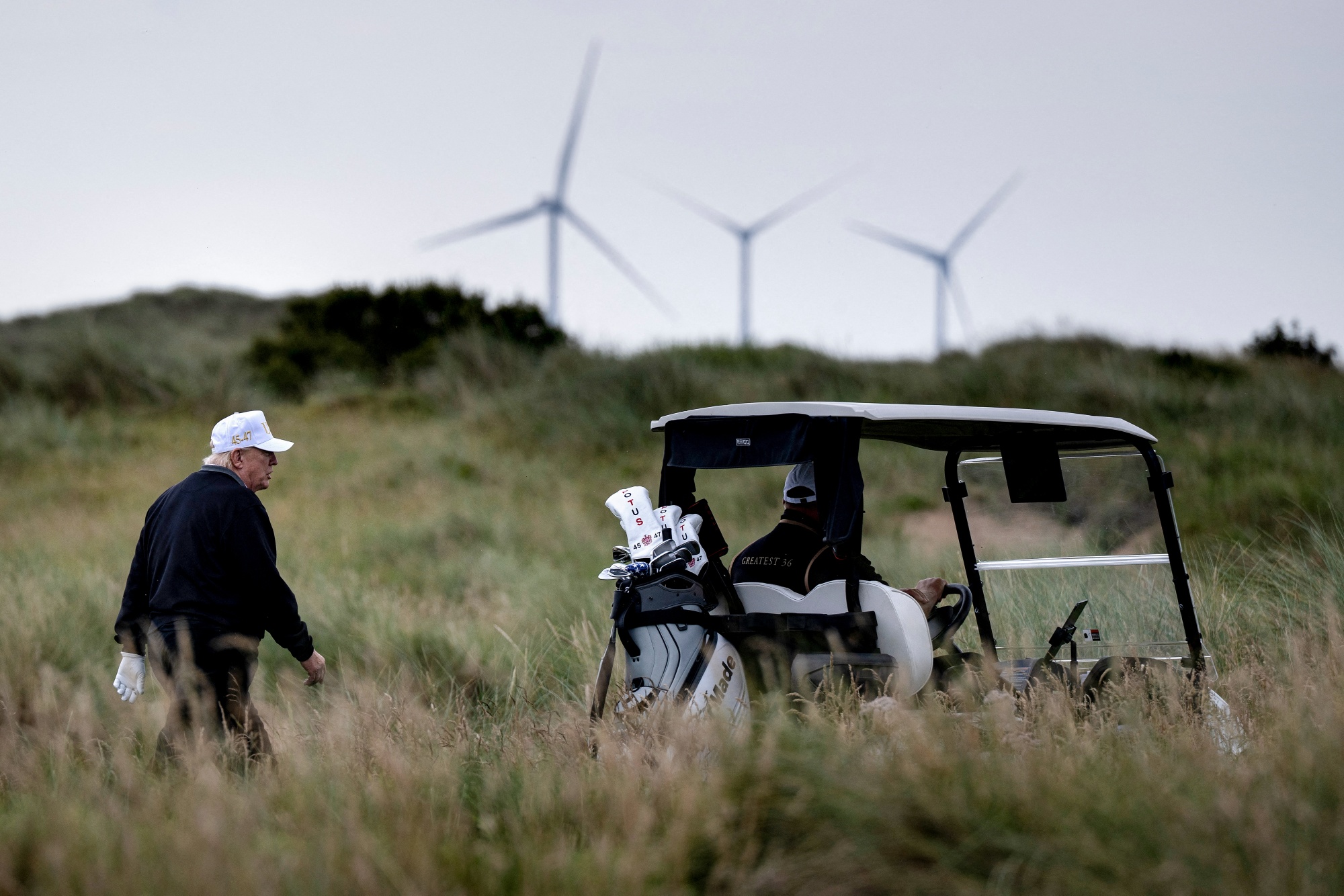
US President Donald Trump hates wind power. His administration has made a concerted effort to thwart the industry. Trump issued a directive within hours of his return to the White House in January that froze new permitting for wind energy and ordered officials to consider terminating existing leases.

But his campaign — which cast a pall over the wind industry, triggering project delays and some cancellations — has run into legal problems. A federal judge ruled on Dec. 8 that Trump's decree was illegal. Earlier, in September, a different federal judge suspended an order the administration had issued to stop work on Revolution Wind — a large, nearly completed wind farm off the coast of Rhode Island.

Still, the US wind industry's troubles are far from over. To untangle the various forces working against wind energy in the US, read the full explainer

Trump at his Aberdeen, Scotland, golf course, with offshore wind turbines in the background. Photographer: Brendan Smialowski/AFP/Getty Images

California isn't the only place missing snow. A storm moving across the eastern US is bringing high winds and rain to New York and other parts of the region. Flood and wind warnings are in place through Friday.

How the band A-ha revolutionized EV charging. The group responsible for the classic bop "Take on Me" helped supercharge the EV movement in Oslo. Today, Norway is the world's electric auto capital. 

GM CEO Mary Barra's successor may be in the building. Sterling Anderson, the former Tesla executive now leading GM's technology push, is emerging as a front-runner to succeed her. Among his tasks: driving down the cost of EVs.

Trump Media is a fusion company now. The unprofitable firm behind Truth Social will merge with fusion startup TAE in a transaction valued at more than $6 billion. No company has been able to produce fusion energy at a commercial scale.

Washington diary

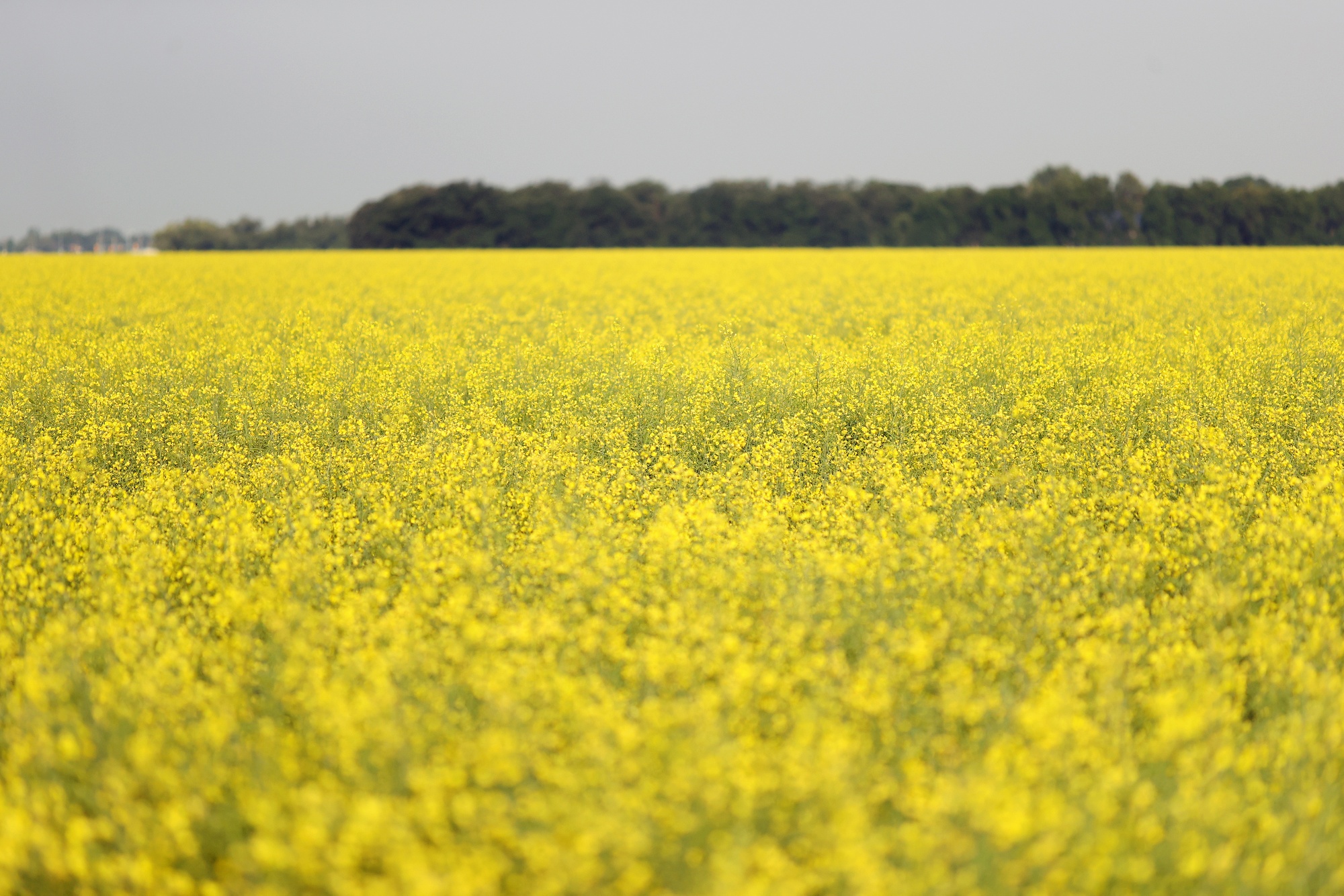
Canola grows on a farm in Manitoba, Canada. The US is the biggest importer of the oilseed. Photographer: Shannon VanRaes/Bloomberg
  • The Trump administration has ordered Calgary-based TransAlta Corp. to keep a Washington State coal plant operating past its scheduled retirement date at the end of this year. The Energy Department cited the risk of power shortages during cold snaps for the decision.
  • key decision on biofuel mandates has been pushed back into 2026, leaving farmers, traders and fuel-makers in limbo. The EPA sets mandates that determine how much ethanol and other biofuels must be blended into US fuel each year. Levels for 2026 and 2027 had originally been expected in late October.
  • Sixteen states, and the District of Columbia, are suing the Trump administration, alleging it illegally withheld billions of dollars in funding for EV charging programs. "The Trump Administration's illegal attempt to stop funding for electric vehicle infrastructure must come to an end," California Attorney General Rob Bonta said in a statement.

More from Bloomberg

  • Business of Food for a weekly look at how the world feeds itself in a changing economy and climate, from farming to supply chains to consumer trends
  • Hyperdrive for expert insight into the future of cars
  • Energy Daily for a daily guide to the energy and commodities markets that power the global economy
  • CityLab Daily for top stories, ideas and solutions, from cities around the world
  • Tech In Depth for analysis and scoops about the business of technology

Explore all Bloomberg newsletters.

Follow Us

Like getting this newsletter? Subscribe to Bloomberg.com for unlimited access to trusted, data-driven journalism and subscriber-only insights.


Want to sponsor this newsletter? Get in touch here.

You received this message because you are subscribed to Bloomberg's Green Daily newsletter. If a friend forwarded you this message, sign up here to get it in your inbox.
Unsubscribe
Bloomberg.com
Contact Us
Bloomberg L.P.
731 Lexington Avenue,
New York, NY 10022
Ads Powered By Liveintent Ad Choices

No comments:

Post a Comment

Before Digital Dollars Arrive, Do This With Your Wealth

What if your dollars had an expiration date? Sponsored ...