Tuesday, December 16, 2025

Dr. Seuss predicts the jobs market

Plus: 50 Companies to Watch in 2026
View in browser
Bloomberg

The November jobs report, delayed by the government shutdown in the fall, was released this morning. Stacey Vanek Smith, co-host of the Everybody's Business podcast, writes about the data—and the feeling that the US labor market is just drifting. Plus: Our annual list of global stocks to watch in 2026, and why sports leagues should be wary of predictions markets.

If this email was forwarded to you, click here to sign up.

When Brett Vergara got a mysterious calendar invite at work a couple of months ago, he says he was hit with a sinking feeling. "It was a video call for 4 p.m. that day," he recalls. "I was like, 'Oh, that's probably not good.'"

Vergara had worked for three years as a project manager for a large tech company. His team was focused on artificial intelligence and how the company could use and integrate the evolving technology. Vergara felt pretty solid about his team and his job. But on the call, his worst fears were confirmed. "They were like, 'Your team has been affected. … You have until 5 p.m. to wrap up everything.'" After that his email went dark, and he started hearing from other members of his team who'd received the same news. "Pretty much everybody was blindsided," he says. "It was brutal."

For many workers, 2025 was a rough year: Almost 2 million people were laid off. The US jobs report from the Bureau of Labor Statistics out this morning revealed that the unemployment rate rose yet again in November, to 4.6%, the highest it's been in four years. Still, the unemployment rate and layoffs are near historic lows. The job market hasn't been in crisis as much as it's been stuck. Hiring is near the lowest it's been in years, and the number of people quitting their job has fallen off a cliff.
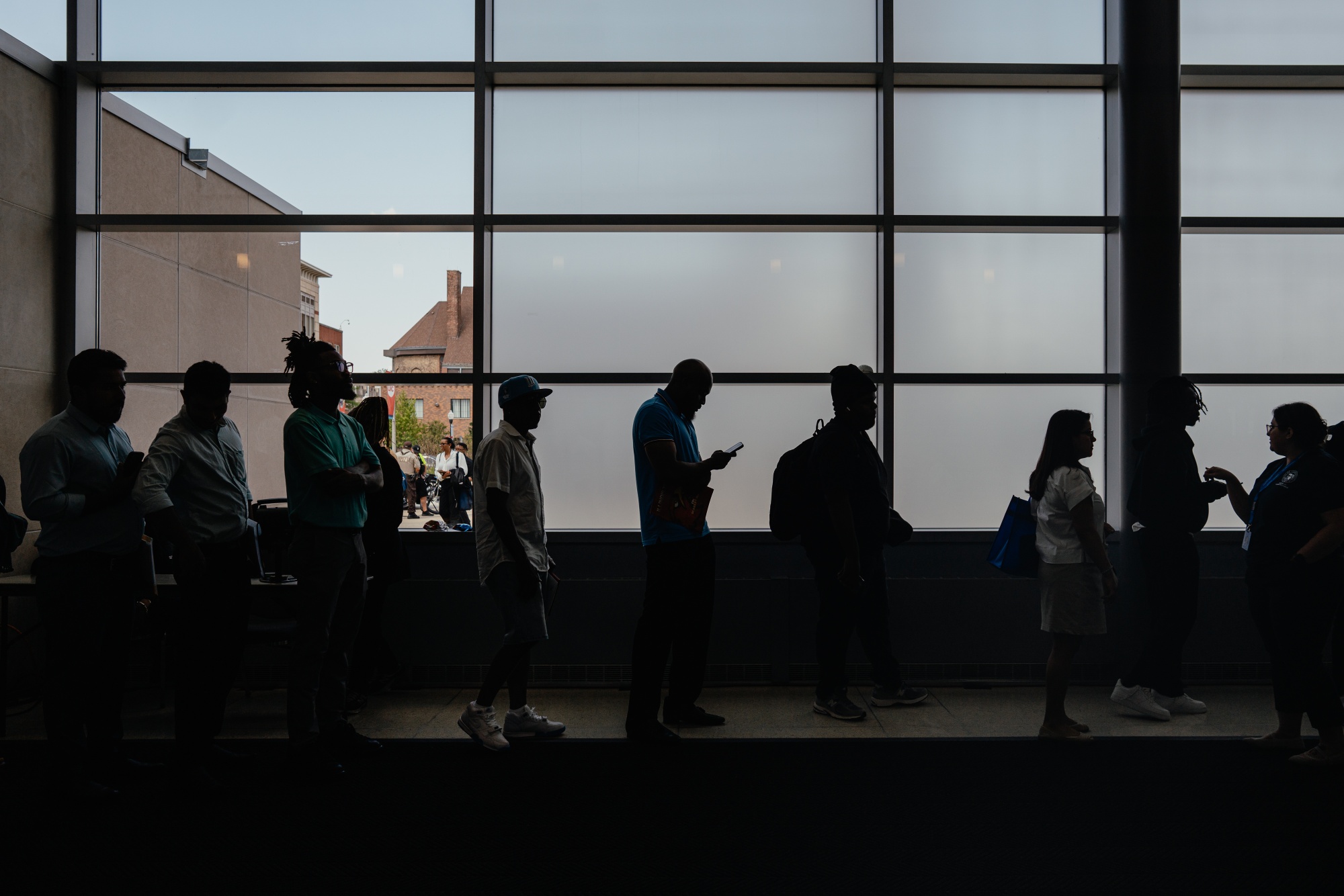
A job fair hosted by Cook County in June to support federal workers in Chicago. Photographer: Jamie Kelter Davis/Bloomberg

"We've drifted into what Dr. Seuss called 'The Waiting Place,'" says Arindrajit Dube, an economics professor at the University of Massachusetts at Amherst. Described in Oh, the Places You'll Go, that's where people are waiting for "the mail to come, or the rain to go / or the phone to ring, or the snow to snow / or waiting around for a Yes or No / or waiting for their hair to grow. / Everyone is just waiting."

"Unemployment is edging up but not surging," Dube says. "Wage growth is positive, but lackluster." So everyone waits, he says. "Workers wait for job offers that come with a real pay bump. Firms wait to see what the next quarter brings." Uncertainty about tariffs, the effect of AI on productivity and whether or not people will continue to spend money at the same pace next year has a lot of companies in wait-and-see mode.

But waiting isn't a good place for a job market to be. In an economy as large, wealthy and dynamic as the US's, this kind of stagnation is highly unusual and insidious: It means companies aren't growing, innovating or evolving as quickly as they could. It also means workers have fewer options. When hiring rates are this low, it's difficult for workers to ask for raises or promotions or to take risks.

Vergara says many of his friends in tech aren't thriving. "A lot of them feel stuck or trapped," he says. "That's a hard feeling too. If they have a job they hate, they feel like they can't leave."

Sarah Kim, who's been searching for work for two years, says the job market can be a truly "disheartening place." Kim works in marketing and got her first job in the field in 2018; then she was poached away by another company in the hot job market of 2021. When her contract ended in late 2023, she found herself in the Waiting Place—and says things felt vastly different. Kim has cerebral palsy and says she noticed companies seemed much more reluctant to hire a worker with special needs, who might need flexibility to work from home.

Kim estimates she's applied for around 1,000 jobs. She's had dozens of interviews, but she says in that stage, things become much harder for her, because verbal communication can sometimes be difficult. "That's where I feel like I'm at a disadvantage," she says. Kim says she tries to stay positive, but it's not easy. The share of unemployed workers who've been looking for a job for more than six months is now almost 25%.

Today's data don't show a drastic change in the market or reveal how it might break in 2026. The unemployment number rose, but the number of jobs added in November came in higher than expected, at 64,000.

Dube says policymakers and business leaders who are looking for a decisive moment, when data will reveal whether the job market is gaining real strength or in a crisis, could find themselves waiting for quite a while. "The risk isn't sudden collapse, but being banished to a land of joyless doldrums for what feels like an eternity."

Vergara says he's experienced those doldrums but also some true bright spots. He was able to volunteer on the mayoral campaign of Zohran Mamdani and do charitable work with immigrant communities in New York. He also landed a temporary position filling in for a worker on maternity leave. "It's short-term so not the most ideal," he says. "But it does at least buy me some more time."

Related: Here Are the Key Takeaways From the Monthly US Jobs Report

In Brief

  • Elon Musk was an "avowed" ketamine user, White House Chief of Staff Susie Wiles told Vanity Fair among a series of candid and occasionally critical remarks she made about President Donald Trump's inner circle.
  • Citadel is shrinking its footprint in Chicago three years after billionaire owner Ken Griffin left for Florida, moving its remaining operations out of the downtown tower that was named for it.
  • China's Luckin Coffee is considering making a bid for Blue Bottle Coffee to boost its brand profile and expand in the premium-coffee segment.

Get the Bloomberg Businessweek print magazine delivered to you and unlimited access to Businessweek stories on Businessweek.com. Annual subscription for $99.

50 Companies to Watch

Illustration: Oscar Bolton Green

Analysts at Bloomberg Intelligence track thousands of companies in industries ranging from computers and cars to finance and food. For Businessweek's January issue they've identified 50 as worth watching carefully in the year ahead—for better or worse. Here's a sample.

Brinker
Revenue for the owner of the Chili's and Maggiano's Little Italy restaurant chains is on track to beat consensus estimates. Brinker has boosted marketing for Chili's, and new offerings such as frozen margaritas with Patron tequila, higher-quality ribs and improved nachos have significantly increased sales. Its remodeling of outlets to create a more welcoming vibe should help attract more customers. —Michael Halen

CF Industries
The US fertilizer maker is an early entrant into the market for "blue ammonia," a lower carbon version of the compound whose use is growing quickly in Europe. The EU's 2026-27 carbon policy should kick-start sales of the ingredient in fertilizers, chemicals, plastics and cleaning formulas, and given its US production base, CF's costs are about half of those of its European rivals. —Alexis Maxwell

Joinn Labs
An effort by China to boost its pharmaceutical industry overseas offers an opportunity for its biotech companies. But that will include a shift away from generic therapies and locally based drug trials, which could hurt this Chinese provider of outsourced research and testing. With about 80% of its revenue coming from its home country, a shrinking backlog of contracts and a paucity of clinical trials increases the risk that Joinn will miss its 2026 sales forecasts. —Jamie Maarten

Marvell
Sales expectations look too conservative for this manufacturer of specialized chips that are critical for computer networks. Marvell has seen accelerating order growth from AI data centers with customers like Microsoft and Amazon.com Inc., and it's working on more than 20 megaprojects. With about $7.5 billion already committed from a current pipeline of $75 billion, its business is poised to jump even further. —Kunjan Sobhani

Keep reading: 50 Companies to Watch in 2026

An Investment Behemoth

$50 billion
That's the size of the Olayan family fortune, according to the Bloomberg Billionaires Index, which is including them in its annual list for the first time. Saudi sisters Lubna and Hutham Olayan have managed to steer the family conglomerate into a behemoth that operates at the scale of a sovereign wealth fund. Read more about their influence.

Predictions Markets and Sports

Illustration: Alex Gamsu Jenkins for Bloomberg Businessweek

Adhi Rajaprabhakaran began trading in prediction markets in summer 2020. Then a couple of years out of college, he started with bets on whether Joe Biden or Donald Trump would win that year's presidential election, and on which states each would carry, buying yes-or-no contracts on Polymarket and PredictIt. By early 2021, Rajaprabhakaran was making his living as a trader and was busy trying to figure out when Jennifer Granholm would be sworn in as US secretary of energy.

As part of that effort, he called an energy lobbyist. Two well-placed Senate staffers, the lobbyist told him, had said Granholm would be confirmed before March 1. Rajaprabhakaran made his bets accordingly and won several thousand dollars when she was sworn in on Feb. 25. "I was super proud of it, and I bragged about it," Rajaprabhakaran says of his detective work. Other traders, he says, congratulated him.

Rajaprabhakaran, who writes a newsletter on prediction markets called 50¢ Dollars, tells this story to illustrate a point. In the prediction market community, his sleuthing was seen as the system working as intended: A trader, motivated by profit, had surfaced valuable information about the probability of a future event, and his confidence in that information became a price signal for others. Nobody cried foul. "If you're trading in these markets, you should expect to be trading against someone who has better information than you," Rajaprabhakaran says.

Others may see it differently. In a new Field Day column, Ira Boudway writes that the boom in sports-related contracts and a lack of regulation leaves bettors open to manipulation: Kalshi and Other Prediction Markets Should Scare Sports Leagues

Video: Bloomberg Investigates

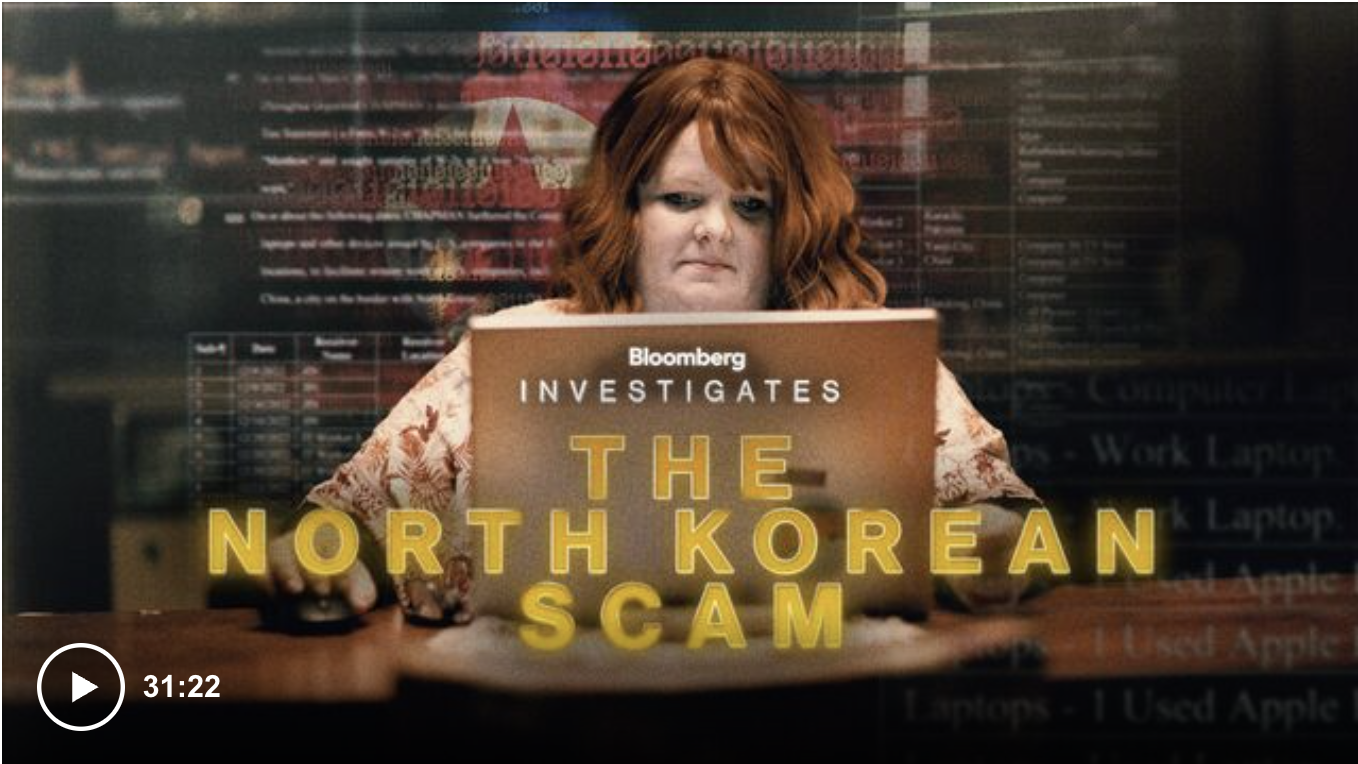
WATCH: The North Korean Workers Inside US Companies

A new episode of Bloomberg Investigates, based on a Businessweek feature story, shows how one woman looking for work in the depths of the pandemic led investigators to uncover a secret North Korean network that hoodwinked some of the biggest US companies. The workers secured remote jobs and quietly collected salaries that, according to the US government, helped finance North Korea's weapons program. Bloomberg Investigates also spoke to one of those North Korean IT workers, who explains how he and his fellow engineers faced abuse, punishment and the threat of death if they didn't meet their quotas.

More: The Secret North Korean Workforce Inside US Companies

Immigration Judge 'Purge'

"It's really pulling the mask down on what's always been a little bit of a ruse when it comes to due process. The fake independence has never been faker."
David Bier
Director of immigration studies for the libertarian Cato Institute.
The Trump administration is slashing the ranks of immigration judges in a drive to extend its broader crackdown to the administrative courts where they serve and to speed up deportations.

Play Alphadots!

Our daily word puzzle with a plot twist.

alphadots

Today's clue is: Problem with some control groups?

Play now!

More From Bloomberg

Like Businessweek Daily? Check out these newsletters:

  • Odd Lots, with Joe Weisenthal and Tracy Alloway, explores the most interesting topics in finance, markets and economics.
  • Power On, with Mark Gurman, has the inside scoop on all things Apple and consumer tech.
  • Washington Edition follows Trump's second term through the lens of business, markets and the economy.
  • Bloomberg Weekend discusses big ideas and open questions in the fascinating places where finance, life and culture meet.
  • Business of Food covers how the world feeds itself in a changing economy and climate, from farming to supply chains to consumer trends.

Explore all Bloomberg newsletters.

Follow Us

Like getting this newsletter? Subscribe to Bloomberg.com for unlimited access to trusted, data-driven journalism and subscriber-only insights.

Want to sponsor this newsletter? Get in touch here.

You received this message because you are subscribed to Bloomberg's Businessweek Daily newsletter. If a friend forwarded you this message, sign up here to get it in your inbox.
Unsubscribe
Bloomberg.com
Contact Us
Bloomberg L.P.
731 Lexington Avenue,
New York, NY 10022
Ads Powered By Liveintent Ad Choices

No comments:

Post a Comment

The Holiday Airdrop is here 🎁 25k $ALICE up for grabs!

Incredible news and updates about everything happening in our beloved archipelago🌸 ...