Wednesday, December 17, 2025

A Blurry Macro Picture Could Clear Up in 2026. Markets Beware

Investors are hoping that uncertainties around US jobs, inflation and artificial intelligence will finally clear up in 2026. That's exactly
View in browser
Bloomberg

Investors are hoping that uncertainties around US jobs, inflation and artificial intelligence will finally clear up in 2026. That's exactly where the big risks lie.

  1. Jobs. AI hasn't really hit the job market hard yet. When it does, the losses will be hard to overcome.
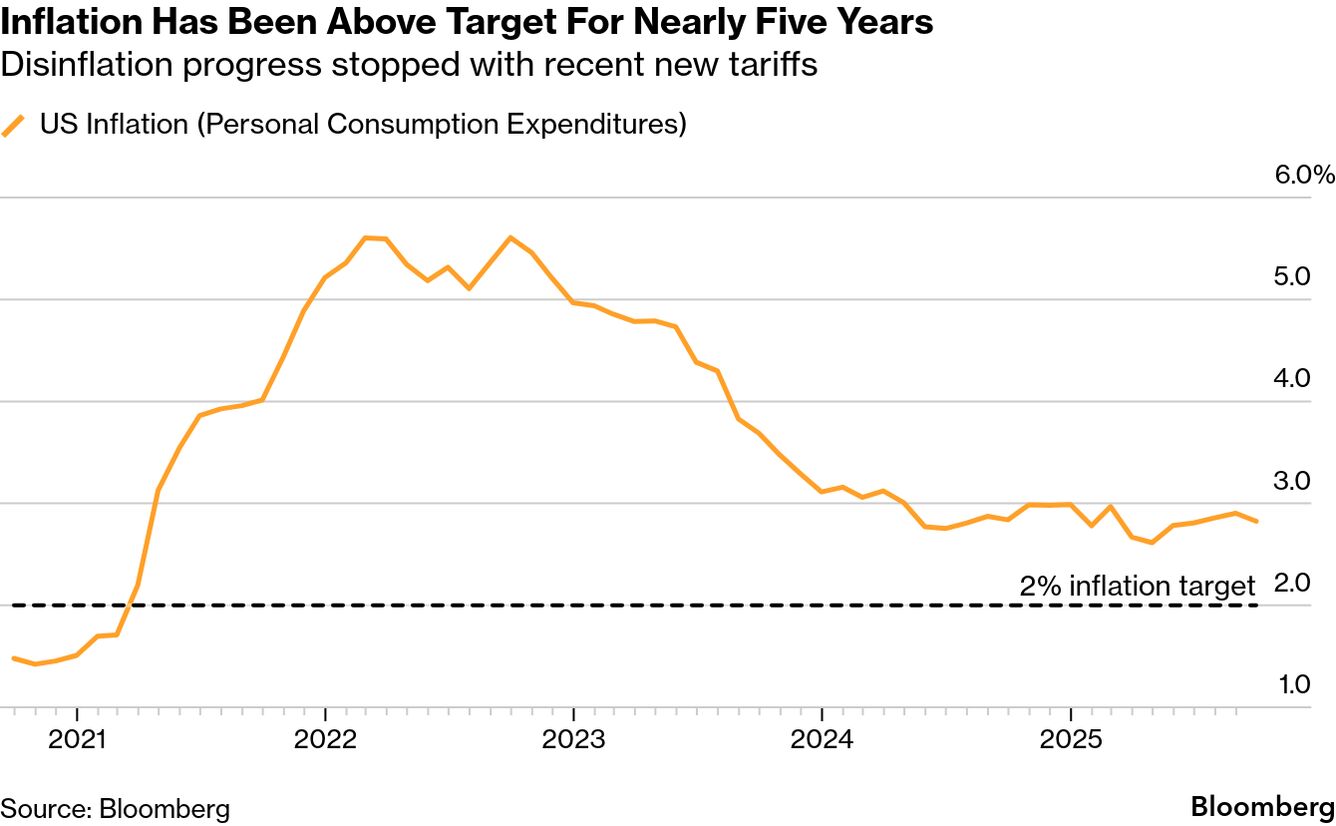
  2. Inflation. There are signs of  input prices keeping costs higher.
  3. Global liquidity. The US is a laggard by still easing monetary policy. US markets won't be immune to forces behind global tightening.
  4. IPOs. Big-name IPOs are a conspicuous absence in this bull market. SpaceX, Fannie Mae and Freddie Mac, or OpenAI could spur the next leg higher before a market downturn.

Recession fear 

Only once in the past 75 years has the US had a recession when the Fed wasn't raising interest rates in the previous 12 months. That was the inevitable pandemic one.

Even over the shortest of horizons, like five years without a recession, long-term investors almost never lose money in US equities. Inflation-adjusted 5-year S&P 500 returns bottomed at 3.9% in late 2023 after the Fed hiked rates.

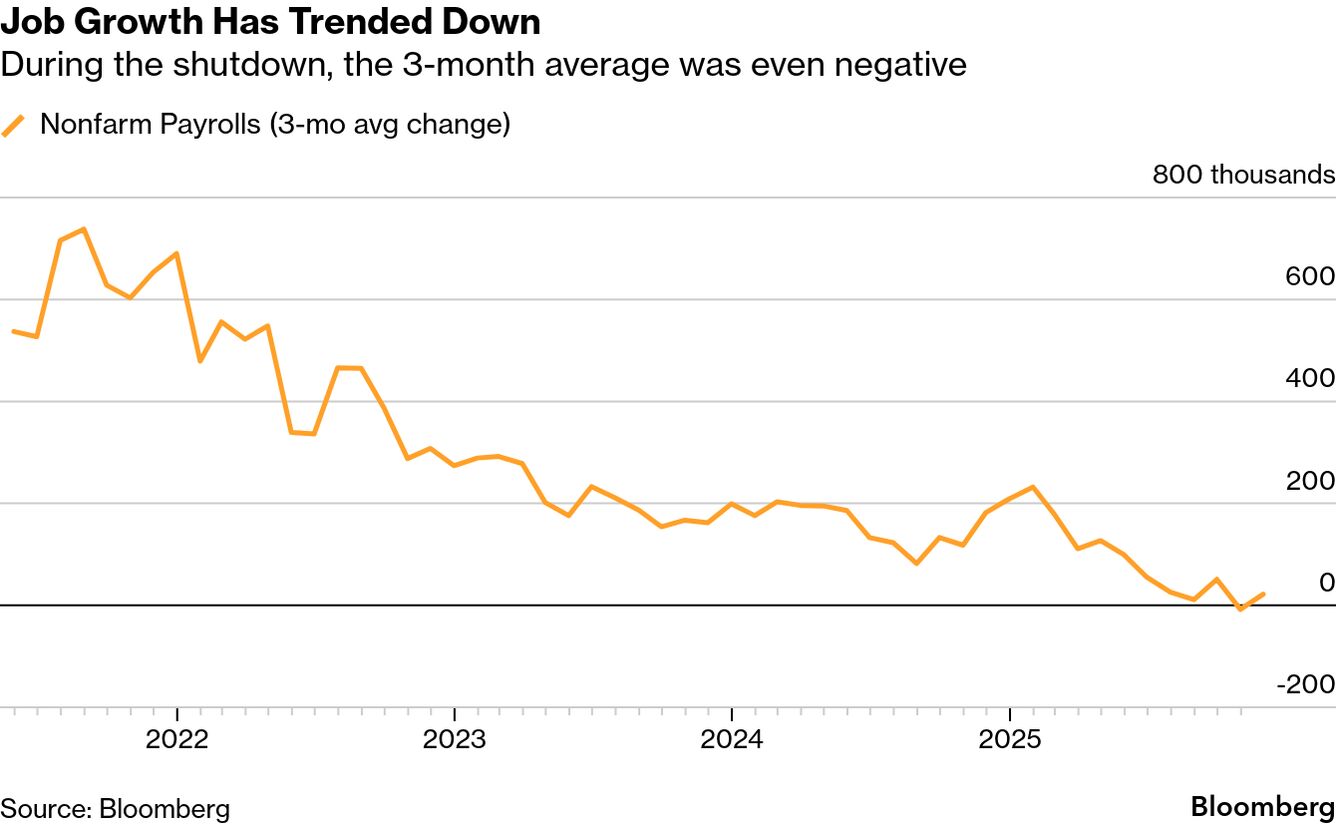
That's why the jobs picture is worrying. The latest data showed the number of jobs in the US economy contracting in three of the past six months. The underemployment rate, at 8.7%, is the highest since 2021.  US job growth has been trending down for four years, except briefly at the end of the Biden administration. This kind of trend almost always leads to a recession if prolonged.

What's interesting is that even though companies like McKinsey have been citing AI as a reason for job cuts, the buildout of AI data centers is actually helping the economy right now, adding jobs. Even the electrification associated with AI power demand is creating new openings. A downturn in AI investment spend could trigger more losses, as would actual AI-driven job cuts. 

Inflation greed

Notice I said investors "almost" never lose money in stocks without a recession. The caveat is inflation. In the mid-1970s, four years after a recession had ended, investors had losses in inflation-adjusted terms. Not once from February 1969 until October 1983 was the S&P 500's 5-year return positive after inflation. And that despite textbook accommodative monetary policy from Fed Chair Arthur Burns from 1970 to 1978.

Right now, the Bloomberg Commodity Index is near its highest levels in over two years, not a good sign for a market that drove much of the pandemic inflation.

Last week I explained how gold and other precious metals are getting a boost from global trade uncertainty and the removal of the US security umbrella acting as a boon for commodities and industrial metals. Strategic stockpiling will continue to drive up commodity prices — and overall inflation. The resources needed for AI only exacerbate that trend.

It's a recipe for stagflation. the worst outcome for stocks and bonds.

Global liquidity is receding

Most major central banks have stopped cutting interest rates. Japan is raising rates. The European Central Bank could be hiking soon too. If the Fed doesn't at least stop easing, the dollar will fall further, importing inflation to the US.

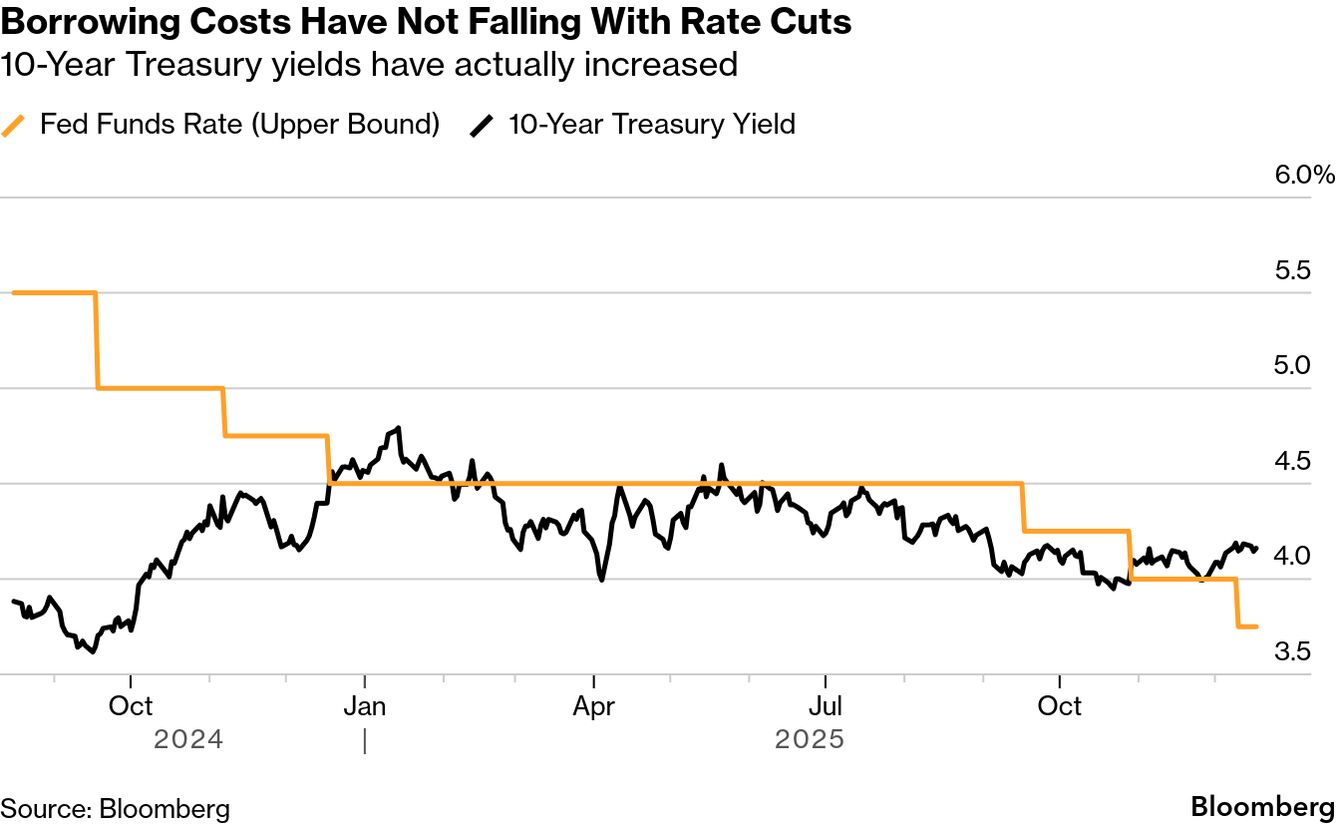
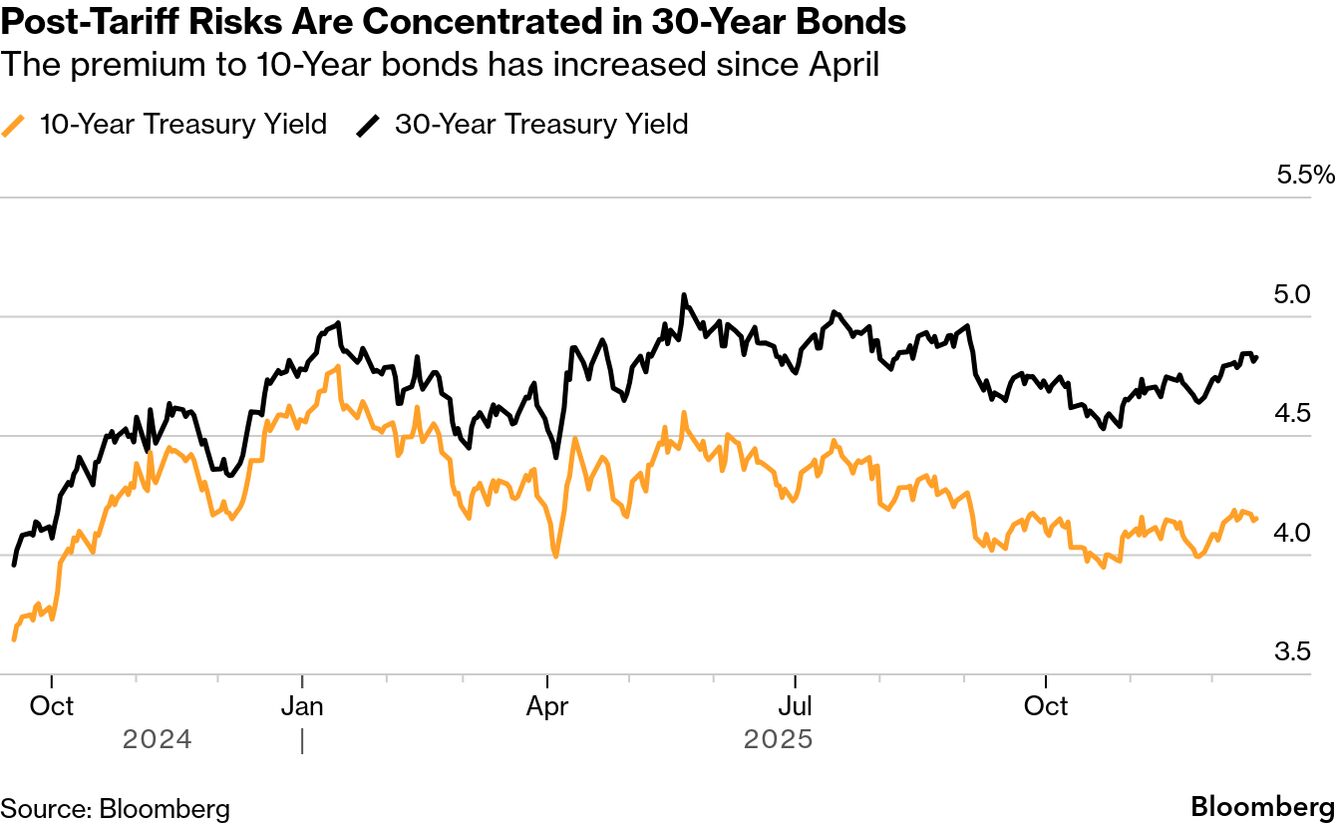
Even if the Fed stays accommodative to protect the job market, investors' bond portfolios would lose value. We've seen 175 basis points of cuts cumulatively since the Fed first lowered benchmark rates in September 2024. Yet the 10-year Treasury yield is 40 basis points higher. Treasury investors are simply swapping one risk with another in their calculus — economic growth with inflation. If the goal was to ease financial conditions for corporate and household borrowers, the cuts haven't done the job.

While much of the rise in costs is in the longest-dated debt of 30 years, the risk for borrowers is that the upward pull takes over the benchmark 10-year yield. The negative impact of higher discount rates on future cash flows would tighten conditions even as the Fed cuts rates. 

IPOs add fuel

There's an upside risk too. A big difference in the AI bull run to the Internet bubble is the lack of initial public offerings. Mom-and-pop investors have no pure-play to invest in the space like they did with Amazon or Yahoo in the 1990s. While OpenAI would fit the bill, with operating losses so huge, going public now would backfire.

Instead, three other candidates could help widen the equity rally beyond the established tech giants. The first two are Fannie Mae and Freddie Mac. Right now, the two companies are adding so many mortgage-backed securities to their balance sheet that it might just be suppressing mortgage rates. Continued massive purchases and an IPO of the two mortgage giants would give a shot in the arm to a sector that's been a drag on growth.

And then, there's aerospace company SpaceX preparing to let insiders sell shares at a valuation of $800 billion. That's 60% higher than OpenAI's last valuation round. Unlike OpenAI, "SpaceX has been cash-flow positive for many years," according to CEO Elon Musk. He recently told employees that the firm is entering a regulatory quiet period, signaling a 2026 IPO is likely to happen.

That would be enough to extend the bull market run. To put a number on IPOs, we could see almost $3 trillion of private valuation go public in 2026. 

AI is key 

The US economy would probably have been close to a recession in the first half of this year without the massive spend on AI. Given the AI hype is starting to lose momentum, the market needs a new driver for the next leg up in the equity rally.

A high-profile IPO, combined with tax cuts on top of deficit spending could do the trick. That is if the market escapes the risk of recession, or worse, stagflation.

Question: This time next year, where do you expect the S&P 500 to be? Let us know in the latest Markets Pulse survey.

Quote of the week

There's a consistent history of transformational technologies generating excessive enthusiasm and investment, resulting in more infrastructure than is needed and asset prices that prove to have been too high... Bubbles created in this process usually end in losses for those who fuel them.

Howard Marks
Founder Oaktree Capital Management
The conclusion of his recent essay " Is It a Bubble?"

Things on my radar

More from Bloomberg

Like getting The Everything Risk? Check out these newsletters:

  • Markets Daily for what's moving in stocks, bonds, FX and commodities
  • Odd Lots for Joe Weisenthal and Tracy Alloway's newsletter on the newest market crazes
  • Economics Daily for what the changing landscape means for policymakers, investors and you
  • CFO Briefing for what finance leaders need to know

You have exclusive access to other subscriber-only newsletters. Explore all newsletters here to get most out of your Bloomberg subscription.

Bloomberg Markets Wrap: The latest on what's moving global markets. Tap to read.

Like getting this newsletter? There's more where that came from. Browse all our weekly and daily emails to get even more insights from your Bloomberg.com subscription.

Before it's here, it's on the Bloomberg Terminal. Find out more about how the Terminal delivers information and analysis that financial professionals can't find anywhere else.  Learn more.

Want to sponsor this newsletter? Get in touch here.

You received this message because you are subscribed to Bloomberg's The Everything Risk newsletter. If a friend forwarded you this message, sign up here to get it in your inbox.
Unsubscribe
Bloomberg.com
Contact Us
Bloomberg L.P.
731 Lexington Avenue,
New York, NY 10022
Ads Powered By Liveintent Ad Choices

No comments:

Post a Comment

ZENA: This Drone Stock is Powering a 1,225% Revenue Surge

A little-known shift is pushing drones into a core U.S. service role. ͏  ͏  ͏  ͏  ͏  ͏  ͏  ͏  ͏  ͏  ͏  ͏  ͏  ͏  ͏  ͏  ͏  ͏  ͏  ͏  ͏  ͏  ͏  ͏...