| Read in browser | ||||||||||||||
  Welcome back to Pursuits Weekly, our look at the big culture stories of the week, as well as ideas and recommendations around travel, dining, art, luxury and living. Sign up here to get it every Saturday in your inbox. On Sunday, New York hosts the world's biggest marathon, with more than a million spectators cheering on some 50,000 runners, including Pursuits' own Halie Chavez. That doesn't mean it's fun! As Nick Thompson writes in his new book, excerpted last week, long-distance running is often extremely painful. And, even though it's ostensibly one of the cheapest and most democratic sports, it can be very expensive, too. More on that in a bit. But first we have to go to the toilet. Game of throne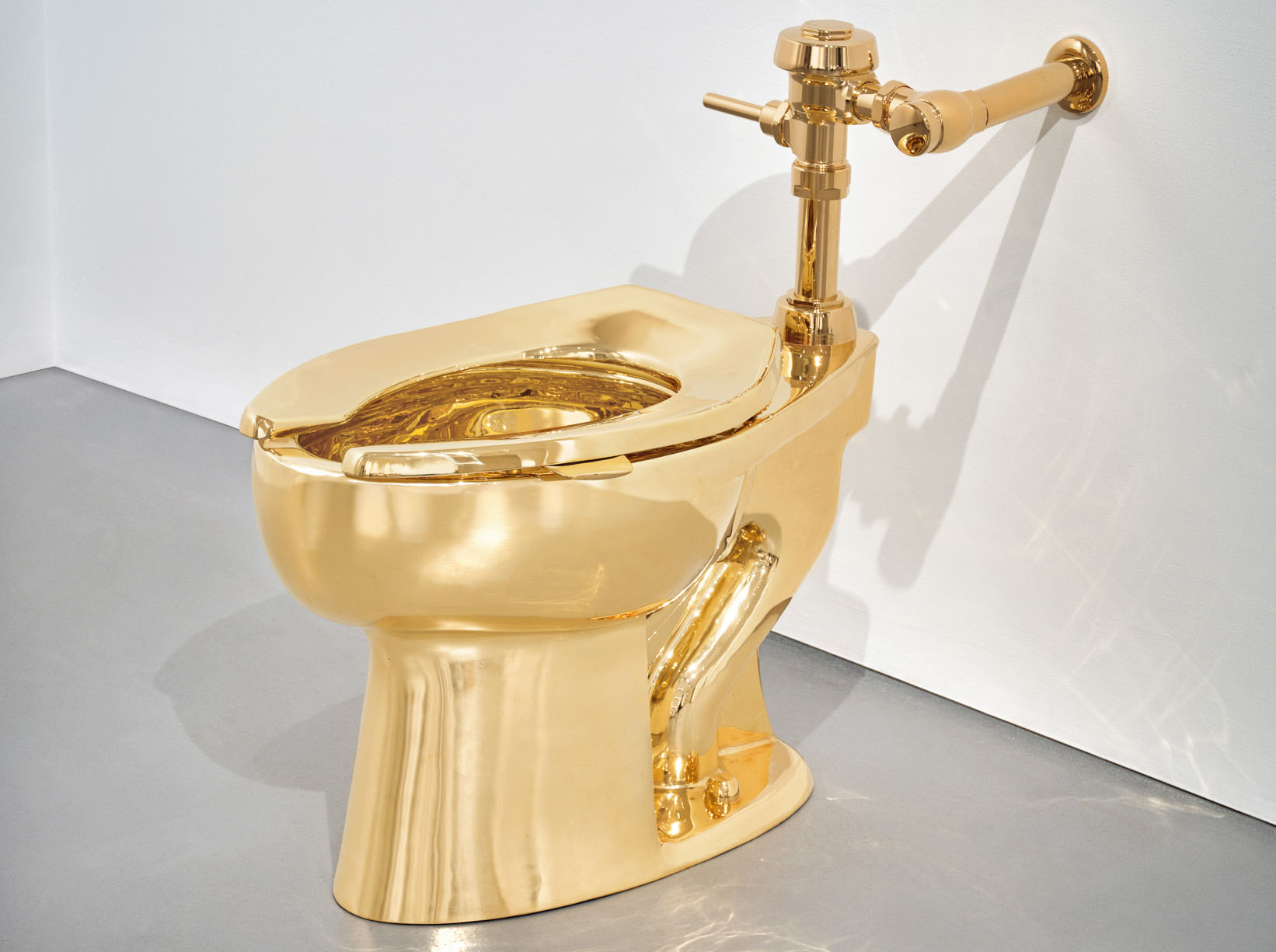 The chamber pot of gold. Source: Sotheby's Tarmy: Which artists do you think are overvalued? The big art-market news of the week: There's another toilet. Maurizio Cattelan's America—a fully-functioning, solid-gold toilet—was used (yes, in that way) by more than 100,000 people when it was installed at the Guggenheim Museum in New York in 2016–17, becoming one of the rare artworks famous enough to make the front page of the New York Post. It then moved to Blenheim Palace, in England, where it was stolen, never to be seen again. (Almost certainly, it was melted down for its scrap value.) The sentencing of the thieves in June looked like the work's final chapter—until yesterday. On Friday, the Wall Street Journal broke the news that a second version of the toilet was quietly sold by Cattelan's gallery, Marian Goodman, in 2017. The buyer of that piece has now consigned the work to Sotheby's, which will sell it on Nov. 18. We don't know the original purchase price, but back when the two toilets were fabricated in 2016, gold was trading at about $1,300 per troy ounce. The 18-karat artwork weighs 223 pounds; that means the gold alone was worth about $3.2 million in 2016. At $4,000 per ounce, that gold is now worth more like $9.8 million. It's a pretty safe bet that the bullion value of the toilet today is more than the purchase price in 2017. As for the value of the toilet as art, that depends in part on whether the Sotheby's marketing department can precipitate a bidding war by turning it into a meme. Cattelan's Comedian, a banana duct-taped to a wall, sold for $6.2 million to crypto guy Justin Sun, and the auction house is once again accepting payment in crypto for America. Cattelan's pre-2011 pieces featuring lifelike dummies have a devoted collector base, and his works have sold for as much as $17.2 million. The big question is whether his more recent work, which has leaned in to his reputation as the art world's foremost prankster, can sell for similar sums. 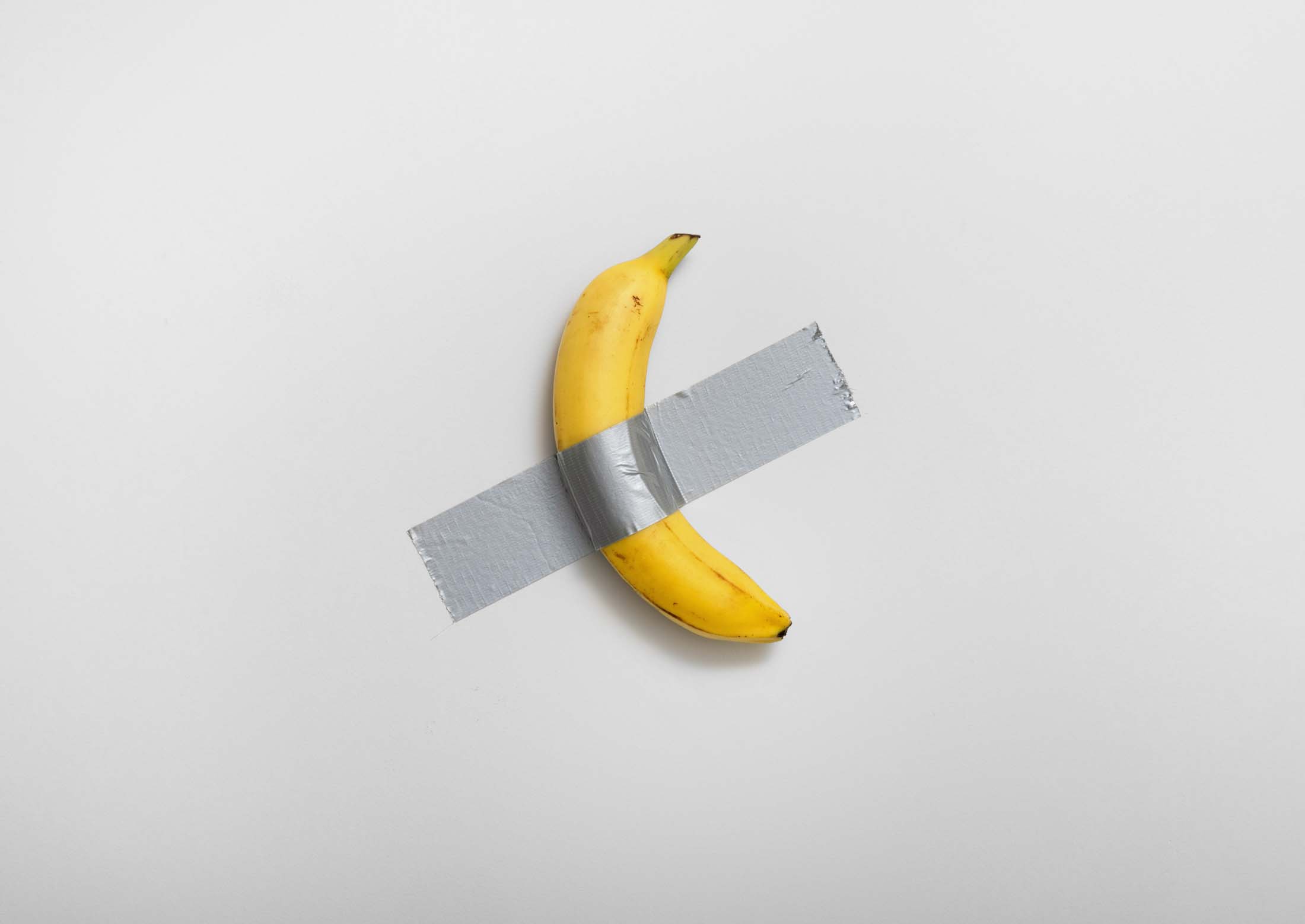 For his crypto millions, Sun got a certificate of authenticity, rights to manifest the piece, plus a banana and a roll of duct tape as a sort of starter kit. Source: Sotheby's The history of artworks made out of millions of dollars' worth of luxury materials is not particularly propitious. Damien Hirst's For the Love of God, a platinum skull studded with more than 8,600 diamonds, failed to sell; Niclas Castello's Castello Cube, made out of even more gold than Cattelan's toilet, is now caught up in an Austrian insolvency proceeding. Even Sotheby's, in its press release announcing the sale, calls America "a work whose subjective value is skewered by its absolute, objective worth." On top of that, there's the only-in-the-art-world question of the three solid-gold toilets that don't exist. Two versions of America were fabricated; one was stolen and melted down, while the second is being sold at Sotheby's. But the work was made in an edition of five, which means that Cattelan has the right to fabricate as many as three more versions of the piece. Given the price of gold, creating a new version of America would cost somewhere in the region of $10 million. But if this version sells for double that, Cattelan would have a clear financial incentive to create a third, which he could sell to the underbidder for a substantial and immediate profit. As part of its sales pitch, Sotheby's is declaring that "the present work is the only extant version of this sculpture." That's true for the time being. But if it sells for a huge sum, it might not stay true for very long. Running tab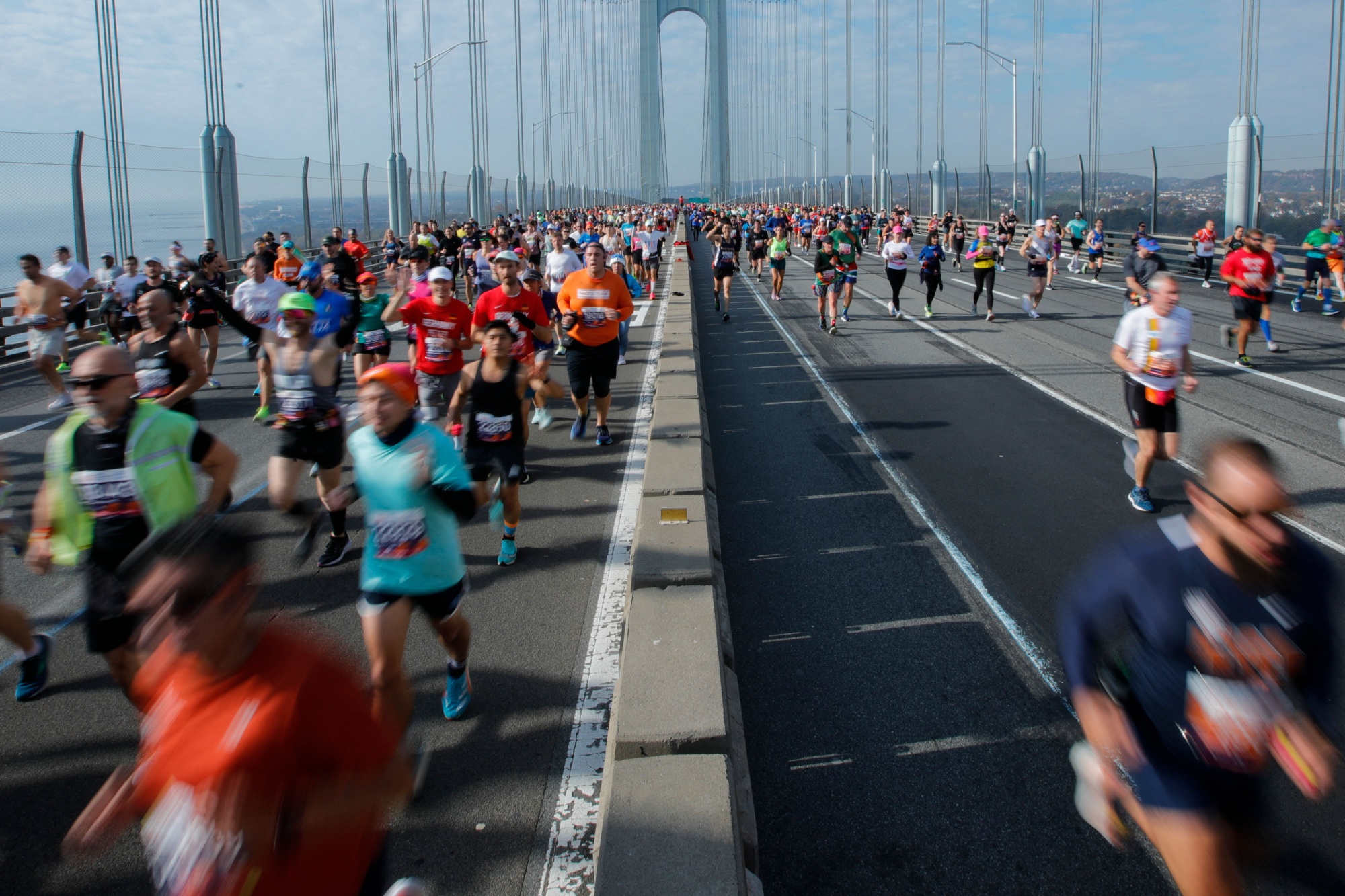 Photographer: KENA BETANCUR/AFP/Getty Images Bloomberg's Laura Noonan is also running in the marathon tomorrow and looked into some of the ways that "the sport that took off in the 1970s as a low-cost fitness trend has turned into a playground for the wealthy." Aside from adding up to $1 billion to the New York economy, it may just make its participants better people. Here's a sampling of the ways the rich are spending their running budgets:
Next time you find yourself on the fence about to whether to drop a couple of hundred dollars on a new pair of running shoes, it might be worth reminding yourself that Munir Nanji, ultramarathoner and Citigroup Inc.'s head of central Europe, has spent tens of thousands of dollars on personal training sessions, massages, blood tests, a $2,000 mattress topper, a $400-per-year Whoop band subscription, a heat suit and much, much more. Reasons to love New York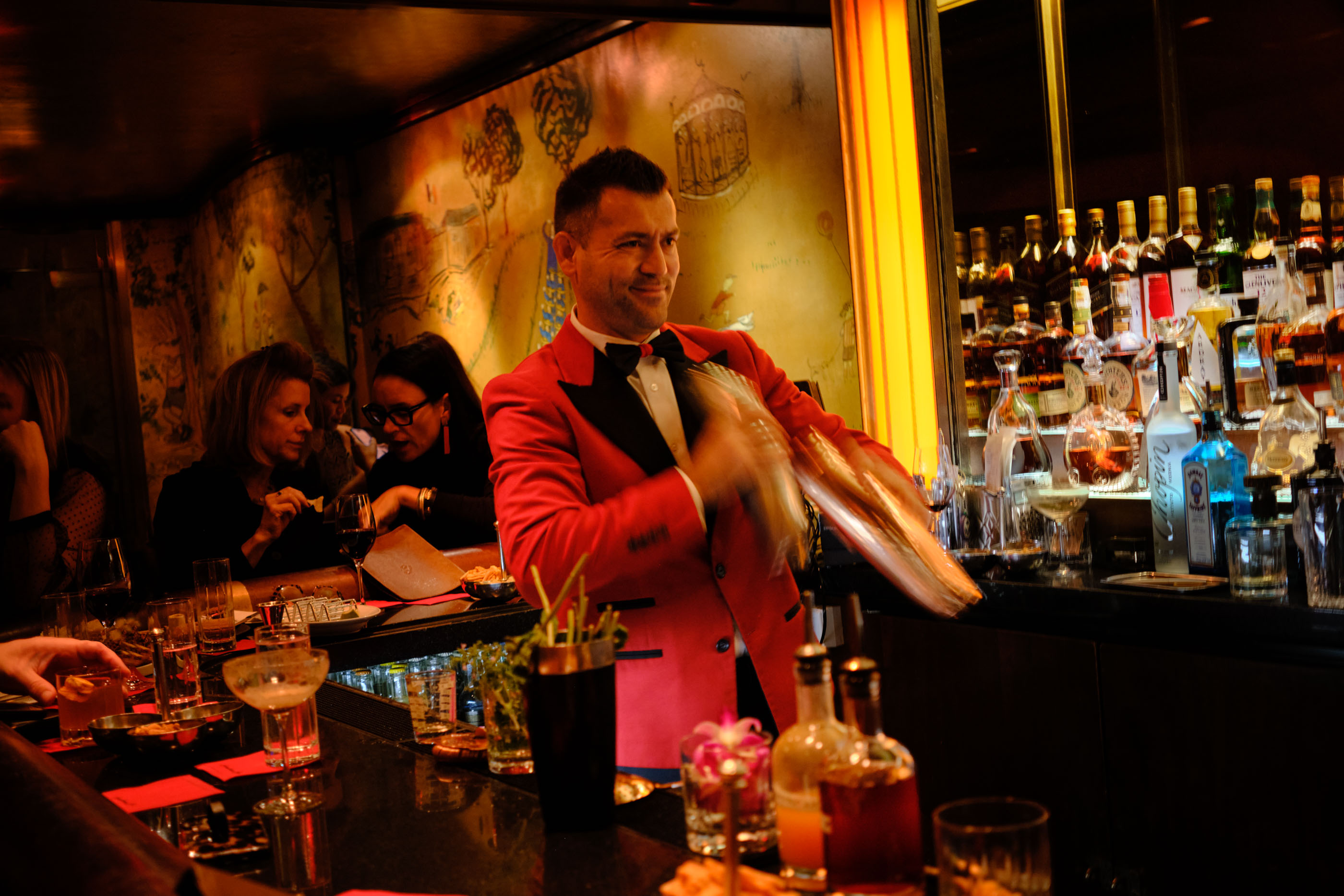 Bemelmans Bar at the Carlyle Hotel on the Upper East Side. Photographer: Annie Schlechter for Bloomberg Businessweek If you're in town for the marathon and want to carbo-load in style, you're unlikely to be able to do better than at Santi, chef Michael White's swanky new restaurant on 53rd and Madison. The pastas are the (relatively) cheap part of the menu, with a garganelli bolognese available for $38, less than some of the crudités. Santi is one of Kate Krader's hot-off-the-presses Five Top Tables in New York, which also features a 5,000-square-foot Mexican restaurant near Moynihan Train Hall where you can drop $95 on fish tacos. That's more than six times the minimum price of a nine-course meal at Community Kitchen, a new nonprofit restaurant from food journalist and cookbook author Mark Bittman. "This is the future, I'm quite sure," he tells Deena Shanker. Head north, and you'll find yourself on the Upper East Side, one of Bloomberg's 25 places to go in 2025. Stay at the Surrey, newly renovated by Corinthia Hotels, and then head out for some highbrow culture. The perfectly-sized Frick Museum has never looked better, and there's a fantastic Man Ray show on at the Met. For a nightcap, Bemelmans Bar is unbeatable. Bag in Japan Sanae Takaichi with her viral tote. Source: Prime Minister's Office of Japan Move over Jane Birkin: The hardest handbag to obtain right now is the Grace Delight Tote made by Hamano Inc., a 145-year-old Japanese leather-goods maker. As Kanoko Matsuyama reports, the bag's presence on the prime ministerial arm of Sanae Takaichi has set off a buying frenzy. It's also incredibly light, weighing a mere 700 grams (1.5 pounds) despite being made entirely of leather. It helps that the bag is made in Japan, given the amount of anti-foreigner sentiment in the country right now. The most recent culprit: McDonald's, which included a Pokémon toy and two exclusive trading cards in its Happy Meals. The result was a wave of anti-Chinese sentiment after speculators bought them up in bulk, left the meals uneaten, and took the cards to China to resell. When Hamano executives need a place to get some air and exercise without being mobbed by crowds, Gordy Megroz might suggest Tanigawadake Tenjindaira, an excellent ski resort a few hours north of Tokyo. It's on his list of five spots around the globe with great skiing and few skiers. The divine comedy of incomprehension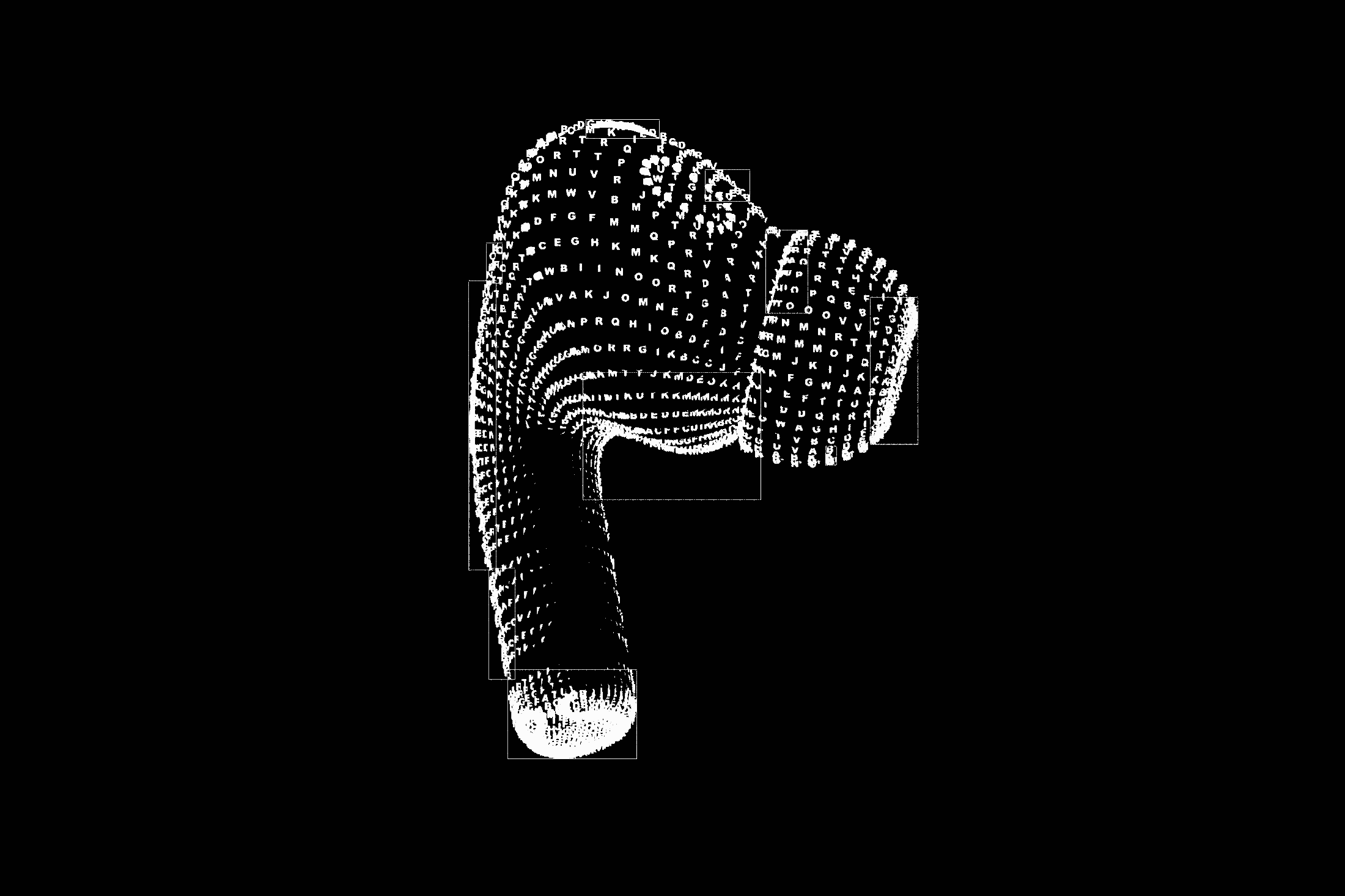 The newest translation tool. Illustration: Vivek Thakker for Bloomberg Without understanding, we observe more closely, we read physical cues. We slow down. We watch what they do so that we can copy it. We make mistakes, embracing an increasingly rare experience in our day-to-day: failure. Your weekend read is Madison Darbyshire's sublime paean to serendipity—things she worries might disappear if the simultaneous-translation function in AirPods becomes ubiquitous. "What happens when we stop misunderstanding, misreading and mistranslating?" she asks. "How much serendipity—and comedy—will simply cease?" As for your weekend listen, that's surely Mishal Husein's interview with Venezuelan opposition leader María Corina Machado, available on iHeart Podcasts, Apple Podcasts, Spotify or wherever you get your podcasts. "For years, [the regime] has felt that they can disappear, torture, kill, and the cost will be zero," says the newly minted Nobel laureate. "But the time of impunity, it's over." New for subscribers: Free article gifting. Bloomberg.com subscribers can now gift up to five free articles a month to anyone you want. Just look for the "Gift this article" button on stories. (Not a subscriber? Unlock limited access and sign up here. We're improving your newsletter experience and we'd love your feedback. If something looks off, help us fine-tune your experience by reporting it here. Follow us
You received this message because you are subscribed to Bloomberg's Bloomberg Pursuits newsletter. If a friend forwarded you this message, sign up here to get it in your inbox.
|
Saturday, November 1, 2025
Flush with cash





Subscribe to:
Post Comments (Atom)
something i've been meaning to tell you
figured i'd stop sitting on it ...
-
Revolutionary Stem Cell & PRP —Start Your Journey Today ...
-
You’ve shown interest in Regenerative Medicine ...


No comments:
Post a Comment