Tuesday, September 30, 2025

The sad familiarity of a shutdown

Countdown to midnight is on
View in browser
Bloomberg

Unless Congress acts in the next few hours, funding for the federal government will run out at the end of the day, and a shutdown will begin. Bloomberg Businessweek editor at large Wes Kosova writes about what's at stake. Plus: 3M charts a path out of its toxic legacy around PFAS chemicals.

If this email was forwarded to you, click here to sign up.

It's possible that Republicans in the US Congress will reach a last-minute compromise with Democrats to stop the government from partially shutting down at midnight. At this hour, though, it sure doesn't look likely. The parties are far apart on the particulars of a temporary spending bill, including whether to extend Obamacare tax credits for millions of Americans that expire at the end of the year. Democrats want them included in the bill. Republicans don't.

But spending priorities aren't the only, or even the most important, thing at stake. No matter how hard the two sides try to make it sound as if this standoff is about legislative details, it's not really a policy fight. This is a political fight. And in Donald Trump's Washington, the point of any fight is the fight itself.

Although Republicans control the House of Representatives, Senate and White House, Trump—who frequently boasts that he can do anything he wants as president—is trying to convince Americans that this one's out of his hands. "Radical Left Democrats are barreling the country toward a government shutdown," reads a recent official White House statement on the shutdown, and Trump himself has taken to calling Democrats "deranged." These don't sound like the words of a president hoping for a way out. (It may be harder still for Trump to convince voters that a plan to use a shutdown to justify mass firings of federal employees is the Democrats' fault.)

Meanwhile, the Senate's Democratic leader, Chuck Schumer, is under enormous pressure not to give in to Trump a second time. He was excoriated by many in his own party after reluctantly joining with Republicans in March to keep the government open, fearing voters would blame Democrats for a shutdown. This time, Democrats are touting polls that show it's Republicans who'll get the blame. Republicans have their own polls that show the opposite.
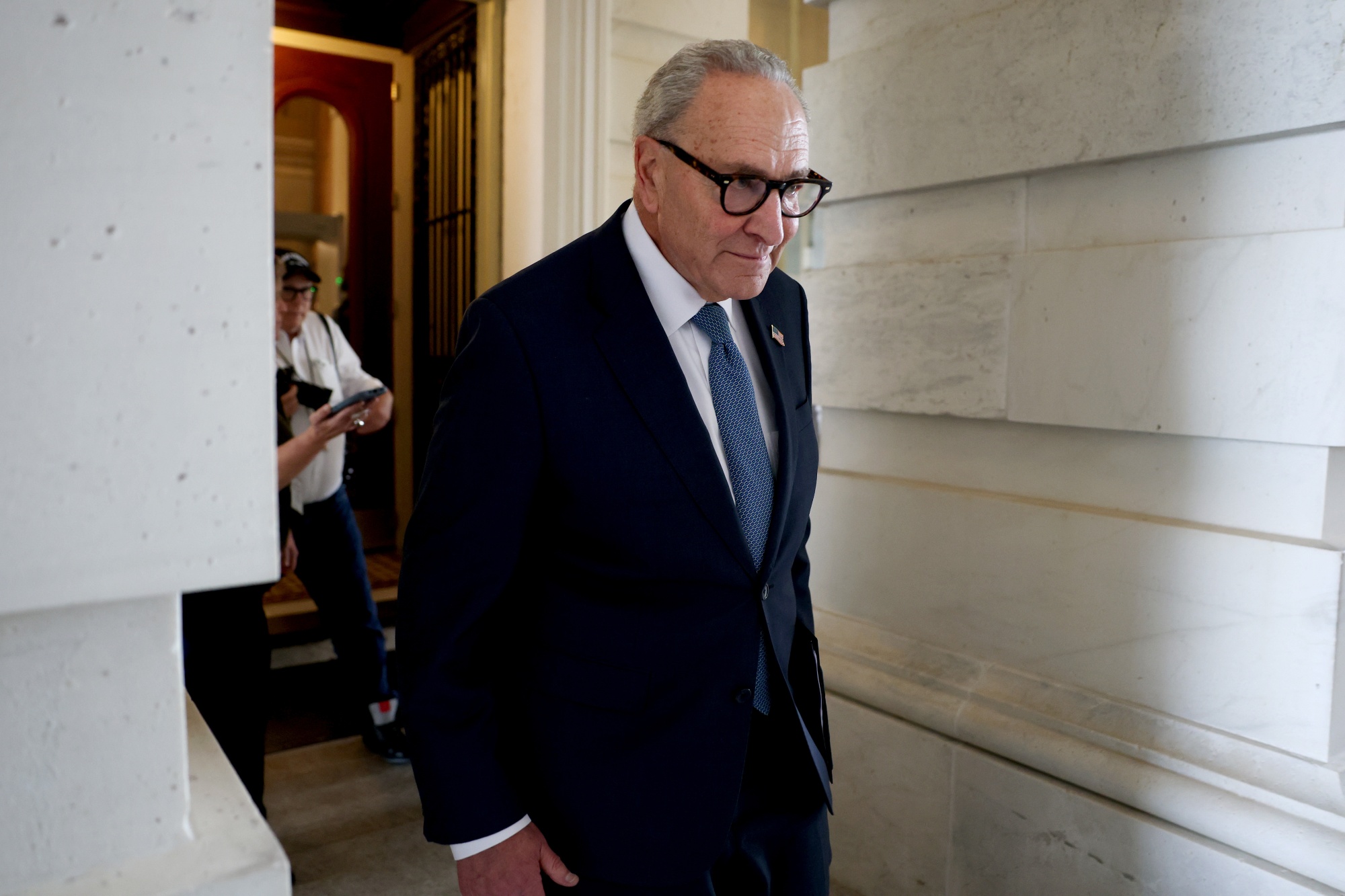
Schumer leaving the US Capitol on Monday for a meeting at the White House about the funding bill. Photographer: Anna Moneymaker/Getty Images

"They want to try to bully us—they are not going to succeed—into taking their partisan bill," Schumer said today. "That's why we are heading into a shutdown."

Dire language aside, experience has taught congressional leaders and presidents that closing the US government for a short period of time doesn't exact a high enough price to stop them from doing it, again and again. If it happens, this will be the 15th time the US government has closed since 1980.

Any shock value wore off years ago. Most Americans, and markets, are largely tuning the shutdown fight out (although stocks fluctuated today on concerns that government economic reports that guide Federal Reserve interest-rate decisions might be delayed). And because the government doesn't really "shut down" completely, with the essential services that voters care about the most continuing, there's even less pressure to keep the lights on.

Shutdowns often end with an obvious, mundane compromise that could've been worked out beforehand and leaves voters wondering why the closure was necessary at all. The possible makings of such a deal are already taking shape. Many Republicans aren't actually eager to end the health-care tax credits that they now oppose adding to the bill. They don't relish having to explain to their constituents why a popular subsidy is disappearing. The Senate's Republican leader, John Thune, has indicated he's willing to talk terms on the credits after passing a short-term spending bill. "We can't even have that discussion until we keep the government open," he said on Monday.

That's one way a shutdown might end: with Republicans agreeing to some kind of extension in principle, and Democrats agreeing to temporarily drop some demands, such as the reversal of Medicaid funding cuts that were part of Trump's tax legislation earlier this year. As with the 14 previous shutdowns, the only question is how long it'll take for Americans to feel enough pain from the government's absence that their elected representatives start to feel it too.

Related: Here's What Happens When the US Government Shuts Down

In Brief

  • Amazon on Tuesday rolled out a slew of new home-security appliances from its Ring and Blink brands, plus a cheaper 4K Fire TV Stick and upgraded television sets.
  • US President Donald Trump's new plan to end the war in Gaza is essentially an ultimatum to Hamas to release hostages, give up arms and surrender—or face the full force of the Israeli military with Washington's explicit blessing.
  • Elsewhere in the grocery store, shoppers are on the hunt for bargains. But sales of high-priced premium butter are growing.

New Leadership in Command

Illustration: Cameron Galley for Bloomberg Businessweek

The Command strip is one of those quintessential 3M products. Released in 1996, it was simple yet revolutionary, strong enough to hold items without stripping paint when removed. Soon it was fastening framed photos, bathroom towels and outdoor decorations around the world.

The adhesive that made the strip possible was invented by a 3M scientist in the late 1980s. The exact science is a closely guarded secret, but it can resist gravity while somehow pulling away clean when tugged as instructed. In hindsight the market for such an invention is obvious, and yet it was almost lost to corporate bureaucracy. 3M shelved the project at one point in the '90s and revived it only after impassioned pleas from a determined product development executive. His persistence paid off: Within three years of its debut, the Command strip was turning a $10 million profit. 3M Co. now sells more than 200 varieties, bringing in $500 million a year.

As Command strips turned into a product empire, though, they also became captive to 3M's unique form of industrial sprawl. Historically the company has organized its factories by material science and manufacturing processes, rather than by product—think chemicals in one facility, adhesives in another and packaging somewhere else, for example, regardless of their ultimate end use. This way, the thinking went, with each innovation, 3M could wring more value from existing machinery and underlying technologies. But every new product and geographic market also brought with it new costs and complexities, resulting in a labyrinthine factory network. This approach meant that Command strip production took place at multiple sites, sometimes hundreds of miles apart. Add in more steps for distribution, and the journey to Walmart shelves of what is, at base, just a particularly good sticky plastic hook looks pretty convoluted.

3M is one of the most sparkling brand names in US business history, but over the years it became mired in legal liabilities from its use of chemicals found to increase the risk of cancer, decrease fertility and suppress the immune system. Brooke Sutherland and Kiel Porter write that a new CEO is hoping to spark a turnaround: 3M Might Just Escape Its Toxic Chemical Legacy

Play Alphadots!

Our daily word puzzle with a plot twist.

alphadots

Today's clue is: Bond villain?

Play now!

Rising Power Bills

267%
The cost of electricity for a single month increased by as much as 267% over five years in areas near significant data centers. It's an example of how everyday households are paying for the AI economy.

Remittance Boom

"When the situation got ugly, we decided to save, because we're in a country that's not our own. If you're deported, I think you lose your money, because who would be able to access it here?"
Wilmer
A 23-year-old Honduran who sends remittances back from his work in the US
Transfers to Honduras jumped 25% as migrants, fearing their time in the US will be cut short by the president's crackdown, bet their money is safer back home. Read the full story here.

More From Bloomberg

Like Businessweek Daily? Check out these newsletters:

  • Markets Daily has what's happening in stocks, bonds, currencies and commodities right now
  • Supply Lines follows the trade wars, tariff threats and logistics shocks that are upending business and spreading volatility
  • FOIA Files goes behind the scenes with Jason Leopold to uncover documents that have never been seen before
  • Management & Work analyzes trends in leadership, company culture and the art of career building
  • Bloomberg Pursuits is your weekly guide to the best in travel, eating, drinking, fashion, driving and living well

Explore all Bloomberg newsletters.

Follow Us

Like getting this newsletter? Subscribe to Bloomberg.com for unlimited access to trusted, data-driven journalism and subscriber-only insights.

Want to sponsor this newsletter? Get in touch here.

You received this message because you are subscribed to Bloomberg's Businessweek Daily newsletter. If a friend forwarded you this message, sign up here to get it in your inbox.
Unsubscribe
Bloomberg.com
Contact Us
Bloomberg L.P.
731 Lexington Avenue,
New York, NY 10022
Ads Powered By Liveintent Ad Choices

No comments:

Post a Comment

Preference center link

...