Wednesday, April 16, 2025

Trump vs the electric school bus

Hitting the brakes on funding |
View in browser
Bloomberg

Today's newsletter looks at how Trump is throwing the electric school bus transition into chaos. You can read and share the full story on Bloomberg.com. For unlimited access to climate and energy news, please subscribe

Trump vs the electric school bus

By Zahra Hirji

When it comes to President Donald Trump's administration, one constant is that things change. I learned this covering Trump's first term and it's held true so far for the second term.

Case in point: the Environmental Protection Agency's $5 billion Clean School Bus program. Launched by President Joe Biden's administration, the program aims to bring down climate and health-harming pollution The EPA had already dispersed some $2.7 billion in awarded funds going into this year. It closed applications for a fourth funding round in early January.

Then the Trump administration swiftly put in place an unprecedented government-wide spending freeze in late January that included the Clean School Bus awards. While other EPA money was quickly released, these funds remained locked. I've been following what's happened to this money ever since, tracking how the story repeatedly shifted but the uncertainty looming over the electric school bus industry remained.

The lack of clarity forced school districts to make tough decisions early this year. Plum Borough School District in Pittsburgh, for example, decided by mid-February to scrap its electric bus plans, according to the district's Superintendent Rick Walsh.

After winning a $9.8 million Clean School Bus grant to cover 25 electric buses in 2023, Little Rock School District was about to start updating its bus yard to accommodate electric buses in early February. Then its EPA grant was frozen. "We did not have the money to pay for these buses," says Linda Young, the school system's director of grants. To her relief, the EPA released the funds on Feb. 19 and the district was able to proceed with construction. The buses, which will transport special-needs students, are slated to arrive by the end of April and go into operation by the fall.
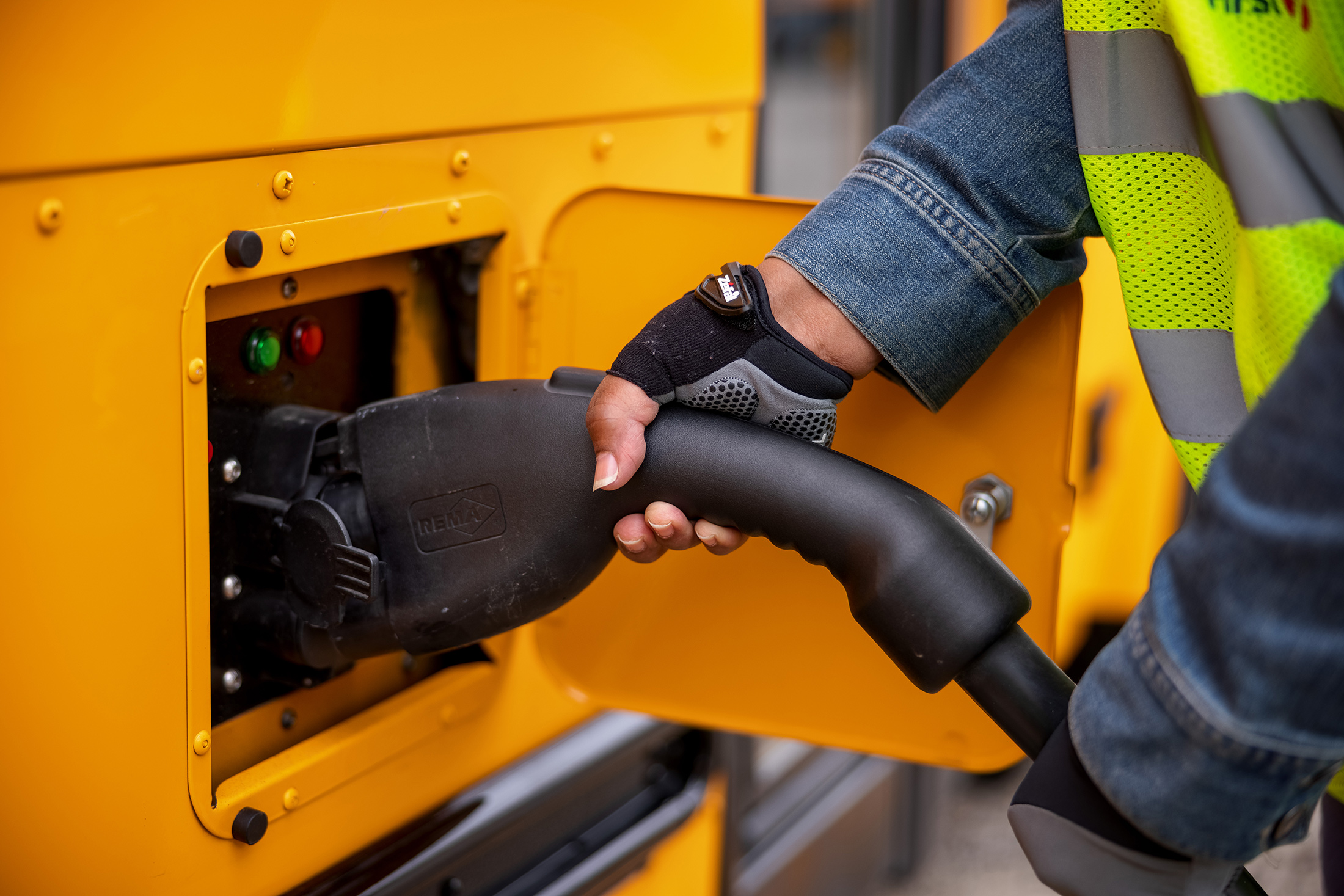
A worker fuels an electric school bus at First Student's Maywood, IL location. Courtesy: First Student

Meanwhile, First Student Inc., a contractor that handles the rest of Little Rock's school busing needs, had won its own EPA award for 25 electric school buses but the funds remained unavailable, according to Young. This wasn't First Student's only frozen award either. According to EPA's publicly available award data, the nation's largest school bus contractor has a total of $216 million in awards for more than 700 electric buses that haven't been delivered.

When I reached out to First Student in March, they declined to comment about their funding. I tried again weeks later, and once more on Monday. This last time, they had good news to share: Last Friday, the EPA had started the process of issuing funds for some of its awards. "We're watching our account associated with the program to monitor for deposits," says Kevin Matthews, First Student's head of electrification. (No money had been deposited as of this morning.)

The EPA then confirmed "the approval of nearly $90 million in pending requests for use in school districts in 22 states across the country as recently as the end of last week." 

But could something change again next week or month? With the Trump administration reversing course on everything from agency layoffs to tariffs, there's no guarantee the situation won't change again.

Read the full story on Bloomberg.com. 

Dirty details

3.3
The climate footprint of a diesel school bus is about this many pounds of carbon dioxide equivalent per mile. That's more than double the per-mile footprint for a bus powered on the average US electric grid.

Hidden threat

"This is really a health issue."
Almeta Cooper
National manager for health equity with the environmental group Moms Clean Air Force
Diesel exhaust is carcinogenic. And specific components of the tailpipe fumes, such as particulate matter and nitrogen oxides (NOx), are linked to asthma and other respiratory problems in children.

More from Green

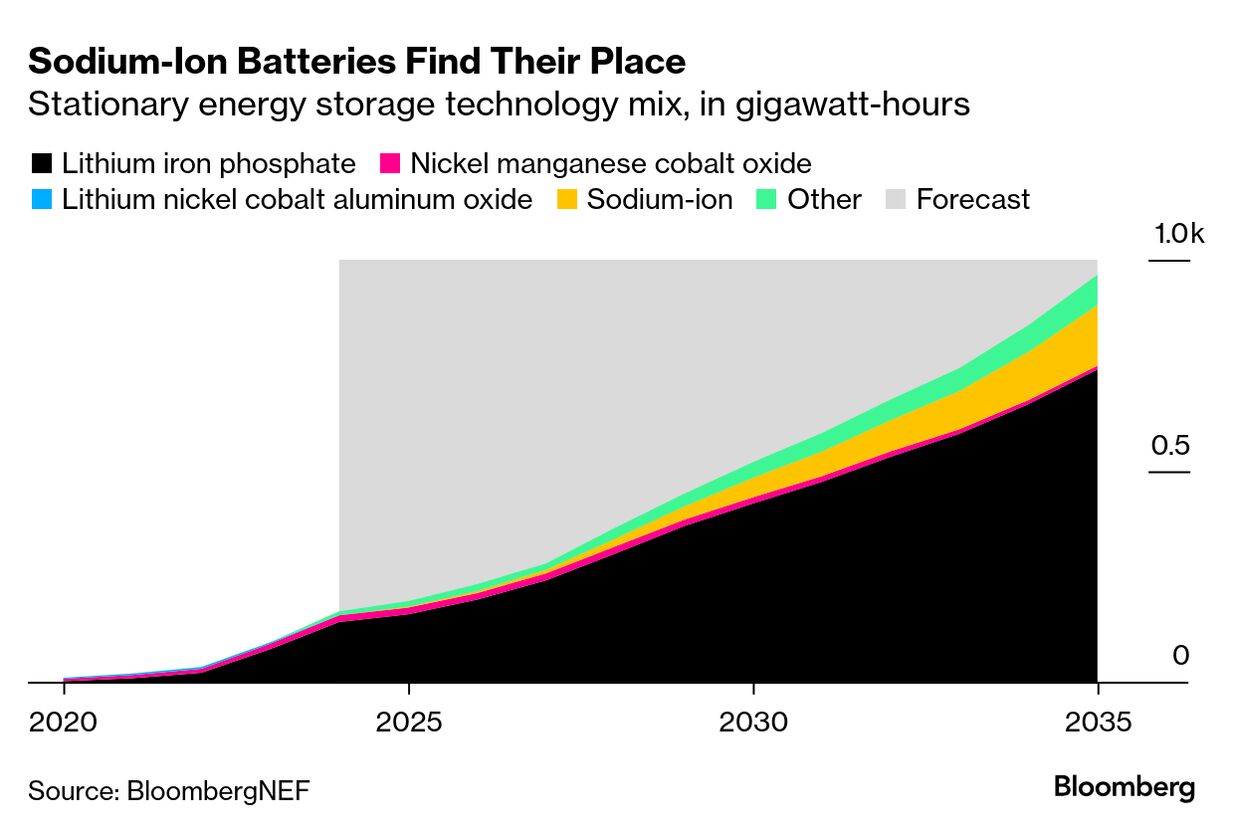
The idea of making batteries from sodium has been around for centuries. In Jules Verne's 1870 novel, Twenty Thousand Leagues Under the Sea, Captain Nemo drives an electric submarine powered by salt. But while researchers have experimented for years with using the cheap, superabundant material for power storage, sodium-ion batteries could never match the energy density of other battery types, particularly lithium-based formulas. Now expanding energy needs and global trade tensions mean the long-overlooked technology is finally breaking through.

Born out of founder Colin Wessells' doctoral thesis in 2012, Natron Energy Inc. is among the few companies in the world that mass-produce sodium-ion batteries and is the only one doing it in the US. Its first plant, in Holland, Michigan, opened in April 2024 at a cost of $40 million to retrofit an existing $300 million facility, and is set to produce 600 megawatts of batteries annually by the end of 2025, almost enough to power a city the size of San Diego. The company is lining up funding for an additional $1.4 billion factory in Edgecombe County, North Carolina, that would increase its production capacity by roughly 40 times. Natron says that's needed to meet demand from its customers, which include data centers and cloud computing companies, particularly as artificial intelligence sucks up more and more energy. "Power demand is going to go through the roof," says Chief Executive Officer Wendell Brooks.

Read more on how trade tensions with China are clearing a path for salt-powered batteries on Bloomberg.com

Tariffs pose a threat to US biofuels feedstock. LanzaJet Inc. has ambitions to become the first ever commercial maker of green jet fuel made from ethanol, but US tariffs on imports from Brazil are complicating plans. The dilemma shows the ripple effect tariffs are having on the US biofuels market.

The EU is cutting red tape with its deforestation law. The European Commission, the bloc's executive branch, said late Tuesday that companies would be able to submit due-diligence statements annually, rather than for each cargo they import, to prove they're keeping to the bloc's new rules to curtail deforestation. 

REI said it made a 'mistake' endorsing Interior department lead. Recreational Equipment, Inc. retracted its endorsement of Doug Burgum's nomination to lead the Interior Department, with CEO Mary Beth Laughton apologizing for the mistake.

Worth a listen

Even with all of the recent market turmoil, the energy transition isn't taking a break. Last year, global spending on clean-energy technologies was more than $2 trillion, according to BloombergNEF. Yet only a small fraction of that money makes its way to developing countries. On the latest Zero, Avinash Persaud, climate advisor to the president of Inter-American Development Bank, joins the podcast's Moving Money series, and answers the question: How do we make the financial system work for climate action, not against it?

Listen to the full episode and learn more about Zero here. Subscribe on Apple or Spotify to stay on top of new episodes.

Avinash Persaud. Photographer: Hollie Adams/Bloomberg

More from Bloomberg

  • Hyperdrive for expert insight into the future of cars
  • Energy Daily for a daily guide to the energy and commodities markets that power the global economy
  • CityLab Daily for top stories, ideas and solutions, from cities around the world
  • Tech In Depth for analysis and scoops about the business of technology

Explore all Bloomberg newsletters.

Follow Us

Like getting this newsletter? Subscribe to Bloomberg.com for unlimited access to trusted, data-driven journalism and subscriber-only insights.


Want to sponsor this newsletter? Get in touch here.

You received this message because you are subscribed to Bloomberg's Green Daily newsletter. If a friend forwarded you this message, sign up here to get it in your inbox.
Unsubscribe
Bloomberg.com
Contact Us
Bloomberg L.P.
731 Lexington Avenue,
New York, NY 10022
Ads Powered By Liveintent Ad Choices

No comments:

Post a Comment

The only factory making America’s new “AI Metal”

Without this material, AI data centers could be crushed by energy costs. ͏  ͏  ͏  ͏  ͏  ͏  ͏  ͏  ͏  ͏  ͏  ͏  ͏  ͏  ͏  ͏  ͏  ͏  ͏  ͏  ͏  ͏ ...