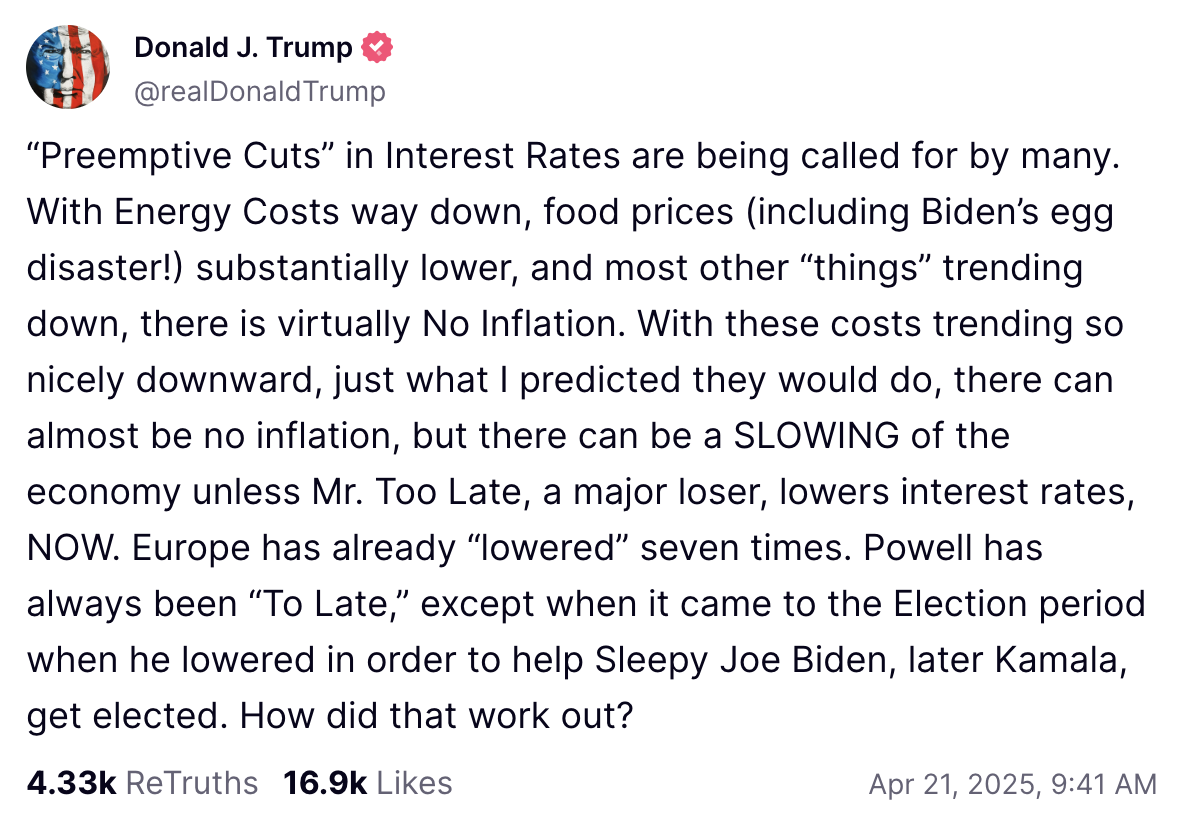
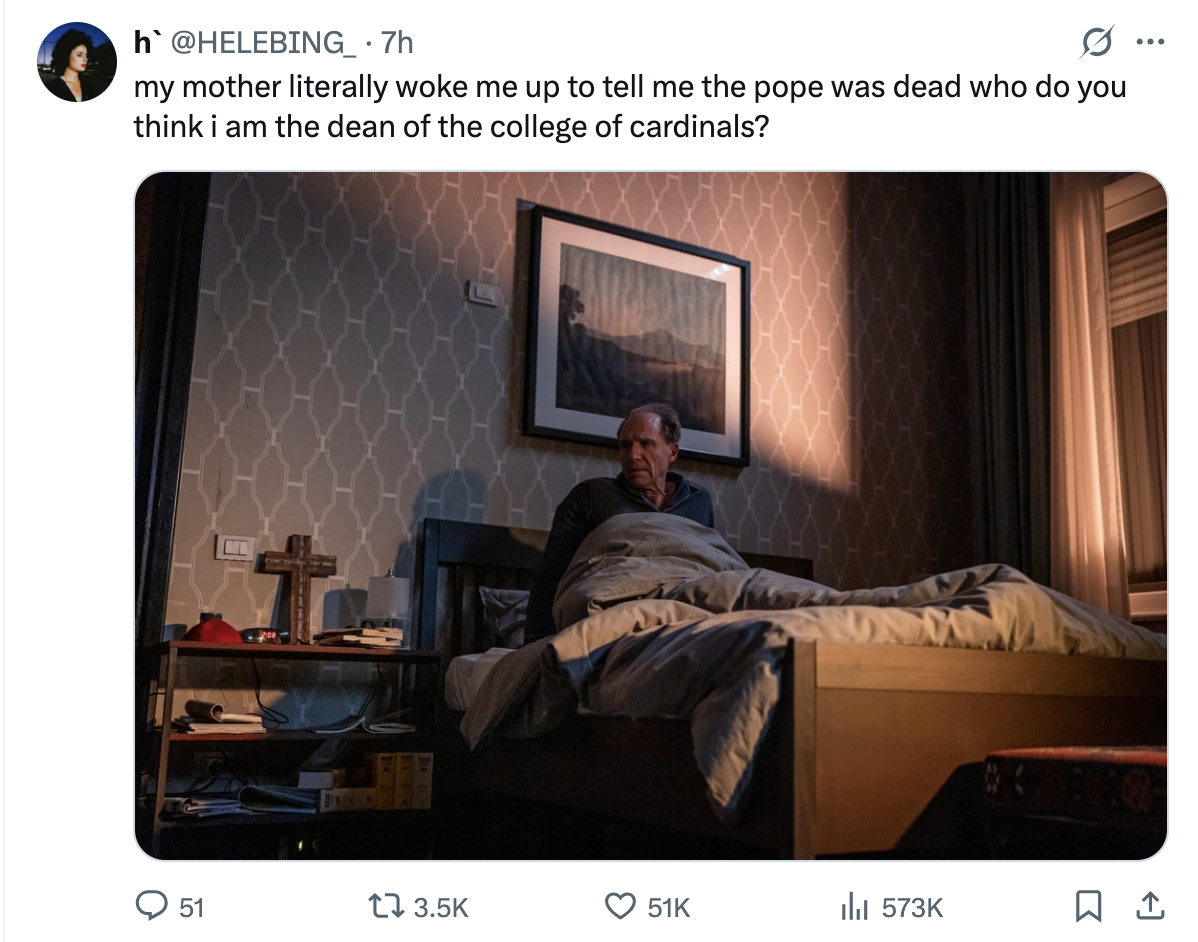
| If you have yet to watch Conclave, perhaps you felt a bit left out today since every other social post about Pope Francis' passing referenced the movie. Lucky for you, Amazon Prime will begin streaming it tomorrow so you still have time to take notes before the actual papal conclave begins next month. First Pope Francis will have a funeral, of course, and he has requested a simple one. And then cardinals from around the world will descend on Rome to choose his successor. Unlike the one Ralph Fiennes presided over, though, this conclave could last more than 72 hours. Previous conclaves have lasted weeks, months and yes, even years. From 1268 to 1271, cardinals bickered endlessly over who would fill the late Pope Clement IV's ruby red slippers. Back in those days, popes could marry and have children. Clement — widowed prior to his pontificate — had two daughters, both of whom lived in a convent. Pope Adrian II, who led the church a handful of decades earlier, lived with his wife Stephania — his "popess," if you will — and his daughter in the Lateran Palace. She went on to marry a relative of the Church's chief librarian who conveniently failed to mention that he was previously betrothed to another. Then her husband had the gall to abduct and murder both her and her mother! Poor Adrian couldn't catch a break. Although the modern papal world [1] is thankfully less gruesome, it's not without its share of scandal. In March 2013, Howard Chua-Eoan says, Pope Francis inherited a church beset with problems: A looming budgetary crisis, a litany of child abuse offenses and a 500-year-old administrative structure in need of reform. "His public persona may have been the humble and patient father figure, but Francis spent his 12 years as pope reorganizing the Vatican bureaucracy — the Roman curia — with more than a touch of ruthlessness. It was the kind of steely, no-nonsense style he honed when, as Archbishop of Buenos Aires, he had to clean up a banking scandal inherited from his predecessor," Howard writes. But he likely won't be remembered for cleaning up the coffers, or even as the first pope to forgive dozing off while praying or to inspire AI-generated memes. He will be remembered for his progressivism. Despite that little slip-up he had in front of his colleagues last year, the pontiff was a champion of gay rights. He was encouraging of Jewish-Catholic dialogue. He was an advocate for marginalized people, regardless of religion or background. That mercy afforded him many fans, but it also made him some foes. In the coming conclave, all the changes the first Latin American pope implemented will be put to the test. "It's not impossible that Eurocentric conservatives and right-wing American prelates — who may have the sympathies of Vice President JD Vance, a recent convert who just visited the pontiff — might combine with Francis' newly minted African Cardinals, who've pushed back against his attempts at conciliation with gay Catholics. Cardinals who feel they've been shunted out of power by the reforms may also use their vote for comeuppance," Howard warns. Read the whole thing. What's worse: Being called "Mr. Too Late" or "a major loser"? It's a tough choice!! But if you're Federal Reserve Chair Jerome Powell, you don't need to decide. You get to be both: President Donald Trump's love for acrimonious nicknames knows no bounds. Nor does his ire for the Fed chair: Trump's economic advisers reportedly spent the weekend dreaming up ways to bring him down. But as much as the president would like to walk up to Powell as if he were a contestant on The Celebrity Apprentice and say, "You're fired!" he can't really do that. As John Authers notes, "a president can fire a Fed chairman but only 'for cause'; nothing about independence protects him or her from accountability for fiddling expenses or insider trading." Powell has ostensibly done none of those things, and so John says firing him "will require either a change in the law governing the Fed's relationship to the executive, or a big stretch of the concept of 'cause.'" If the Supreme Court gets involved, as Kathryn Judge and Lev Menand suspect it might, the concept of Fed independence could soon become a mirage. As for Trump's big wish — preemptive rate cuts — Bill Dudley says the trade war is getting in the way: "The economic outlook is unusually cloudy. There is no precedent for the rapid increase in US tariffs that have been far larger than Fed officials anticipated," he writes. More broadly, Daniel Moss says central bankers around the world are "feeling their way through the tariff drama, just like the rest of us." | 









No comments:
Post a Comment