Friday, April 11, 2025

Spain's bold clean energy plan

Plus, Tesla reacts to China's tariffs |
Bloomberg

China has announced it will raise tariffs on the US to 125% — further escalating the trade war between the world's two biggest economies. You can read the latest on how electric vehicle manufacturers Tesla and Polestar are reacting, along with earlier analysis on the impacts tariffs have across the wider clean energy market, on Bloomberg.com.

Today's newsletter brings the focus back to energy security. Read why Spain is continuing to pursue its plan to gradually shut down its nuclear capacity — at a time when atomic energy is having a revival. For unlimited access to climate and energy news, please subscribe

Spain is putting renewables to the ultimate test

By Laura Millan

Spain is ignoring calls to reconsider its nuclear decommissioning plans, betting renewables and battery storage will make up for the upcoming energy shortfall.

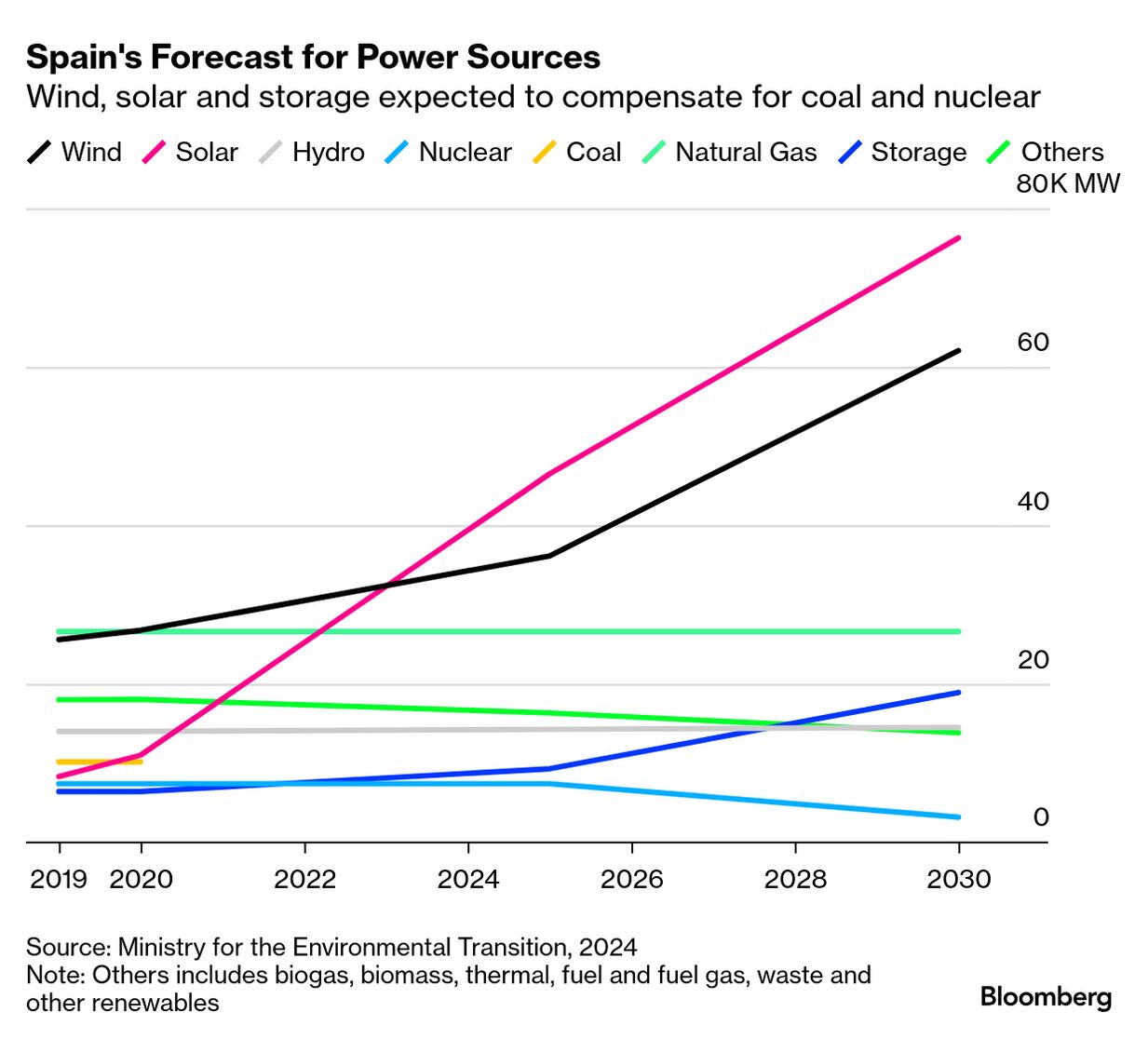
The country is plowing ahead with plans to shut down its seven nuclear reactors, which currently contribute 20% of its power mix, over the next decade. It's also set to close its last coal plant this year. 

While it's already only second to Germany in terms of renewable capacity in Europe, Spain is looking to fill the energy gap with more wind turbines, solar panels and giant batteries. 

The strategy isn't completely fossil fuel free — as it would rely on natural gas plants as a backup for the foreseeable future. Yet it is a substantial wager on clean power: It depends on a still nascent energy storage industry in Spain to rapidly expand from just 3 gigawatts of capacity today to a target of 20 gigawatts by 2030. It also requires an unprecedented roll-out of wind and solar over the next five years. Spain is targeting 81% power generation from renewables by the end of this decade — from just above 50% in the past two years.
Spain's plan to ditch nuclear, which was decided in 2019, currently stands out against a worldwide revival for atomic energy. The worries countries once had about safety and radioactive waste have been outranked by an insatiable hunger for constant, low-emission power supplies. Energy consumption is set to skyrocket with new demand sources such as artificial intelligence and its associated data centers. Europe has also been on a mission to replace Russian gas since the invasion of Ukraine in 2022.

"If everyone's going in one direction and we are the only ones going in another, we should at least stop and think," said Ignacio Araluce, president of Spanish nuclear industry association Foro Nuclear.

Spain believes extending the life of their aging reactors would only increase the cost of dealing with radioactive waste. It's also reluctant to invest in new reactors, saying renewable capacity is more cost efficient to deploy. So far, the government says it has received no formal request from nuclear companies to make changes to the scheduled shut down. 

Plant owner Endesa SA did not comment when asked whether the life of its reactors could be extended, but a company spokesperson said fiscal burdens associated with the plants, namely taxes, have risen over the years. Operators Iberdrola SA, EDP SA and Naturgy SA did not comment.

There are reasons for Spain to feel a sense of caution as it looks to switch off its first atomic facility in 2027. After Germany shut down its last reactor in 2023, coal plant operators said they may need to remain remain open longer than planned to keep the country's lights on. Natural gas plants might also be needed to run beyond 2035 — Germany's target date for carbon-free power production.

Moreover, countries across Europe have struggled to balance supply and demand on their grids as more intermittent renewable energy comes online, with negative electricity prices becoming more common. 

As a way to stablize power markets, Spain has granted 100 million euros ($110 million) to four projects to store energy through reversible pumped hydroelectric plants, including one to Iberdrola SA, one of Spain's largest renewable power companies and also an operator of nuclear power plants.

While this all points to Spain remaining bullish on renewables, Araluce said his group wants to convince the government wind and solar isn't the only way to fight climate change. "There's still room for negotiation — we are hopeful," he said.

Read the full story on Bloomberg.com. 

Going less than zero

247
This is how many hours of negative electricity prices Spain had last year, according to Bloomberg analysis of Epex Spot SE data. Sub-zero prices were unheard of in the country two years ago.

Not all about that base(load)

"Spain is a postcard, a glimpse into the future where you're not going to need baseload generators from 8am to 5pm."
Kesavarthiniy Savarimuthu
European power markets analyst with BloombergNEF
Savarimuthu said solar and wind could provide all of Spain's needs during the day once its clean energy plan is fully unfurled. Still, she said, there is a reasonable chance it could take longer than expected to rollout and "extending the life of the nuclear fleet can prove as an insurance for these delays."

More from Green

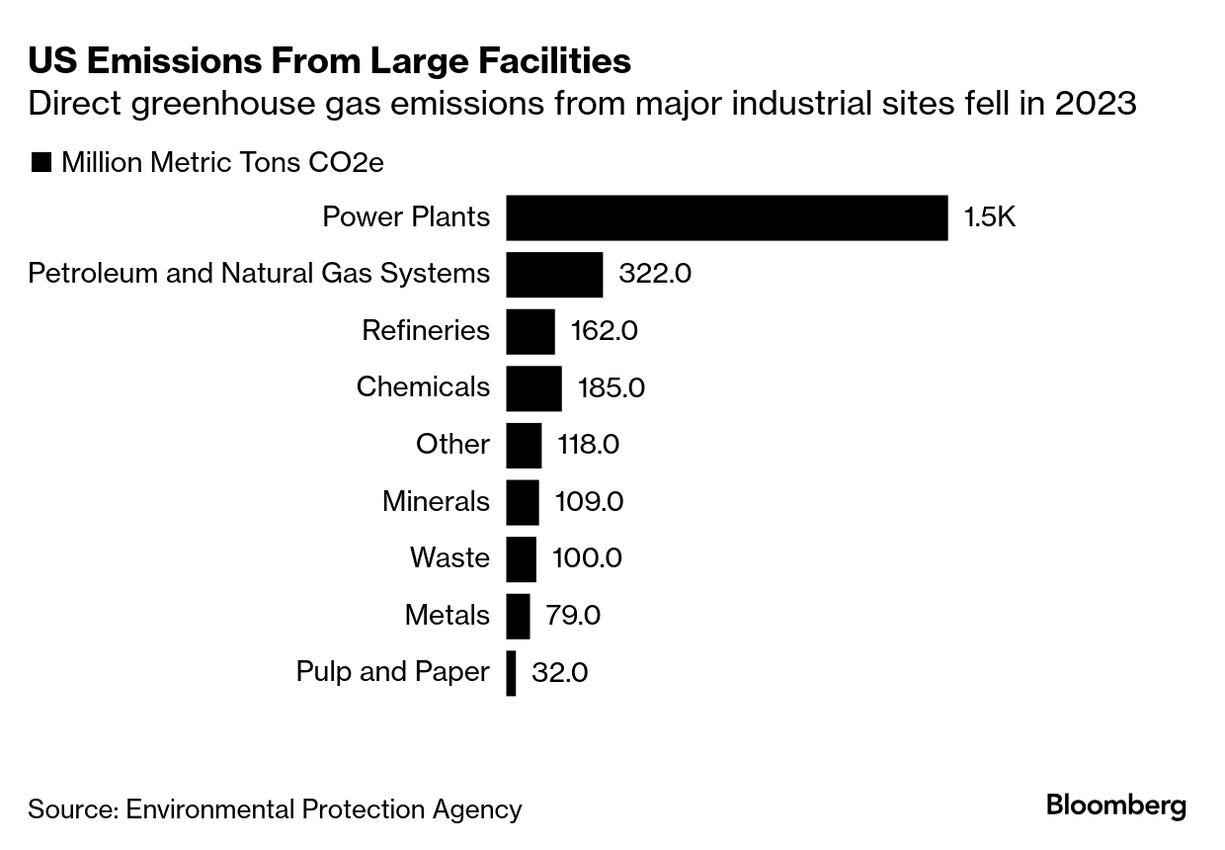
The US Environmental Protection Agency plans to scale back standards that compel major polluters — including power plants and industrial facilities — to collect and report data on greenhouse gas emissions, ProPublica reported.

A move to reduce the scope of the EPA's long-standing Greenhouse Gas Reporting Program would complicate the task of tracking the climate impact of about 8,000 sites, which accounted for direct emissions totaling roughly 2.6 billion metric tons of carbon dioxide equivalent in 2023.

Four GOP senators vow to protect climate tax credits. Four Republican senators are warning against a wholesale repeal of energy tax credits in former President Joe Biden's signature climate law, asking their party's leadership to instead take a measured approach.

California is also standing by its climate laws. President Donald Trump issued an executive order this week  targeting state climate laws, including California's cap-and-trade program, which he claims drive up energy costs and threaten national security. Following the announcement, a wave of state officials pledged to keep pursuing their climate programs.

Meanwhile, heat pumps have a new competitor. There's growing interest in so-called heat batteries, which are cheaper than lithium-ion batteries and can store energy for heating and hot water, making them a potential solution for homes that can't accommodate heat pumps, especially in cold climates like the UK.

Now streaming

While most people have heard of efforts to seed clouds to trigger rain, a host of new geoengineering startups are looking for a silver bullet to slow global warming in a somewhat more sophisticated way. On the latest episode of Primer, Bloomberg looks deeper into geoengineering. It's a corner of environmental science that—given the climate crisis and lack of consensus in addressing it—has become known as the "terrible idea whose time has come." Watch this episode and all of the others in the Primer series on Bloomberg.com. 

Worth a listen

Even with all of the recent market turmoil, the energy transition isn't taking a break. Last year, global spending on clean-energy technologies was more than $2 trillion, according to BloombergNEF. Yet only a small fraction of that money makes its way to developing countries. This week on Zero, Avinash Persaud, climate advisor to the president of Inter-American Development Bank, joins the podcast's Moving Money series, and answers the question: How do we make the financial system work for climate action, not against it? Listen to the full episode and learn more about Zero here. Subscribe on Apple or Spotify to stay on top of new episodes.

Avinash Persaud. Photographer: Hollie Adams/Bloomberg

More from Bloomberg

  • Hyperdrive for expert insight into the future of cars
  • Energy Daily for a daily guide to the energy and commodities markets that power the global economy
  • CityLab Daily for top stories, ideas and solutions, from cities around the world
  • Tech In Depth for analysis and scoops about the business of technology

Explore all Bloomberg newsletters.

Follow Us

Like getting this newsletter? Subscribe to Bloomberg.com for unlimited access to trusted, data-driven journalism and subscriber-only insights.


Want to sponsor this newsletter? Get in touch here.

You received this message because you are subscribed to Bloomberg's Green Daily newsletter. If a friend forwarded you this message, sign up here to get it in your inbox.
Unsubscribe
Bloomberg.com
Contact Us
Bloomberg L.P.
731 Lexington Avenue,
New York, NY 10022
Ads Powered By Liveintent Ad Choices

No comments:

Post a Comment

The China deal no one understands

Trump's unexpected move with China is exposing a massive shift—and most investors aren't ready. ͏  ͏  ͏  ͏  ͏  ͏  ͏  ͏  ͏  ͏  ͏  ͏  ...