| By Brian Kahn Ten years out from the Paris Agreement, the outlook for climate tech is decidedly unsettled. Funding for the energy transition crossed the $2 trillion threshold for the first time in 2024. Yet climate has tumbled down the international agenda this year. President Donald Trump has vowed to undo much of his predecessor's support for clean energy, while other countries have been distracted by his sweeping tariffs on imports and other issues such as national defense. In the fundraising community, venture capitalists are fleeing the sector for artificial intelligence. What can survive — and maybe even thrive — in this challenging environment? The winners of this year's BloombergNEF Pioneers awards for startups with potentially transformative carbon-cutting technology offer some clues. Investors chasing AI may eventually find themselves right back to funding the climate sector. A growing number of companies are using the technology to reduce climate harm and emissions rather than fueling them. The applications of machine learning run the gamut from high-tech beehives to improving the power grid. At the same time, one of the most under-invested corners of the climate tech universe is finally getting its due. Adapting to climate change received just 7.5% of all climate tech funding from 2019 to 2020. But with relentless fires, rising seas and deadly heat increasing, it's never been more important to prepare. Despite it being an underfunded sector, the startups working on reducing climate risk are quickly finding their services are needed. 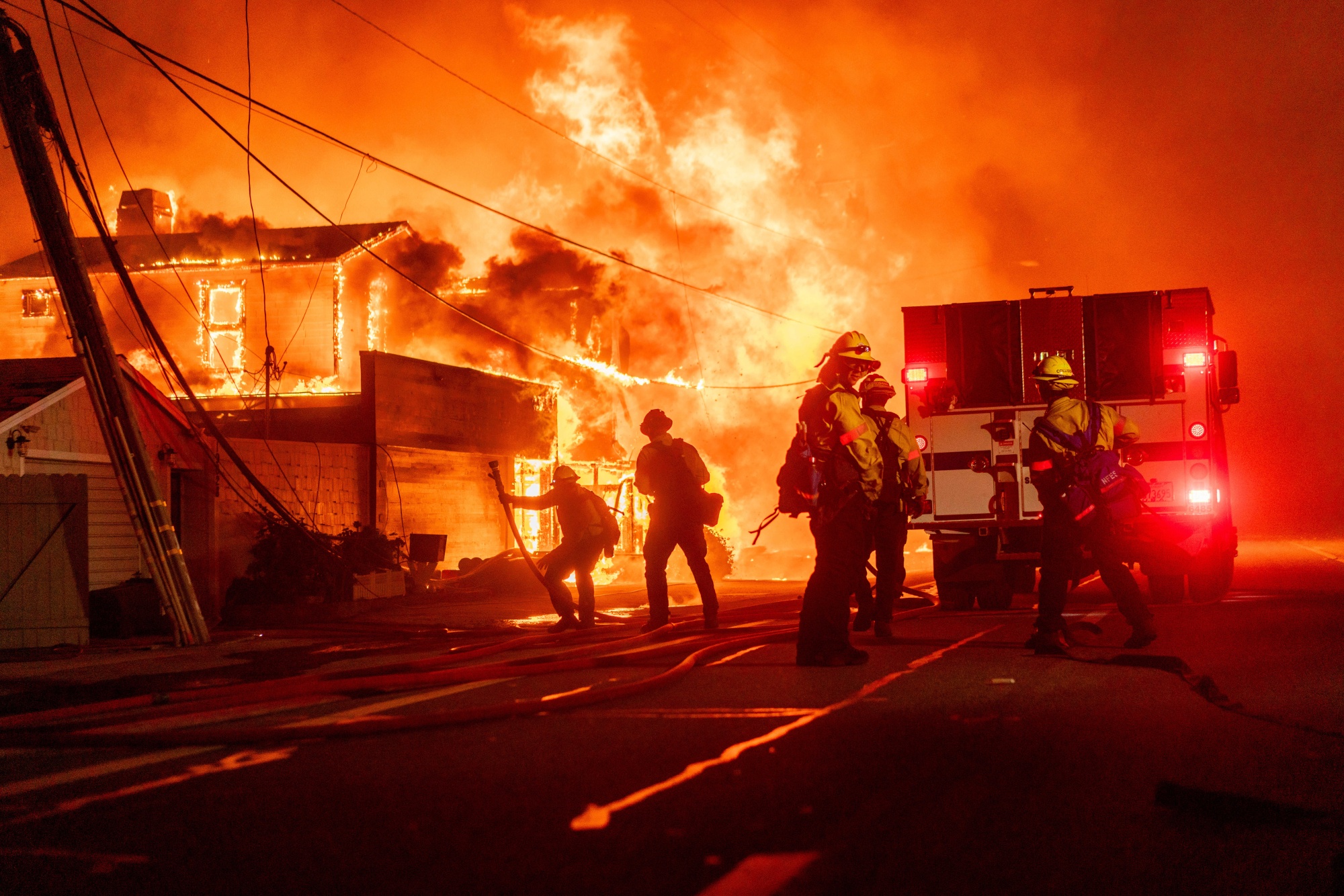 Firefighters battle flames during the Palisades Fire in the Pacific Palisades neighborhood of Los Angeles, California on, Jan. 7, 2025. Photographer: Kyle Grillot/Bloomberg Energy storage also stands a strong chance of continuing to find backers. The need for more and better batteries will rise in tandem with demand for renewables and electric vehicles — a dynamic that might be buffeted by geopolitics but remains very much in play. "Lithium-ion is likely to continue to power the majority of EVs and at the premium, longer range," said Andy Leach, an energy storage expert at BNEF, citing the most widespread battery technology. He noted that alternatives like sodium-ion batteries could be used in more affordable vehicles while more energy-dense, solid-state batteries make inroads in higher-end models. (Though some recent lithium-ion developments could challenge that.) Ultimately, some venture capitalists see the path to net zero as a marathon. And while Trump and the threat of a less cooperative world are real challenges, it doesn't mean the race stops. "We've seen a lot of these cycles," said Brook Porter, a founding partner at G2 Ventures. He said his firm's strategy, even before Trump, was to back companies that don't rely on subsidies, including those in the Inflation Reduction Act that lavished billions of dollars on clean technologies. "Only 3% of our overall portfolio's revenue is exposed to IRA dollars," he said. This year's Pioneers awards were given out to 12 startups from a group of 230 applicants that were reviewed by a group that included Bloomberg Green editors. The winners include companies working on reducing light industry emissions, improving energy storage and adapting to climate change — three key sustainability challenges identified by BNEF. Startups that didn't fit neatly in those categories were selected as wildcards. Read the full list of winners and the innovative solutions they are offering on Bloomberg.com. For unlimited access to climate and energy news, please subscribe. | 







No comments:
Post a Comment