Thursday, April 10, 2025

Boeing has a China problem

And Trump's tariffs aren't helping
View in browser
Bloomberg

Even as President Donald Trump delayed draconian tariffs for dozens of countries on Wednesday, he raised import taxes on China. Today the White House confirmed a rate of at least 145%. Aviation reporter Julie Johnsson explains why that could be a huge problem for planemaker Boeing. Plus Trump disrupts a key bargain between politicians and the American consumer, and the race to bring F1 to Africa heats up after 30 years away.

If this email was forwarded to you, click here to sign up.

Boeing Co.'s China sales peaked in 2018, when a quarter of its new jets ended up in the mainland. It delivered 181 single-aisle 737s and more than two dozen widebodies that year. The company even opened a campus near Shanghai to install cabin interiors and handle local deliveries. Since then, it's been in a rapid descent.

America's biggest export machine hasn't had a large-scale airplane order from China since 2017. This year the company will deliver 40 of its 737 Max jets to China, according to researcher Cirium Ascend. But those shipments are in question as the US and China lurch toward an all-out trade war. Worse, the growing trade tensions could scuttle a potential order for hundreds of planes that's been in the works for years.
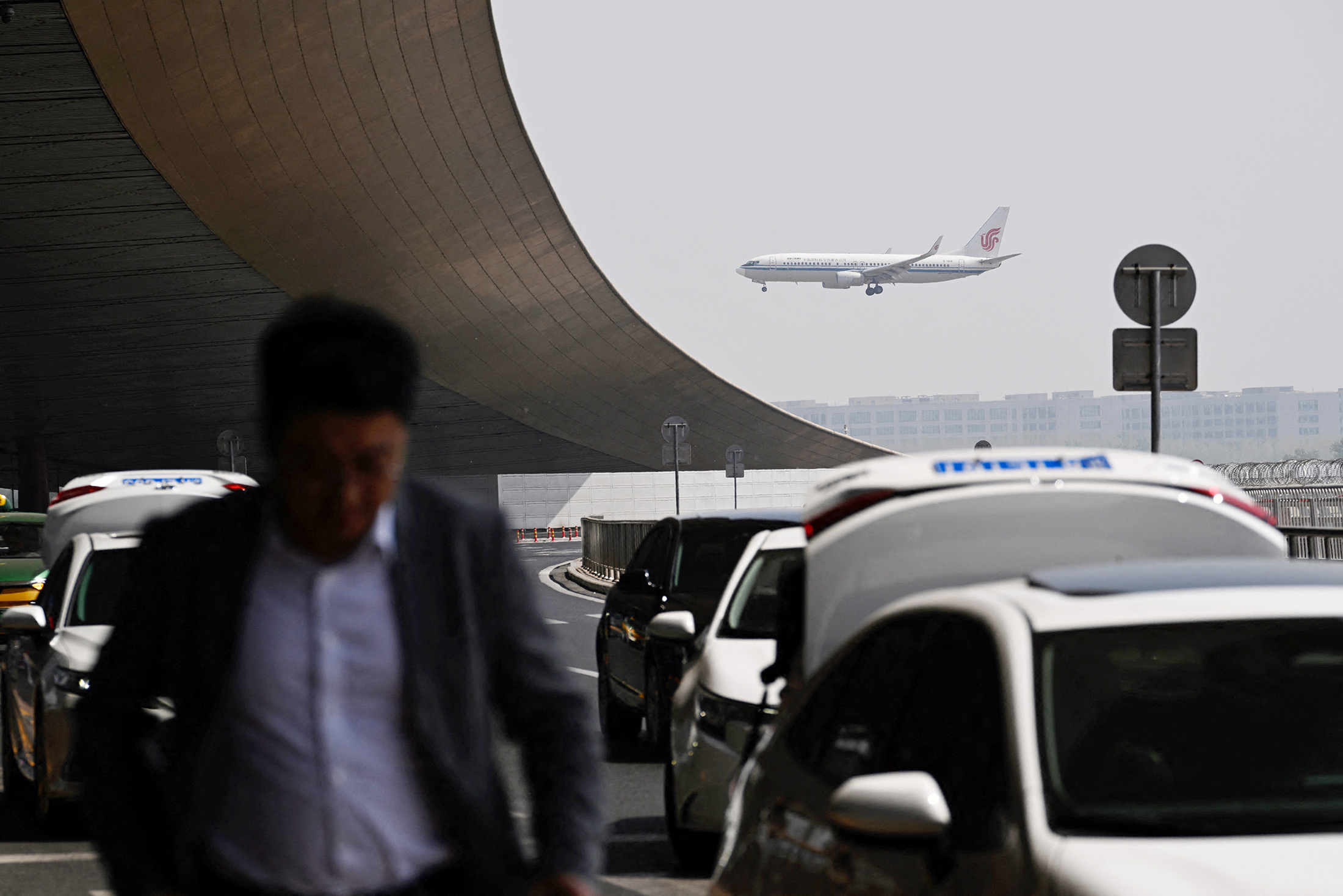
An Air China Boeing 737-800 plane lands Thursday at Beijing Capital International Airport. Photographer: Wang Zhao/AFP/Getty Images

In January, Chief Executive Officer Kelly Ortberg was upbeat about the prospects of a deal despite the administration's growing drumbeat of tariff talk. "We certainly hope that there's an opportunity for some additional orders in the next year with China," he said in an interview.

The fresh uncertainty and lost opportunity underscore the havoc that tariffs—even those intended to foster American manufacturing—can wreak on US industrial champions. Although China hasn't publicly targeted Boeing with its trade measures, it has largely favored Airbus SE for its jetliner purchases in recent years.

The European company took the lead there in 2019, when China was the first to ground Boeing's 737 Max after two fatal accidents. With US-China trade tensions simmering, Boeing has announced only 28 orders from China-based airlines and leasing companies in the past six years, while Airbus's sales have flourished. "China has been taking it out on Boeing," says George Ferguson, an analyst with Bloomberg Intelligence. "I think Boeing's almost at the point where there's nothing left to lose."

One factor that might bolster Boeing's position is China's insatiable appetite for jets: 8,830 aircraft valued at more than $1.2 trillion in the next two decades, Boeing predicts. The country's airlines won't want to commit solely to Airbus for those orders, because a single supplier would make it harder to negotiate better prices. And with only one manufacturer, Comac, which makes no widebodies at all, China's domestic industry is far from able to fulfill that demand. Furthermore, Comac's most important model, the single-aisle C919, uses engines made in the US, which means the White House could hobble the Chinese company by barring their export. "The Chinese need to tread carefully," Ferguson says. "They aren't far along enough in aerospace to completely sever the relationship with the US."

Boeing is the rare American company that's historically generated a trade surplus with China, a market it helped pioneer a half-century ago. It builds its planes in the US, where 85% of its 160,000 workers are based. And it says it supports almost 10,000 US parts suppliers. Boeing didn't respond to a request for comment for this story.

In his first term, Trump skirmished with China on trade, though Boeing's difficulties then were mostly self-inflicted with the 737 crashes. Now, with the president implementing levies that would more than double the cost of imports from China, and the Chinese government responding with an 84% tariff on American goods, it's far from clear how the tensions will play out.

One school of thought is that the US president is simply amping up the pressure to get new trade agreements more favorable to the US–what appears to have happened Wednesday when Trump backed away from so-called reciprocal tariffs against dozens of countries: "Escalate to de-escalate, essentially," Seth Seifman, an analyst with JPMorgan, wrote in an April 3 report. "A key risk, in our view, is that other governments have their own agency and constituencies to satisfy."

The century-old manufacturer hasn't yet shown any ill effects from the latest trade sparring, and in the first quarter the company delivered more planes than analysts expected. That tally included 12 Max jets handed off to Chinese operators, which will reduce the financial drag from planes built prior to 2023. But Boeing still has aircraft that have been parked for years; managers call it a "shadow factory" that they urgently want to close down this year. That, too, risks being delayed.

Boeing's biggest worry is the prospect of Trump's trade wars triggering a recession that would spur airlines worldwide to defer plane orders even as manufacturing costs are rising, says Adam Pilarski, president of consulting firm Avitas Inc. "In the long term, not good things will happen because we, the US, will be losing our position in the world," he says. "And that includes airplane production."

In Brief

Americans Just Wanna Shop

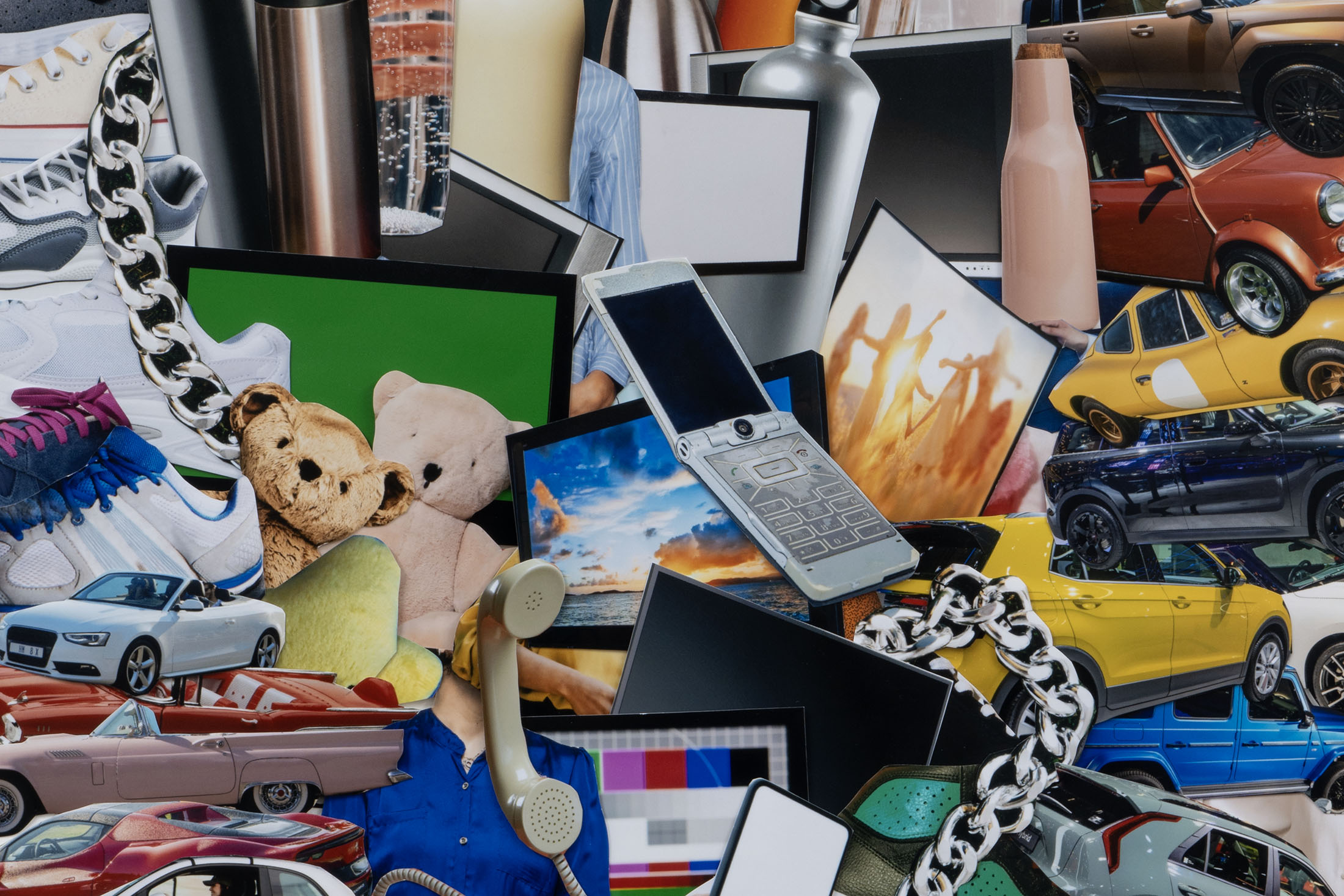
Photo illustration by Carmen Winant for Bloomberg Businessweek.

In the decades after World War II, as the Americans and Soviets waged a multifront cultural and political fight for the soul of Europe, the US deployed a potent weapon: home appliances. And clothes. And color televisions. And sporting goods. And canned soda.

The US spun up a shock-and-awe campaign to sell the world on the splendor of its affordable, abundant consumer conveniences. It started in Marshall Plan-era West Berlin, where in 1950 the US Department of State built a gleaming trade pavilion packed with thousands of everyday products available to the growing suburban middle class across the Atlantic. For the first exhibition, a model tract home was shipped over from Minneapolis. In later shows, actors depicted nuclear families going about their daily life through product demonstrations: getting dinner on the table in a jiffy with a microwave, throwing laundry into an electric washer and dryer, sitting down with the kids to watch some TV.

These exhibitions were part of an expansive effort to pitch US-style capitalism to war-weary, communist-sympathetic Europeans. It was one of the most effective propaganda campaigns in American history: Thousands of visitors flooded in to catch a glimpse of a very foreign notion of modern life—first in Berlin, then across West Germany and Italy, and eventually in the USSR itself. At the first Moscow exhibit in 1959, Soviet Premier Nikita Khrushchev erupted in anger at his guide, then-Vice President Richard Nixon, over the display of American decadence. In the years following, Khrushchev tried to fight the propaganda not by opposing consumerism, but by embracing it in state media, promising that comparable Soviet products were already available or soon would be. (They weren't and wouldn't be.) The move backfired spectacularly, according to a 2005 article by historian Greg Castillo, validating America's message about the superiority of capitalism as an economic system in the eyes of regular Soviets. "A runaway inflation of consumer desire ultimately bankrupted the political economy of Soviet-style socialism," he wrote. Once the people see a dishwasher, they want a dishwasher.

Americans still want dishwashers—and iPhones and new sneakers and closets overflowing with clothes and rainbows of fruit and vegetables at the grocery store. Amanda Mull, in her latest Buying Power column, writes about how Trump's embrace of tariffs disrupts that: Cheap Consumer Goods Are the American Dream, Actually

Africa Wants In on the F1 Racing Boom

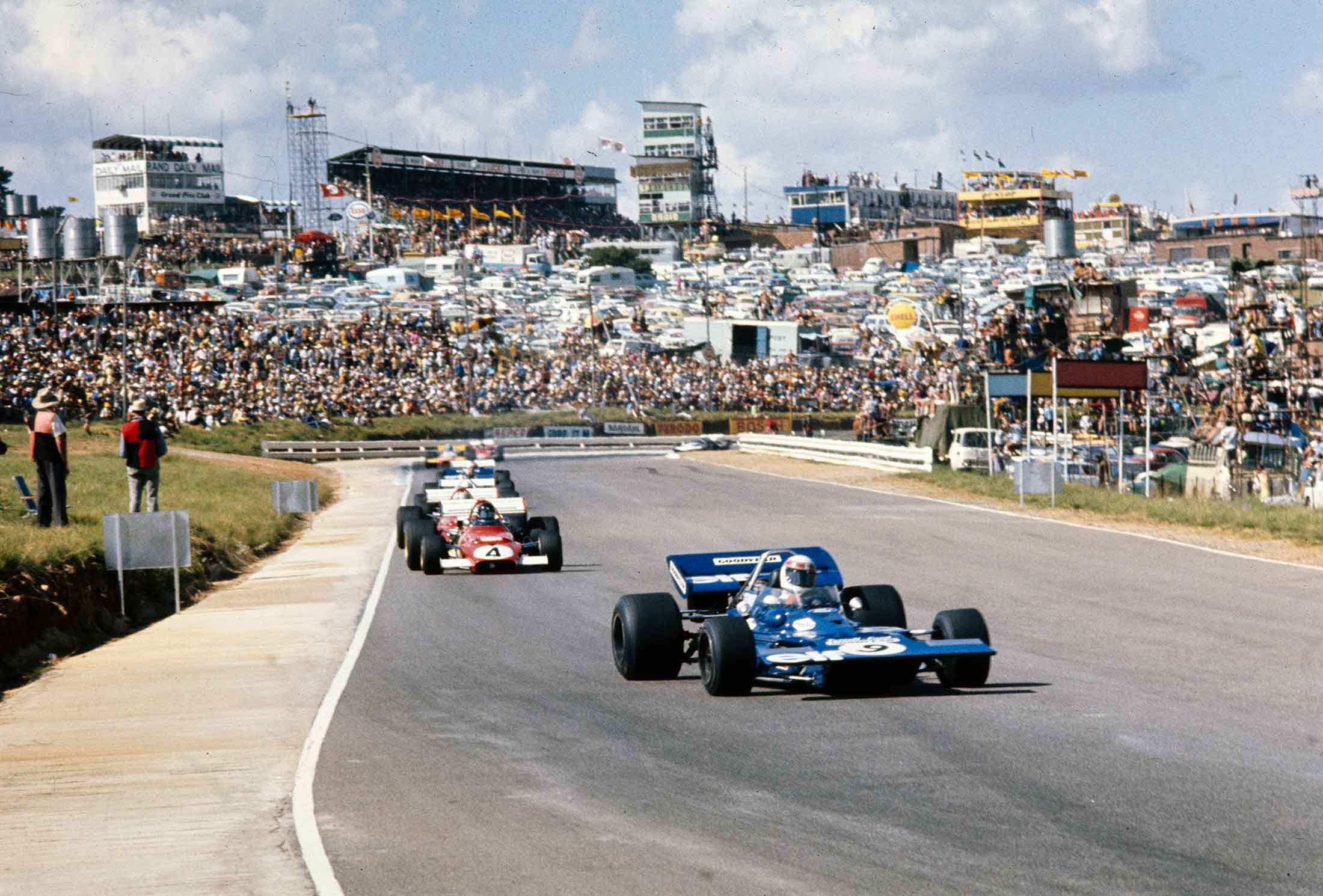
The South African Formula One Grand Prix at Kyalami in 1971. Photographer: David Phipps/Sutton Images/Getty Images

Bob Hartslief used to own the Kyalami racetrack in Johannesburg, the venue for a Formula One Grand Prix in Africa more than 30 years ago. F1 has since morphed from a niche sport mostly popular with Europeans into a global phenomenon and a very big business. Liberty Media Corp. purchased the Formula One Group, the company behind the auto racing series, for $4.4 billion in 2017. In 2024, F1 revenue crossed $3.4 billion, and the races drew 1.6 billion TV viewers. Brad Pitt will help further amplify the F1 brand when he stars as a driver in a big-budget movie—titled simply F1—premiering this June. The series' broadcast deal with ESPN, worth around $85 million a year and set to expire soon, is drawing interest from Amazon.com, Apple and Netflix.

Today, Africa is the only populated continent not on the Grand Prix circuit, a glaring omission for a global sport that recently added races in Qatar and Azerbaijan. Hartslief, 60, is part of a big effort to change that. He's one of several African bidders vying to win the next available license. The cast of characters includes a Porsche executive, a winemaker, a street racing promoter, an Austrian driver and a wartime president. If F1 returns to the continent, South Africa is seen as a strong contender, largely because of its lead on infrastructure, says a person familiar with the deliberations who asked not to be identified discussing private matters. Aspiring hosts in the country view the sport's possible return as a way to immediately attract tourists, spur growth and showcase South Africa's progress since the end of apartheid.

Building an acceptable racetrack is just a first step. Loni Prinsloo and Rivaldo Jantjies write about the efforts underway: The Long, Expensive Race to Bring F1 Back to Africa

No Relief on Eggs

$6.227

That's what consumers are paying for a dozen eggs in March, a new record. Industry experts had expected prices to fall, with demand lower and bird flu outbreaks easing. But retailers, fearing future supply shocks, keep prices high.

Self-Inflicted Damage

"I consider the tariff developments thus far to be what soccer fans call an own goal. They're highly analogous to Brexit, and we know how that turned out."
Howard Marks
Co-founder Oaktree Capital Management LP
Who said in a note on Wednesday that Trump's tariff policies have the potential to be the biggest economic event of our lifetimes and that reversing them could still have consequences.

More From Bloomberg

Like Businessweek Daily? Check out these newsletters:

  • Markets Daily has what's happening in stocks, bonds, currencies and commodities right now
  • Supply Lines follows the trade wars, tariff threats and logistics shocks that are upending business and spreading volatility
  • FOIA Files goes behind the scenes with Jason Leopold to uncover documents that have never been seen before
  • Working Capital analyzes trends in leadership, management and the art of career building
  • Bloomberg Pursuits is your weekly guide to the best in travel, eating, drinking, fashion, driving and living well

Explore all Bloomberg newsletters.

Follow Us

Like getting this newsletter? Subscribe to Bloomberg.com for unlimited access to trusted, data-driven journalism and subscriber-only insights.

Want to sponsor this newsletter? Get in touch here.

You received this message because you are subscribed to Bloomberg's Businessweek Daily newsletter. If a friend forwarded you this message, sign up here to get it in your inbox.
Unsubscribe
Bloomberg.com
Contact Us
Bloomberg L.P.
731 Lexington Avenue,
New York, NY 10022
Ads Powered By Liveintent Ad Choices

No comments:

Post a Comment

đŸ”¥ China's 500 Million Year Advantage

But this $20 American company could control the secret ͏  ͏  ͏  ͏  ͏  ͏  ͏  ͏  ͏  ͏  ͏  ͏  ͏  ͏  ͏  ͏  ͏  ͏  ͏  ͏  ͏  ͏  ͏  ͏  ͏  ͏  ͏  ͏  ͏...