| Bloomberg Evening Briefing Americas |
| |
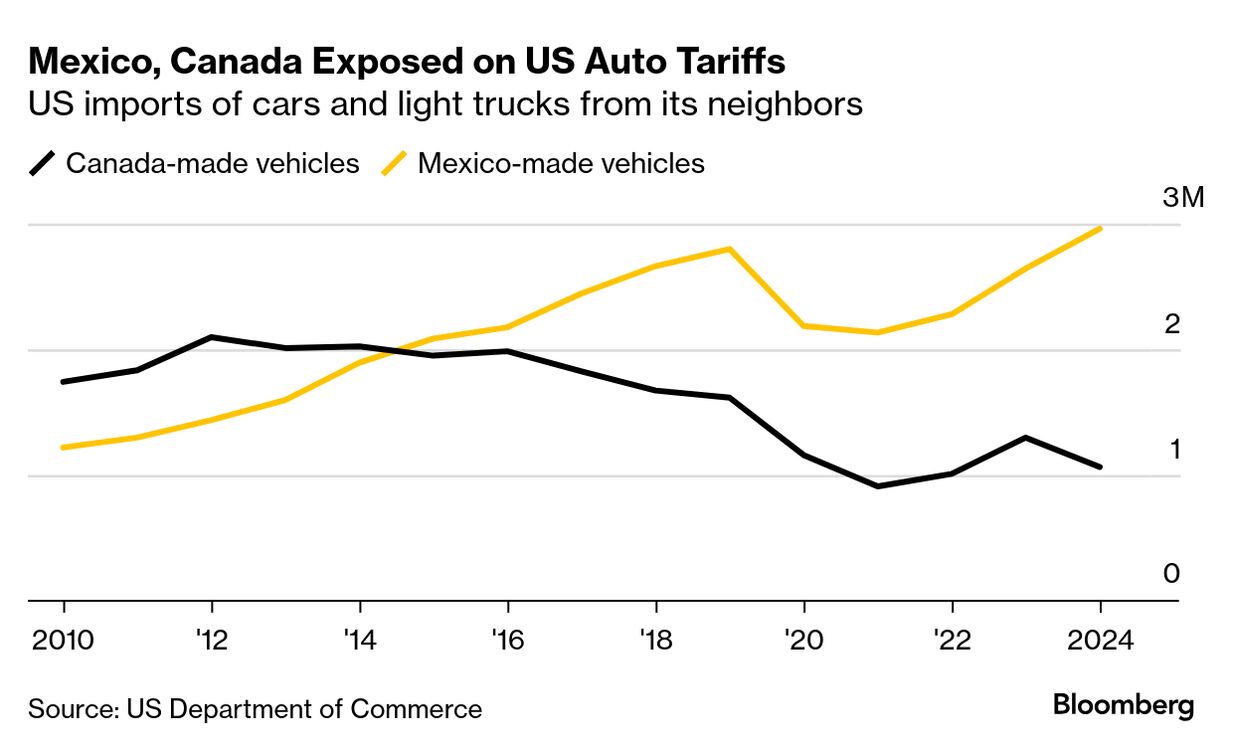
| The European Union and the US made little progress bridging trade differences this week as officials from President Donald Trump's administration indicated that the bulk of the US tariffs imposed on the bloc will not be removed. The EU's trade chief, Maros Sefcovic, is said to have left Monday's meeting in Washington with little clarity on the American stance. US officials indicated that the 20% "reciprocal" tariffs—which Trump reduced to 10%—as well as other tariffs targeting sectors including cars and metals would not be removed outright. The uncertainty around Trump's chaotic tactics, replete with delays, retreats, new threats and sudden exceptions and trial balloons, hasn't helped. The legality of his entire trade war is also the subject of litigation. The EU has offered that both sides remove all tariffs on industrial goods, including cars, but Trump has so far rejected the proposal. (And while Trump is supposedly betting that a 25% tariff on imports of vehicles and automotive parts will bring more manufacturing to America, the reality may not be so straightforward.) In Canada, Prime Minister Mark Carney said his government will allow automakers to import US-manufactured cars and trucks without tariffs, as long as the companies keep making vehicles in Canada. The move provides some relief from the trade war to companies including General Motors and Stellantis that have assembly plants in Ontario but export large quantities of vehicles from the US into Canada. Last week, Carney put retaliatory tariffs of as much as 25% on vehicles made in the US, effectively matching an earlier move by Trump on foreign autos. The two countries, along with Mexico, have operated a tightly integrated automotive supply chain for decades. But that may soon change. —Jordan Parker Erb | |
What You Need to Know Today | |
| The US refused to endorse a G7 statement condemning Russia's deadliest attack on Ukraine this year, a strike on Palm Sunday hitting residential buildings that killed at least 35 and injured 119 including children. The Trump administration, which has often parroted false Kremlin narratives about the war, told other countries it couldn't sign the statement denouncing the mass killing as it is "working to preserve the space to negotiate peace." On Monday, Russian officials claimed without evidence they were targeting military personnel in the strike. Kremlin forces have repeatedly hit civilian areas and infrastructure over the course of the war.  Ukrainian rescue personnel search the rubble at the site a Russian missile attack in Sumy, Ukraine, on April 13. Photographer: Oleg Voronenko/AFP | |
|
| |
|
| |
|
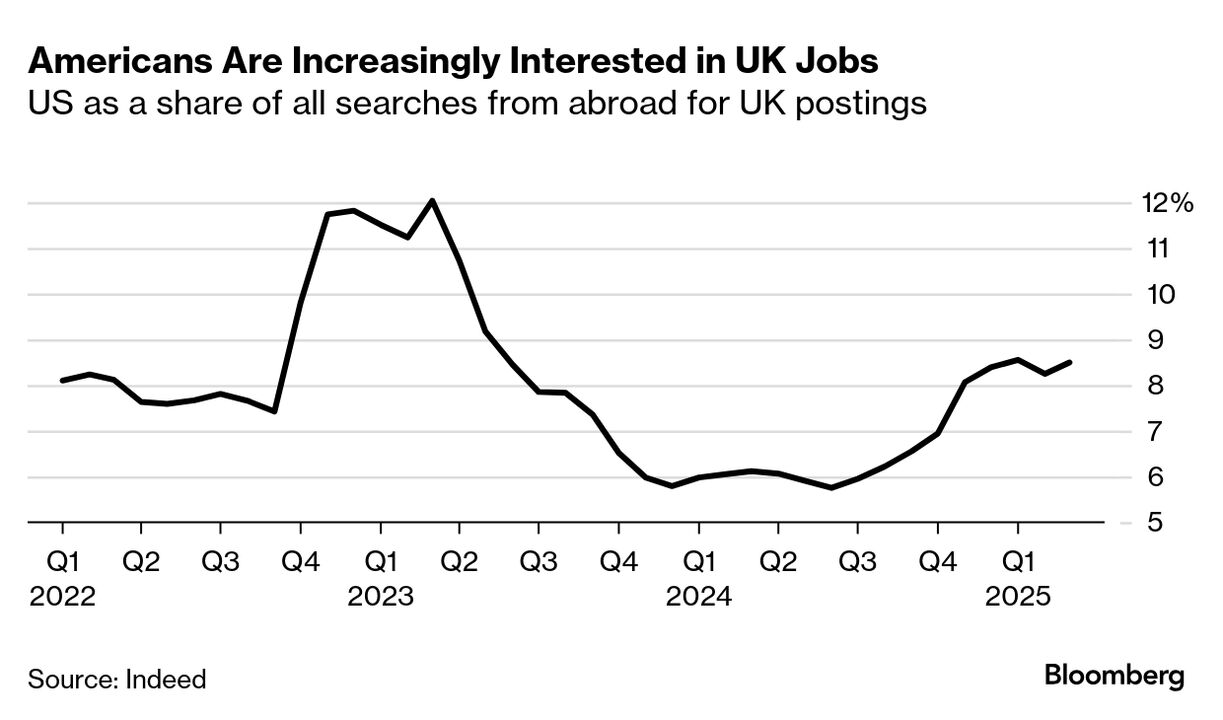
| More Americans are eyeing jobs across the pond amid Trump's funding cuts and a darkening economic outlook. Almost one in 10 foreign clicks on UK postings in the first quarter came from the US, the largest share since the second quarter of 2023. US interest in British jobs was up 2.4 percentage points year-on-year, the sharpest increase of any country. The rise was driven by Americans looking for roles in scientific research and development—and management. The figures capture the months after Trump's return to the White House when the Republican slashed billions of dollars in federal funding for research, education and infrastructure projects, much of which has been challenged in court. | |
|
| A US judge ordered the Trump administration not to deport a Columbia University student who was taken by federal agents in Vermont on Monday ahead of an interview for his citizenship application. US District Judge William Sessions ordered Trump and other senior officials not to remove Mohsen Mahdawi, a Palestinian, from the state or country. Mahdawi faces a similar situation as Mahmoud Khalil, a Columbia graduate student who was imprisoned in March as part of Trump's broader effort to deport foreign students who have protested the war in Gaza. Last week, an immigration judge within the Trump Justice Department ruled Khalil should be deported. In both cases, neither man has been charged with a crime. | |
|
| Republicans in the Senate and House are drafting analyses on how best to craft a new tax bracket for the wealthiest Americans, work that signals the GOP under Trump may be considering ideas to raise taxes on the rich. The House proposal would set the new rate at 40% for taxpayers earning $1 million or more a year. A White House official, speaking on the condition of anonymity to discuss private conversations, said Trump is open to the idea of a new top tax bracket. However, the person said the higher rate should kick in at a threshold far greater than $1 million. | |
|
| |
What You'll Need to Know Tomorrow | |
| |
| |
| |
| Enjoying Evening Briefing Americas? Get more news and analysis with our regional editions for Asia and Europe. Check out these newsletters, too: Explore all newsletters at Bloomberg.com. | |
| |
Before it's here, it's on the Bloomberg Terminal. Find out more about how the Terminal delivers information and analysis that financial professionals can't find anywhere else. Learn more. Want to sponsor this newsletter? Get in touch here. | | | You received this message because you are subscribed to Bloomberg's Evening Briefing: Americas newsletter. If a friend forwarded you this message, sign up here to get it in your inbox. | | |
















No comments:
Post a Comment