| By Leslie Kaufman The announcement last week from Homeland Security Secretary Kristi Noem that she plans to "eliminate" the Federal Emergency Management Agency (FEMA) has cast a pall over the US government's disaster response unit. While most of the focus has been on what it would mean for disaster recovery if the agency is wound down, there's another big issue at stake: FEMA's foundational role in managing the National Flood Insurance Program (NFIP). Any changes to the program or how it's run can potentially disrupt the lives of millions of homeowners living in flood-prone areas. Congress created the program in 1968 because private insurance for flood risk failed; insurers simply couldn't price policies affordably enough for most homeowners. The government stepped in and offered subsidized rates. As of the end of 2023, according to FEMA's website, it held 4.7 million policies and $1.3 trillion in liability. While it's unclear what exactly would happen to NFIP if FEMA were eliminated — the agency and Department of Homeland Security didn't respond to multiple requests for comment — people who have knowledge on how the program works and depend on it are worried. "With all this talk about dismantling FEMA, the current administration doesn't seem to have a plan for the National Flood Insurance Program. No plan to protect people from flooding, the number one disaster, is a really big concern," one former FEMA senior official, who asked that their identity be withheld for fear of retribution, tells Bloomberg Green. The most extreme possibility is shutting down NFIP. Elon Musk's Department of Government Efficiency has pursued cuts to what it claims are wasteful programs. On paper, NFIP might look that way. The program now owes the US Treasury $22.5 billion after two decades of borrowing in the aftermath of hurricanes. Closing NFIP would have far-reaching effects on the entire financial system, though. Most mortgages — including those with flood insurance — are sold to Fannie Mae or Freddie Mac, the quasi-governmental agencies that back roughly 70% of mortgages nationwide. "Global investors buying mortgages from Fannie and Freddie would either not invest outright in uninsured properties or would impose a risk premium in the form of higher interest rates," says Jesse Keenan, a real estate professor at Tulane University. "In either event, the cost of mortgages would go up for everybody." The National Association of Realtors said a lapse in NFIP would likely prevent 40,000 property sales per month in severe flood zones, where buyers are required to have flood insurance to get a mortgage. Historically, NFIP has enjoyed strong bipartisan support when it periodically comes time to be reauthorized — after all, there are flood zones in both blue and red states — there would likely be political blowback if the program is shuttered. If FEMA is eliminated — something President Donald Trump has also called for — another agency could take over NFIP's insurance policies and payouts. But while the program provides insurance services, the rest of FEMA provides critical information that stabilizes the market such as the location of flood zones and flood mitigation efforts. 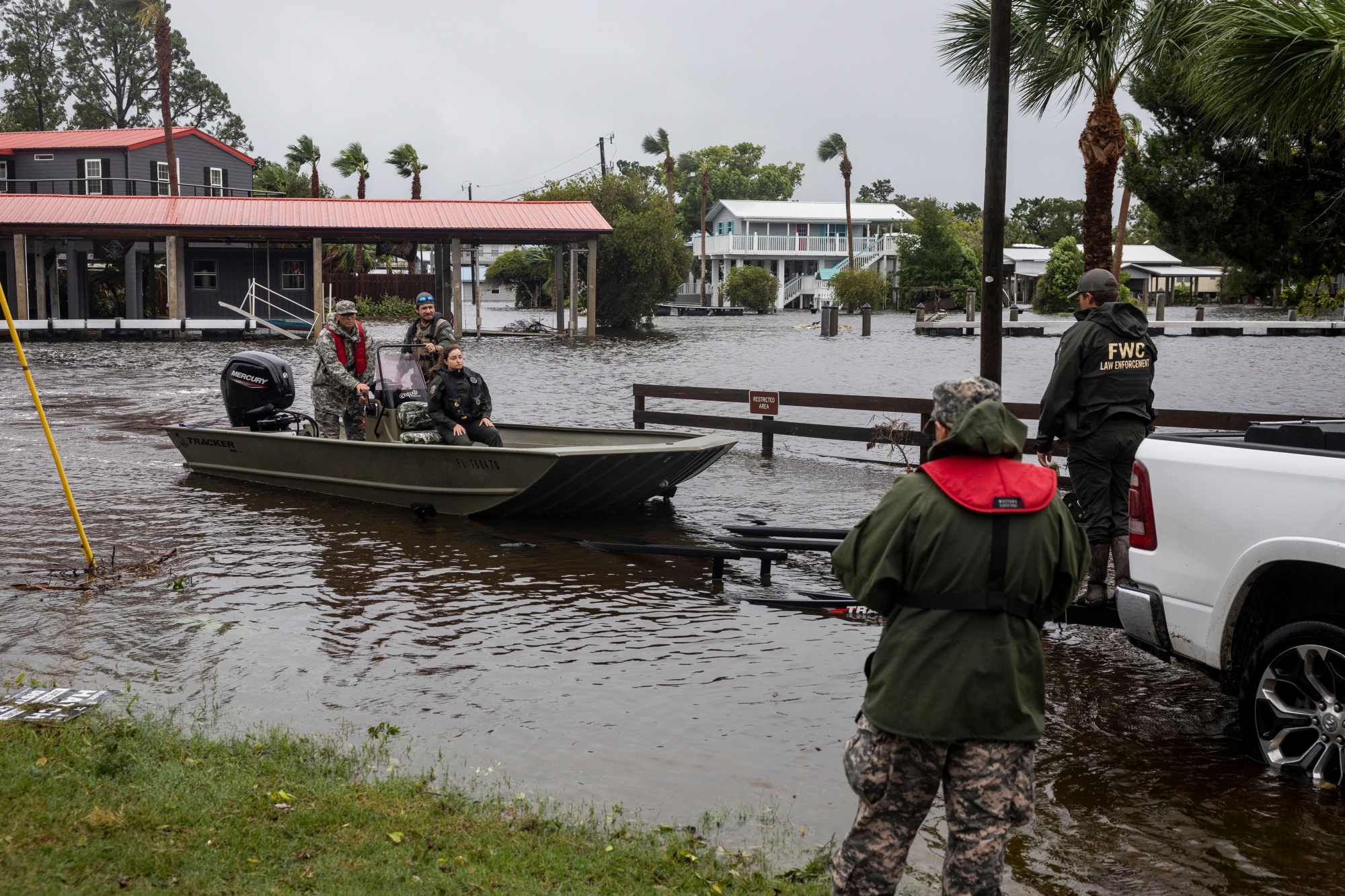 Officers return from looking for stranded residents after Hurricane Debby made landfall in Suwannee, Florida in August 2024. Photographer: Christian Monterrosa/Bloomberg "Some of the most impactful parts of NFIP aren't related to insurance at all," says Anna Weber, a senior policy analyst with the Natural Resources Defense Council's flood solutions program. "To be eligible for flood insurance, you must live in a town that has met basic floodplain management standards set by FEMA. In this way, NFIP is a driving force behind safer floodplain development. It provides a minimal level of floodplain safety," she says. In other words, FEMA's flood insurance requirements have helped drive building code and zoning ordinance changes that reduce the risk of flood damages. The agency also keeps a database of what municipalities have done, which allows it to price insurance accordingly. "If NFIP has to run the program without FEMA, they'd be flying blind and taking on more risk," says Keenan. Though NFIP enjoys bipartisan support, it also faces calls for reforms from both sides of the aisle. FEMA is being sued over a new rate program to raise premiums to make the program more actuarially sound by a group of Attorneys General hailing primarily from red states who say the rates don't take into account local mitigation efforts and will drive people who can't afford the new costs from their homes. In 2021, the Association of State Floodplain Managers petitioned FEMA to update its floodplain management standards not updated since the 1970s to reflect both new building realities and the rising threat of climate change. Read our award-winning Uncovered series, which dives into how climate change is impacting the mortgage and insurance industries. Please subscribe for even more deep dives into the ramifications of an overheating planet. | 








No comments:
Post a Comment