Thursday, February 27, 2025

Nvidia keeps the faith

It says it's not fazed by DeepSeek
View in browser
Bloomberg

Nvidia's fourth-quarter earnings release on Wednesday was widely watched in the US tech community. Joshua Brustein writes today about the company that seems to hold the weight of the whole US AI industry on its shoulders. Plus: Central banks try their hand at social media, and matcha's supply chain is no match for its going viral. If this email was forwarded to you, click here to sign up.

It's been just over a month since the Chinese chatbot DeepSeek sent panic through the US artificial intelligence industry, and this week, Wall Street looked to Nvidia Corp. for permission to declare that Silicon Valley's AI boom is still on. Nvidia did its best, delivering a quarterly report Wednesday that showed it did a bit better than expected on fourth-quarter revenue and profit, with sales in fiscal first quarter of 2025 predicted to be slightly above the average forecast from analysts. Yet this was interpreted as a downer, and the stock slipped when markets opened. 

Silicon Valley has operated for years under the assumption that advances in AI are directly tied to increases in computing power. DeepSeek showed, perhaps, that a guy who ran a random Chinese hedge fund can build a product on the cheap that could compete with top US offerings. If that was the case, maybe devoting hundreds of billions of dollars to build AI data centers wasn't the best idea?

The most logical way to take the temperature on those concerns is to watch Nvidia. Because the $3 trillion chipmaker is by far the leading producer of the equipment needed to run AI data centers, its quarterly earnings have become a bellwether for the entire AI project. The DeepSeek freakout in late January caused Nvidia's market value to drop almost $600 million in a single day. Although shares have partially recovered, there was a nervousness about what the company would reveal Wednesday.
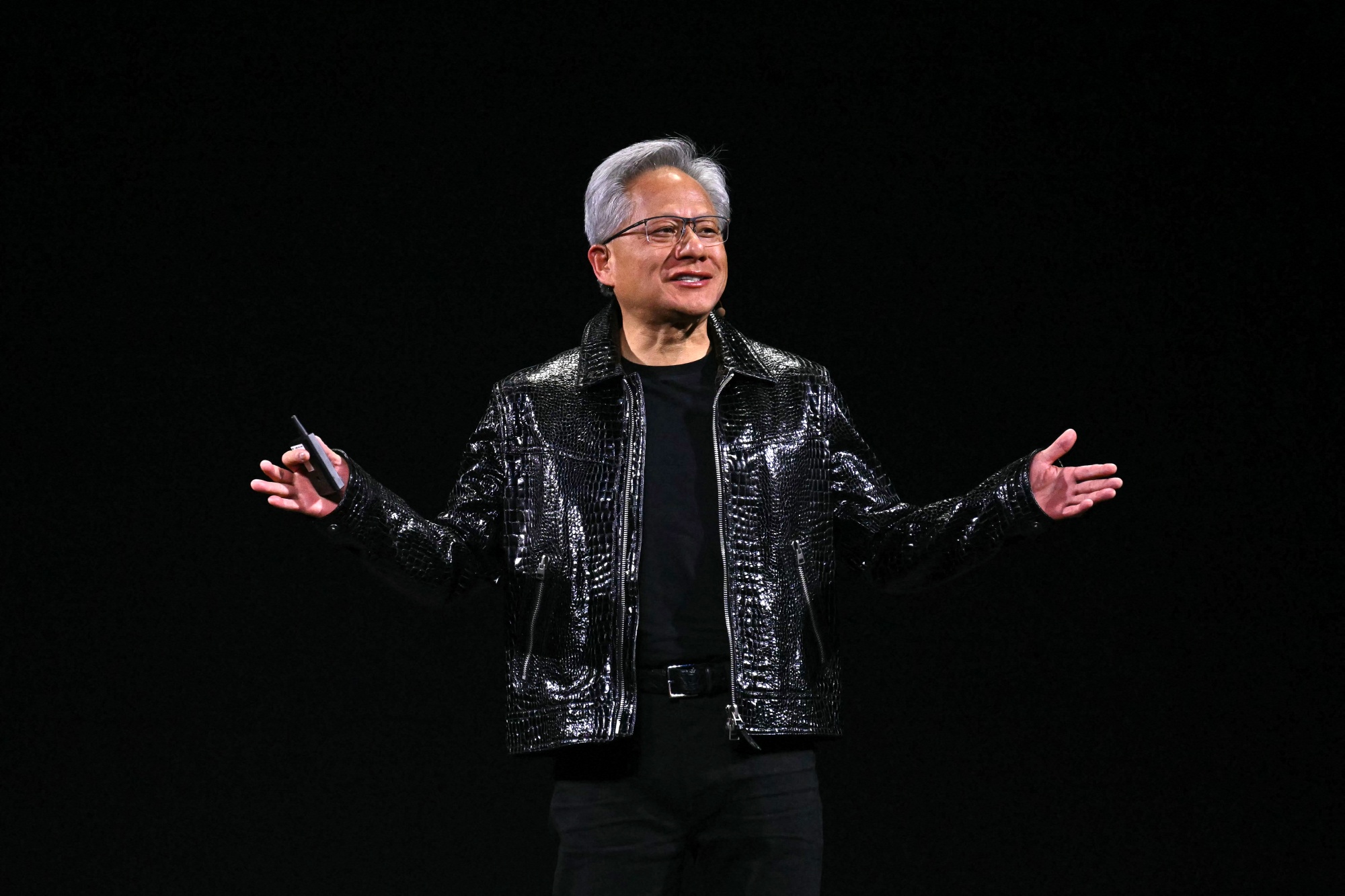
Huang delivers a keynote address at the Consumer Electronics Show in Las Vegas in January. Photographer: Patrick T. Fallon/AFP/ Getty Images

There was never going to be a big connection between Nvidia's actual results and DeepSeek's product, given when it was released. But Nvidia Chief Executive Officer Jensen Huang clearly came prepared to soothe fears about how DeepSeek might point to changes in the basic economics of AI. In short, he wasn't buying the negative assessments.

Huang praised the model powering the Chinese chatbot, just as he did after its release. But, he argued, its breakthrough in using less computing power in the initial step known as pretraining doesn't change the need for more power later in the process. In any case, Huang added, most of the computing costs actually come from inference, the stage where a model considers each subsequent prompt entered from users.

Nvidia is betting that AI will soon take on huge new applications such as warehouse automation and humanoid robots. "This is just the beginning," Huang said, adding that future models might require millions of times more computing power than today.

If those predictions were to come true, they'd bring along some daunting problemseven today's AI systems are straining existing power capacity. But weak demand for Nvidia's chips wouldn't be one of them.

Huang has been making such claims for some time, and it's fair to question his optimism around AI being on the verge of solving problems like robotics. But his attitude toward DeepSeek fits a pattern among US tech leaders, who've praised the technology, then interpreted its emergence not as a threat but as another sign that AI is on the march. For now, at least, signs point to the AI infrastructure binge accelerating. DeepSeek's prospects as a Chinese consumer app unseating US incumbents, meanwhile, seem to be dimming: As of Thursday morning it's dropped to the 35th-ranked iPhone app in the US.

In Brief

Next Up, the Monetary Policy Challenge?

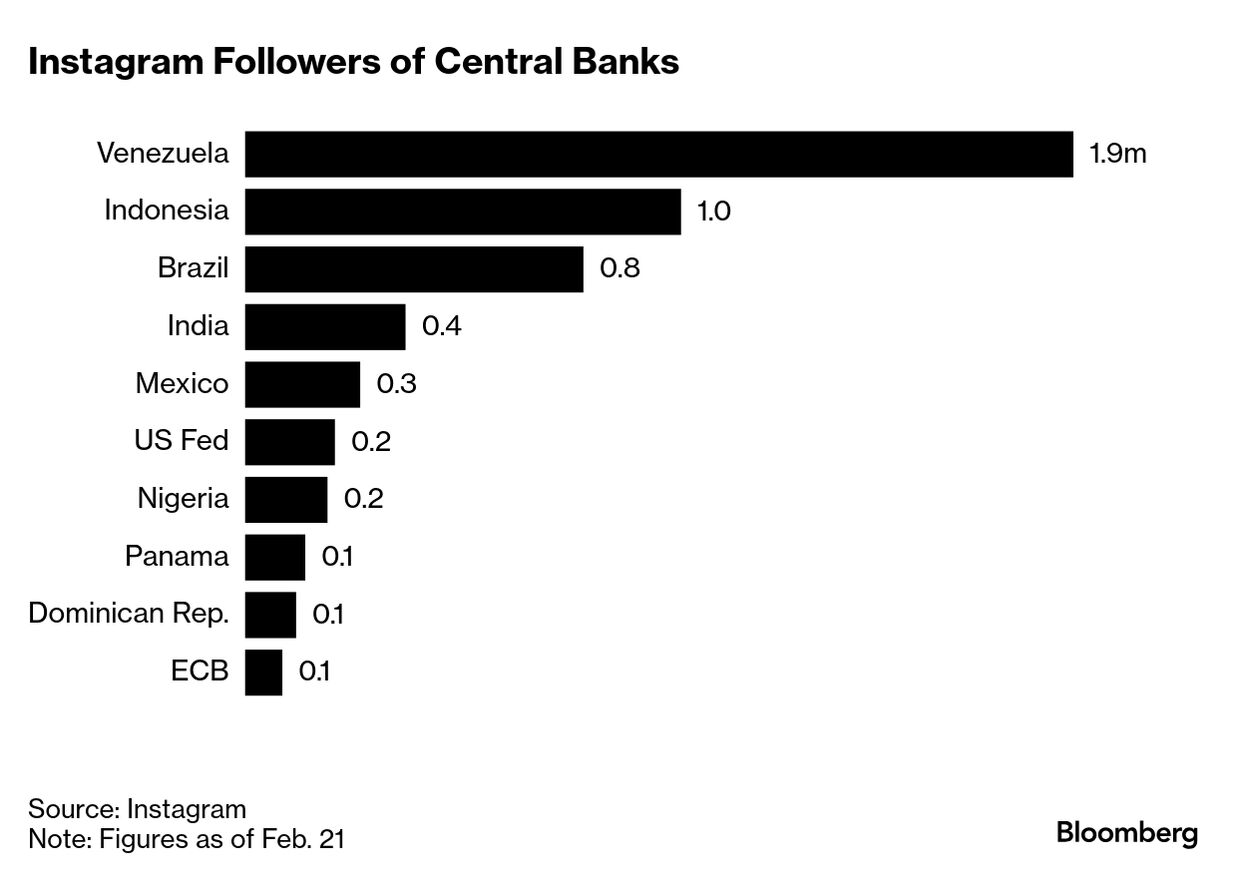
Central bankers are like the tooth fairy: Their policies work only if the public believes in them. That trust was recently tarnished by the inflation crisis, when people in many countries felt as if they went to bed with a tooth under their pillow, then woke up not to a gift but to more missing teeth. So to rebuild trust—particularly with younger generations who haven't felt much warmth from monetary policy in their lifetimes—the Federal Reserve, the European Central Bank, the Bank of England and beyond are trying their hand at marketing and influencing on social media.

The central banks recognize that Gen Z and millennials get much of their news from social media and have little patience for inscrutable speeches laden with talk of basis points and "second-round effects." That's led roughly 100 of them to establish a presence on Instagram: As of December 2023 (the most recent available data) the number was up by more than a third from two years earlier, according to the Central Bank Directory, an annual guide. "If you're not out there setting your narrative, somebody else will," says Michael McMahon, a macroeconomist at the University of Oxford who advises central banks on communications.

Part of the goal is reputation management and counteracting falsehoods online. Fed Chair Jerome Powell is routinely the subject of misinformation or mockery on social media, which can foment conspiracy theories about central banks pushing up interest rates simply for the joy of inflicting pain. An Instagram video liked by more than 1 million people shows Powell apparently crashing markets just by uttering "good afternoon." A TikTok clip with 1 million views manipulates his voice to say, "God bless my money printer."

But that hasn't stopped the masters of monetary policy from turning to social media to reach young constituents, Irina Anghel writes: When Central Banks Hit Instagram, Cue the Cringe

Matcha Craze Disrupts Its Supply Chain

Photographer: Shira Inbar for Bloomberg Businessweek

Since 2022 content creators Jasmine and Freya Smith in Tokyo have been posting on TikTok about Japanese food and travel, including all things matcha. Dozens of the sisters' videos feature them at cafes and restaurants stirring matcha lattes, drizzling matcha-flavored syrups and showing off pastries and pancakes tinted the telltale shade of leafy green. But one of their most recent videos came with a warning: "Unfortunately," Jasmine told their 47,000 followers in January, "there is a matcha shortage in Tokyo right now."

She was correct. Since last year, a number of prominent Japanese tea makers have limited sales of the green tea powder, leaving shelves bare across Japan and squeezing supplies for beverage makers in other countries. Largely to blame is the world's growing taste for matcha: In 2024, Japan's export value of green tea, which includes matcha, reached an all-time high of ¥36.4 billion ($244 million), a roughly 25% increase from the previous year, according to data from the Ministry of Agriculture, Forestry and Fisheries of Japan. The surge in demand is a result of social media's influence as well as a travel boom to Japan driven by a weak yen. Last year, 37 million people visited the country, up 47% from 2023, tourism figures show.

Visitors are flooding social media with their favorite Japanese treats. Mia Glass writes about the phenomenon in the latest Going Viral column: The Global Matcha Boom Is Driving a Shortage in Japan

Billions for MrBeast

$5 billion
That's how much YouTube star MrBeast's company could be worth as he seeks to raise funds. The most popular creator on the platform, whose real name is Jimmy Donaldson, is raising hundreds of millions of dollars for a holding company that owns all or part of several businesses, including the chocolates brand Feastables, the snack company Lunchly and his video production company.

Buy Canada

"One thing we can do is not give our dollars to the United States right now."
Curtis Brown
Principal at Winnipeg-based Probe Research
As President Trump has threatened tariffs, made jabs about "the 51st state" and referred to the country's prime minister as "Governor Trudeau," furious Canadian consumers have turned into vindictive shoppers: American-made products are out; everything else is in.

More From Bloomberg

Like Businessweek Daily? Check out these newsletters:

  • Business of Space for inside stories of investments beyond Earth
  • CFO Briefing for what finance leaders need to know
  • CityLab Daily for today's top stories, ideas and solutions from cities around the world
  • Tech In Depth for analysis and scoops about the business of technology
  • Green Daily for the latest in climate news, zero-emission tech and green finance

Explore all Bloomberg newsletters.

Follow Us

Like getting this newsletter? Subscribe to Bloomberg.com for unlimited access to trusted, data-driven journalism and subscriber-only insights.

Want to sponsor this newsletter? Get in touch here.

You received this message because you are subscribed to Bloomberg's Businessweek Daily newsletter. If a friend forwarded you this message, sign up here to get it in your inbox.
Unsubscribe
Bloomberg.com
Contact Us
Bloomberg L.P.
731 Lexington Avenue,
New York, NY 10022
Ads Powered By Liveintent Ad Choices

No comments:

Post a Comment

Preference center link

...